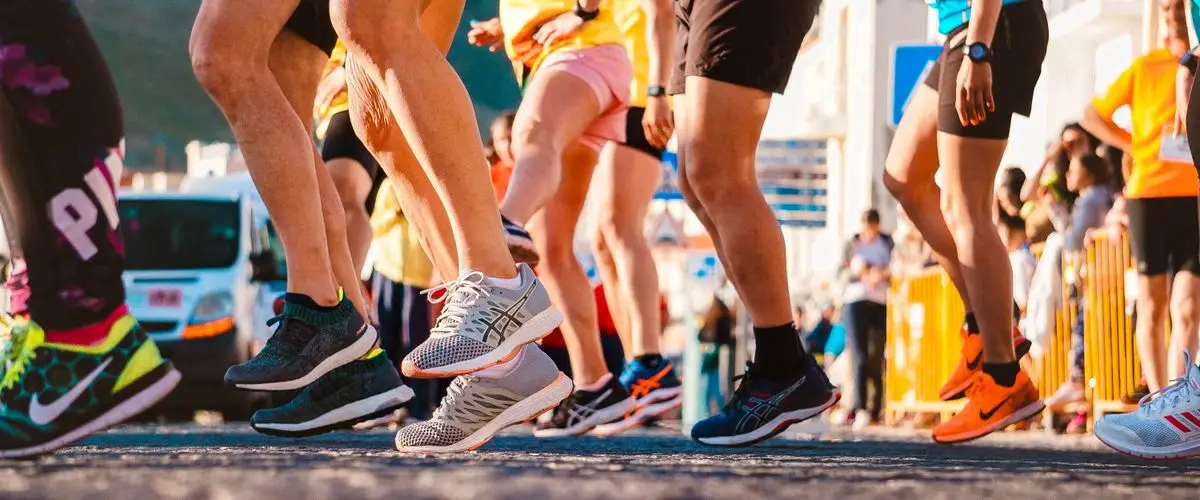
Something has changed in running. For decades, running was a solitary sport: you, your shoes and the road. But in recent years, a quiet transformation has turned running into one of the most powerful social activities in the world. They call it social running, and it is redefining why, how and with whom we run.
It is no longer just about chasing personal bests or accumulating mileage. It is about meeting people through sports, building community, and turning training into something you genuinely look forward to each week. And the data confirms it: group activities on platforms like Strava continue to grow year after year, with club memberships reaching record highs.
In this guide, I explain exactly what social running is, why it is exploding in 2026, what science says about its benefits, and how you can join this revolution regardless of your level. Whether you are a complete beginner or a seasoned marathoner, social running has something to offer you.
What Is Social Running?
Social running is a way of approaching running that puts community and human connection at the center of the experience. It is not simply running with people: it is a philosophy where the primary goal is not the clock, but the connection.
When we talk about social running, we mean meetups where the pace is set by conversation, apps that connect you with like-minded runners, clubs where the post-run coffee is as important as the kilometers. We mean a form of running where asking someone about their week matters as much as asking about their pace.
As we explored in our article about running as a social fitness trend, the pandemic accelerated something that was already brewing: the need to reconnect with other people through movement. Running, thanks to its accessibility and low barrier to entry, became the perfect vehicle for that reconnection.
The fundamental difference is one of intention. A traditional runner goes out to train. A social runner goes out to share a training session. It seems subtle, but that shift changes everything: adherence, motivation, enjoyment and, surprisingly, results too.
From Lone Runner to Community
During the 1980s and 1990s, the profile of a recreational runner was clear: someone solitary, disciplined, almost skeptical of any company during training. The romantic image of the lone runner hitting empty streets at dawn defined an entire generation of the sport.
Strava's annual Year in Sport reports reveal an undeniable trend: shared activities and running club memberships are growing exponentially every year. What started as a way to log miles has become the social network of sport. And that transformation reflects a deep cultural shift in how we understand running globally.
The real change arrived when three factors converged simultaneously:
- The loneliness crisis: Post-pandemic studies confirmed that the loneliness of running was not a character trait but a real problem. Runners who always trained alone had significantly higher dropout rates and reported less satisfaction with their practice. A meta-analysis showed that social isolation is as harmful to health as smoking 15 cigarettes a day.
- The democratization of technology: Apps like CorrerJuntos eliminated the most important barrier to entry: not knowing who to run with. Suddenly, finding partners at your level and schedule was just a tap away. The best apps for running groups made it easier than ever to connect.
- The parkrun movement: Parkrun demonstrated that thousands of people were willing to get up early on a Saturday to run 5K together, with no prize, no ranking, no incentive other than community. Now active in over 20 countries, parkrun has become the gateway drug to social running.
The result is that in 2026, the runner profile has changed radically. The modern runner is no longer someone who runs despite the solitude. They are someone who runs precisely because of the company. And that has profound implications for how we train, compete and live running.
5 Pillars of Social Running
Social running is not one single thing. It is an ecosystem built on five pillars that reinforce each other, creating a virtuous cycle that keeps runners engaged, motivated and improving:
1. Running meetups
The most visible pillar. Running meetups are organized gatherings where runners meet at a set point, at a set time, to run together. They can involve 3 people or 300. What matters is regularity and accessibility. If you have never attended one, our guide to your first running meetup covers everything you need to know.
The most successful meetups share three characteristics: a fixed meeting point, a predictable schedule and an inclusive atmosphere. You do not need to be fast. You do not need experience. You just need to show up.
2. Apps and connection platforms
Technology is the accelerator of social running. Group running apps like CorrerJuntos allow you to discover meetups near you, filter by level and schedule, and connect with compatible runners through intelligent matching systems. Strava adds the social layer of sharing activities and joining clubs.
What used to require knowing someone who already ran now takes 30 seconds from your phone. That elimination of friction is what has made social running explode in recent years. The technology does not replace the human connection; it enables it.
3. Local clubs and communities
Running clubs, both registered and informal, are the backbone of social running in the long term. While an app connects you with someone new each week, a club gives you a sense of belonging, identity and deep relationships. To find the right fit, check out our guide on how to join a running group.
From major cities to small towns, running clubs are thriving. They range from competitive athletics clubs with coaches and structured programs to casual WhatsApp groups that meet twice a week at the local park. Both serve the same fundamental purpose: giving runners a community to belong to.
4. Community events
Parkrun, charity fun runs, urban challenges, themed meetups... Events are the gateway to social running for many people. They are one-off, require no ongoing commitment and offer a complete experience in a single morning.
More and more cities are organizing free, open social running events. From beginner 5K challenges to collective long runs preparing for marathons. These events lower the barrier even further because they feel like a special occasion rather than a commitment.
5. Runner social networks
Instagram, TikTok, Strava and X have become spaces where runners share workouts, celebrate achievements, ask for advice and build digital community. Local hashtags function as virtual notice boards where you can discover groups and meetups anywhere in the world.
This digital layer complements the in-person experience. You run with someone on Tuesday, share the activity on Strava, comment on Instagram and meet up again on Thursday. The virtuous cycle of social running, connecting the physical and digital worlds seamlessly.
Ready to try social running?
CorrerJuntos connects you with runners at your level and in your area. Free.
Social Running vs Competitive Running
One of the most common questions is whether social running and competitive running are incompatible. The short answer: no. But they do have important differences in approach. This comparison will help you understand where each fits and how many runners successfully combine both:
| Aspect | Social Running | Competitive Running |
|---|---|---|
| Goal | Enjoyment, connection, well-being | Improve times, rankings, PBs |
| Motivation | Community, friendships, fun | Self-improvement, competition |
| Pace | Conversational, adaptable to group | Planned, based on training zones |
| Atmosphere | Inclusive, pressure-free | Demanding, results-oriented |
| Outcome | Consistency, mental health, social network | Performance gains, race results |
| Best for | Easy runs, long runs, recovery days | Intervals, tempo runs, race prep |
What is interesting is that many runners combine both approaches successfully. They do their quality sessions (intervals, tempo) individually or with a specific training group, and reserve social meetups for easy runs and long runs. As we explain in our article on running alone vs in a group, the key is to combine the best of both worlds. You do not have to choose one or the other.
How Social Running Improves Your Training
Social running is not just more fun. Science demonstrates that it has real, measurable benefits on performance and health. The benefits of group running go far beyond the social aspect, affecting your body and mind in ways that solo running simply cannot replicate:
The Köhler effect: perform better without realizing it
A study published in the Annals of Behavioral Medicine (Irwin et al., 2012) demonstrated that people who train with a slightly more capable partner significantly increase their effort and persistence, even without being aware of it. This is called the Köhler effect: in a group, you push harder because you do not want to be the weakest link.
Applied to social running: when you run with someone slightly faster than you, your body naturally adapts to the stimulus. It is not suffering. It is improving without forcing. Over time, what used to be your maximum effort becomes your comfortable running pace.
Endorphins amplified by social synchrony
Researchers at the University of Oxford (Cohen et al., 2010) found that rowing in synchrony with other athletes produced a significant increase in endorphins compared to rowing alone at the same effort. Group synchronized exercise amplifies the brain's well-being response.
This explains why many runners say that meetups leave them feeling better than a solo run of the same distance. It is not placebo: it is biochemistry. The combination of exercise endorphins plus social connection hormones (oxytocin, serotonin) creates what runners call the group high.
Adherence and consistency: the community factor
Studies on exercise adherence are consistent: people who have a social commitment to their training maintain the habit at significantly higher rates than those who train alone. The key is shared accountability.
When someone is waiting for you at the park at 7:00 AM, canceling has a social cost. That small external push makes the difference between running twice a month and running three times a week. And consistency is, above any training plan, the number one factor for improvement. If you struggle with motivation, read our running motivation tips.
Mental health: running as social therapy
Social running combines two of the most potent interventions for mental health: physical exercise and social connection. Runners who train regularly in groups report lower levels of stress, anxiety and depressive symptoms than those who train exclusively alone.
It is no coincidence that many runners describe their weekly meetups as their therapy session. Social running offers a safe space where conversation flows at the rhythm of the stride, without the barriers of a conventional social encounter. For those dealing with the loneliness of running, a group can be transformative.
The Global Social Running Movement
Social running is not confined to any single country. It has become a worldwide movement, with thriving communities on every continent. Here are some of the key hotspots driving the revolution:
The parkrun phenomenon
Parkrun is perhaps the purest expression of social running on the planet. Free, weekly, timed 5K events held in parks across more than 20 countries. No entry fee, no minimum pace, no pressure. Just show up and run (or walk) with your community. With millions of registered participants, parkrun has proven that the appetite for social running is enormous and universal.
Urban running crews
From London and New York to Berlin and Tokyo, informal running crews have become a cultural phenomenon. They often combine running with social events, brand collaborations and community activism. They attract younger runners who might never join a traditional athletics club but love the social energy of running with a crew.
Running in Spain
Spain has become a European reference for social running. Cities like Madrid, Barcelona, Valencia and Sevilla have thriving running communities. The warm climate, abundant parks and strong social culture make Spain an ideal environment for running together year-round.
Digital communities going global
Platforms like Strava, CorrerJuntos and dozens of local apps are connecting runners across borders. You can now find a running group in almost any city in the world before you even arrive. This is especially valuable for travelers, expats and digital nomads who want to stay connected to a running community wherever they go. Check our guide on how to find people to run with in any city.
All these communities share something: they prove that running is inherently social. The myth of the lone runner is fading. In its place, a new generation of runners is emerging that values connection as much as performance, community as much as competition.
How to Start Your Social Running Journey
If you have read this far and want to take the leap, here is a practical plan to start with social running this very week. No experience required, no minimum pace, no excuses:
Step 1: Define your starting point
You do not need to be fast. You do not need experience. If you are just starting to run, social running is actually the best way to do it, because the group supports you on the difficult days. Be honest about your current level and look for groups that match. Not sure about your level? Our beginner pace guide can help you figure that out.
Step 2: Find your first meetup
Three quick options to get you started this week:
- Download CorrerJuntos and search for active meetups in your area. Filter by level and schedule to find the best fit for your routine.
- Find your local parkrun at parkrun.com. Every Saturday morning, free, no commitment, no registration needed to start.
- Visit a local running store and ask about meetups and local groups. Many specialty stores host weekly group runs that are beginner-friendly.
Step 3: Prepare for your first group run
Read our guide to your first running meetup to go with confidence. The essentials: arrive 5 minutes early, introduce yourself, do not start too fast and enjoy the route. Make sure you have the right shoes and know how to warm up properly. If you do not know anyone, even better: it is the perfect opportunity to expand your circle.
Step 4: Use matching to find compatible partners
If you prefer to start with someone at your own level before joining a larger group, the CorrerJuntos meetups map suggests compatible runners in your area based on pace, schedule and goals. It is like a compatibility system for sports, and it works surprisingly well. Learn more about finding running partners who match your style.
Step 5: Make social running a habit
The key is regularity. Share it at least once a week: a Tuesday easy run with your group, a Saturday parkrun, a CorrerJuntos meetup. That single weekly social session can transform your relationship with running. If you are unsure how many days per week to run, start with three total runs, one of which is social.
Social running is not a passing trend. It is the natural evolution of a sport that for too long was practiced in solitude. The science supports it, the data confirms it and millions of runners worldwide are living it. You can be part of this revolution today.
Frequently Asked Questions
What is social running?
Social running is a way of approaching running that prioritizes community, relationships and shared experience over individual performance. It includes group meetups, apps that connect you with other runners, local running clubs and community events like parkrun. It is not about running faster, but about running better and happier.
Is social running only for beginners?
No. Social running benefits runners of all levels. Beginners find motivation and guidance, intermediate runners improve their consistency, and advanced runners gain training partners who push them to improve. Many elite runners train in groups precisely because the social effect enhances performance.
Do I need to pay to join a social running group?
Most social running options are free: informal meetups, parkrun, apps like CorrerJuntos in their basic version and social media groups. Registered clubs may charge monthly fees that include coaching and sports insurance. You can absolutely start without spending anything.
How do I find social running groups near me?
The fastest way is to use an app like CorrerJuntos, which shows active meetups in your area filtered by level and schedule. You can also search social media with local hashtags, ask at running stores, check the parkrun calendar or search for clubs through your local athletics federation website.
Does social running replace individual training?
No, it complements it. Social running provides motivation, accountability and enjoyment, but many runners combine group sessions with specific individual workouts. The ideal approach is to mix both: social meetups for easy runs and long runs, and solo sessions for speed work or when you need total flexibility.
What is the best app for social running?
CorrerJuntos is a leading app for social running: it shows meetups in your area, connects you with runners at your level through its meetups map and has an active community. Strava is excellent for sharing activities and joining clubs. Ideally, combine both based on your needs.