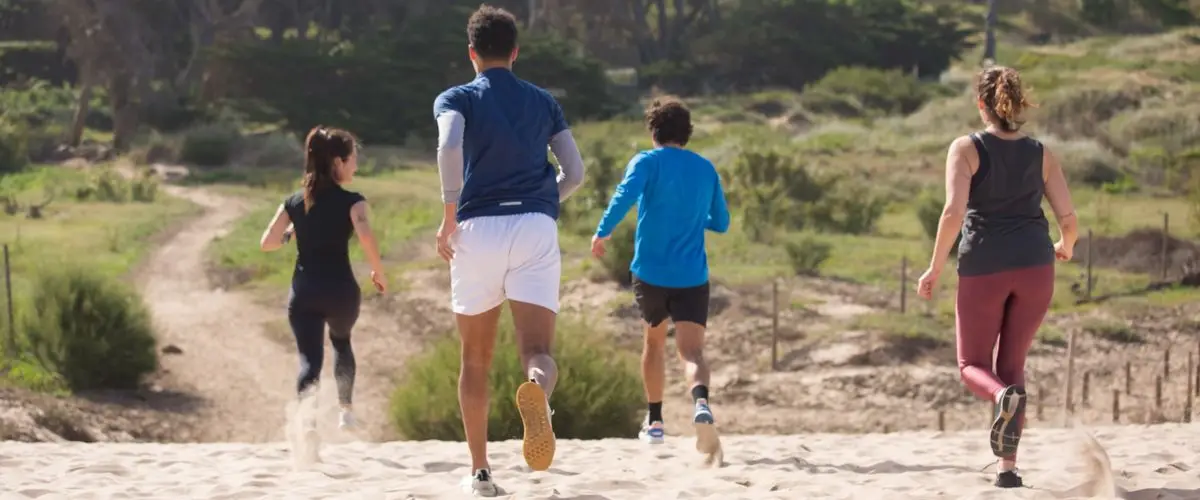
In a world where making genuine connections as an adult has become surprisingly difficult, sport remains one of the most natural and effective ways to meet people. No awkward small talk at networking events. No swiping. No forced conversations. Just shared effort, shared endorphins, and shared experiences that naturally evolve into real friendships.
Whether you have just moved to a new city, are looking to expand your social circle, or simply want to combine getting fit with meeting people, this guide covers the best sports for making friends in 2026 and exactly how to get started with each one. If running is your thing, start with the 7 science-backed benefits of group running (WHO).
Contents
Why sport is the best way to meet people
Meeting people as an adult is hard. Studies on adult friendship formation suggest that it takes roughly 50 hours of time spent together to move from acquaintance to casual friend, and about 200 hours to develop a close friendship. The challenge is finding contexts where you naturally spend that much time with the same people.
Sport solves this problem better than almost any other activity for several reasons:
- Built-in regularity: Sports groups meet on recurring schedules, which means you see the same faces week after week. This repeated contact is essential for friendship formation and happens automatically without anyone having to organize social events.
- Shared challenge creates bonding: Struggling through a difficult workout, finishing a race together, or simply surviving a rainy training session creates shared memories and mutual respect that accelerate the bonding process.
- Natural conversation: You always have something to talk about. The workout, the route, the race, the gear, the training plan. Sport provides an endless supply of conversation topics that remove the anxiety of blank-slate social situations.
- Endorphins and good vibes: Exercise triggers the release of endorphins, dopamine, and serotonin, which put you in a positive mood. You associate the people you exercise with positive feelings, which strengthens social bonds.
- Low pressure environment: Unlike a dinner party or a bar, a sports setting does not demand constant social performance. You can be quiet during hard efforts and chatty during easy ones. There is no expectation to be entertaining or witty. Just show up, participate, and let relationships develop at their own pace.
Running: the ultimate social sport
Why running is unmatched for meeting people
Running has the lowest barrier to entry of any sport. All you need is a pair of shoes and the willingness to move. There is no court to book, no equipment to buy, no rules to learn, and no minimum skill level to participate. This accessibility means running communities are massive, diverse, and easy to join (World Athletics).
What makes running particularly social is the conversational pace run. When runners go at an easy effort, they can talk comfortably for long periods. A 45-minute group run at conversational pace generates more genuine human interaction than most social events. You learn about people's lives, their challenges, their goals, and their humor in a natural, unforced way.
The global running community offers countless entry points:
- parkrun: Free weekly timed 5K events every Saturday in parks worldwide. No registration fee, all paces welcome. This is the single easiest way to start meeting runners in your area.
- Running clubs: Formal organizations with coached sessions, social events, and racing teams. Great for structured improvement and deep community involvement.
- App-based groups: Platforms like CorrerJuntos connect you with runners by location and pace level, making it easy to find compatible running partners.
- Running store groups: Most specialty running stores host free weekly group runs that attract a mix of beginners and experienced runners.
For a detailed guide on getting started with group running, read our article on how to join a running group. If safety is a concern, our safety guide for running with strangers covers everything you need to know.
Padel and tennis
The racket sports revolution
Padel has exploded in popularity across Europe and Latin America over the past five years, and it is rapidly gaining ground in the UK, US, and other markets. As of 2026, padel is one of the fastest-growing sports in the world, and its format makes it inherently social.
Find your running group
1,100+ runners already train together. Free on iOS.
Padel is always played in doubles. You need four people on the court, which means every session is a social event by default. The sport is also much easier to pick up than tennis, so beginners can enjoy competitive rallies within their first few sessions. This low skill floor combined with a high skill ceiling keeps people engaged long-term.
Tennis, while traditionally more individual, has seen a resurgence of social play through doubles leagues, cardio tennis classes, and social mixers at clubs. Many tennis facilities now organize group sessions specifically designed for meeting new playing partners.
How to get started with racket sports socially:
- Book group lessons: Most padel and tennis facilities offer group beginner courses where you learn alongside other newcomers. These are natural friendship incubators.
- Join a league or ladder: Structured competitions with rotating partners ensure you play with different people regularly.
- Use booking apps: Many padel courts have apps where players post available slots and look for partners. Show up as a fill-in and you will quickly build a network of playing partners.
- Attend social mixers: Clubs frequently organize events where players are randomly paired, play a few games, and then rotate. These are designed for meeting new people.
Hiking and trail running
Nature as the ultimate social backdrop
There is something about being in nature that strips away social pretense. Hiking and trail running groups bring people together in environments where conversation flows naturally, scenery provides constant talking points, and the shared challenge of the terrain creates camaraderie.
Group hikes are typically longer than road runs, lasting anywhere from two to six hours. This extended time together provides far more opportunity for deep conversation and genuine connection than a one-hour gym class. The pace is usually moderate enough for comfortable talking, and the natural beauty of the setting puts everyone in a positive, open mood.
Trail running offers a similar dynamic but with a fitness edge. Trail running groups tend to attract adventurous, outdoorsy people who share a love of exploration and physical challenge. Weekend trail runs often end with a group meal or drinks, extending the social time beyond the activity itself.
Where to find hiking and trail groups:
- Meetup.com: Hiking remains one of the most popular activity categories on Meetup, with active groups in virtually every city.
- Local mountaineering clubs: These organizations host regular group hikes ranging from easy walks to challenging mountain routes.
- Facebook groups: Search for hiking groups in your area. Many organize weekly or biweekly outings with varying difficulty levels.
- National park programs: Many parks offer guided group hikes led by rangers or volunteer leaders, which are free or low-cost.
Find Runners Near You
CorrerJuntos helps you find running partners and groups in your area. Start building your running community today.
Team sports
The classic community builders
Team sports like football, basketball, volleyball, and ultimate frisbee are purpose-built for social connection. You cannot play them alone, and success requires communication, trust, and coordination with your teammates. These dynamics create bonds quickly and naturally.
Adult recreational leagues have grown enormously in recent years. Most cities now have organized leagues for various skill levels, from complete beginners to competitive players. These leagues typically include a regular season of games, end-of-season playoffs, and often organized social events like post-game drinks at a sponsor bar.
The structure of team sports means you are committed to showing up at the same time each week with the same group of people. This regularity is exactly what friendship formation requires. After a season of playing together, celebrating wins, and commiserating losses, your teammates become genuine friends.
Getting started with team sports as an adult:
- Join as a free agent: Most adult leagues let individuals sign up and get placed on a team. This is ideal if you do not know anyone who plays.
- Start with social or recreational divisions: Skip the competitive leagues if you are a beginner. Social leagues prioritize fun and inclusion over winning.
- Try non-traditional sports: Ultimate frisbee, kickball, and dodgeball leagues tend to be especially welcoming to newcomers because many players are also new to the sport.
- Attend pick-up games: Many parks host regular pick-up sessions for basketball, football, and volleyball. These are informal, free, and a great way to test the waters.
Yoga and CrossFit
Community through intensity
Yoga studios and CrossFit boxes are two of the strongest community-building environments in fitness. Despite being very different activities, they share a key social ingredient: a small, consistent group of people who see each other regularly and share an intense physical experience.
CrossFit is famous for its community culture. The class format, where a small group performs the same workout together and encourages each other through the toughest moments, creates rapid bonding. Most CrossFit gyms organize social events, competitions, and team challenges that extend relationships beyond the workout hour. The on-ramp programs for beginners are designed to integrate newcomers smoothly into the community.
Yoga builds connection differently but just as effectively. Regular attendees at the same class time develop familiarity, and the mindful nature of yoga practice creates an atmosphere of openness and authenticity. Many studios host workshops, retreats, and social events that provide opportunities for deeper connection. Teacher training programs are also powerful community builders for dedicated practitioners.
Both yoga and CrossFit benefit from the small class format. When you see the same 15 to 20 people three or four times a week, friendships form almost inevitably. The shared physical struggle, whether it is holding a challenging yoga pose or pushing through the final round of a CrossFit workout, creates a unique mutual respect.
Cycling
Miles of conversation on two wheels
Group cycling shares many of running's social advantages but adds the element of covering greater distances and exploring new places together. A typical weekend group ride of 60 to 100 kilometers takes three to five hours, providing ample time for conversation and shared adventure.
Cycling clubs are some of the most established and well-organized sports communities. Most clubs run multiple group rides per week at different speeds and distances, from gentle social spins to fast-paced training rides. The cafe stop tradition, where the group pauses mid-ride for coffee and food, is a beloved ritual that provides dedicated social time away from the bikes.
The mutual aid aspect of cycling also builds strong bonds. Riders help each other with mechanical issues, share food and water, draft behind each other to reduce effort, and look out for hazards on the road. This culture of looking after your fellow riders creates a strong sense of belonging and mutual support.
How to find cycling groups:
- Local cycling clubs: Most cities have multiple clubs catering to different levels and styles of riding. Many offer introductory rides for newcomers.
- Strava clubs: Find active cycling groups in your area through Strava, where you can see ride schedules and member activity.
- Bike shops: Like running stores, local bike shops often host group rides and serve as community hubs for cyclists.
- Zwift and indoor cycling: Virtual cycling platforms have created online communities that often translate into real-world riding groups.
Taking the first step
The hardest part of meeting people through sport is not finding the right activity. It is walking through the door for the first time. Here is how to overcome the initial hesitation and actually show up.
Lower the stakes
You are not signing a contract. You are not committing to a team. You are attending a single session to see if you enjoy it. Frame it as an experiment with no strings attached. If you love it, great. If you do not, you never have to go back. This mental shift removes the pressure that keeps most people on their couch.
Go alone
Waiting until you have a friend to go with is a trap that delays action indefinitely. Going alone is actually better for meeting people because you are more approachable, more motivated to talk to strangers, and more open to the experience. Everyone in the room was a newcomer at some point, and most people are genuinely happy to welcome a new face.
Commit to three sessions
One session is not enough to judge a group or activity. The first time you will be nervous and awkward and that is completely normal. By the third session, you will know the routine, recognize faces, and have enough context to decide if this is for you. Give yourself the gift of three attempts before making a verdict.
Say yes to the post-activity hangout
The coffee after the run, the beers after the game, the smoothie after the workout. These informal gatherings are where acquaintances become friends. Even if you are tired, even if you have things to do, stay for the first few. The relationships you build during these moments are worth more than the 30 minutes they take.
Be consistent, not perfect
You do not need to attend every session or be the best athlete in the room. You just need to show up regularly. Consistency signals that you are part of the community, and other members will invest in getting to know someone they expect to see again next week. Two sessions per week for a month is enough to establish yourself as a regular in most groups.
Apps to find sports partners
Technology has made it easier than ever to find people who share your sports interests. Here are the most effective platforms for finding activity partners in 2026.
CorrerJuntos
Specifically designed for runners, CorrerJuntos connects you with running partners and groups in your area based on location, pace, and schedule. The app shows verified profiles, group history, and lets you browse upcoming runs nearby. It is the fastest way to go from solo runner to part of a running community. Available on iOS with Android launching in March 2026.
Strava
While primarily a fitness tracking app, Strava's club feature is an excellent way to find running and cycling groups. Search for clubs in your area, join ones that match your interests, and attend their scheduled group activities. Strava's social feed also helps you discover active athletes in your neighborhood.
Meetup
Meetup remains one of the broadest platforms for finding sports groups. Search for running, hiking, cycling, padel, yoga, or any other sport in your city. Groups range from small informal gatherings to large organized clubs. The event format makes it easy to see what is happening near you and RSVP with a single tap.
Facebook Groups
Local sports communities are extremely active on Facebook. Search for your city plus the sport you are interested in, and you will likely find multiple active groups. The advantage of Facebook is the ability to see group member profiles, read past discussions, and view photos from previous events before deciding to join.
Sport-specific apps
Many sports have their own dedicated platforms. Padel apps for booking courts and finding partners, cycling apps like Komoot for group rides, and CrossFit gym apps for connecting with local box communities. Explore the app store for your specific sport and you will likely find tools designed to connect you with local players.
Frequently asked questions
What is the best sport for meeting new people?
Running is often considered the best sport for meeting people because it requires minimal equipment, has a massive global community, allows natural conversation during easy-paced runs, and offers countless group options from parkrun to running clubs to app-based meetups. However, the best sport for you is the one you enjoy most, because consistency is what builds relationships.
How do I make friends at the gym or in a fitness class?
Attend the same class at the same time consistently so you become a familiar face. Arrive early and stay after to chat. Introduce yourself to the people who work out near you. Compliment someone's effort or ask for technique advice. Join any social events the gym organizes. The key is consistent attendance and small, genuine interactions that build over time.
I am shy. How can I meet people through sports?
Sports are ideal for shy people because the activity itself provides a natural focus and conversation topic. You do not need to make small talk from scratch. Start with larger group activities where you can observe before engaging. Running groups are especially good because conversation happens naturally at easy pace, and there is no pressure to talk constantly.
Are sports meetup apps safe for meeting strangers?
Dedicated sports apps like CorrerJuntos provide safety features such as verified profiles, group history, reviews, and public meeting points. Always take standard precautions: meet in public places, tell someone your plans, share your live location, and trust your instincts. The social context of a group sports activity provides natural safety. Read our full safety guide for more details.
Can I meet people through sports if I am a complete beginner?
Absolutely. Beginner-friendly groups exist for nearly every sport. parkrun welcomes everyone from first-time joggers to elite runners. Most running groups have multiple pace subgroups. Beginner yoga, CrossFit on-ramp programs, and learn-to-play leagues are specifically designed for newcomers. Being a beginner can actually be an advantage because people love to share their knowledge and welcome new members.
Start meeting runners today
Running is the easiest way to meet active people near you. CorrerJuntos matches you by pace and location.
Join 1,100+ runners