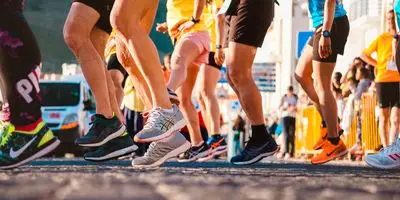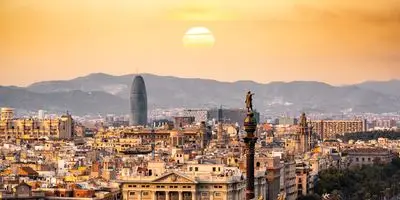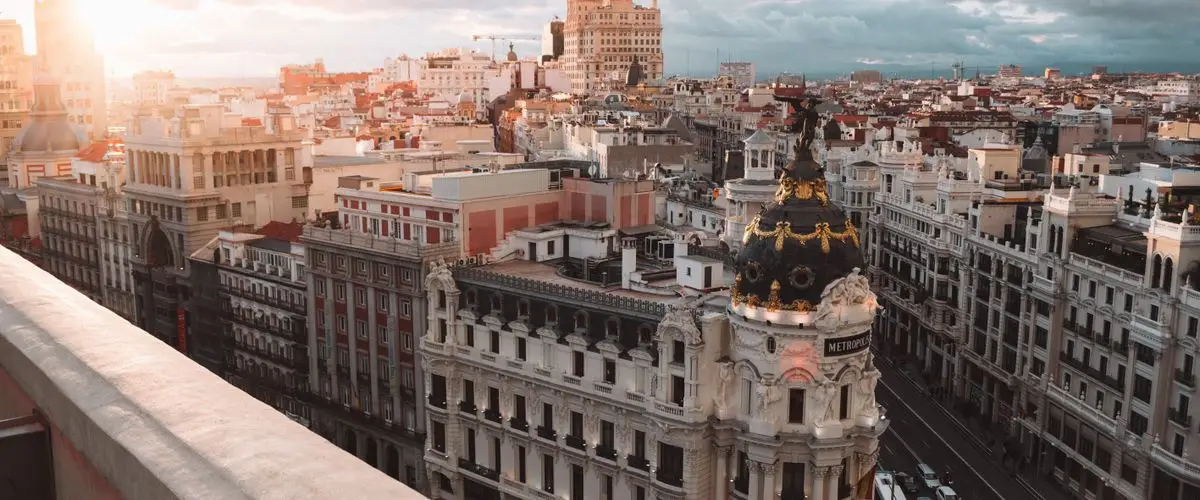
The EDP Rock'n'Roll Madrid Marathon is more than just a race — it is a moving celebration through the most iconic streets of Spain's capital. Every last Sunday in April, over 35,000 runners across all distances take over the Paseo de la Castellana, pass the Puerta de Alcalá, run down Gran Vía, and cruise past the Royal Palace, all accompanied by more than 20 live bands performing along the course.
Whether this is your first marathon or you are looking for a completely different experience from the flat coastal courses, this guide covers everything you need to know: registration details, a thorough course analysis, training specifics for Madrid's altitude and hills, and the best race day strategies. Madrid has a character and energy that make this race truly unforgettable.
Why run the Madrid Marathon?
Madrid is not the flattest or fastest marathon in Spain, but it offers something few marathons in the world can match: you run through the heart of one of Europe's greatest capitals while the city turns into a stage for live music and celebration.
The Madrid Marathon holds World Athletics Gold Label status, ensuring top-tier organization, international elite runners, and world-class support. But what truly sets this race apart is its place in the Rock'n'Roll Running Series, which transforms the course into a unique experience where sport and music come together.
Along the 42 kilometers, you will encounter more than 20 stages with live bands playing rock, pop, jazz, electronic, and Latin music. Every few kilometers, just when fatigue starts creeping in, another band appears to give you that extra push. Many runners say the live music was what got them through the toughest kilometers of the race.
The course itself is a sightseeing tour of Madrid's most iconic landmarks: you start on the Paseo de la Castellana, pass the Cibeles Fountain, cross the Puerta de Alcalá, skirt Retiro Park, run down Gran Vía, reach Puerta del Sol, see the Royal Palace, follow the Manzanares River, and finish on the Paseo de Recoletos. It is essentially a premium city tour — at running pace.
Then there is the atmosphere. Madrid is a city that lives outdoors, and race day is no exception. Thousands of spectators line the streets to cheer runners on, with particularly intense support around Gran Vía, Sol, and Cibeles. The energy from the Madrid crowd is infectious and makes the kilometers pass much faster.
If you want to explore the best areas for training runs in the city, check out our guide to the best running routes in Madrid, with options for long runs and tempo workouts.
Key facts about the Madrid Marathon 2026
| Detail | Information |
|---|---|
| Official name | EDP Rock'n'Roll Madrid Marathon |
| Date | Sunday, April 26, 2026 |
| Distances | Marathon (42K), Half Marathon (21K), 10K |
| Start | Paseo de la Castellana |
| Finish | Paseo de Recoletos |
| Total participants | ~35,000 (all distances) |
| Marathon runners | ~15,000 |
| Elevation gain | ~200 m (city altitude: 650 m / 2,130 ft) |
| Average temperature | 10-20 °C (50-68 °F) in April |
| Label | World Athletics Gold Label |
| Official website | maratonmadrid.com |
Madrid Marathon course
The Madrid Marathon course is one of the most spectacular in Europe from a monumental standpoint, though also one of the more demanding if you compare it to coastal marathons like Valencia or Barcelona. Madrid sits at 650 meters (2,130 feet) above sea level and the course has approximately 200 meters of cumulative elevation gain, meaning there are hills you will need to manage intelligently.
The race starts on the Paseo de la Castellana, one of the widest and most iconic avenues in the city. The opening kilometers are fast and exhilarating, with the pack of thousands advancing past modern office towers and skyscrapers near the Santiago Bernabéu Stadium.
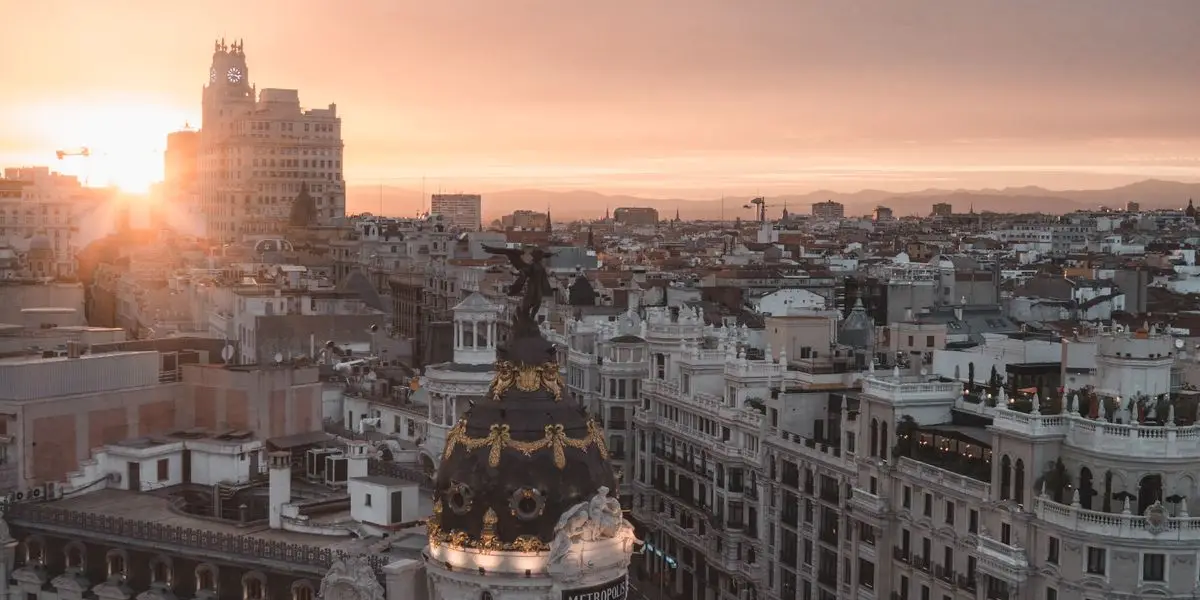
As you progress, the course takes you through the city's most emblematic landmarks. The Cibeles Fountain appears majestically, marking the transition into the historic center. The Puerta de Alcalá, grand and imposing, greets you before you skirt Retiro Park, where the shade of ancient trees offers a brief respite.
Gran Vía is arguably the most thrilling stretch of the course. Madrid's most famous avenue fills with spectators cheering with an intensity that is hard to describe. The theater marquees, luminous billboards, and crowd energy make this stretch fly by, even when your legs are starting to feel heavy.
After that, you reach Puerta del Sol, the geographical center of Spain, and continue toward the Royal Palace and the Manzanares River, where Madrid Río offers a renewed urban landscape with gardens and modern bridges. The final kilometers bring you back toward Paseo de Recoletos, where the finish line awaits.
Registration and pricing
Registration for the EDP Rock'n'Roll Madrid Marathon is done through the official website: maratonmadrid.com. With three distances and 35,000 total participants, demand is high and early registration is recommended.
Pricing follows a tiered structure — the earlier you register, the cheaper it is. Full marathon fees typically range from 50 to 100 euros depending on the registration period. The half marathon and 10K have lower fees and are great options if you are not ready for the full distance or simply want to experience the Rock'n'Roll atmosphere at a more accessible distance.
The runner's expo
In the days before the race, the Runner's Expo takes place at the IFEMA Madrid convention center, one of the largest in Europe. Visiting the expo is mandatory as it is where you pick up your bib number, timing chip, and runner's bag.
The Rock'n'Roll Expo has a special vibe: alongside the usual running shoe, nutrition, and tech brand booths, there are live music zones, interactive activities, and a festive atmosphere that gives you a taste of what race day will be like.
- Bib pickup: Must be collected in person at the Expo. Bibs are not mailed and cannot be collected on race day.
- Documentation: Bring your passport or national ID and registration confirmation.
- Runner's bag: Includes official Rock'n'Roll race shirt, timing chip, runner's guide, and sponsor samples.
- Three distances: When registering, you choose between marathon (42K), half marathon (21K), or 10K. Each distance has its own start and partial course.
How to train for the Madrid Marathon
Training for the Madrid Marathon requires accounting for two specific factors that differentiate it from other Spanish marathons: the 650-meter altitude and the hills along the course. While it is not a mountain marathon by any means, these factors mean your preparation should differ slightly from training for a flat, sea-level course.
You need a structured plan of 16 to 20 weeks (4-5 months) of specific training. With the race on April 26, you should start your plan between December and January.
Marathon training structure
A marathon training plan typically includes 4-5 training days per week, combining different session types:
- Easy runs (2-3 days): Comfortable-pace runs where you can maintain a conversation. These form the foundation of your training and make up the bulk of your weekly mileage — 40 to 70-minute sessions building your aerobic base.
- Weekly long run (1 day): The cornerstone of any marathon preparation. Start with 16-18 km and progress gradually to 32-35 km during peak weeks. This run is done at easy or slightly faster-than-easy pace.
- Specific tempo work (1-2 days): Intervals, fartlek, or tempo runs at marathon pace or slightly faster. For Madrid, it is especially important to include hill repeats to prepare for the course's climbs. Check our zone training guide to structure these sessions.
- Rest or cross-training (1-2 days): No running, or low-impact activities like swimming, cycling, or yoga. Recovery is just as important as the training itself.
Madrid-specific preparation: hills and altitude
If you live in a coastal or flat city, incorporating hill work into your training is essential. You do not need mountains — just find a 200-400 meter incline and include hill repeats 1-2 times per week. This will strengthen the quads and glutes, which are the muscles that suffer most on the course's climbs.
Regarding altitude, 650 meters is not high enough to cause serious acclimatization issues, but you may notice a slight difference in performance if you are coming from sea level. The air is marginally less dense, meaning each breath delivers slightly less oxygen. If possible, arrive in Madrid 1-2 days before the race to adjust.
If you have not yet run a half marathon, we recommend completing one as part of your preparation. Our half marathon training plan is a solid starting point before tackling the full 42 km. For a complete marathon plan, check out our 16-week sub-4-hour marathon plan.
Injury prevention
The high mileage of marathon training increases injury risk if you do not take precautions. Include strength exercises specific to runners (squats, lunges, core work) at least twice a week, stretch after every session, and listen to your body. If you feel persistent pain, reduce training load before it becomes an injury that sidelines you. Check our complete guide to preventing running injuries.
Train with others for the marathon
Many runners prepare for this race with training partners to stay motivated. On CorrerJuntos you can find runners at your pace.
Race day tips
You have trained for months and the big day has arrived. What you do in the hours before the start and during the 42 km can make the difference between an unforgettable experience and unnecessary suffering. Here are the most important tips for race day at the Madrid Marathon.
Manage the temperature
April in Madrid is unpredictable. You might get a perfect 14°C day with gentle sun, or you could face 20°C and strong sunshine. It can also be chilly early on (8-10°C at the start) and warm by midday. The safest strategy is to dress in layers: a technical singlet as your base and an old long-sleeve shirt you can discard in the first few kilometers if it warms up. Check our guide on what to wear running by temperature.
Nothing new on race day
This is the golden rule of marathon running: shoes, socks, shirt, shorts, gels, sports drink — everything you wear or consume on race day must have been tested in training. If you need guidance on shoes, read our carbon plate running shoes guide for fast racing, or our guide on how to choose running shoes.
Breakfast 3 hours before the start
Your pre-marathon breakfast should be high in carbohydrates, low in fiber, and low in fat: toast with jam and honey, instant oatmeal with banana, or white rice with honey. The goal is 100-150 grams of carbohydrates to top off your liver glycogen stores. For specific ideas, check our article on what to eat before running.
Gels and in-race nutrition
Even with proper carb loading beforehand, you will need to take in carbohydrates during the race. The current recommendation is 60-90 grams of carbs per hour, which translates to one energy gel every 30-45 minutes. Take each gel with some water to aid absorption. For a detailed strategy, check our race day nutrition guide.
Start conservatively (especially in Madrid)
Going out too fast is the most common marathon mistake. In Madrid, this is even more dangerous than in a flat marathon, because the hills in the second half of the course punish you far more if you have burned excess energy in the opening kilometers. Start 10-15 seconds per kilometer slower than your target pace and let your body warm up gradually. If you feel strong after km 25, then you can push the pace.
Enjoy the live music
One of the great advantages of the Rock'n'Roll format is that you do not need headphones for music — the music comes to you. Each live band stage is a chance to smile, raise your arms, and let the energy carry you. Many experienced runners recommend skipping headphones for this race to fully enjoy the Rock'n'Roll experience and the crowd support.
Accommodation and travel
Madrid is one of the best-connected capitals in Europe, with two airports, high-speed rail connections, and an extensive metro network. Organizing your logistics for the Madrid Marathon is straightforward, but planning ahead always helps.
Book your hotel early
The last weekend of April often coincides with good weather and holiday periods, which increases hotel demand. Add 35,000 runners and their companions, and availability drops fast. Book your accommodation at least 2-3 months before the race for the best options and prices.
Recommended areas to stay
The best neighborhoods for marathon runners in Madrid:
- Paseo de la Castellana / Chamberí: Close to the start line. Ideal if you want to minimize your morning commute and walk to the starting corrals.
- City center (Sol / Gran Vía): Central location with many accommodation options. Great metro connections to the Castellana and close to the liveliest sections of the course.
- Retiro / Salamanca: Quiet and elegant neighborhoods, close to the Recoletos finish line. Perfect for walking back to your hotel after the race.
- Malasaña / Chueca: Trendy neighborhoods with excellent restaurants and more affordable prices. 10-15 minutes by metro to the start.
Getting to Madrid
Madrid is extremely well connected for international travelers:
- By air: Adolfo Suárez Madrid-Barajas Airport is Spain's largest, with domestic and international flights. From the airport to the city center, there is a direct metro line (Line 8), express buses, and taxis (fixed fare of 30 euros to the center).
- By high-speed train (AVE): Atocha station connects Madrid with Barcelona (2h 30min), Valencia (1h 35min), Seville (2h 20min), Málaga (2h 30min), and many other cities.
- Metro: Madrid's metro network is extensive and efficient. On race day, check which lines are operational as some stations near the course may be temporarily closed.
- By car: Madrid sits at the center of Spain's radial motorway network. Parking can be difficult on race day, so public transport is recommended.
After the race
Madrid is a phenomenal city to enjoy after your marathon. Spanish cuisine is world-class, and your body will need to refuel: think traditional cocido stew, tapas in the La Latina neighborhood, or the classic calamari sandwich in Plaza Mayor. You can also take advantage of your time to visit Retiro Park, the Prado Museum, the Reina Sofía, or simply enjoy Madrid's legendary nightlife — if your legs cooperate.
If you want to connect with other runners after the race to share stories, look for running groups in Madrid where post-marathon celebrations are always happening.
Training with others for the Madrid Marathon
Preparing for a marathon is an enormous challenge that tests not just your fitness, but also your discipline, motivation, and mental resilience. It is 4-5 months of consistent training, with early mornings, long runs through winter cold or spring heat, days when your legs feel like lead, and others when you would rather stay on the couch. And that is exactly where training with others makes a massive difference.
When you train with people who are also preparing for a marathon, the dynamic changes completely. On days when you lack motivation, they pull you out the door. Long runs through Casa de Campo or Madrid Río become far more bearable when you have someone to talk to. Pacing becomes easier when you have someone alongside you with a similar goal. And the motivation feeds on itself: watching your training partners progress week after week pushes you to give your best.
Training with others also gives you something impossible to get alone: collective experience. There is always someone who has already run the Madrid Marathon, who knows where the toughest hills are, who has a trick for managing the altitude, or who has been through the same injury you are dealing with and knows how to overcome it.
Whether you live in Madrid or are coming from elsewhere, on CorrerJuntos you can find runners who are also preparing for this race. You just need to search and connect.
Training for the Madrid Marathon?
Find runners who are also training for this race. Join group runs, discover routes, and train together. Prepare the race of your life with fellow runners who share your goal.
Find training partners on CorrerJuntosFrequently asked questions
When is the Madrid Marathon 2026?
The EDP Rock'n'Roll Madrid Marathon 2026 takes place on Sunday, April 26, 2026. The start is at the Paseo de la Castellana, with the finish on the Paseo de Recoletos. It is one of the most important dates on the Spanish running calendar and holds World Athletics Gold Label status. The race is part of the international Rock'n'Roll Running Series, giving it a unique festive character with live music throughout the course.
What distances are available at the Madrid Marathon?
The EDP Rock'n'Roll Madrid Marathon offers three distances: full marathon (42.195 km), half marathon (21.097 km), and a 10K race. Around 35,000 runners participate across all distances, with approximately 15,000 running the full marathon. All three distances share parts of the course and enjoy the same Rock'n'Roll experience with live bands performing throughout.
Is the Madrid Marathon course hilly?
The Madrid Marathon course is more challenging than coastal marathons like Valencia or Barcelona. Madrid sits at 650 meters (2,130 feet) above sea level and the course has approximately 200 meters (650 feet) of cumulative elevation gain. It is not a flat marathon — there are some hills that require careful pacing strategy. However, the stunning views of the city's iconic landmarks and the constant support from the crowd and live bands more than compensate for the extra difficulty.
How much does the Madrid Marathon registration cost?
Registration fees for the Madrid Marathon vary by period. Full marathon prices typically range from 50 to 100 euros, with early-bird pricing offering the best value. The half marathon and 10K have lower fees. Check the official website maratonmadrid.com for current pricing and registration windows.
What makes the Rock'n'Roll format special?
The Rock'n'Roll format means the course features over 20 live bands performing along the route. Every few kilometers, runners pass a stage with live music — rock, pop, jazz, electronic, and Latin genres — that transforms the race into a moving party. Many runners say the live music is what helped them maintain their motivation through the most difficult kilometers of the race.
What landmarks will I see during the Madrid Marathon?
The Madrid Marathon course is a tour of the city's most iconic landmarks: the Paseo de la Castellana, the Cibeles Fountain, the Puerta de Alcalá, Retiro Park, Gran Vía, Puerta del Sol, the Royal Palace, the Manzanares River, and the Santiago Bernabéu Stadium area. It is widely considered one of the most scenic marathon courses in Europe and a unique way to experience Madrid.
How many weeks do I need to train for the Madrid Marathon?
A safe marathon preparation requires 16 to 20 weeks (4-5 months) of structured training. For a late April marathon, you should start your plan between December and January. For Madrid specifically, it is important to include hill training to prepare for the elevation changes on the course. Ideally, you should have at least one year of running experience and have completed a half marathon first. Check our half marathon training plan as a stepping stone.
Running tips and training plans in your inbox
Plans, strategies and tips to prepare for your next marathon. No spam.
Join 1,100+ runners