Contents
If you could design the perfect marathon from scratch, it would look a lot like Valencia. A dead-flat course at sea level, mild December weather, a world-class organization with a World Athletics Platinum Label, and a finish line at one of the most stunning architectural complexes on the planet. It is no accident that the Valencia Marathon Trinidad Alfonso has become the race where personal bests go to happen.
Whether you are chasing a sub-3, attempting your first 42.195 km, or simply looking for a brilliant destination marathon in Europe, Valencia belongs at the top of your shortlist. In this guide, we break down everything you need to know about the 2026 edition: the course, how to register, how to train, what to expect on race day, and practical travel advice for getting there and making the most of your trip.
Why the Valencia Marathon Is One of the World's Best
The Valencia Marathon Trinidad Alfonso has risen meteorically through the ranks of international marathons over the past decade. What was once a mid-tier European race is now mentioned in the same breath as Berlin, London and Chicago. Here is why.
A record-breaking course
Valencia is officially the 4th fastest marathon course in the world. The course record stands at a staggering 2:01:48, set by Ethiopian runner Sisay Lemma in December 2023. The women's record is equally impressive: 2:14:58, also set in 2023 by Letesenbet Gidey. These are not anomalies. Year after year, Valencia produces a disproportionate number of fast times, national records and personal bests across all ability levels.
Completely flat, completely at sea level
The entire course has less than 30 metres of total elevation gain across 42 km. There are no hills, no bridges, no underpasses to contend with. You run on wide, smooth avenues at sea level from start to finish. For runners who have trained on hilly terrain, arriving in Valencia feels like being given a cheat code. Your legs simply have less work to do, and that translates directly into a faster time.
Perfect weather
Early December in Valencia offers temperatures between 8 and 16 degrees Celsius with low humidity and minimal wind. Sports scientists consider the physiological sweet spot for marathon running to be around 10-12 degrees, and Valencia hits that window almost every year. Compare that to spring marathons where temperatures can spike unexpectedly, or autumn races where rain and wind can wreak havoc on pacing.
World-class organization
The race holds the World Athletics Platinum Label, the highest certification a marathon can receive. That means elite fields, pace groups for every target time, aid stations every 5 km stocked with water, isotonic drinks and energy gels, precise timing, and a seamless logistics operation from bib collection to the finish line. Over 30,000 runners cross the finish line each year, and the event is run with the precision you would expect from a major international marathon.
An unforgettable finish
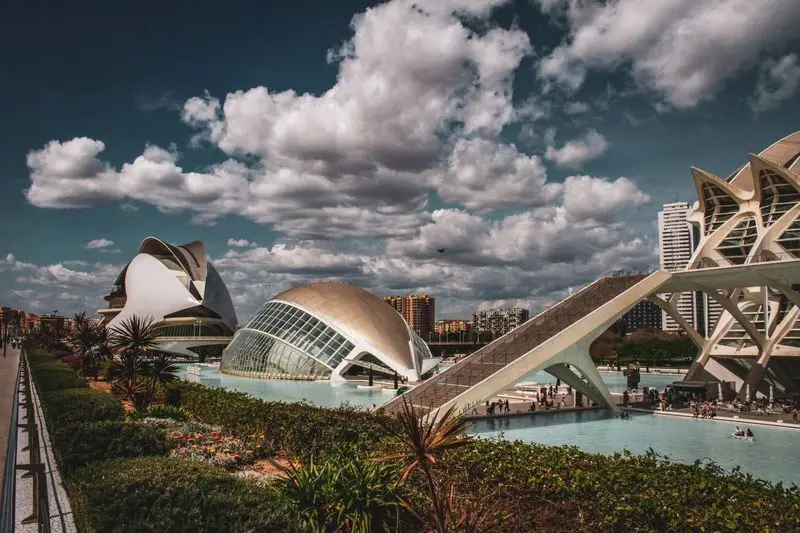
The final stretch takes you through the Turia Gardens and into the City of Arts and Sciences, Santiago Calatrava's futuristic architectural masterpiece. You cross the finish line surrounded by gleaming white structures, reflective pools and tens of thousands of cheering spectators. It is, without exaggeration, one of the most visually spectacular marathon finishes anywhere in the world.
Key Facts: Valencia Marathon 2026
| Detail | Information |
|---|---|
| Official name | Maraton Valencia Trinidad Alfonso 2026 |
| Edition | 46th |
| Date | Sunday, December 6, 2026 |
| Start time | 8:30 AM (local time) |
| Start location | Placa de la Marato, city center |
| Finish location | City of Arts and Sciences |
| Distance | 42.195 km (IAAF certified) |
| Elevation gain | Less than 30 m total |
| Participants | 30,000+ finishers |
| Men's course record | 2:01:48 (Sisay Lemma, 2023) |
| Women's course record | 2:14:58 (Letesenbet Gidey, 2023) |
| Label | World Athletics Platinum Label |
| Time limit | 5 hours 30 minutes |
| Website | valenciaciudaddelrunning.com |
The Valencia Marathon Course
Understanding the course is essential for pacing your race correctly. The Valencia Marathon uses a point-to-point start with a loop design that brings you through the heart of the city before finishing at the City of Arts and Sciences.
Start: Placa de la Marato
The race begins at Placa de la Marato, a wide square in the city center with plenty of room for the staggered wave starts. Corrals are organized by estimated finish time, and pace groups are available for all major targets from sub-2:45 through to 5:00. The atmosphere at the start is electric, with music, announcements in multiple languages and the buzz of 30,000 nervous, excited runners.
The route: wide avenues, zero hills
From the start, you head south through the Ensanche district on broad, flat avenues. The course then loops through several of Valencia's most iconic neighborhoods, including the historic Ciutat Vella (old town), the vibrant Ruzafa district and the port area. The roads are wide enough that crowding is rarely an issue, even in the middle of the pack. You will pass through residential areas with enthusiastic local crowds, commercial districts and green spaces along the old Turia riverbed.
Aid stations are positioned every 5 km, with water and isotonic drinks available at each. Gel stations are typically at km 20, 30 and 37. Sponge stations help with cooling if the sun comes out. The course is well marked with kilometre signs and electronic timing mats at 5 km intervals.
The final kilometres
The last 5 km run along the Turia Gardens, the 9 km park built in the old riverbed that cuts through the city. This is where the crowd support reaches fever pitch. The final straight takes you past the Oceanografic, the Hemispheric and the Palau de les Arts before you cross the finish line at the Museo de las Ciencias. It is a finish that rewards every single kilometre of suffering that came before it.
Registration and Entry
The Valencia Marathon is popular, and entries are limited. Here is what you need to know about signing up.
How to register
Registration opens on the official website at valenciaciudaddelrunning.com, typically in the spring of the race year. The entry fee varies depending on when you register: early bird prices are significantly cheaper than late registration. Expect to pay between 60 and 95 euros depending on your registration window.
Does it sell out?
Yes. The Valencia Marathon regularly sells out months in advance, especially after the race gained its Platinum Label and global reputation for fast times. If you are serious about running in December 2026, register as soon as entries open. Waiting until summer could mean missing out entirely.
The Expo 42K
Bib collection takes place at the Expo 42K, held at Feria Valencia in the days before the race (usually Thursday through Saturday). The expo is one of the largest running expos in Europe, with hundreds of brands, free samples, talks, and the chance to pick up any last-minute gear. You must collect your bib in person with valid ID, and you cannot collect on race day. Plan your arrival accordingly.
What is included
Your entry fee includes your race bib with timing chip, a technical T-shirt, access to the Expo 42K, bag drop service at the start and finish, post-race refreshments and a finisher medal. Premium services such as VIP hospitality and dedicated bag drop are available as paid upgrades.
How to Train for the Valencia Marathon
A fast course means nothing if your body is not ready for 42.195 km. Here is how to structure your preparation.
Training timeline
For a December 6 marathon, your specific marathon training block should begin no later than mid-August if you are following a 16-week plan, or late July for a 20-week plan. Before that, you should have a solid base of 40-50 km per week, built over several months of consistent running. If you are starting from a lower base, check our half marathon training plan as a stepping stone.
Weekly structure
A typical marathon training week includes 4-5 running days:
- Long run (Sunday): The cornerstone of marathon training. Build from 24 km up to 32-35 km over the training block. Run these at 30-60 seconds per km slower than your target marathon pace.
- Tempo run (Wednesday): 8-12 km at or slightly faster than marathon pace. This teaches your body to sustain race effort for extended periods.
- Interval session (Tuesday or Thursday): Shorter, faster efforts (e.g. 6 x 1 km at 10K pace) to build aerobic capacity and running economy. Read more about zone-based training for runners.
- Easy runs (remaining days): Recovery runs at a comfortable, conversational pace. These build mileage without adding fatigue.
- Rest day: At least one full rest day per week. Your body adapts during recovery, not during the run itself.
The long run progression
Your longest run should peak 3-4 weeks before race day (around mid-November for a December race), then taper down to allow your body to recover and arrive at the start line fresh. A typical long run progression might look like: 24 km, 26 km, 28 km, 24 km (recovery week), 30 km, 32 km, 34 km, 26 km (taper), 20 km (taper), race day.
Marathon-specific workouts
In the final 8 weeks, include sessions that simulate race conditions. Marathon-pace runs of 16-20 km teach your body and mind what race effort feels like. Progressive long runs where the last 8-10 km are at marathon pace are particularly effective. These sessions build confidence and teach you to run fast on tired legs.
Train together, race stronger
Many runners preparing for the Valencia Marathon train with partners to stay motivated through the long weeks of preparation. On CorrerJuntos you can find runners at your pace in your city.
Find training partnersRace Day Tips
You have done the training. Now it is time to execute. These tips will help you get the most out of your Valencia Marathon experience.
Nothing new on race day
This is the golden rule of marathon running. Do not wear new shoes, try a new gel brand, eat an unfamiliar breakfast, or use new clothing. Everything you use on race day should have been tested multiple times during training. Your shoes should have at least 50-80 km on them. Your gels should be the exact ones you have practiced with. If you need carbon plate racing shoes, break them in during your tempo runs in the weeks before the race.
Breakfast
Eat your pre-race breakfast 3 hours before the gun (around 5:30 AM for an 8:30 start). Stick to easily digestible carbohydrates: white toast with jam, a banana, oatmeal with honey, or a bagel with peanut butter. Avoid high-fibre foods, dairy and anything fatty. Sip water or a sports drink, but do not overhydrate. For a detailed pre-race nutrition strategy, see our guide on what to eat before running.
Hydration strategy
Start drinking at the first aid station (km 5), not when you feel thirsty. Take small sips at every station rather than large gulps at a few. In December temperatures, you will lose less fluid through sweat than in a summer race, but dehydration while running is still a performance killer. Alternate between water and isotonic drinks. If you carry your own bottles, our guide to running hydration covers everything you need to know.
Fueling during the race
Take your first energy gel at around km 8-10, before you feel any fatigue, and continue every 30-45 minutes (roughly every 7-8 km) throughout the race. That means carrying 4-6 gels for a full marathon. Always take gels with water, never with isotonic drinks, to aid absorption. Our best energy gels guide helps you choose the right ones and our race day nutrition plan gives you a kilometre-by-kilometre fueling strategy.
Pacing
The single biggest mistake in any marathon is starting too fast. In Valencia, the flat course and the excitement of 30,000 runners around you make this especially tempting. Run the first 5 km 5-10 seconds per km slower than your target pace. Settle into your goal pace from km 5 to km 30. If you still feel strong at km 30, that is when you can start pushing. The best marathons are run with a negative split, where the second half is faster than the first.
Carb loading
In the three days before the race, increase your carbohydrate intake to 8-12 grams per kg of body weight per day. This maximises your muscle glycogen stores and gives you extra fuel for the final kilometres. White rice, pasta, bread and potatoes are your best friends. For a complete protocol, read our marathon carb loading guide.
Travel and Accommodation
Valencia is one of the most accessible and enjoyable marathon destinations in Europe. Here is how to plan your trip.
Getting to Valencia
Valencia has an international airport (VLC) just 8 km from the city center, with direct flights from most major European cities including London, Paris, Amsterdam, Berlin, Rome and many more. Budget airlines like Ryanair, easyJet and Vueling serve the route frequently, meaning flights can be very affordable if you book early.
If you are already in Spain, the high-speed AVE train is an excellent option. Madrid to Valencia takes 1 hour 40 minutes, and Barcelona to Valencia takes about 3 hours. Trains arrive at Estacio del Nord, right in the city center.
Where to stay
Book your accommodation early. December is not peak tourist season in Valencia, but the marathon brings tens of thousands of visitors and hotels fill up fast, especially those near the start and finish. The best areas to stay are:
- City center (Ciutat Vella / Ensanche): Close to the start line, surrounded by restaurants and shops. Easy access to public transport.
- Near City of Arts and Sciences: Close to the finish line. Convenient if you want to minimize post-race walking.
- Ruzafa: Valencia's trendiest neighborhood, full of cafes, restaurants and independent shops. A 15-minute walk from the start.
- Playa de la Malvarrosa: Beachfront location. Slightly further from the action, but good for a relaxing pre-race stay.
Getting around
Valencia is a compact, walkable city with an excellent metro and bus system. On race day, runners with their bib number can use public transport for free, which makes getting to the start line straightforward. The city also has one of the best public bike-sharing systems in Europe (Valenbisi), perfect for getting around in the days before and after the race.
What to do beyond the marathon
Give yourself at least an extra day in Valencia after the race. The city has world-class cuisine (paella was invented here), stunning architecture, beautiful beaches and the largest aquarium in Europe at the Oceanografic. The Central Market is one of the biggest fresh food markets in Europe and worth a visit alone. For runners who want to explore the city on foot, check our guide to the best running routes in Valencia.
Find Training Partners for Valencia
Training for a marathon is a journey that spans months of dedication, early mornings and relentless consistency. Doing it alone is possible, but doing it with others is better in almost every way.
Running with a training partner or group keeps you accountable on the days when motivation is low. It gives you someone to share the long runs with, someone to pace you during tempo sessions, and someone who understands exactly what you are going through during the hardest weeks of the training block. Research consistently shows that runners who train with others are more likely to complete their training plans and achieve their race goals.
If you are preparing for the Valencia Marathon and looking for like-minded runners in your area, the CorrerJuntos app connects you with runners who share your pace, schedule and goals. Whether you are in Madrid, Barcelona, London or anywhere else, you can find someone training for the same race and arrange to run together.
Find runners training for Valencia
On CorrerJuntos you can find training partners in your city who are also preparing for the Valencia Marathon. Run together, stay motivated and arrive at the start line ready.
Find training partnersFrequently Asked Questions
When is the Valencia Marathon 2026?
The Valencia Marathon Trinidad Alfonso 2026 takes place on Sunday, December 6, 2026. The race starts at 8:30 AM local time from Placa de la Marato in the city center. The marathon is traditionally held on the first Sunday of December each year.
Is the Valencia Marathon course flat?
Yes, the Valencia Marathon is one of the flattest major marathon courses in the world. The entire route is at sea level with virtually no elevation change. The total elevation gain across the full 42.195 km is less than 30 metres. This is one of the main reasons it has produced so many fast times and personal bests, and why it is ranked as the 4th fastest marathon course globally.
What is the Valencia Marathon course record?
The men's course record is 2:01:48, set by Sisay Lemma of Ethiopia in December 2023. The women's course record is 2:14:58, set by Letesenbet Gidey of Ethiopia in 2023. Valencia has consistently produced some of the fastest marathon times in the world, second only to Berlin, London and Chicago.
Is Valencia a good marathon for first-timers?
Valencia is an excellent choice for a first marathon. The completely flat, sea-level course makes it far more forgiving than hilly alternatives. The weather in early December is mild (8-16 degrees Celsius), which is close to ideal for distance running. The crowd support is extraordinary, with over 100,000 spectators lining the streets, and the finish at the City of Arts and Sciences is unforgettable.
How do I get to Valencia?
Valencia has its own international airport (VLC) located just 8 km from the city center, with direct flights from most major European cities. You can also reach Valencia by high-speed AVE train from Madrid (1 hour 40 minutes) or Barcelona (3 hours). The city center is compact and walkable, and public transport is free on race day for runners with their bib number.
How many weeks should I train for a marathon?
For a full marathon, you should allow a minimum of 16 weeks of structured training, ideally 20 weeks. This assumes you already have a solid running base of at least 30-40 km per week. Training typically involves 4-5 running days per week, including one long run, one tempo or threshold session and one interval session, with the remaining days for easy recovery runs.
What is the weather like in Valencia in December?
December in Valencia offers some of the best marathon weather you could ask for. Average temperatures range from 8 to 16 degrees Celsius (46-61 degrees Fahrenheit). Humidity is moderate and rain is uncommon. At the 8:30 AM start, expect temperatures around 8-10 degrees, warming to 14-16 degrees by late morning. These conditions are close to the physiological ideal for marathon running.