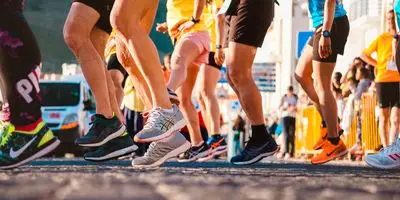
The Zurich Seville Marathon has established itself as one of the must-run races on the European marathon calendar. Every February, around 12,000 runners from across the globe descend on the Andalusian capital to race 42.195 kilometres on a course with one killer argument: it is arguably the flattest big-city marathon in all of Europe, with a total elevation gain of just 10 metres. If you are chasing a personal best, Seville is your race.
But the Seville Marathon is more than a fast course. It is an experience that blends sport with the historic and cultural heritage of one of the most beautiful cities in the world. Running past the Cathedral, threading through the Plaza de España, crossing the Triana neighbourhood and following the banks of the Guadalquivir turns the 42 km into a memory that stays with you long after the finish line. If you are considering running the Seville Marathon 2026, this guide covers everything you need to know.
Why the Seville Marathon is special
Seville has grown steadily on the international marathon scene, earning the World Athletics Gold Label — a distinction reserved for races with elite-level organisation, competitive fields and exceptional quality standards. But what truly sets the Seville Marathon apart from the rest is its elevation profile: it is essentially a flat line at sea level.
With a total elevation gain of just 10 metres across the entire course, the Seville Marathon eliminates the hill factor entirely. There are no climbs to break your rhythm at kilometre 25, no descents to hammer your quads before the wall hits. The course is so flat that you can programme your GPS running watch guide with a steady pace from kilometre 1 to kilometre 42 and — if your fitness is right — hold it without significant variation. For PB hunters, this is simply perfect.
The timing works in the runner's favour too. February in Seville offers ideal marathon conditions: temperatures between 8 and 16 degrees Celsius (46-61 F), without the stifling summer heat Seville is famous for or the bitter cold of northern European winters. The early-morning start sits at a cool 8-10 degrees, and the temperature rises gently during the race without becoming a problem.
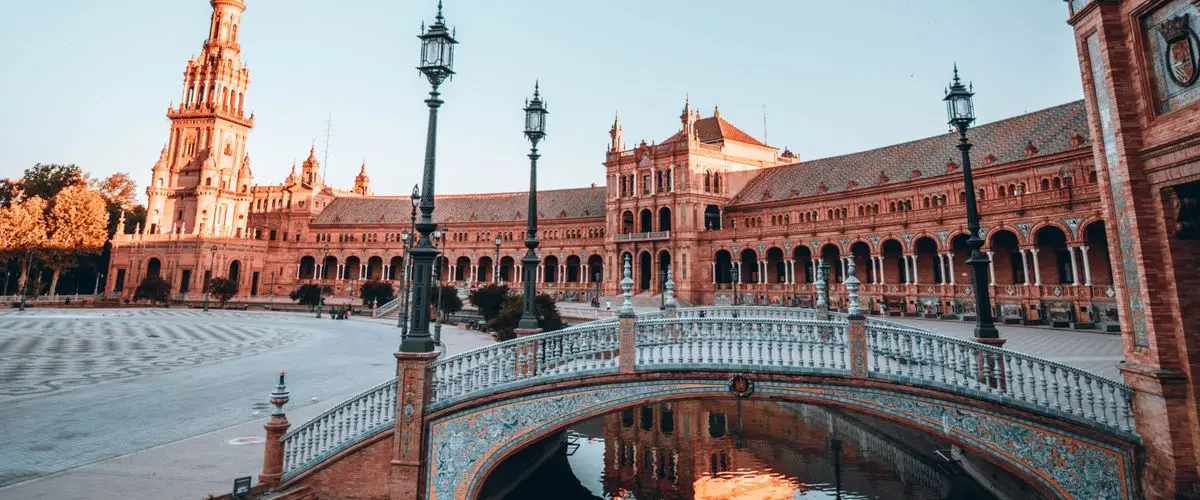
And then there is the course itself. The Seville Marathon is a journey through history: it passes the Plaza de España, one of the most spectacular squares in Europe; winds through the Parque de María Luisa; crosses the historic Triana neighbourhood; follows the banks of the Guadalquivir river; runs past the Cathedral and the Giralda tower; and skirts the Real Alcázar. Few marathons in the world offer such a rich concentration of architectural and cultural heritage per kilometre.
If you want to explore the best training spots in the city, check out our guide to the best running routes in Seville.
Key facts: Seville Marathon 2026
| Detail | Info |
|---|---|
| Date | February 2026 (typically third Sunday of February) |
| Start time | 8:30 AM |
| Distance | 42.195 km (official marathon) |
| Course profile | Ultra-flat, ~10 m total elevation gain |
| Entries | ~12,000 bibs |
| Label | World Athletics Gold Label |
| Start | Near Estadio Olímpico de la Cartuja |
| Finish | Paseo de las Delicias |
| Temperature | 8-16 °C (46-61 °F) in February |
| Official website | zurichmaratonsevilla.es |
The course
The Seville Marathon starts near the Estadio Olímpico de la Cartuja and finishes at the Paseo de las Delicias, next to the Parque de María Luisa. Over those 42 kilometres, the course winds through Seville's most iconic neighbourhoods and monuments, turning the race into a cultural tour that few marathons can match.
The opening kilometres run through the Cartuja area — a wide, uncrowded zone where runners can settle into their pace without stress. The course then crosses the Guadalquivir river and enters the city proper, passing through Triana, one of Seville's most characterful and vibrant neighbourhoods. The crowd support in Triana is outstanding and provides a real boost during the middle kilometres.
As the race progresses, the route passes through La Macarena, another neighbourhood full of personality and atmosphere, before turning towards the historic centre. This is where the Seville Marathon's real magic unfolds: running past the Cathedral of Seville with the Giralda tower framed against the sky, and skirting the walls of the Real Alcázar, is an experience you will not forget, no matter how tired your legs are.
The final kilometres thread through the Plaza de España and the Parque de María Luisa — two of the most beautiful spaces in the city — before reaching the finish on the Paseo de las Delicias. The closing straight, with the crowd cheering and the Parque de María Luisa as a backdrop, gives you an emotional push to deliver your best over those last metres.
The defining feature of the course, as mentioned, is its profile: just 10 metres of total elevation gain. You will not encounter a single hill worthy of the name across the entire 42 km. It is so flat that the only external factor that might alter your pace is wind, which tends to be gentle in Seville in February. For runners targeting a PB, the Seville Marathon offers the perfect conditions for a controlled negative split.
Registration and fees
Registration for the Seville Marathon is handled through the official website: zurichmaratonsevilla.es. Entries are limited to approximately 12,000 bibs, and while they do not sell out quite as quickly as some of the mega-marathons, it is wise to register early to secure the best price and guarantee your place.
Entry fees are tiered by date: the earliest registration periods offer the lowest prices, typically starting at around 40-50 euros and rising to 80 euros in the later windows. Compared to other major European marathons (London, Berlin, Chicago), the Seville Marathon offers exceptional value for money.
Runners' Expo
In the days before the race, the Feria del Corredor (Runners' Expo) takes place, where you must collect your bib and runner's bag in person. It is worth visiting at leisure: you will find stands from major running brands, technical talks, physiotherapy zones and a pre-race atmosphere that gets you into competition mode.
- Bib collection: In person only at the Expo. It cannot be posted or collected on race day.
- ID required: Bring your passport or national ID card and your registration confirmation.
- Runner's bag: Includes the official t-shirt, timing chip and sponsor gifts.
- Tip: Visit the Expo on the first day to avoid queues and keep Saturday free for rest.
How to train for the Seville Marathon
Preparing for a marathon requires a structured plan of 16 to 20 weeks (4 to 5 months) of specific training. If the Seville Marathon is in February, that means starting your plan between September and October the previous year. It is a serious commitment, but the results are worth it.
Training plan structure
A marathon training plan combines different session types across 4-5 training days per week:
- Easy runs (2-3 days): Comfortable-pace runs that build your aerobic base. Sessions of 40 to 70 minutes at a pace where you can hold a conversation.
- Weekly long run (1 day): The most important session in marathon preparation. Start at 16-18 km and build progressively to 32-35 km in peak weeks. For more detail, see our zone training guide.
- Quality sessions (1-2 days): Intervals, fartlek or tempo runs at marathon pace or slightly faster. These are essential for internalising your target pace and improving your lactate threshold.
- Rest or cross-training (1-2 days): No running, or activities like swimming, cycling or yoga. Recovery is as important as training.
The long run: your key session
The long run is the backbone of any marathon build. In an 18-week plan, the typical progression is to start at 16 km and add 2 km each week, with a step-back week every 3-4 weeks. Your longest run should not exceed 32-35 km and should be completed at least 3 weeks before the marathon.
If you have not yet run a half marathon, we recommend completing one as part of your preparation. Our half marathon training plan is a solid starting point before tackling the full 42 km.
Leverage the flatness
One of the advantages of preparing for a marathon as flat as Seville is that you can focus your training entirely on pace consistency. You do not need to train hills or accumulate elevation gain — your goal is to hold a steady pace for 42 km on flat terrain. This simplifies your planning and lets you work on race-pace sessions with greater precision than you could for a hilly course.
To stay injury-free during your build, include strength exercises at least twice a week. See our guide to preventing running injuries for detailed exercises.
Train with others for the marathon
Many runners prepare the Seville Marathon in groups to stay motivated. On CorrerJuntos you can find runners at your pace.
Race-day tips
You have trained for months and the big day has arrived. What you do in the hours before the start and during the 42 km can make the difference between an unforgettable experience and unnecessary suffering.
Nothing new on race day
The golden rule of marathon running: everything you wear or consume on race day must have been tested in training. Shoes, socks, shirt, shorts, gels, sports drink — all of it. New shoes can cause blisters at km 25 and an untested gel can wreck your stomach. For shoe guidance, see our best carbon plate running shoes guide.
Eat breakfast 3 hours before the start
With an 8:30 AM start, the alarm should go off before 5:00 AM. Your pre-marathon breakfast should be carb-heavy, low in fibre and low in fat: toast with jam, instant oats with banana, white rice with honey. Aim for 100-150 grams of carbohydrates to top up your liver glycogen stores. For specific ideas, see our article on what to eat before running.
Manage the Seville climate
Although February is cool in Seville, the temperature can rise noticeably through the morning. You might start at 8-10 °C but it could reach 15-16 °C by noon. Dress in light layers: a short-sleeve or thin long-sleeve technical tee will suffice. Bring disposable gloves for the first kilometres and ditch them once you warm up. For detailed guidance, see our what to wear running by temperature guide.
Start hydrating from kilometre 5
Begin drinking from the first aid station with small sips of water or sports drink. In Seville, dehydration while running can be a factor even in February if the sun comes out. Alternate water and electrolyte drinks to keep your sodium levels balanced. The organisers place well-stocked aid stations throughout the course.
Gels every 30-45 minutes
Even with a solid carb load beforehand, you will need to take on carbohydrates during the race. Current guidelines recommend 60-90 grams of carbohydrates per hour, which translates to an energy gel every 30-45 minutes. Take each gel with water to aid absorption.
Start conservative: the negative split secret
The ultra-flat course in Seville is perfect for running a negative split — running the second half faster than the first. Start 10-15 seconds per kilometre slower than your target pace for the first 15 km. If you feel good from km 25 onwards, pick up the pace progressively. Seville's flat profile lets you manage this with surgical precision, something that is far harder on hilly courses. If you need help calculating your pace, see our running pace guide.
Race-day nutrition plan
Carry your own nutrition: gels you have already tested in training, salt tablets if you use them, and an extra energy snack. Distribute gels across your pockets or race belt and plan which kilometre you will take each one. For a complete nutrition strategy, read our race-day nutrition guide.
Accommodation and logistics
Seville is a welcoming, compact and relatively affordable city to stay in compared to other major European marathon destinations. But hotel demand during marathon weekend is high, so it pays to plan ahead.
Book your hotel early
Although February is not peak tourist season in Seville, the marathon weekend draws thousands of runners and their companions. Book your accommodation at least 2-3 months before the race to find good options at good prices. Holiday apartments are also an excellent option in Seville, especially if you are travelling with family or friends.
Recommended areas
- Historic centre (Santa Cruz, Arenal): Close to the course, the monuments and the nightlife. The most convenient option, though prices tend to be higher.
- Triana: On the other side of the river, full of character, excellent restaurants and more reasonable prices. Well connected to the centre on foot or by bus.
- Nervión: A modern district with good hotel supply and easy public transport access. Solid value for money.
- Los Remedios: Near the Paseo de las Delicias (finish area), quiet and well connected. Ideal if you want a short walk after crossing the finish line.
Getting to Seville
- High-speed train (AVE): Santa Justa station connects Seville with Madrid (2h 20min), Córdoba (45min) and Málaga (2h). The station is well linked to the centre by metro and bus.
- By air: San Pablo Airport is 10 km from the city centre. The EA shuttle bus reaches the centre in 30-35 minutes, and taxis are also readily available.
- By car: Motorways link Seville with Madrid (A-4), Málaga (A-92) and Portugal (A-49). Parking in the centre can be tricky, so consider a hotel with included parking if you are driving.
After the race
Seville is a wonderful city to enjoy after a marathon. The Andalusian cuisine is outstanding: tapas in the Santa Cruz bars, fried fish in Triana, salmorejo, flamenquines... Your body will need to replenish calories and nutrients, so treat yourself. You can also spend the rest of the weekend visiting the Cathedral and the Giralda, the Real Alcázar, the Plaza de España or strolling along the Guadalquivir. If you are looking for local runners to connect with after the race, check out the running groups in Seville.
Training with others for the Seville Marathon
Preparing a marathon is a challenge that tests your fitness, discipline and mental resilience. It is 4-5 months of consistent training, with early mornings, long runs in the rain and days when you would rather stay on the sofa. That is where training with others makes an enormous difference.
When you train with people who are also preparing a marathon, the dynamic changes completely. On the days you do not feel like going out, they drag you along. Long runs feel shorter when you are chatting with someone. Paces regulate better when you have someone beside you with a similar goal. And motivation feeds on itself: seeing your training partners progress week after week pushes you to give your best.
Group training also brings collective experience: there is always someone who has already run Seville, who knows how to manage the kilometres through Triana, who has a tip for long runs or who has dealt with the same injury you are facing. That shared knowledge is worth more than any training plan downloaded from the internet.
It does not matter where you live — Madrid, Barcelona, London, Berlin — there are always runners near you who are also preparing Seville. You just need to find them. Read our article on running alone vs with a group to discover why so many runners choose to train together.
Training for the Seville Marathon?
Find runners who are also training for this race. Join group runs, discover routes and train together. Prepare the race of your life with others who share your goal.
Find training partners on CorrerJuntosFrequently asked questions
When is the Seville Marathon 2026?
The Zurich Seville Marathon 2026 takes place in February 2026, typically on the third Sunday of February. The start is at 8:30 AM near the Estadio Olímpico de la Cartuja. The race holds a World Athletics Gold Label and attracts around 12,000 runners from all over the world each year.
Is the Seville Marathon course flat?
Yes, the Seville Marathon has one of the flattest courses in the world. The total elevation gain is just 10 metres, making it arguably the flattest big-city marathon in Europe. Combined with mild February temperatures (8-16 °C / 46-61 °F), it offers ideal conditions for personal bests. The course is so flat that you can hold a steady pace from start to finish without worrying about hills.
How much does the Seville Marathon entry cost?
Entry fees vary depending on when you register. Prices typically range from 40 to 80 euros, with the cheapest rates available in the earliest registration windows. Entries are limited to around 12,000 bibs and sell out each year, so registering early is recommended. Check the official website zurichmaratonsevilla.es for current prices.
Is the Seville Marathon good for first-timers?
The Seville Marathon is an excellent choice for first-time marathoners. The ultra-flat course (just 10 m of elevation gain) removes the stress of hills. February temperatures are ideal for running (8-16 °C), the organisation is top-tier with well-stocked aid stations, the crowd support is strong along much of the course and the monumental scenery helps the kilometres pass faster. With 12,000 runners of all levels, you will always find someone running at your pace.
What is the weather like during the Seville Marathon?
In February, Seville enjoys mild weather with temperatures between 8 and 16 °C (46-61 °F). The 8:30 AM start is typically cool (8-10 °C), perfect for running, and the temperature rises gradually through the morning without becoming uncomfortable. These are ideal conditions for marathon performance, a world away from the scorching heat Seville is known for in summer.
How do I get to the Seville Marathon?
Seville is easily accessible. By high-speed train (AVE): Santa Justa station, Madrid in 2h 20min, Córdoba in 45min. By air: San Pablo Airport is 10 km from the centre with shuttle bus service. By car: motorways from Madrid, Málaga and Portugal. The city has metro, tram and bus networks for getting around on race day.
How many weeks do I need to train for a marathon?
For safe and effective marathon preparation, a 16 to 20-week (4-5 month) training plan is recommended. This involves running 4-5 days per week with easy runs, progressive long runs, tempo work and rest days. If you are a beginner, ideally you should have at least a year of regular running experience and have completed a half marathon first. See our half marathon training plan as a starting point.
Running tips delivered to your inbox
Training plans, strategies and tips for your next marathon. No spam.
Join 1,100+ runners