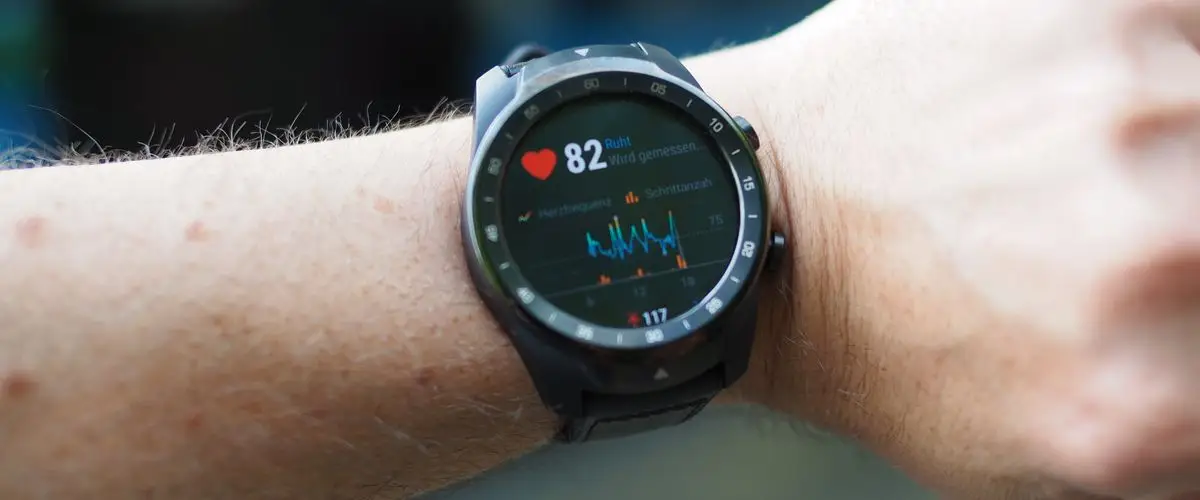
Choosing a GPS running watch can be overwhelming. Garmin has more than 20 models in its catalogue, COROS keeps releasing new products, Polar is still in the game, and Apple Watch wants to be a sports watch too -- they all promise to be the best option. The reality is that the best watch is the one that fits your level, your needs and your budget (World Athletics).
In this guide we break down which features truly matter, which ones are a dispensable extra, how much you should spend according to your level, and which specific model we recommend in each price range.
Essential features: what you absolutely need
Before looking at specific models, be clear about which features are essential for a runner:
1. Accurate and fast GPS
This is the reason a running watch exists. GPS records your route, distance and pace. Look for watches with multi-band GPS (L1 + L5), which is the current standard for maximum accuracy. All the models we recommend below include it. The difference between single-band and multi-band GPS is noticeable in cities (tall buildings) and forests (tree cover).
2. Optical heart rate sensor
All modern watches include one on the wrist. It is useful for training by heart rate zones, estimating VO2max and measuring recovery. Accuracy has improved significantly, although for clinical-grade data a chest strap heart rate monitor is still superior (ACSM).
3. Sunlight-readable display
You run outdoors, often in direct sunlight. You need a screen you can read without squinting. MIP displays (like COROS) are unbeatable in sunlight. AMOLED screens (like the Garmin 265) are prettier but need high brightness. Both work well.
4. Decent battery life
A watch that lasts only one day with GPS on is no good for a marathon if you put it on at 7:00 AM. Look for at least 20 hours in continuous GPS mode to have some margin. For daily use (smartwatch mode), ideally a week or more without charging.
5. Real-time pace data
Being able to see your current pace (min/km) while running is essential for controlling effort, especially during races and interval sessions. All GPS watches offer this, but the refresh rate and smoothing varies between models.
Advanced features: useful but not essential
These features make a difference in mid-range and high-end models, but are not necessary to get started:
- Maps and navigation: Useful for trail running and new routes. Essential in the mountains, dispensable in the city.
- Training metrics (Training Load, Recovery, VO2max): Help you plan your training better. Garmin and COROS offer them free in their apps.
- Offline music: Running without your phone while listening to Spotify from your watch. Convenient but drains the battery.
- Contactless payments: Garmin Pay, Apple Pay... Handy for buying water after a run without carrying a wallet.
- Touchscreen: More intuitive for navigating menus, but physical buttons are more reliable with sweat and gloves.
- HRV (Heart Rate Variability): Indicates your recovery status upon waking. Very useful if you train hard.
How much to spend based on your level
Beginner (running 1-3 times/week)
With this budget you get a watch with accurate GPS, optical heart rate and the basic running features. You do not need maps, music or advanced metrics just yet. When you improve and want more data, you can upgrade.
Find your running with a group
1,100+ runners already train together. Free on iOS.
What to look for: Multi-band GPS, good battery, readable display, Strava integration.
Intermediate (running 3-5 times/week, racing)
This is where you find watches with advanced training metrics, built-in training plans, better displays and more customisation options. The difference from the basic range is noticeable in daily use.
What to look for: All the basics + training metrics, maps/navigation, AMOLED or high-resolution MIP display.
Advanced (training 5+ times/week, marathon/ultra)
Premium watches with every feature: colour maps, offline music, solar charging, premium materials, elite-level performance metrics. Battery life is usually huge (40+ hours GPS). Worth it if running is your main sport.
What to look for: All of the above + colour maps, music, optional solar, titanium/sapphire materials, ultra battery.
Brand comparison: different ecosystems
The four main brands have different philosophies:
| Aspect | Garmin | COROS | Polar | Apple Watch |
|---|---|---|---|---|
| App and ecosystem | The most complete on the market | Simple and rapidly improving | Good, data-focused | Excellent, integrated with iPhone |
| Battery (GPS) | 20-40 hours | 25-50 hours | 20-35 hours | 6-12 hours |
| GPS accuracy | Excellent | Excellent | Very good | Good |
| Running metrics | The most comprehensive | Very comprehensive (EvoLab) | Comprehensive (Running Index) | Basic to intermediate |
| Smartwatch features | Basic (notifications, pay) | Minimal | Basic | Best on the market |
| Average price | 250-650 euros | 200-500 euros | 200-500 euros | 400-800 euros |
| Ideal for | Those who want the most complete ecosystem | Those who prioritise battery and price | Those who want pure training data | Those who want a daily watch + sport |
Our 5 recommendations by level

1. COROS PACE 3 - Best for beginners and intermediates
~229 eurosThe COROS PACE 3 is arguably the watch with the best value for money on the running market in 2026. At just 39 grams you barely notice it on your wrist. The 38-hour GPS battery is premium-level. The multi-band GPS is accurate and the optical HR sensor is reliable.
It includes EvoLab with free advanced metrics, training plans in the app, and compatibility with Strava and other platforms. The MIP display is not the prettiest, but it is perfect in sunlight. For 90% of runners, this watch is more than enough.

2. Garmin Forerunner 165 - Best budget Garmin
~279 eurosThe Forerunner 165 is the gateway to the Garmin ecosystem with an AMOLED display. It has everything a beginner-to-intermediate runner needs: accurate GPS, training metrics (Training Status, Race Predictor, daily workout suggestion), and the best app on the market (Garmin Connect).
The AMOLED display is beautiful and readable even in sunlight. The 19-hour GPS battery is more than enough for most runners. It lacks offline music and maps, but for road and city running it is perfect.

3. Garmin Forerunner 265 - Best all-round running watch
~399 eurosThe Forerunner 265 is the most balanced running watch of 2026. It has a spectacular AMOLED display, all of Garmin's metrics (Training Readiness, HRV Status, Morning Report), offline music, basic maps and a solid 24-hour battery.
It is the logical step up from a basic watch once you know what you need. The training features are premium-level, the display is best in class, and Garmin Connect gets the most out of it. Our favourite watch for intermediate-to-advanced runners.

4. Garmin Forerunner 965 - For demanding runners
~549 eurosThe 965 is a Forerunner 265 on steroids: larger AMOLED display, downloadable colour topographic maps, more battery (31 hours GPS) and premium materials. The software features are identical, but the user experience is superior across the board.
The colour maps are fantastic for trail running and exploring new routes. The larger display makes reading data during a run easier. If budget is not an issue and running is your main sport, the 965 will not disappoint.
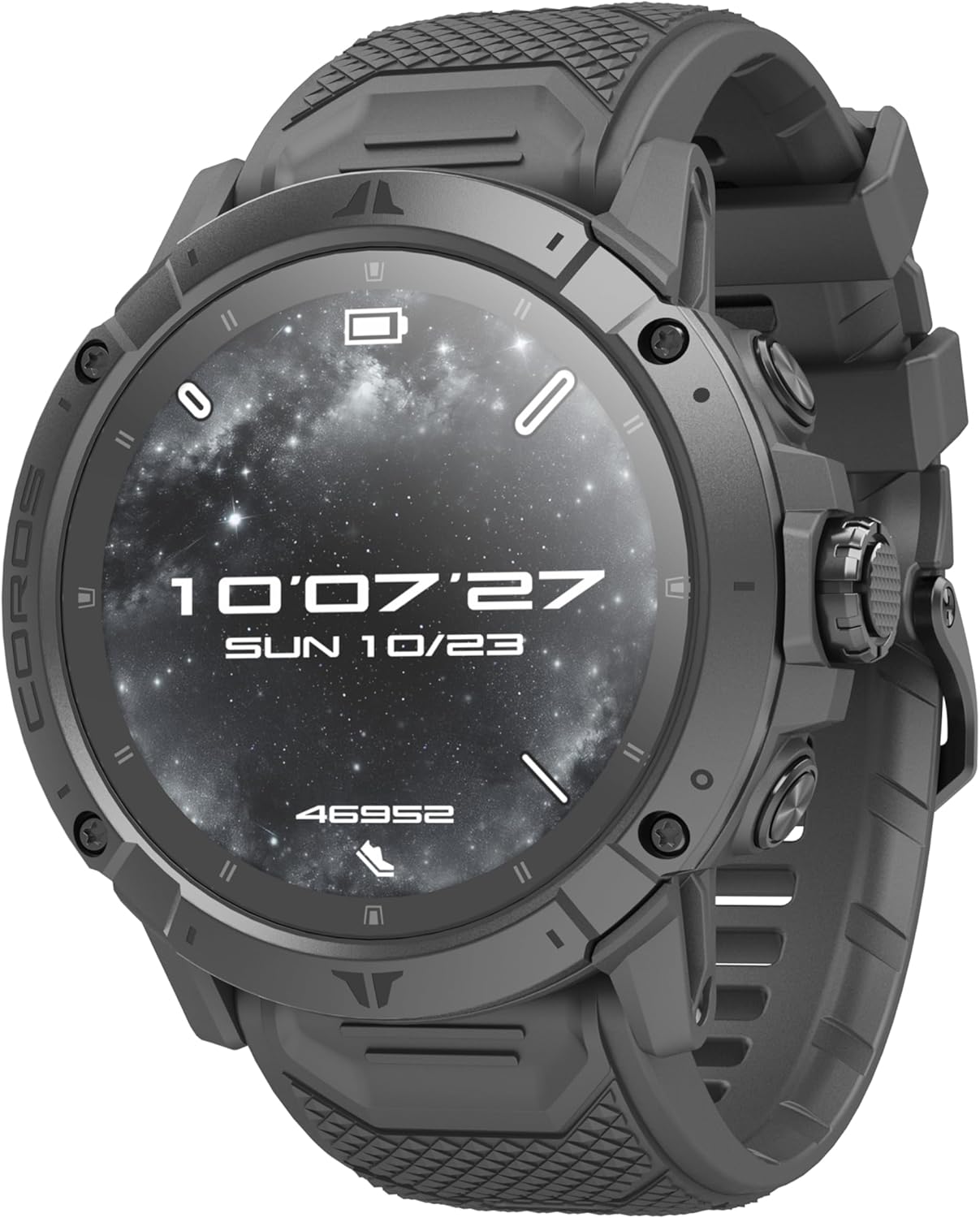
5. COROS VERTIX 2S - For ultra and mountain running
~499 eurosThe COROS VERTIX 2S is designed for those who need extreme battery life and reliability in the mountains. With over 50 hours in GPS mode and up to 140 hours in UltraMax mode, you can complete a 100-mile ultra without worrying about charging.
It includes offline maps, barometric altimeter, compass, temperature sensor and superior shock resistance. The weight of 62 grams is contained for what it offers. If you run ultras, mountain trail or simply hate charging your watch, the VERTIX 2S is your choice.
Summary: what to buy based on your situation
| Situation | Recommendation | Price |
|---|---|---|
| First GPS watch, tight budget | COROS PACE 3 | ~229 euros |
| Want Garmin without spending much | Garmin Forerunner 165 | ~279 euros |
| Best all-round running watch | Garmin Forerunner 265 | ~399 euros |
| No budget limit, pure running | Garmin Forerunner 965 | ~549 euros |
| Ultra trail and mountain | COROS VERTIX 2S | ~499 euros |
If you want a more detailed comparison between the two standout models of the moment, read our Garmin Forerunner 265 vs COROS PACE 3 article. And to see all models with updated prices, visit our GPS running watches section.