
How to Prevent Running Injuries: Complete Guide 2026
Up to 70% of runners suffer at least one injury per year. This guide brings together all the evidence-based strategies so you don't become part of that statistic.
Up to 70% of runners suffer at least one injury per year. This guide brings together all the evidence-based strategies so you don't become part of that statistic.
If you have been running for a while, you have probably felt a niggle that made you wonder: should I keep going or stop? Is this just fatigue or the beginning of an injury? The truth is that most running injuries are preventable. They don't come down to luck or genetics -- they depend on how you manage your training load, how you prepare your body and how well you listen to the signals it sends.
This guide is the cornerstone of our injuries section. Here you will find every prevention strategy that actually works, from load management to strength training, warm-up, equipment and recovery. Each section links to more specific articles so you can dig deeper into whatever interests you most.
Whether you are a beginner wanting to start on the right foot or a seasoned runner who has been through several injuries and doesn't want to repeat the experience, here is everything you need to know to train more and get injured less.
Before talking about prevention, it helps to understand the scale of the problem. These numbers are not meant to scare you but to motivate you: most of these injuries can be avoided with the right strategies.
If you could only take one piece of injury-prevention advice, this would be it: do not increase your training load faster than your body can absorb. Most injuries don't happen because you run too much -- they happen because you ramp up too much, too soon.
The 10% rule states that you should not increase your weekly training volume (total kilometers, total time or workload) by more than 10% compared to the previous week. It is a straightforward guideline that has been used in running for decades and, although simplified, works well as a general ceiling.
Practical example: if you run 30 km total this week, next week you should cap it at 33 km. If you run 40 km, the limit would be 44 km. It may feel slow, but in 10 weeks you can go from 30 to nearly 50 km per week without excessive risk.
Modern physiotherapists and coaches use a more refined concept: the acute-to-chronic workload ratio (ACWR). It compares the load from the last week (acute) with the average of the past 4 weeks (chronic). The safe range sits between 0.8 and 1.3. If you exceed 1.5, your injury risk multiplies.
You don't need to calculate it with mathematical precision. The important principle is this: if you train significantly more than usual in any given week, your risk goes up exponentially.
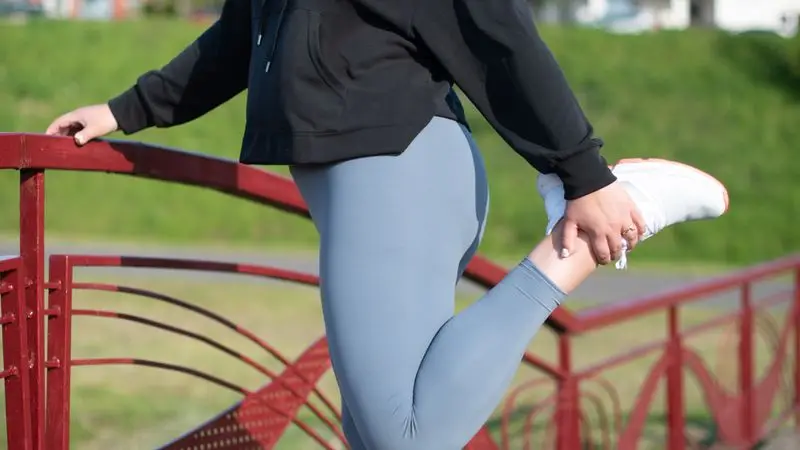
Many runners walk out the door and start at their usual pace from the very first step. It is understandable when time is short, but skipping the warm-up is one of the easiest risk factors to fix. A proper warm-up prepares the muscles, tendons and joints for the impact of running and can make the difference between a productive session and an injury.
Find your running with a group
1,100+ runners already train together. Free on iOS.
1. Cardiovascular activation (3-5 minutes)
Start with brisk walking or a very easy jog. The goal is to gradually raise your heart rate, increase blood flow to the muscles and raise core temperature. You should not be out of breath during this phase.
2. Dynamic stretching (5 minutes)
Dynamic stretches (active, controlled movements) are the recommended type before a run. Unlike static stretches (holding a position), dynamic stretches prepare the muscle for the range of motion it is about to use:
3. Slow first kilometer (5-10 minutes)
Your first kilometer should always be the slowest of the workout. This is not wasted time -- it is the final phase of the warm-up. Tendons need gradual loading so that collagen fibers align properly and resist impact more effectively.

The cool-down is the other end of the workout that many runners skip. Gradually reducing intensity and stretching after running a run speeds up recovery and prepares the body for the next training session.
Dedicate the last 5-10 minutes of your session to slowing down progressively. If you have done interval work or a tempo run, do not stop abruptly. Jog easy and finish with 2-3 minutes of walking. This helps clear metabolic waste products and reduces post-exercise muscle soreness.
After running, with warm muscles, is the ideal time for static stretches. Hold each stretch for 30 seconds without bouncing:
Check out our complete stretching guide for runners for a detailed routine with variations.

If there is one habit that separates runners who get injured from those who don't, it is strength work. The scientific evidence is compelling: strength training reduces the risk of overuse injuries by up to 50%. Yet most recreational runners don't do it.
You don't need a gym or heavy weights. Two weekly sessions of 20-30 minutes focused on the key areas will deliver a significant benefit.
These are the exercises with the strongest evidence for injury prevention in runners. Aim for 2-3 sets of 10-15 reps of each, twice a week.
With one foot elevated on a bench or step behind you, lower by bending the front knee until the thigh is parallel to the floor. Keep your torso upright and the knee aligned with the foot. 3 sets of 10 per leg. This is the most running-specific exercise because it works one leg at a time, mimicking the gait pattern.
Lying on your back with knees bent, lift one leg and raise the hip by pushing through the foot on the ground. Squeeze the glute at the top for 2 seconds. 3 sets of 12 per side. Weak glutes are the underlying cause of many knee, hip and ankle injuries in runners.
Standing on a step with the heel hanging off, rise and lower slowly (3 seconds each phase). Do it with the knee straight (gastrocnemius) and with the knee slightly bent (soleus). 3 sets of 15 per leg. Essential for preventing Achilles tendinopathy, plantar fasciitis and shin splints.
Front plank: supported on forearms and toes, hold the body in a straight line for 30-60 seconds. Side plank: on one forearm and the side of one foot, 30 seconds per side. The core stabilizes the pelvis and torso during running. Without a strong core, impact forces are transmitted in an uncontrolled way to the knees and lower back.
Standing on one leg, hinge forward at the hip while the other leg extends behind you, forming a straight line. Lower until you feel tension in the hamstrings and return in a controlled manner. With or without weight. 3 sets of 10 per leg. Works the entire posterior chain and improves proprioceptive balance.
Standing beside a step or box, step up laterally with one leg and lower in a controlled fashion with the same leg. 3 sets of 12 per side. The gluteus medius controls knee adduction and internal rotation, a key pattern in patellofemoral pain syndrome.
Lying on your side with knees bent and a resistance band just above the knees, open the top knee like a clamshell without moving the hip. 3 sets of 15 per side. Activates the external rotators of the hip that control knee alignment while running.

Running shoes are a runner's most important tool, and choosing the wrong pair is a real risk factor for injury. It is not about buying the most expensive model -- it is about finding the right one for your foot, your gait and your type of training.
Alternating between 2-3 different pairs of shoes is one of the most science-backed prevention strategies. A study in the Scandinavian Journal of Medicine and Science in Sports found that runners who rotated shoes had a 39% lower injury risk compared to those who used a single pair.
The reason: each model has slightly different geometry and cushioning, which distributes impact forces in different ways and prevents the same structure from being overloaded repeatedly.
For specific recommendations, check out our best running shoes guide and the trail running shoes section if you run off-road.
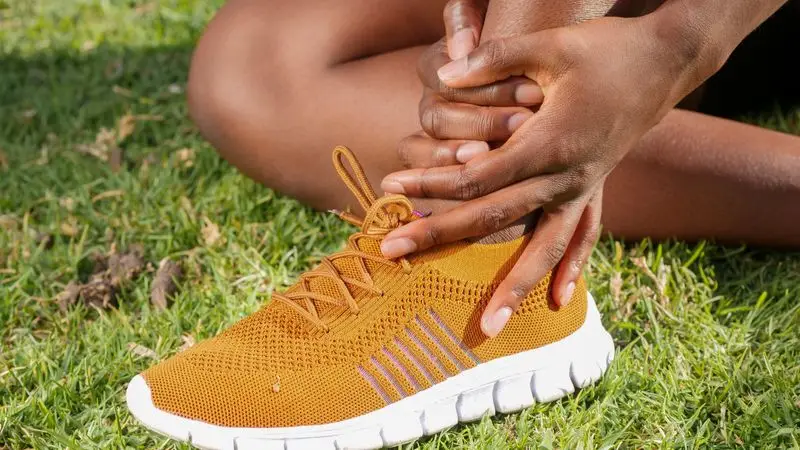
The surface you run on directly affects the impact on your joints, tendons and bones. Varying terrain is an underused prevention strategy that requires no extra effort -- just a bit of planning in your routes.
Ideally, your training week should include at least 2 different surfaces. For example: long runs on dirt, intervals on a track or asphalt, and recovery runs on grass or a treadmill. If you can only run on asphalt, make sure to rotate shoes so you at least vary the cushioning underfoot.
Training provides the stimulus. The adaptation (improvement) happens during rest. Without adequate recovery, tissues accumulate microdamage that doesn't have time to repair and eventually develops into injuries. Resting is not wasted time -- it is an essential part of training.
Sleep is the single most important recovery period. During deep sleep, growth hormone (GH) is released, which is essential for the repair of muscle, tendon and bone tissue. Runners who sleep fewer than 7 hours have a significantly higher injury risk.
The foam roller won't cure injuries, but it is a useful recovery tool. Spending 5-10 minutes after a run rolling the calves, quads, hamstrings and glutes helps reduce muscle stiffness and improve range of motion. It is not a substitute for stretching but a complement.
What you eat after training influences how quickly your tissues repair:
For more detail on nutrition, check out our runner's nutrition guide and the article on supplements for runners.
One of the biggest challenges for any runner is distinguishing between normal training discomfort and the warning signs of a developing injury. Many runners get injured because they ignore early signals. Others stop training over niggles that pose no real risk. Learning to tell the difference is fundamental.
Although prevention is the best strategy, it helps to know the most frequent injuries so you can identify them early if they appear. We have created specific guides for each of the main running injuries.
The most common foot injury in runners. It presents as sharp heel pain, especially when taking the first steps in the morning or after periods of inactivity. It is caused by repetitive overload of the plantar fascia, aggravated by inadequate shoes, foot muscle weakness or a rapid increase in volume.
Read our full guide: Plantar Fasciitis in Runners: Causes, Treatment and Prevention
Diffuse pain around or behind the kneecap that worsens when going up and down stairs, after sitting for a long time (the "movie-theater sign") and on hills. It is usually related to weak glutes and quads and poor dynamic knee alignment during running.
Read our full guide: Runner's Knee: A Guide for Runners
Pain along the inner edge of the shinbone that appears during or after running. Very common in beginner runners or after a sudden spike in volume. If left untreated, it can progress to a tibial stress fracture. Strengthening the tibialis anterior and gradual progression are the best prevention tools.
Read our full guide: Shin Splints in Runners: Causes and Treatment
Pain and stiffness in the Achilles tendon (the back of the ankle, just above the heel) that typically worsens in the morning and at the start of activity. It can be insertional (where the tendon attaches to the bone) or mid-portion. The primary treatment involves eccentric calf and soleus exercises with progressive loading.
Read our full guide: Achilles Tendinitis in Runners: Complete Guide
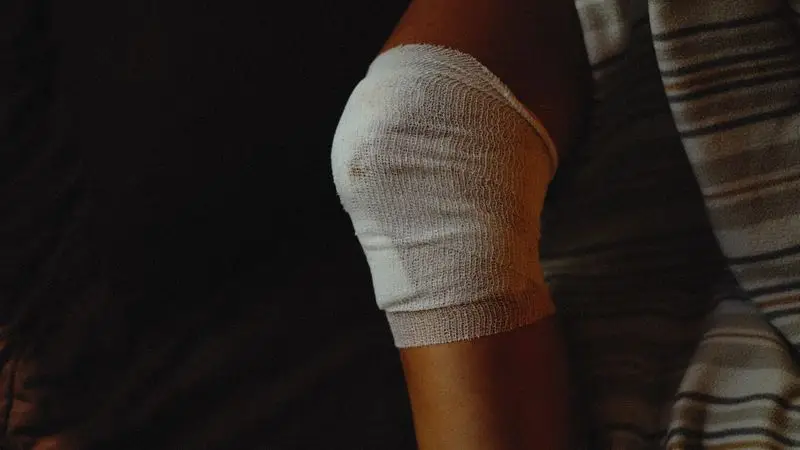
Most recreational runners need at least 2 days of complete rest or active recovery per week. More experienced runners can run 5-6 days if they alternate high and low intensity workouts. The key is making rest part of your plan, not something you only do when something hurts.
Yes, the evidence is very strong. Multiple studies show that strength training reduces the risk of overuse injuries by up to 50%. Two weekly sessions of 20-30 minutes focused on glutes, core, calves and quads are enough to get a significant benefit.
The 10% rule states that you should not increase your weekly training volume by more than 10% compared to the previous week. It is a general guideline to avoid the overload that causes most running injuries. Example: if you run 30 km this week, next week you should not exceed 33 km.
The general recommendation is to replace shoes every 600-800 km, depending on the model, your weight, your biomechanics and the surface you run on. Signs you need new shoes: flat cushioning, unevenly worn outsole or new pain with no other apparent cause.
Before running, do dynamic stretches (active movements like leg swings, walking knee hugs, skipping). After running, do static stretches held for 30 seconds. Static stretching before running with cold muscles is not recommended and can actually increase injury risk.
A treadmill reduces impact by 15-20% compared to asphalt, which can be useful during recovery or transition periods. However, the ideal approach is to vary surfaces: alternating between asphalt, dirt, grass and treadmill distributes stress differently and reduces the risk of repetitive overuse injuries.
Key warning signs include: pain that does not go away within the first 10 minutes of a run, pain that worsens during training instead of improving, pain when walking or at rest, visible swelling, pain that makes you alter your running form, and any pain above a 4 out of 10 on the pain scale.
Find running groups in your city that train smart and progressive. Running with others helps you listen to your body.
Join 1,100+ runners
Routes, training plans and tips to run better. No spam.
We respect your privacy. Unsubscribe anytime.