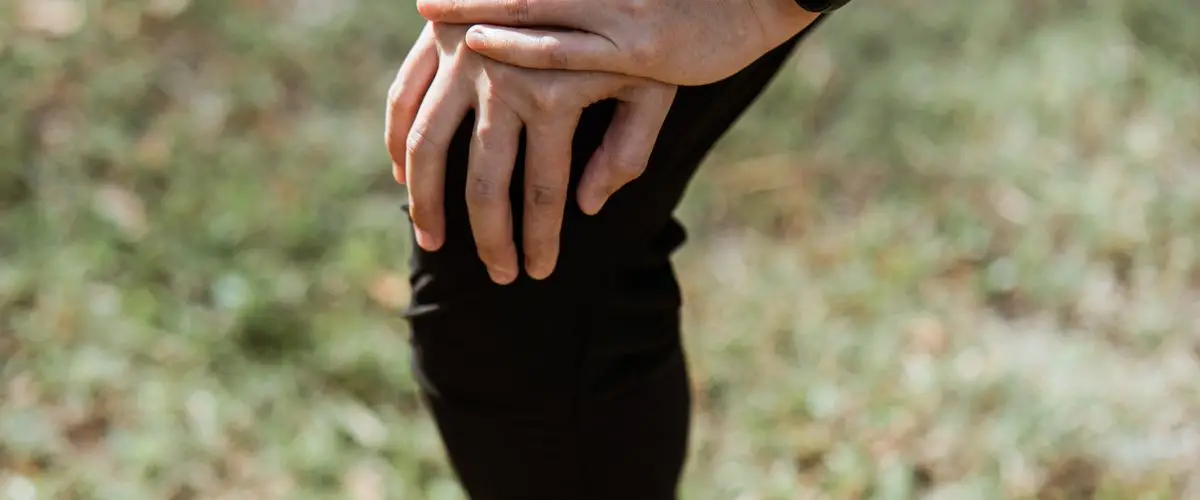
stretching after running a race is not the same as stretching after a regular training run. Your muscles have been working at their limit for 30, 60 or more than 120 minutes. They are inflamed, fatigued and full of micro-tears (normal and necessary for adaptation). The goal of post-race stretching is not to gain flexibility, but to help your body begin the recovery process (World Athletics) (ACSM).
When to stretch: not immediately
The most common mistake is dropping to the ground to stretch right after crossing the finish line. Your body needs a transition:
- First 10-15 minutes: Walk. Let your heart rate come down gradually and keep the blood circulating through your legs.
- Hydrate: Drink water or an electrolyte drink in small sips.
- After walking: Now you can find a quiet spot and start your gentle stretching routine.
10 essential post-race stretches
Hold each stretch for 20-30 seconds per side. No bouncing, no forcing. Breathe deeply throughout each one.
1. Standing quadriceps stretch
Muscles: quadriceps (front of thigh)
Stand up, bend one knee and bring your heel toward your glute. Hold the ankle with the same-side hand. Keep the knee pointing straight down and hips aligned. If you need balance, lean against a wall or a fellow runner. 20-30 seconds per leg.
2. Seated hamstring stretch
Muscles: hamstrings (back of thigh)
Sit on the ground with one leg extended and the other bent (sole of foot against the inner thigh). Lean forward from the hips, keeping your back straight, reaching toward your toes. Don't force it: go as far as you can without pain. 20-30 seconds per leg.
3. Wall calf stretch
Muscles: calves (gastrocnemius)
Place your hands on a wall. Step one leg forward with the knee bent and extend the other leg back with the heel pressed to the ground. Push your hips toward the wall until you feel the stretch in the calf of the back leg. 20-30 seconds per leg.
4. Hip flexor stretch (low lunge)
Muscles: psoas-iliacus, hip flexors
Get into a lunge position with one knee on the ground and the other leg forward at a 90-degree angle. Push your hips forward while keeping your torso upright. You'll feel the stretch in the front of the hip on the back leg. 20-30 seconds per side.
5. Piriformis / glute stretch (figure 4)
Muscles: piriformis, gluteus medius
Lie on your back, cross one ankle over the opposite knee forming a "4." Pull the bottom leg toward your chest. You'll feel a deep stretch in the glute of the crossed leg. Essential for preventing piriformis syndrome. 20-30 seconds per side.
6. Adductor stretch (butterfly)
Muscles: adductors (inner thigh)
Sit down, bring the soles of your feet together and let your knees drop to the sides. Hold your feet with both hands and gently press your elbows against your knees. Keep your back straight. 20-30 seconds.
7. IT band stretch (standing crossover)
Muscles: iliotibial band, tensor fasciae latae
Stand up, cross one leg behind the other. Lean sideways toward the back leg, pushing your hip outward. You'll feel the stretch on the outer thigh. The IT band takes a heavy beating during races. 20-30 seconds per side.
8. Psoas stretch (knee to chest)
Muscles: psoas, lower back
Lie on your back, bring one knee to your chest and hug it with both hands. Keep the other leg extended on the ground. Keep your back pressed to the floor. This relieves the tension in the lower back that builds up after running. 20-30 seconds per side.
9. Lower back stretch (cat-cow)
Muscles: erector spinae, multifidus
On all fours, alternate between arching your back upward (cat: head down, navel in) and downward (cow: head up, chest open). Slow, controlled movement. Repeat 8-10 times. Releases the tension built up in the spine.
10. Tibialis anterior stretch
Muscles: tibialis anterior (shin)
Kneel with your shins on the ground, sitting on your heels with the tops of your feet flat on the floor. Lean slightly backward to intensify. This stretch is important because the tibialis anterior works hard during a race and overloading it can lead to shin splints. 20-30 seconds.
Complete recovery protocol
Stretching is just one part of post-race recovery. The complete protocol includes:
Find your running with a group
1,100+ runners already train together. Free on iOS.
- Hydration: Drink 500 ml of water or electrolyte drink in the first hour post-race. Continue hydrating throughout the day until your urine is clear.
- Nutrition: Have a recovery drink like 226ERS Recovery or a snack with protein and carbs within the first 30-60 minutes. See our recovery supplements guide.
- Sleep: Get 8-9 hours of sleep the night after the race. Your body repairs muscles during deep sleep. If possible, take a 20-30 minute nap the following day.
- Foam roller: 24-48 hours after the race (not immediately), use a foam roller on quads, hamstrings and calves. 1-2 minutes per muscle group.
- Gentle movement: In the days that follow, walk 20-30 minutes. Gentle movement helps recovery more than complete rest.
Common recovery mistakes
- Stretching too aggressively. After racing, your muscles are inflamed. Forcing deep stretches can worsen the micro-tears.
- Not eating or drinking. The recovery window in the first 60 minutes is real. If you miss it, it will take longer to bounce back.
- Running the next day. Even if you feel fine, your muscles need 3-7 days of active rest (walking, swimming, easy cycling) after a half marathon.
- Excessive ice. Post-race ice baths used to be popular, but current evidence suggests that inflammation is necessary for adaptation. Cold may actually delay long-term recovery.
Frequently asked questions
Should I stretch immediately after crossing the finish line?
No. Walk for 10-15 minutes first, hydrate and then stretch gently. Your body needs a gradual transition.
How long should I hold each stretch?
20-30 seconds per side. No bouncing and no forcing. Your muscles are fatigued and pushing too hard can cause micro-tears.
Is it normal to have soreness after a half marathon?
Completely normal. DOMS (delayed onset muscle soreness) appears 24-48 hours after the race and can last 3-5 days. Gentle stretching, hydration while running, sleep and walking help reduce its duration.
Recover better with easy group runs
Recovery jogs, stretching with company. Find runners near you.
Join 1,100+ runners