📋 Transparency: This article contains affiliate links to Amazon. If you buy through them, we receive a small commission at no extra cost to you. This does not change the price or our editorial selection.
Hoka started in 2009 in the French Alps as an oddity for ultra-trail runners who wanted to protect their knees with midsoles twice as thick as anything else on the market. Fifteen years later it is the fastest-growing running brand in the world — the Clifton is on the feet of everyday runners who will never set foot on a mountain, and the Cielo X1 3 fights for marathon podiums against Nike and Adidas.
Hoka’s catalogue is huge and confusing: Clifton, Mach, Bondi, Speedgoat, Cielo, Rocket, Arahi, Stinson, Skyflow... and inside each family, men’s and women’s, GTX and non-GTX, special editions. In this guide I have picked the 7 that genuinely deserve your money in 2026, each with a clear use case, its real price on Amazon and my honest opinion after more than 20 years running and analysing running shoes.
Why choose Hoka for running?
Three objective reasons. The first is maximalist cushioning: nobody puts as much foam under your foot as Hoka, and year after year that foam gets lighter (the CMEVA in the Clifton 10 weighs less than the traditional EVA of a shoe with half the stack). The second is the Meta-Rocker geometry: the curved sole rolls your stride forward — once you get used to it, no other brand feels the same. The third is the breadth of the range: Hoka is equally strong on road (Clifton, Bondi), trail (Speedgoat) and racing (Cielo X1, Rocket X), something only Nike and Adidas match.
How we picked (and checked) every model
This list is not a copy-paste of Hoka’s catalogue. Every model passed five filters:
- A clear use case: each shoe solves a specific need — when two did the same job, only the better one stayed.
- Real availability on Amazon ES: checked unit by unit, with its current price. That is why the Bondi 9 (recently updated, patchy stock) is not here for now.
- Value for money: what you get for what you pay versus the direct competition (especially Asics, On Running and Nike).
- Feedback from real runners: verified ratings and the consensus in running communities.
- Fit with your gait and level: we say who each model is for and who it is not for, exactly as in our guide on how to choose running shoes.
The 7 best Hoka running shoes of 2026
Ranked by versatility and value for money, not by price. Each one with specs, real price and who it is for.
1. Clifton 10 — The best Hoka for most runners
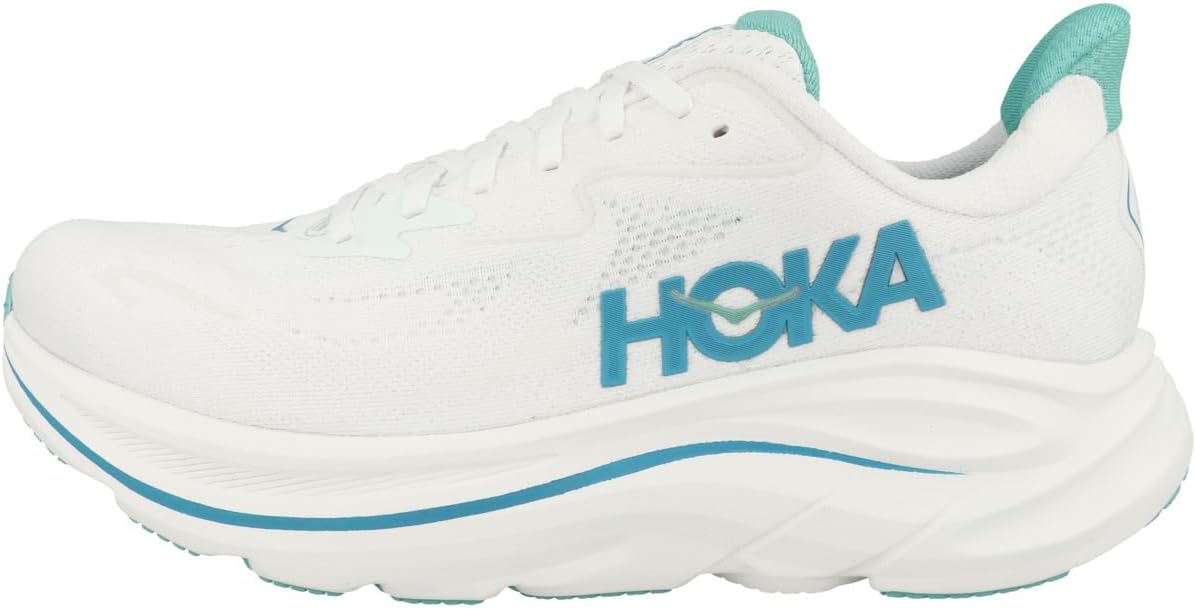
Best for: any runner who wants ONE shoe for everyday training
The Clifton has been Hoka’s best-selling shoe for a decade for one reason: it is the easiest to run in. The version 10 adds 3 mm more foam than the 9 — now 42/34 mm — without gaining weight (~265 g) thanks to the new supercritical CMEVA. The Meta-Rocker still rolls your stride forward and the engineered mesh upper is one of the most comfortable out there, with no odd pressure points even on wide feet.
Downsides? It is a neutral shoe with no stability platform: if you overpronate heavily, look at the Arahi 7 (not included because its stock on Amazon ES is patchy — check hoka.com directly). For everyone else, it is one of the most complete buys on the market, alongside our favourite road shoes.
2. Mach 6 — Cheap lightness for training with bite
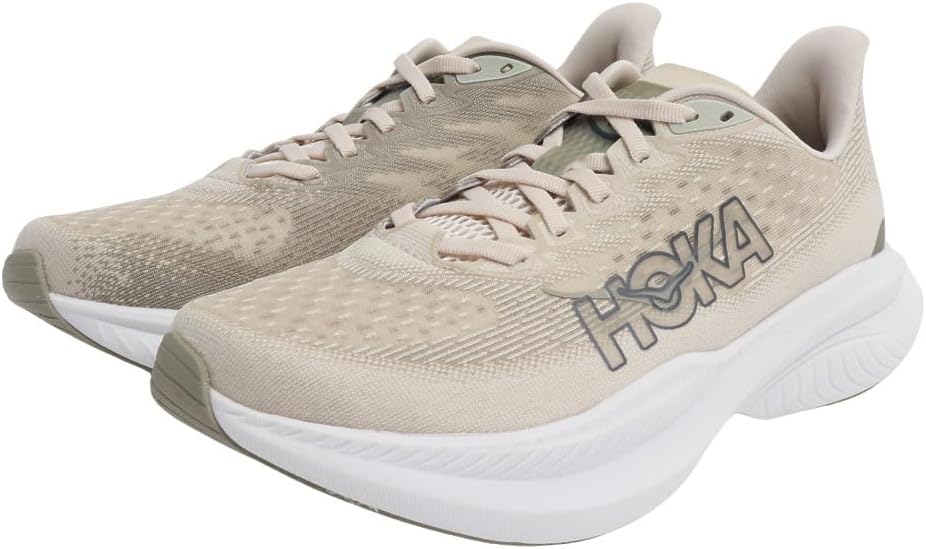
Best for: the runner who already trains seriously and wants a second, nimbler shoe for pace work
The Mach 6 is Hoka’s best-kept secret: 225 g, responsive supercritical foam and a low 5 mm drop — it weighs less than almost any supershoe, with no carbon plate and no inflated price. This is the shoe for Thursday’s intervals and Saturday’s progression run, so you do not burn through the Cielo X1 you race in.
Downsides? The 5 mm drop is demanding on your calves if you are coming from traditional 10 mm shoes — alternate with the Clifton at first. And the responsive foam really shows below 4:30/km; if you always run at 5:30+, the Clifton is more comfortable. For everything else, nothing in the Hoka range offers better value.
3. Bondi 8 — Maximum cushioning for long easy runs
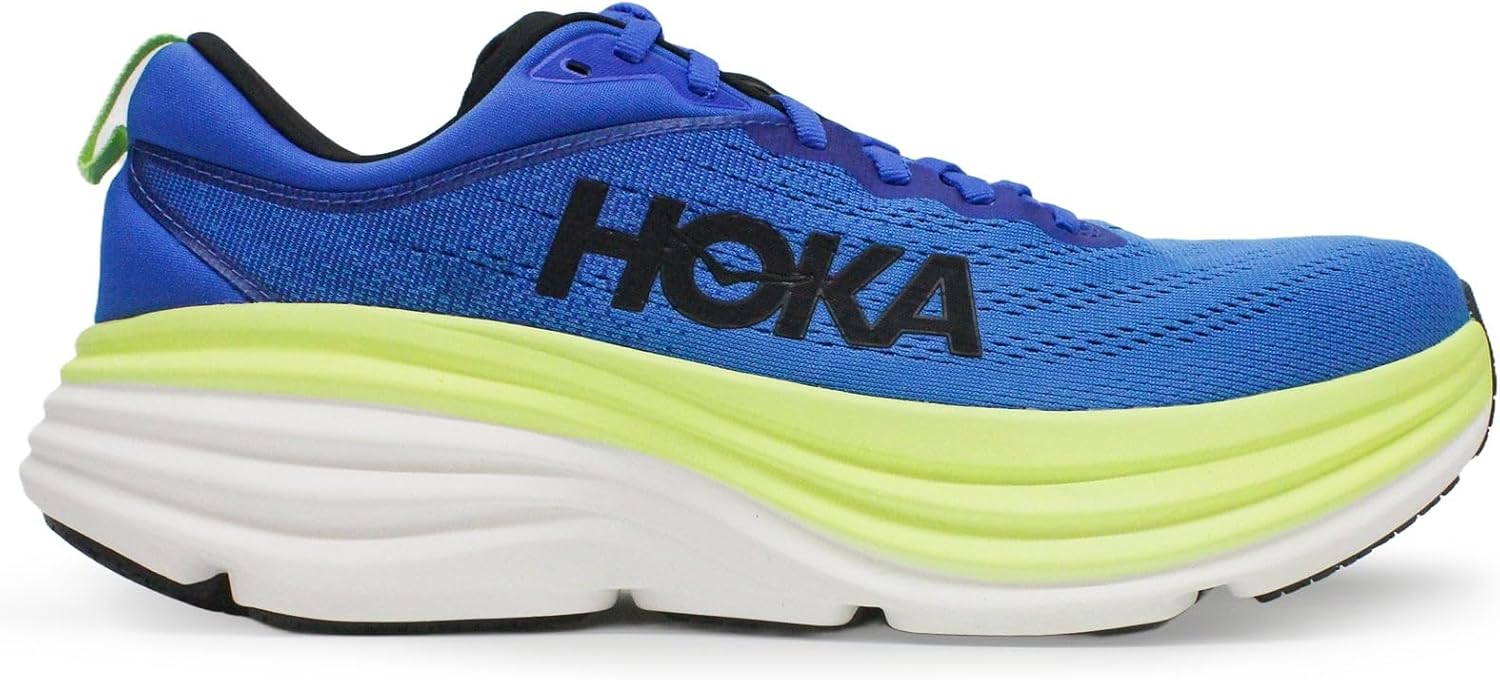
Best for: comfortable long runs, heavier runners, and anyone after maximum joint protection
The Bondi carries more foam than any other Hoka road shoe: 33/29 mm of stack height — you are literally walking on a sofa. It is supremely comfortable on long runs of 90+ minutes, and the logical choice if you weigh 80+ kg and need extra joint protection (see also our guide to running shoes for heavier runners).
Downsides? It weighs ~310 g — this is not an interval shoe. And the feel is cotton wool rather than trampoline: coming from a Mach 6 or a Cielo X1, it feels slow. For what it was built for (recovery runs and relaxed long runs) there is little better on the market.

Break in your Hokas with company
Runners at your pace near home, weekly group runs organised by real people, and plans that adapt to how you respond. Coach José guides you through every session. Free to start.
4. Speedgoat 6 GTX — The global trail benchmark
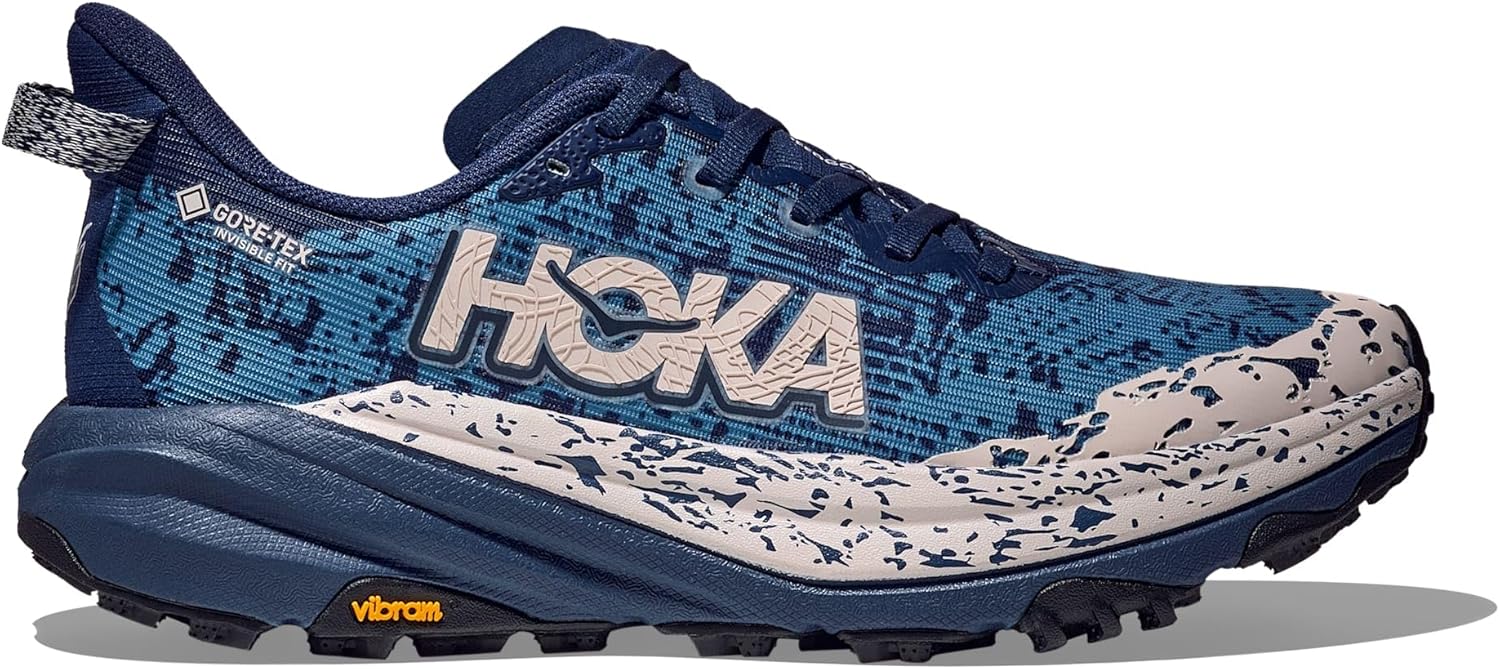
Best for: trail running at any distance on any terrain, rain included
The Speedgoat is to Hoka what the Pegasus is to Nike: the flagship. This v6 adds a Gore-Tex Invisible Fit membrane (waterproof without bulking up the upper) and keeps the Vibram Megagrip outsole with 5 mm lugs — the best grip on the market on wet rock, roots and mud. For ultras, it is the worldwide reference: plenty of UTMB finishers run in Speedgoats.
If you live somewhere dry and would rather not pay the Gore-Tex premium (~30€), the non-GTX version exists but its stock on Amazon ES is patchy — check hoka.com. For your first trail races or Sunday outings in the hills, this is the best thing you can buy. More options in our guide to trail running shoes.
5. Mach X 3 — The supershoe for fast training days
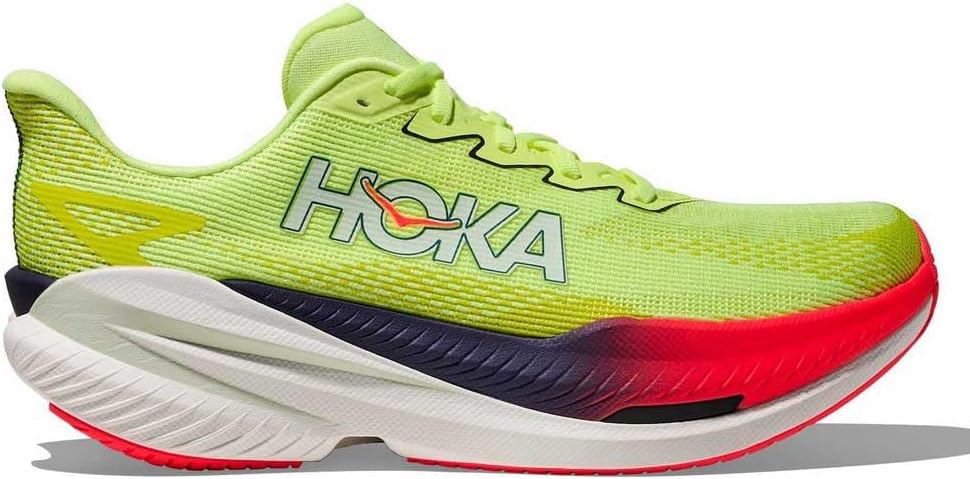
Best for: preparing a 10K, half marathon or marathon with quality sessions without wearing out your race shoe
The Mach X 3 is to Hoka what the Boston 13 is to Adidas: the “trainable supershoe”. It uses a Pebax plate (more flexible and more durable than pure carbon) and a PEBA-EVA combination — the energy return of a racing shoe, but on a chassis that survives 600+ km of training. This is the shoe for tempo runs, long intervals and the hard long runs in your training plan.
Honestly: if you race rarely and want a single fast shoe, save your money and buy the Mach 6 (130€ vs 250€, for 80% of the feeling). The Mach X 3 shines when you already train seriously 4+ days a week and want a dedicated shoe for the hard sessions. More plated options in carbon plate running shoes.
6. Cielo X1 3 — Hoka’s racing supershoe
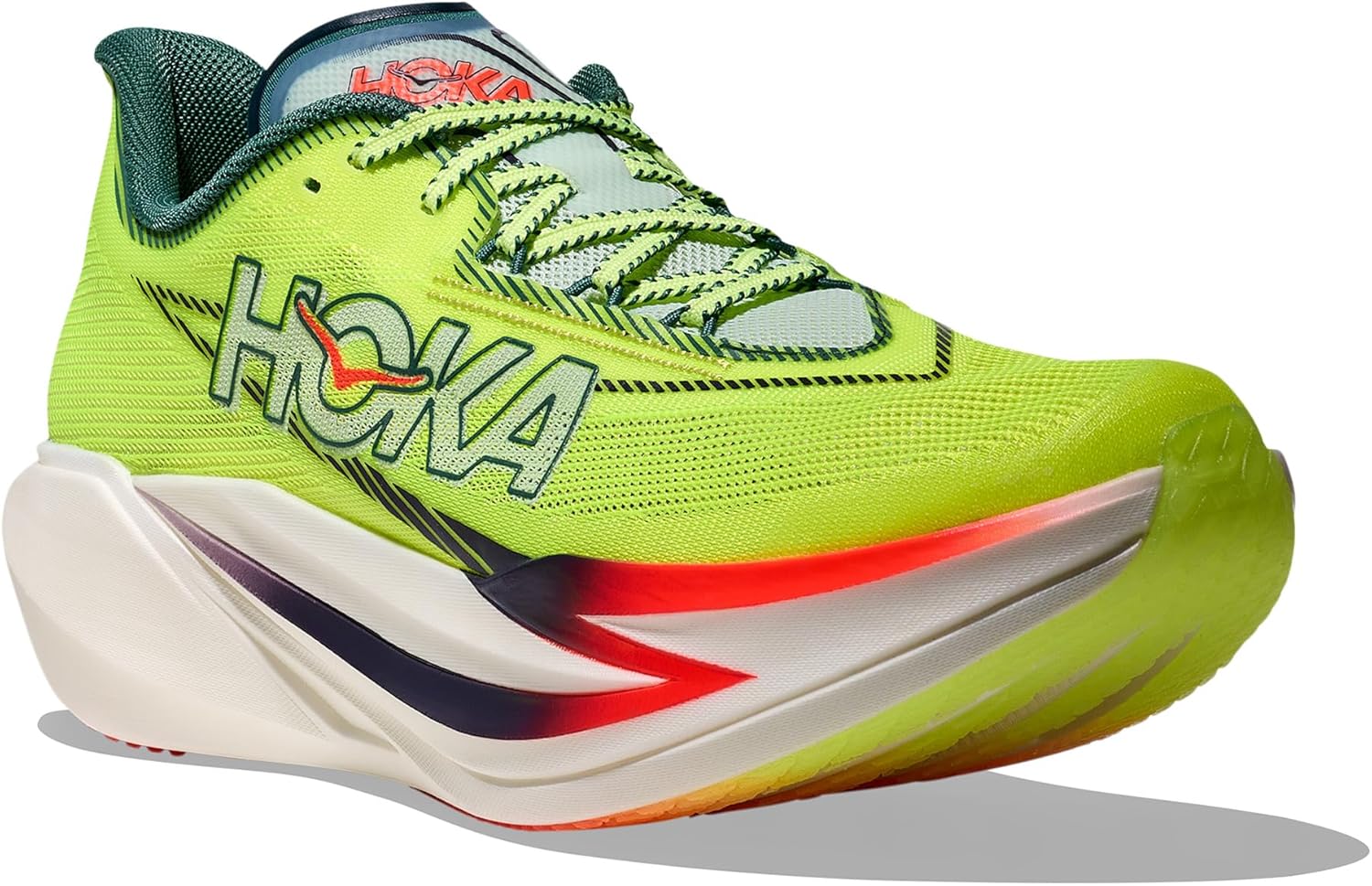
Best for: racing a 10K, half or marathon when you are chasing a personal best
The Cielo X1 is Hoka’s answer to the Nike Vaporfly and the Adidas Adios Pro. The v3 has cut weight down to ~225 g while keeping the dual-density PEBA and the full carbon plate that returns energy on every footstrike. When you run the race of your life, this is the shoe that makes you faster without training more.
Brutal honesty: these shoes last 250-400 km of racing — they are not for training. And the 250€ only makes sense if you are going to cash in that real 2-4% gain in a specific race. If you race once a year it is not worth it — spend the money on the Clifton 10 and the Mach 6 and enjoy running all year round.
7. Clifton 10 Women — The Clifton on a women’s last
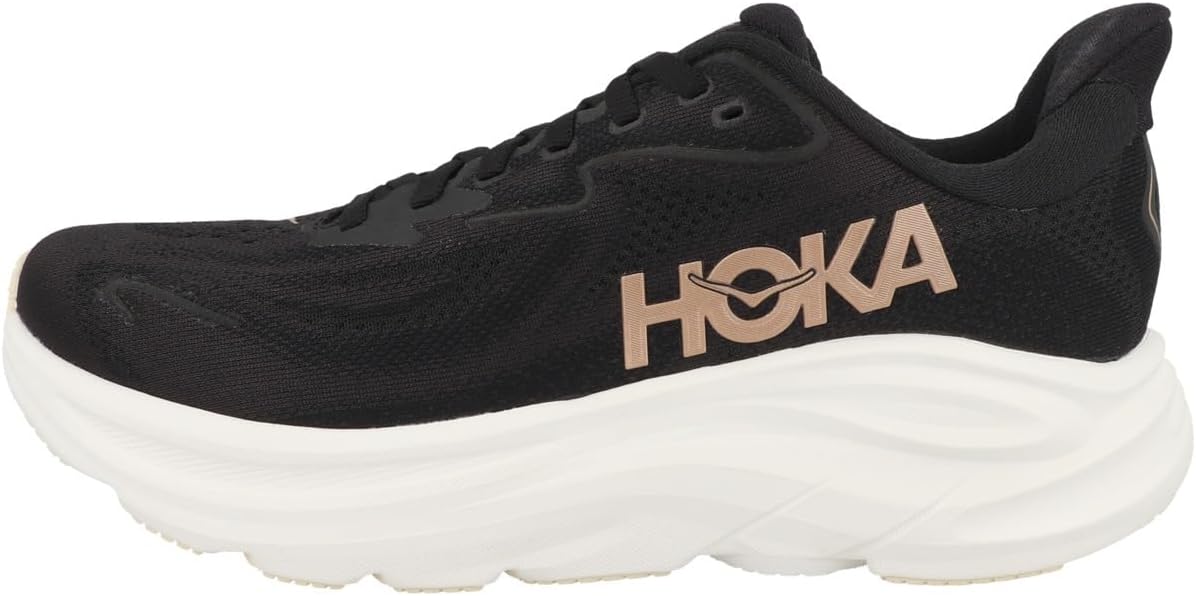
Best for: women who want the Clifton on a last designed around their sizes
The Clifton 10 Women is not the men’s version in different colours: it has a narrower midfoot and a tighter heel on top of the cosmetic changes. Same CMEVA foam, same Meta-Rocker, same relative weight — but the fit is noticeably better for most women who had to crank the laces tight on the unisex version.
If you are a woman and you buy “men’s” shoes because they fit and feel fine, keep doing it (you will save money hunting sizes). But if your midfoot slides around or your heel slips out, this is the answer. It works with any training plan — from starting to run to a marathon.
Comparison table: the 7 Hokas at a glance
| Model | Price | Weight | Drop | Foam | Best for |
|---|---|---|---|---|---|
| Clifton 10 | ~155€ | ~265 g | 8 mm | Supercritical CMEVA | All-in-one |
| Mach 6 | ~130€ | ~225 g | 5 mm | Supercritical EVA | Tempo and intervals |
| Bondi 8 | ~165€ | ~310 g | 4 mm | CMEVA max stack | Long runs / heavier runners |
| Speedgoat 6 GTX | ~165€ | ~310 g | 5 mm | CMEVA + Vibram | All-terrain trail |
| Mach X 3 | ~250€ | ~265 g | 5 mm | PEBA + Pebax plate | Quality sessions |
| Cielo X1 3 | ~250€ | ~225 g | 7 mm | PEBA + carbon | Racing 10K-42K |
| Clifton 10 Women | ~155€ | ~220 g | 8 mm | Supercritical CMEVA | Women’s last |
Which Hoka running shoe is right for you?
- I want ONE shoe for everything: Clifton 10 — the most complete and best-selling shoe in the range. (If you are a woman, Clifton 10 Women.)
- I run intervals or tempo, or want a nimble second shoe: Mach 6 — the best weight-to-price ratio in the range.
- I am seriously preparing a race (10K, half, marathon): Mach X 3 to train hard + a training plan + Cielo X1 3 for race day.
- Comfort first / I run at a higher body weight: Bondi 8 — maximum foam stack.
- The mountains are calling: Speedgoat 6 GTX — the global benchmark.
- I race flat out: Cielo X1 3 (full carbon).
Frequently asked questions about Hoka running shoes
Which Hoka running shoe is best in 2026?
For most runners, the Clifton 10 (~155€): soft CMEVA cushioning, a sensible weight (~265 g) and the versatility that has made the Clifton Hoka’s best-selling shoe for a decade. If you are a heavier runner or you want very comfortable easy runs, go for the Bondi 8. If you train at pace, the Mach 6.
What is the difference between the Hoka Clifton and the Bondi?
The Bondi 8 has more foam and more weight (~310 g): it is the most cushioned shoe in the range, built for long easy runs and heavier runners. The Clifton 10 is lighter (~265 g) and more versatile: it works for easy runs and for moderate paces. If in doubt, Clifton — the Bondi feels slow if you do not need its extra protection.
Is Hoka good for trail running?
Yes, it is one of the benchmark brands. The Speedgoat 6 (with or without Gore-Tex) is one of the best-selling trail shoes in the world: excellent Vibram Megagrip traction, cushioning built for ultras and solid protection against rocks. For dry terrain with no rain, consider the non-GTX version (more breathable, ~30€ cheaper).
Are Hoka shoes good for a marathon?
Yes, at every level. For training: Clifton 10 or Bondi 8 for easy runs, Mach 6 for intervals. For racing: the Cielo X1 3 (carbon plate, PEBA foam) is Hoka’s supershoe, comparable to the Nike Vaporfly or the Adidas Adios Pro. For tempo work and hard sessions without burning through your race shoe: the Mach X 3 with its Pebax plate.
How many kilometres do Hoka shoes last?
Training shoes (Clifton, Bondi, Mach 6, Speedgoat) last between 600 and 800 km. Racing shoes with PEBA foam and a carbon plate (Cielo X1 3, Rocket X) are closer to 250-400 km: the foam prioritises energy return over durability. You will find the exact signs that it is time to replace them in our guide on how long running shoes last.
Where can you buy Hoka running shoes?
Amazon Spain carries good stock of the training models (Clifton, Mach 6, Bondi, Speedgoat) at prices close to RRP, with fast shipping and easy returns if the size is off. For top racing models with limited stock (Cielo X1 3, Rocket X) or recent updates (Bondi 9, Mach 6 v2), always compare with hoka.com — on Amazon they are sometimes sold by third parties at a markup.
Conclusion
Hoka has gone from niche ultra-trail brand to global running reference in 15 years, and the 2026 catalogue shows it: an excellent shoe for every use case, at prices running from 130€ (Mach 6) to 250€ (Cielo X1 3) at the serious end, with no strange gaps in quality.
If I had to pick one, it would be the Clifton 10: there is a reason it has been Hoka’s best seller for a decade — it is the easiest shoe to run in for almost any runner. And if you want a second shoe for pace work without spending as much, the Mach 6 at 130€.
Shoes are half the equation. The other half is consistency — and that is what CorrerJuntos is for: plans that adapt to you, people running your pace near home, and a coach who does not leave you hanging. You can also compare Hoka with other brands in our guides to Nike, Adidas and On Running, or in our roundup of the best road running shoes.