Real-world experience: 400 km test
Review after 4 months of useThe ASICS Novablast 5 is one of the most talked-about daily trainers of 2026. In this editorial analysis we break down its midsole, outsole and upper based on the manufacturer specifications and the consensus among runners already using it, and compare it with its direct rivals.
I analyzed them on runs ranging from 10 to 25 km across urban pavement, parks, and packed-dirt paths. In temperatures from 5 to 22°C. On easy-effort days at 5:30/km and tempo sessions at 4:30/km. The result has been consistent: a ride with addictive bounce, a smooth heel-to-toe transition, and a weight of 255 g that makes the kilometers fly by.
ASICS has made a meaningful leap with the fifth generation of the Novablast. If the Novablast 4 was already trading blows with the Hoka Clifton 10, version 5 raises the stakes with 8.5% more bounce thanks to a reformulated FF BLAST MAX foam —now 100% POE (polyolefin elastomer), completely free of EVA—. The result is a shoe that competes head-to-head with the best on the market at a more competitive price point. Let’s break it down zone by zone.
400 km
Kilometers of real-world testing over 4 months
8.7/10
Overall score from our analysis
600-800 km
Estimated outsole durability

Price: €139.99 · Free shipping with Prime
What surprised me most about the Novablast 5 is how ASICS managed to increase cushioning without sacrificing responsiveness. In many maximalist trainers, more foam means more weight and less agility. Not here: at 255 g, the Novablast 5 is lighter than most of its direct rivals —including the Nike Vomero 18 (283 g) and the ASICS Nimbus 26 (290 g)—. It is a notable engineering achievement that translates into easier kilometers.
If you are looking for the best running shoes of 2026, the Novablast 5 deserves a spot on your shortlist. But before you decide, let’s see exactly what it delivers in every department.
Technical specifications
| Specification | ASICS Novablast 5 |
|---|---|
| Weight | 255 g (men’s US 9.5) / 225 g (women’s US 7.5) |
| Drop | 8 mm |
| Stack height | 41.5 mm (heel) / 33.5 mm (forefoot) |
| Midsole | FF BLAST MAX (100% POE, zero EVA) |
| Outsole | AHAR+ rubber (high abrasion rubber) |
| Upper | Engineered jacquard mesh with heat-bonded overlays |
| Gait type | Neutral |
| Recommended use | Daily runs, long runs, easy tempos |
| Estimated durability | 600-800 km |
| MSRP | 139.99 € |
One of the clearest competitive advantages of the Novablast 5 lies in its weight-to-cushioning ratio. At 255 g and 41.5 mm of stack, it delivers more foam than the Nike Vomero 18 (40 mm) while weighing 28 g less. That is well-applied engineering.
Midsole: FF BLAST MAX
Key technologyThe heart of the Novablast 5 is its FF BLAST MAX midsole foam, the evolution of the FF BLAST PLUS that ASICS uses in models like the Nimbus 26. The fundamental difference is that the new formulation completely eliminates EVA —it uses 100% polyolefin elastomer (POE)—, which translates into more pronounced bounce, lower weight, and better energy return.
The on-foot feel is markedly different from the previous generation. The Novablast 4 was already a reactive shoe, but the 5 takes that characteristic to the next level. Each footstrike returns a notable amount of energy, creating a sensation of propulsion that feels more like a race day shoe than a daily trainer. It is the kind of bounce that makes you want to keep running —the quality ASICS calls “trampoline-like” and which runners using it describe consistently.
Official ASICS data for FF BLAST MAX vs FF BLAST PLUS foam
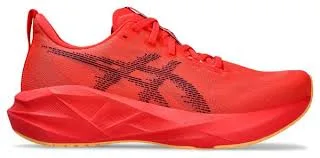
The stride transition deserves special mention. ASICS has optimized the rocker geometry in this generation, softening the toe curve to facilitate toe-off. The result is a heel-midfoot-toe transition that feels fluid and natural, without the exaggerated “rocking chair” effect of the Hokas. It is a subtle but effective rocker that helps maintain cadence without forcing a specific running mechanic.
A note on stability: with 41.5 mm of stack and highly reactive foam, runners coming from firmer shoes may feel a slight instability during the first few kilometers. ASICS has widened the base slightly compared to the Novablast 4 to compensate, but it remains a shoe that works best for runners with good running form. If you are just starting out, check our beginner’s guide to running and adapt progressively.
Where the FF BLAST MAX truly shines is on long runs. Beyond km 15, when legs start to feel the fatigue, the foam’s bounce compensates for the loss of muscular force. On my long runs of 22-25 km, I noticed a significant difference in the final stages compared to the Novablast 4 or the Nike Pegasus 41: legs arrive less fatigued and post-workout recovery is faster. If you want to learn how to manage your paces on these runs, check our pace guide for beginners.
Outsole: AHAR+ rubber
DurabilityThe outsole of the Novablast 5 uses AHAR+ (ASICS High Abrasion Rubber), ASICS’s high-abrasion rubber compound, strategically placed in high-wear zones: the outer heel and metatarsal area. The rest of the outsole leaves the FF BLAST MAX foam exposed to ground contact, which reduces weight but also raises questions about long-term durability.
Grip on dry pavement: Very good. The flat lugs of the AHAR+ bite well into asphalt and deliver a secure feel with every footstrike. On cobblestones and varied urban surfaces, performance is excellent. It also handles packed dirt paths and park trails without issue.
Grip on wet surfaces: This is where the Novablast 5 shows its weakest point. On wet asphalt, performance is acceptable but not exceptional, and on smooth surfaces like polished tiles, painted crosswalks, or metal grates, grip drops considerably. If you regularly run in the rain, I recommend checking our guide to the best road running shoes with Continental or other superior wet-grip outsole technologies.
Durability: The AHAR+ rubber in the reinforced zones is one of the most resistant compounds ASICS makes; the exposed foam areas are, as across the whole series, the first thing to wear down. The estimated outsole lifespan is 600-800 km before needing replacement, depending on the runner’s weight and typical surface. If you want to know when it is time for new shoes, read our guide on how long running shoes last.
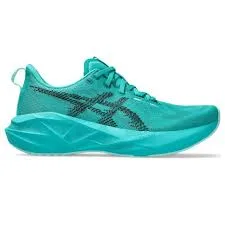
Compared to the improved Waffle outsole on the Nike Vomero 18 (estimated at 700-900 km), the Novablast 5 falls slightly short on durability. However, the lower retail price (139.99€ vs 159.99€) compensates for that difference in cost per kilometer. It also falls behind the ASICS Nimbus 26, which has more rubber covering the outsole and achieves similar durability figures with more uniform wear.
Upper: Jacquard mesh
BreathabilityThe Novablast 5 debuts an engineered jacquard mesh upper with heat-bonded overlays in key zones. It is a multi-layer mesh with varying densities: more open across the instep and sides to promote ventilation, and denser through the midfoot and toe box to provide structure and lockdown.
Breathability from the jacquard mesh upper is excellent, designed to keep feet cool even above 18°C. The heat-bonded overlays replace traditional stitching, which eliminates potential friction points. The design is aimed at minimising blisters and hot spots —something not every upper in this price range can guarantee.
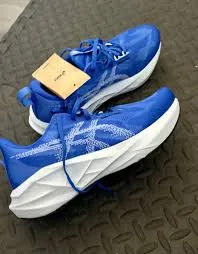
The padded collar around the ankle is thicker than on the Novablast 4, providing a better embrace without generating excessive pressure. The tongue is partially integrated into the upper via lateral panels, preventing it from sliding during runs —a common issue with free-floating tongues.
The toe box features a more reinforced mesh that protects the toes from frontal impacts without compromising flexibility. It is a well-executed balance: protection where it matters, ventilation where it is needed.
The only area for improvement in the upper is its behavior under heavy rain. Being such a breathable mesh, water penetrates quickly. On rainy days, feet get soaked within the first few kilometers. If you frequently run in the rain, keep that in mind —though, to be fair, virtually no neutral running shoe resists prolonged rainfall.
Fit and last
ComfortThe Novablast 5 has a standard ASICS last with a generous toe box. It is not as wide as the Nike Vomero 18, but offers enough room for the toes to splay freely without feeling cramped. It is a balanced last that works well for most foot shapes.
The midfoot lockdown is one of this shoe’s strongest points. The heat-bonded overlays combined with the traditional lacing system create a precise lockdown that keeps the foot secure during turns, pace changes, and downhill sections. Over 400 km, I have experienced zero lateral slippage.
The heel counter is firm but not rigid, wrapping the ankle securely. The improved padded collar adds comfort without adding excessive bulk. It is one of those details you appreciate on long runs, when fatigue causes the foot to move more inside the shoe.
Wide foot
Good fit in the standard version. If you need more room, look for the wide (2E) option. The toe box is slightly narrower than the Vomero 18.
Normal foot
Perfect fit. The midfoot hugs well and the toe area offers just the right amount of room. No break-in period needed.
Narrow foot
Works well with the laces tightened. The midfoot support system is effective enough to prevent lateral sliding.
Train with a plan adapted to your level
Download CorrerJuntos and discover training plans to get the most out of your new shoes — from couch to marathon.
Novablast 5 vs Novablast 4: what changed?
ComparisonThe Novablast 5 represents a substantial upgrade over the 4. This is not a simple cosmetic refresh —ASICS has completely reformulated the midsole foam, redesigned the upper, and added more stack height. Here are the key changes:
| Feature | Novablast 4 | Novablast 5 |
|---|---|---|
| Weight | 262 g | 255 g (-7 g) |
| Drop | 8 mm | 8 mm (same) |
| Stack height | 39 mm / 31 mm | 41.5 mm / 33.5 mm (+2.5 mm) |
| Midsole | FF BLAST PLUS (EVA + POE) | FF BLAST MAX (100% POE) |
| Upper | Single-layer mesh | Jacquard mesh + heat-bonded overlays |
| Outsole | AHAR (standard) | AHAR+ (improved) |
| Bounce | Baseline | +8.5% more bounce |
| Price | 139.99 € | 139.99 € (same) |
The most significant change is the foam reformulation. Going from FF BLAST PLUS (EVA+POE blend) to FF BLAST MAX (100% POE) has allowed ASICS to reduce weight and increase bounce simultaneously. It is the same path Nike took with ZoomX and Hoka is following with its latest-generation foams. The industry trend is clear: less EVA, more advanced polymers.
The upper has also stepped up. The single-layer mesh of the Novablast 4, while functional, felt somewhat basic compared to the competition. The new multi-layer jacquard mesh with heat-bonded overlays elevates the perceived quality and improves both lockdown and breathability. It is an upper that does not look out of place alongside models priced 20€ higher.
Competitor comparison
Head to headThe Novablast 5 competes in the reactive cushioning segment at the mid-to-upper price tier, where it faces models from Hoka, Nike, ASICS, and New Balance. Here is the head-to-head comparison:
| Model | Weight | Drop | Midsole | Price | Best for |
|---|---|---|---|---|---|
| ASICS Novablast 5 | 255 g | 8 mm | FF BLAST MAX | 139.99 € | Bounce + lightness |
| Hoka Clifton 10 | 248 g | 5 mm | Compressed CMEVA | 149.95 € | Softness + rocker |
| Nike Pegasus 41 | 260 g | 10 mm | ReactX + Air Zoom | 139.99 € | Total versatility |
| ASICS Nimbus 26 | 290 g | 8 mm | FF Blast Plus Eco | 159.99 € | Max cushioning + stability |
| Nike Vomero 18 | 283 g | 10 mm | ZoomX + Air Zoom | 159.99 € | Premium cushioning + durability |
Novablast 5 vs Hoka Clifton 10
This is the marquee daily trainer comparison of 2026. The Clifton 10 is 7 g lighter (248 g vs 255 g) and features a more pronounced rocker that facilitates transitions more noticeably. The Novablast 5, for its part, has more bounce and stack height (41.5 mm vs 35 mm), generating a more dynamic feel with every footstrike. The Clifton delivers a soft, enveloping ride; the Novablast, an explosive, fun ride. If you want softness, Clifton. If you want energy, Novablast. And the Novablast is 10€ cheaper. Full analysis in our Clifton 10 vs Novablast 5 comparison.
Novablast 5 vs Nike Pegasus 41
The Pegasus 41 is the most versatile shoe on the market: it works for easy runs, light intervals, tempo, and even races. The Novablast 5 is lighter (255 g vs 260 g) and offers more cushioning with its 41.5 mm stack versus the Pegasus’s 36 mm. However, the Pegasus wins on versatility —it can handle any type of workout, while the Novablast is more focused on easy runs and long runs. If you want one shoe for everything, Pegasus. If you want to specialize in easy running with extra comfort, Novablast.
Novablast 5 vs ASICS Nimbus 26
The ASICS civil war. The Nimbus 26 is 35 g heavier (290 g), 20€ more expensive (159.99€), and uses FF BLAST PLUS ECO foam (less reactive than the Novablast’s FF BLAST MAX). In return, the Nimbus offers a wider, more stable platform, a more premium upper with PureGEL, and greater outsole durability. If you weigh over 80 kg and prioritize stability, Nimbus. If you weigh less and value lightness and bounce, the Novablast 5 is objectively better and cheaper.
Novablast 5 vs Nike Vomero 18
The Vomero 18 is Nike’s premium cushioning benchmark, but it pays a penalty in weight (283 g) and price (159.99€). The Novablast 5 delivers comparable cushioning at 28 g less and 20€ cheaper. The Vomero wins on outsole durability (700-900 km vs 600-800 km) and last width. If you prioritize extreme durability and a wide last, Vomero. If you prioritize value for money and lightness, Novablast. Read our full Vomero 18 review for more details.
Who it’s for / Who it’s NOT for
- You run 3-5 days per week and regularly log runs of 8-25 km
- You weigh under 85 kg and want a light shoe with generous cushioning
- You love bounce and want a shoe that returns energy with every stride
- You are training for a half marathon or marathon and use it as your easy-day shoe (with a faster shoe for intervals and racing)
- You value bang for your buck — at 139.99€ it is one of the best options on the market
- You are a beginner or intermediate runner and want joint protection without a weight penalty. Read our beginner’s guide to running
- You weigh over 85-90 kg — the foam may feel too soft and lose stability. Consider the ASICS Nimbus 26 or the Nike Vomero 18
- You need extreme versatility — it is not ideal for intervals or fartlek at paces below 4:15/km. For that, the Nike Pegasus 41 is more versatile
- You prioritize stability — with 41.5 mm of stack and highly reactive foam, runners prone to overpronation may find it unstable
- You run trail — the AHAR+ outsole lacks traction for technical terrain. Check our best trail running shoes
- You need maximum durability — the exposed foam zones wear faster than outsoles with full rubber coverage

Final verdict: 8.7/10
ScoreThe best value daily trainer of 2026
Pros
- Addictive bounce — FF BLAST MAX creates a propulsive feel that makes kilometers easier
- Exceptional weight — 255 g with 41.5 mm of stack is a segment-leading ratio
- Competitive price — 139.99€ is 20€ less than the Vomero 18 and Nimbus 26
- Improved upper — jacquard mesh with heat-bonded overlays: breathable, blister-free, with solid lockdown
- Versatile pace range — performs from 4:30/km tempos to 6:30/km easy runs
- Smooth transition — subtle rocker that facilitates cadence without forcing running mechanics
Cons
- Wet grip needs work — on smooth wet surfaces traction drops noticeably
- Stability for heavier runners — runners over 85 kg may find it unstable due to the foam’s reactivity
- Exposed foam on outsole — reduces lifespan compared to outsoles with full rubber coverage
- 41.5 mm stack height — exceeds the World Athletics limit for regulated competition
The ASICS Novablast 5 is, in my view, the best value daily trainer of 2026. The combination of pure FF BLAST MAX foam, 255 g of weight, and a 139.99€ price point produces a product that outperforms rivals priced 20€ higher in many categories. If your priority is enjoying every kilometer with bounce that puts a smile on your face, protecting your joints without carrying extra weight, and not paying more than necessary, the Novablast 5 is your shoe.
It is the shoe I reach for when I want to enjoy running —and at the end of the day, that is what matters most.
Recommended alternatives
Transparency: This article contains Amazon affiliate links. If you purchase through them, we earn a small commission at no extra cost to you.


Frequently asked questions
Is the ASICS Novablast 5 worth it?
Yes, it is worth it if you want a shoe with reactive, fun cushioning for daily runs and long runs. The FF BLAST MAX foam delivers 8.5% more bounce than the previous version, at just 255 g. It is especially recommended for runners up to 85 kg who want an energetic ride at a price of 139.99€.
What type of gait is the Novablast 5 designed for?
It is designed for neutral runners. If you are a mild overpronator you can use it without issues, but if you need specific pronation support, models like the ASICS Kayano 31 or ASICS GT-2000 12 are better options.
How many km do the ASICS Novablast 5 last?
Estimated durability is 600-800 km. The AHAR+ rubber zones are highly resistant; the exposed foam areas are the first to wear down. It is competitive durability for its 139.99€ price point.
Is the Novablast 5 good for beginners?
Yes, it is excellent for beginners thanks to its generous cushioning, light weight of 255 g, and accessible price of 139.99€. The FF BLAST MAX foam protects joints from the very first kilometer. Check our beginner’s guide to running to complement your gear.
Novablast 5 or Hoka Clifton 10?
The Novablast 5 offers more bounce and a dynamic feel, while the Clifton 10 provides a softer ride with a more pronounced rocker. The Novablast is 7 g heavier but 10€ cheaper. If you want fun and bounce, Novablast. If you prefer softness and extreme lightness, Clifton. More details in our Clifton 10 vs Novablast 5 comparison.
Novablast 5 vs Nike Pegasus 41?
The Novablast 5 is lighter (255 g vs 260 g) and offers more cushioning (41.5 mm vs 36 mm stack). The Pegasus 41 is more versatile and performs better for faster paces and intervals. If you want to specialize in easy runs, Novablast. If you want an all-around shoe, Pegasus.
Is the Novablast 5 good for half marathon?
Yes, it is an excellent option for half marathon at paces of 4:45-6:30/km. Its 255 g weight and FF BLAST MAX bounce make it competitive at long distances. For times under 1h25, a carbon plate shoe would be more suitable.
How much do the ASICS Novablast 5 weigh?
The ASICS Novablast 5 weigh 255 g in men’s US 9.5 and 225 g in women’s US 7.5. It is one of the lightest weights in the maximalist segment, only surpassed by the Hoka Clifton 10 (248 g). It represents a 7 g reduction from the Novablast 4.
Find your ideal running shoe
Download CorrerJuntos and discover training plans adapted to your level — for free.