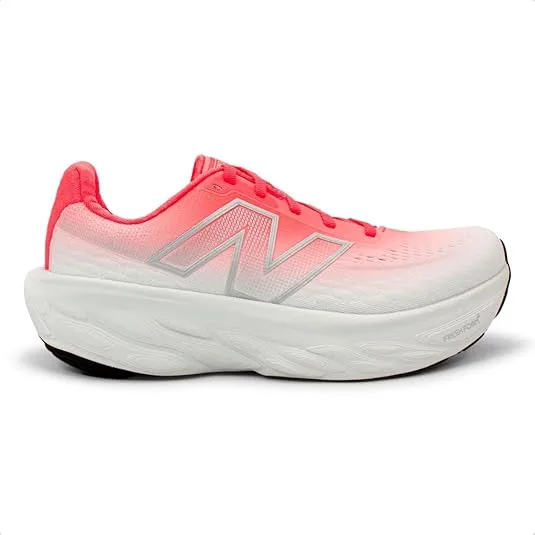
New Balance 1080 vs Hoka Clifton: Complete Comparison 2026
Two of the most popular maximalist running shoes go head-to-head. Which one deserves a spot in your rotation?
Two of the most popular maximalist running shoes go head-to-head. Which one deserves a spot in your rotation?
The New Balance Fresh Foam 1080v14 and the Hoka Clifton 9 are two of the most popular maximalist neutral running shoes in the world. Both target runners who want generous cushioning for daily training and long runs. Despite occupying the same category, they take noticeably different approaches to achieving that goal.
The 1080 uses Fresh Foam X, a dense and plush compound with a high stack height of 36mm. It weighs 298g with a 6mm drop. The Clifton uses a lighter, bouncier foam with a 33mm stack, weighing just 248g with a 5mm drop. On paper, the Clifton is the lighter option; the 1080 is the more cushioned one. But numbers only tell part of the story. For broader context, see our complete best neutral shoes ranking.

NB 1080 v14

Hoka Clifton
The Fresh Foam X midsole in the 1080 provides a cushioning experience that is best described as plush and supportive. The foam has a higher density than the Clifton's, meaning it absorbs more impact but returns slightly less energy. For runners over 80 kg, this density is an advantage because the foam does not bottom out even on long runs. The cushioning remains consistent from kilometer 1 to kilometer 30, which is a testament to the foam's resilience.
The Clifton's midsole feels lighter and more responsive. The foam has a lower density, which contributes to the impressive 248g weight, but it also means it compresses more quickly under heavier runners. The rocker geometry is the Clifton's secret weapon: the curved sole design creates a smooth rolling motion from heel strike through toe-off, reducing the effort needed at each transition. This makes the Clifton feel faster than its weight class would suggest.
This is where the 1080 has a clear advantage. New Balance offers the 1080 in standard (D), wide (2E), and extra-wide (4E) widths. The standard width toe box is already roomier than the Clifton's. Runners with wider feet, bunions, or who simply prefer more toe splay will be significantly more comfortable in the 1080. The Clifton fits narrower in the midfoot and forefoot, which provides a more secure lockdown for narrow-to-medium feet but can feel constricting for wider feet.
The 1080 uses a Hypoknit upper that stretches to accommodate the foot while maintaining structure. It feels engineered and precise. The Clifton uses a breathable mesh upper that is lighter and more ventilated but offers less adaptive stretch. Both heels fit well, though the Clifton's heel collar is slightly less padded than the 1080's plush collar.
Find your running with a group
1,100+ runners already train together. Free on iOS.
Both shoes excel here. The 1080 provides a more cushioned, protective ride that shines on runs over 20 km. The extra foam density means less fatigue on longer efforts, especially for heavier runners. The Clifton feels more agile and nimble on easy runs and handles moderate pace increases well. For daily training variety, either shoe works brilliantly. Our shoe buyer's guide can help you understand which qualities matter most for your training style.
The Clifton is the better choice for any session that involves picking up the pace. Its 50g weight advantage and rocker geometry make it feel significantly more responsive at tempo paces. The 1080 can handle moderate speed but starts to feel heavy and unresponsive during faster intervals. Neither shoe is a true speed shoe; for half marathon racing, check our best half marathon shoes guide.
The 1080 has more outsole rubber coverage, providing better grip on wet roads and slightly better durability. The Clifton uses rubber only in high-wear zones, which saves weight but means exposed foam sections wear faster. On dry roads, both perform well. On wet pavement, the 1080 inspires more confidence.
The NB 1080 typically lasts 400-500 miles thanks to its denser foam and more comprehensive outsole rubber. The Clifton averages 350-450 miles, with the lighter foam showing compression sooner and the exposed foam outsole sections wearing down faster. For heavier runners, this gap widens further in favor of the 1080.
The Clifton retails for around 145 dollars; the 1080 for around 165 dollars. The 20-dollar premium for the 1080 is justified by its wider size options, superior durability, and denser cushioning. However, the Clifton offers better value for lighter runners who do not need the extra foam and who benefit from the lighter weight. Both shoes are frequently discounted when new versions release, so timing your purchase can save 30-40 percent. For runners with supination concerns, see our supinator shoe guide.
Both excel at long runs. The 1080 offers more cushioning with its higher stack and denser foam. The Clifton feels lighter with a forward-rolling rocker. Heavier runners may prefer the 1080; lighter runners often prefer the Clifton.
The NB 1080 generally lasts longer (400-500 miles vs 350-450) due to denser foam and more outsole rubber coverage.
Yes. Both offer generous cushioning, forgiving rides, and comfortable fits. The 1080 is slightly more cushioned; the Clifton is slightly lighter and easier to run in.
The NB 1080 has a noticeably wider toe box and comes in 2E and 4E width options. The Clifton fits narrower, especially in the midfoot and forefoot.
The Clifton handles moderate speed work better due to its lighter weight and rocker geometry. The 1080 is better suited for easy and long runs. Neither is a true speed shoe.
The NB 1080 has a 6mm drop; the Clifton has 5mm. The difference is minimal and most runners would not notice it.
Connect with running groups in your city. Free, no commitment.
Join 1,100+ runners
Routes, training plans and tips to run better. No spam.
We respect your privacy. Unsubscribe anytime.