Transparency: This article contains affiliate links to Amazon. If you buy through them, we receive a small commission at no extra cost to you. This does not change the price or our editorial selection.
- Best value for money → Sidas 3D Run Protect (~€30)
- Best for plantar fasciitis → Superfeet Run (~€40)
- Best for overpronation → currexSole RunPro (~€40)
- Best entry-level option → Sorbothane Full Strike (~€18)
- Best for trail → Sidas Run 3Feet Protect Mid (~€37)
Most runners ignore insoles until the pain shows up. Plantar fasciitis, runner's knee, shin splints — in many cases there is a biomechanical component that a good insole can ease. In others, the original insole in your shoe has been flattened since kilometre 400 and you have run another 600 on top of dead foam.
I have gone through the 9 most relevant options on Amazon Spain for 2026, from the €15 entry-level models to the €45 structured ones. There is no perfect insole for everyone: the choice depends on your gait, your arch type, whether you already have an active injury and what kind of shoe you wear. Here it is, no fluff.
When do you actually need running insoles?
Before spending money on insoles, answer three questions:
- Do you get recurring pain in the sole of your foot, heel, knee or shin? If you do, and the pain is linked to running, an insole can help unload the area.
- Do your shoes have more than 600-700 km on them? The original insole flattens before the outsole does. You can be running on dead foam without knowing it. A new insole gives you cushioning back without buying new shoes.
- Has your podiatrist or physio told you that you have marked overpronation, a flat foot or a high arch? That is where an arch-support insole goes from "comfort" to active prevention.
Types of insole: gel, semi-rigid, structured
Not all running insoles work the same way. There are three categories you should know before choosing:
1. Gel or foam insoles (pure cushioning)
Examples: Sorbothane Full Strike, Scholl GelActiv Running, riemot Sport. They absorb ground impact but have little or no biomechanical action. They are the cheapest (€15-€20) and the right fit for neutral runners who just want more comfort or want to delay shoe wear. They do not correct your gait.
2. Semi-rigid insoles with arch support
Examples: Sidas 3D Run Protect, Sidas Run 3Feet Protect Mid, Dr. Scholl's Performance. They combine a layer of foam or gel with a support plate that influences how weight is distributed. They are the sweet spot for most runners: €25-€40, real biomechanical action, compatible with almost any shoe.
3. Structured / orthotic insoles
Examples: Superfeet Run, currexSole RunPro, PowerStep Pinnacle. Deep heel cup, rigid or semi-rigid structure that actively controls overpronation. These influence running mechanics the most and last the longest (800-1,000 km). They are the ones indicated for runners with overpronation, chronic fasciitis or repeat injuries. €35-€50.
The 9 best running insoles of 2026
1 riemot Sport Comfort — best entry-level price
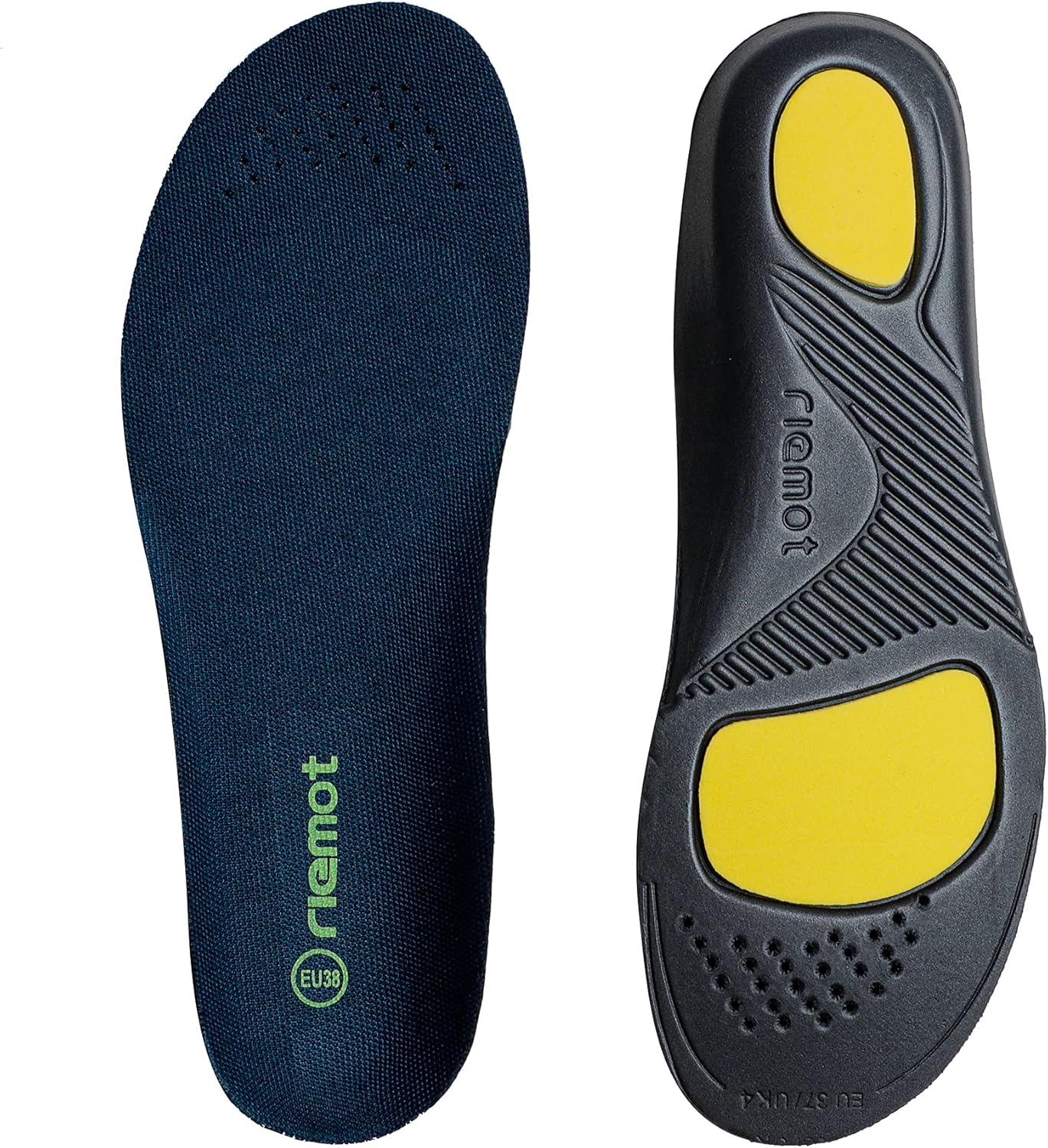
The riemot Sport is the cheapest option on this list that still has real arch support. The EVA base gives you spring and cushioning without adding weight; the 2.5 cm arch is enough for runners with a medium arch and no pathology. The underside has softer EVA zones at the forefoot and heel to absorb impact differentially.
Strengths
- Unbeatable price in its category
- Fits almost any shoe
- Good breathability
- Real arch support (not just flat foam)
Weaknesses
- No structured heel cup
- Not suitable for marked overpronation
- Limited lifespan (~400 km)
- Little information on long-term durability
Who it's for: the occasional runner (fewer than 3 days a week) who wants more comfort without spending much. Not for runners with fasciitis or overpronation.
View on Amazon2 Sorbothane Full Strike — best impact absorption
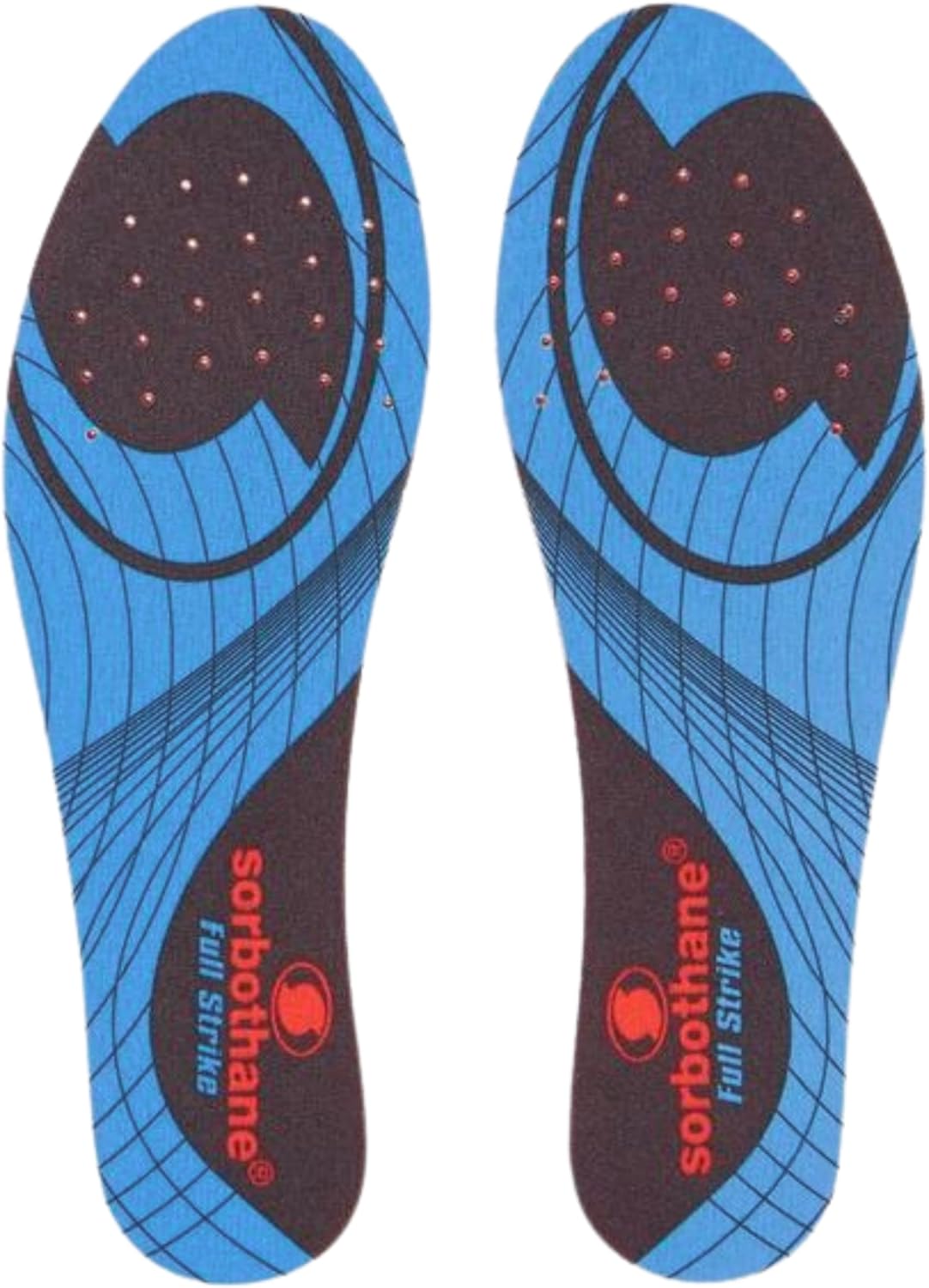
Sorbothane is a proprietary viscoelastic polymer that absorbs 94.7% of heel-strike impact — a verified lab figure. It is not foam: Sorbothane does not bounce back like EVA, it dissipates kinetic energy the way a hydraulic damper does. It is heavy compared with foam insoles, but for runners with a history of shin splints, stress fractures or chronic knee pain, that weight is worth it.
Strengths
- Proprietary material with superior absorption
- Good for shin splints and knee pain
- Antibacterial Coolmax fabric
- Trim-to-fit
Weaknesses
- Heavier than foam insoles
- No active arch support
- Does not change gait biomechanics
- Sizing by UK ranges (can be confusing)
Who it's for: runners with high heel impact, shin splints or knee pain who want cushioning without touching their biomechanics.
View on Amazon3 Scholl GelActiv Running — the pharmacy brand that works
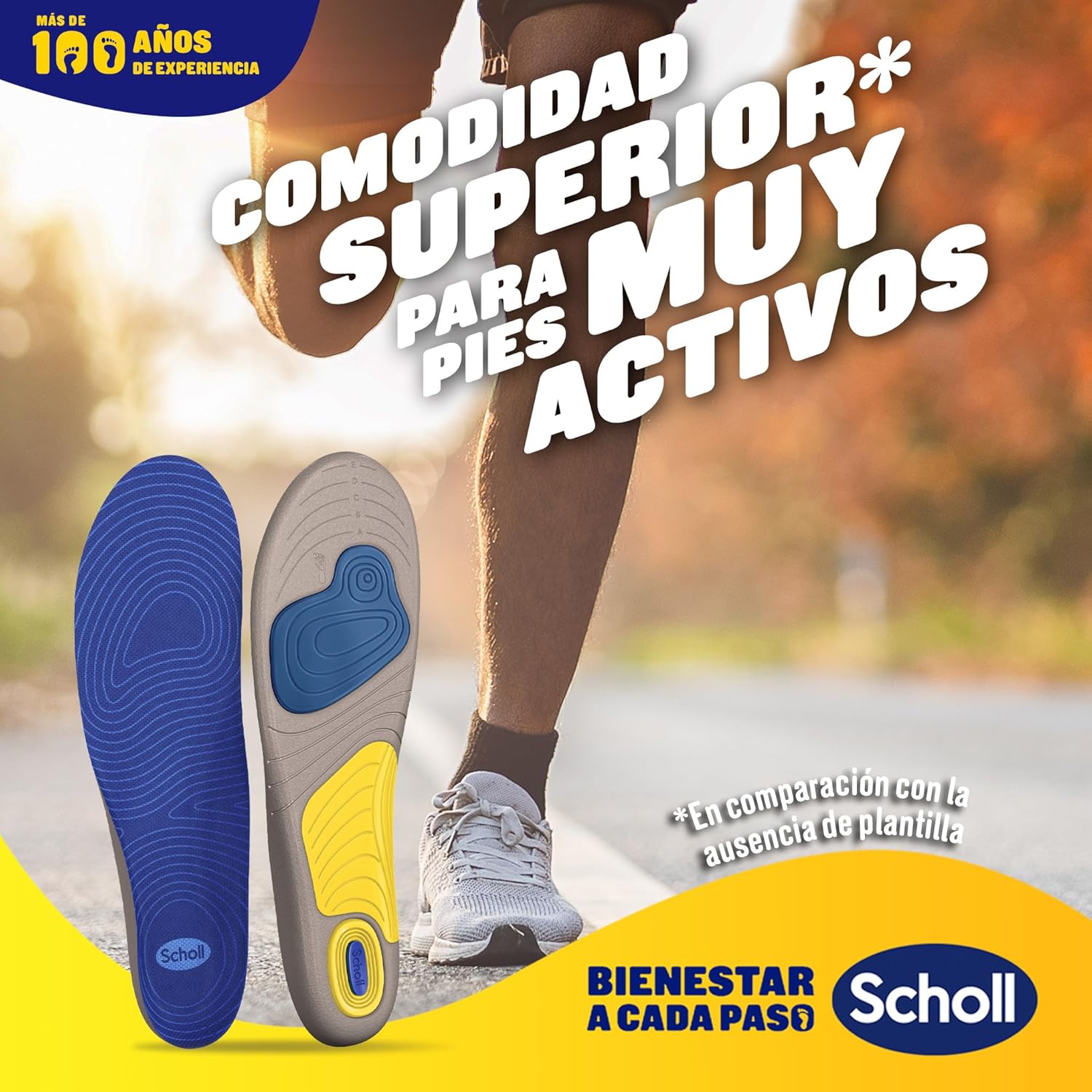
Scholl has been in pharmacies for decades and that breeds distrust among more technical runners. It is not justified: the GelActiv Running is an insole designed specifically for running shoes, with micro impact absorption and basic arch support. It is not the same GelActiv you buy for everyday use — this one has different densities at the heel and forefoot, matched to the impact pattern of running.
Strengths
- Very competitive price
- Designed specifically for running
- Available in pharmacies and on Amazon
- Slim profile, fits almost every shoe
Weaknesses
- Only one men's size range (40-46.5)
- Limited arch support
- Not suitable for severe overpronation or fasciitis
- Average durability (~400-500 km)
Who it's for: neutral runners doing low to medium volume who want a reliable pharmacy insole at a low price. First option if you have never tried insoles and want to test the water without spending.
View on Amazon4 Dr. Scholl's Performance Running — for preventing the classic injuries
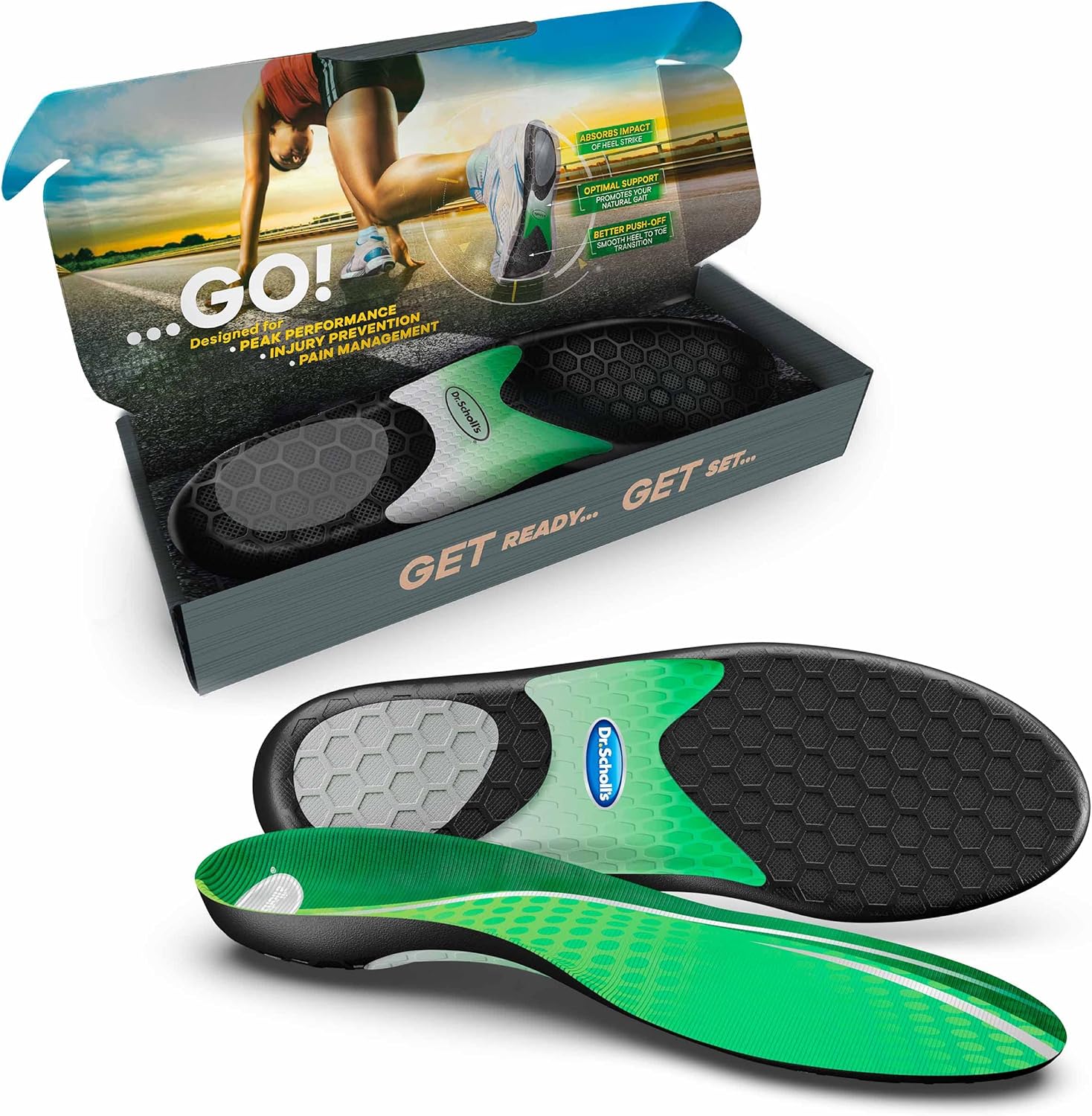
The Dr. Scholl's Performance is the American brand's clinically oriented running model. Its Tri-zone technology splits cushioning across the heel (landing impact), arch (support) and forefoot (propulsion). It is one of the few entry-level insoles that explicitly mentions preventing plantar fasciitis, shin splints and runner's knee — three of the most common injuries in medium-volume runners.
Strengths
- Tri-zone design specific to running
- Aimed at preventing common injuries
- Visible gel at the heel and forefoot
- Good price for the technology included
Weaknesses
- Less well known in Europe than in the US
- No deep heel cup
- Moderate arch support
- Size availability can vary
Who it's for: the runner who has had shin splints or mild fasciitis and wants prevention-oriented insoles without spending much. A good option for going from no insole at all to a basic preventive one.
View on Amazon5 Sidas 3D Run Protect — best value for money
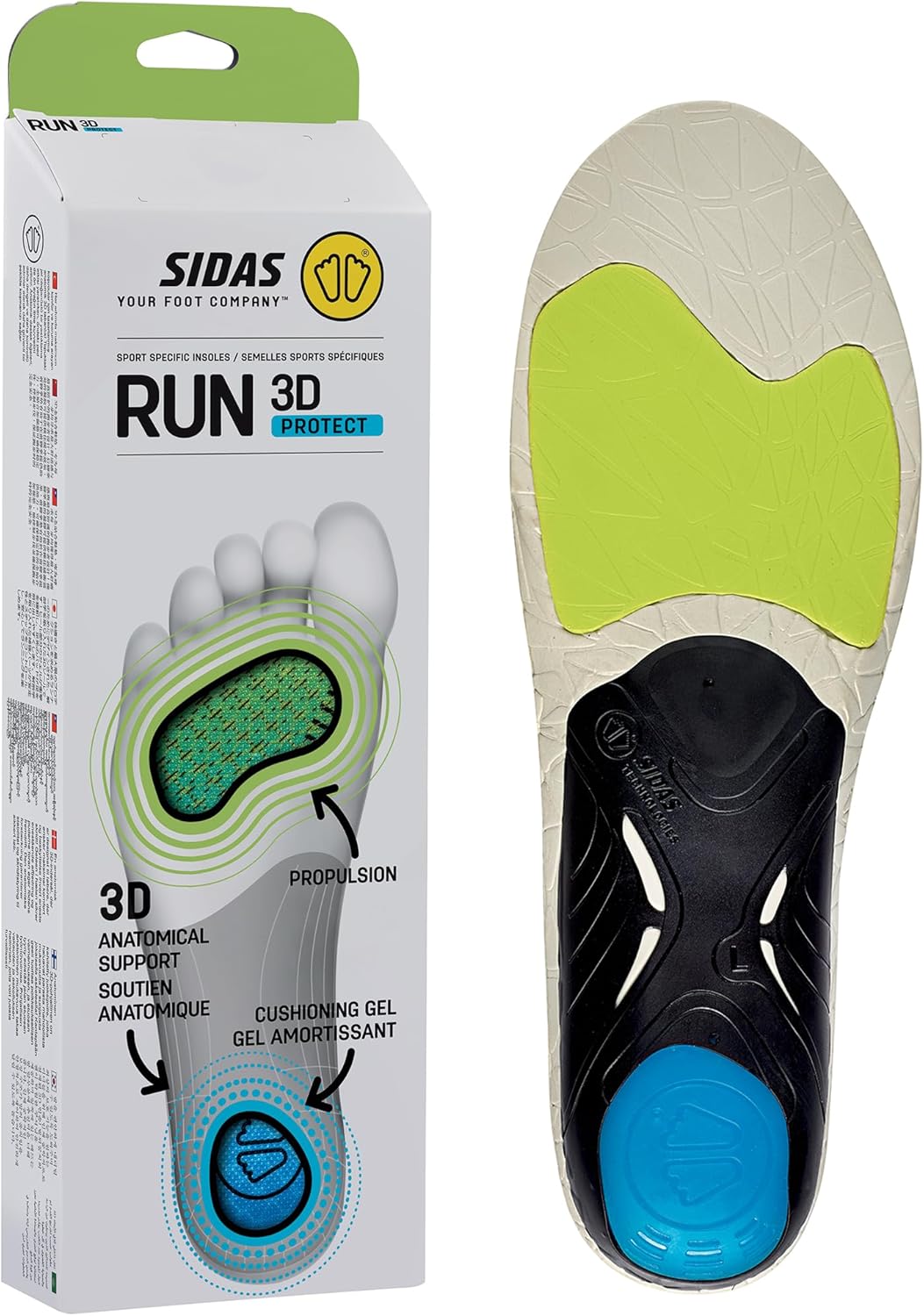
Sidas is a French brand that makes insoles and nothing else — no shoes, no clothing, just insoles. It shows in the design: the 3D Run Protect has a pre-moulded three-dimensional shape (hence the "3D") that settles the foot into a neutral position from the very first run. The heel gel is visible through the transparent inner section and absorbs heel-strike impact efficiently. The green forefoot pad adds energy return during push-off.
This is my main recommendation for the runner who has never used insoles and wants to move up to something with real technology without paying a premium price.
Strengths
- Pre-moulded 3D shape from the start
- Separate heel gel and propulsion pad
- Design validated for road and trail
- Brand that specializes in insoles only
- Better durability than pure gel insoles
Weaknesses
- Pricier than the entry-level options
- No specific profile for marked overpronation
- Can add volume in tight-fitting shoes
Who it's for: neutral runners or mild overpronators running 3-5 days a week who want real cushioning plus support without a trip to the podiatrist. Ideal for mild plantar fasciitis.
View on Amazon6 Sidas Run 3Feet Protect Mid — best for trail
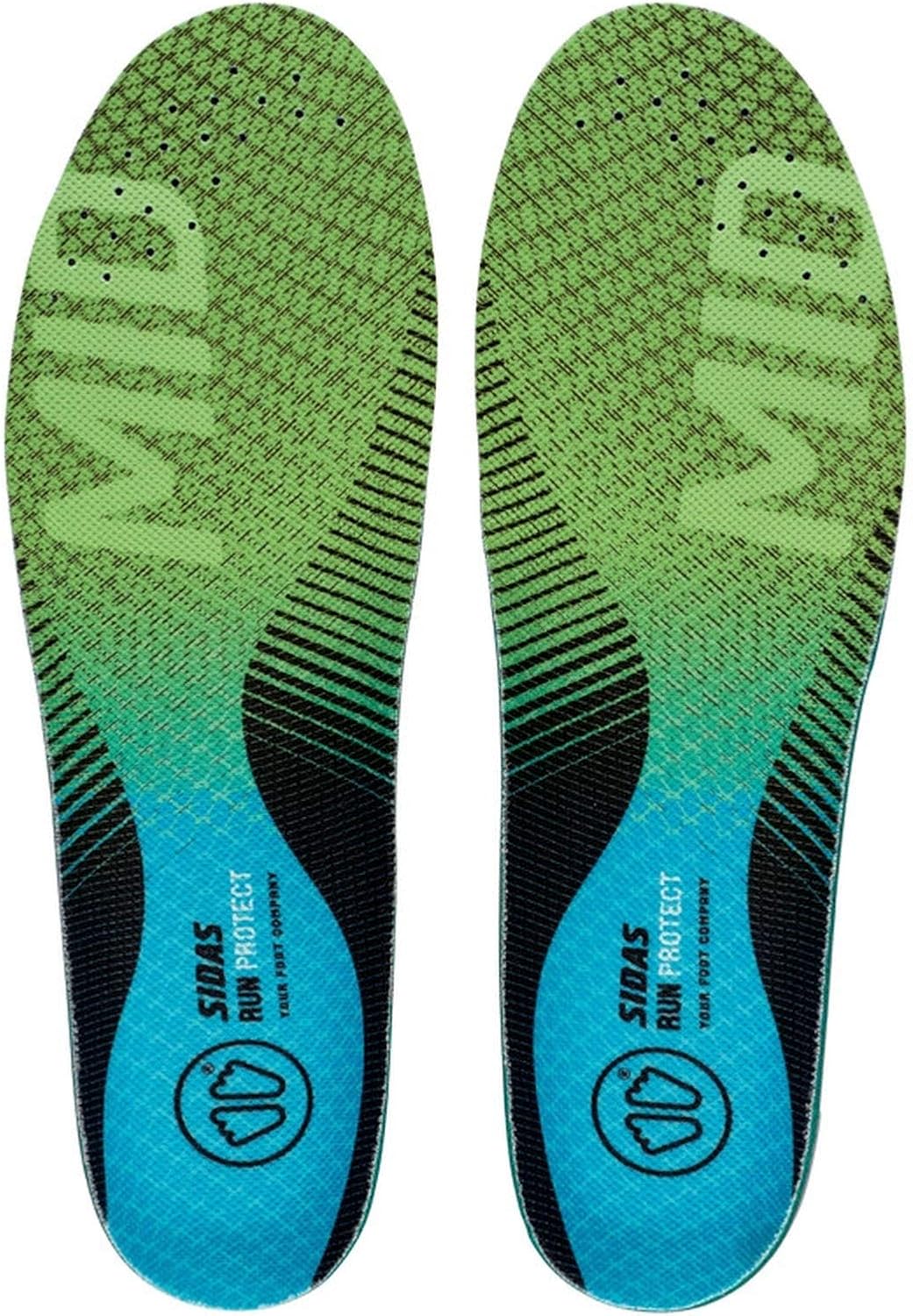
Sidas's 3Feet technology splits feet into three types by arch height (Low, Mid, High) and gives each one its own geometry. This is the Mid version — medium arch — which covers the majority of runners. Unlike the 3D Run Protect, the 3Feet adds extra lateral support that steadies the foot on uneven ground, which is where its advantage on trails and wet tarmac comes from.
It is the most sensible choice for mountain runners or mixed road-trail runners with a medium arch. If you run trail regularly and already have the basic trail running kit, insoles are the add-on that delivers the most per euro spent.
Strengths
- 3Feet technology specific to a medium arch
- Superior lateral stability (trail)
- Heel gel + forefoot rebound
- Works with trail and road shoes
Weaknesses
- Pricier than the 3D Run Protect
- You need to know your arch type (Low/Mid/High)
- May take 1-2 sessions to adapt
Who it's for: trail or mixed-surface runners with a medium arch. If you run pure road with a medium arch, the 3D Run Protect is enough and cheaper. If you hit the trails often, the 3Feet Mid wins.
View on Amazon7 Superfeet Run — best for plantar fasciitis
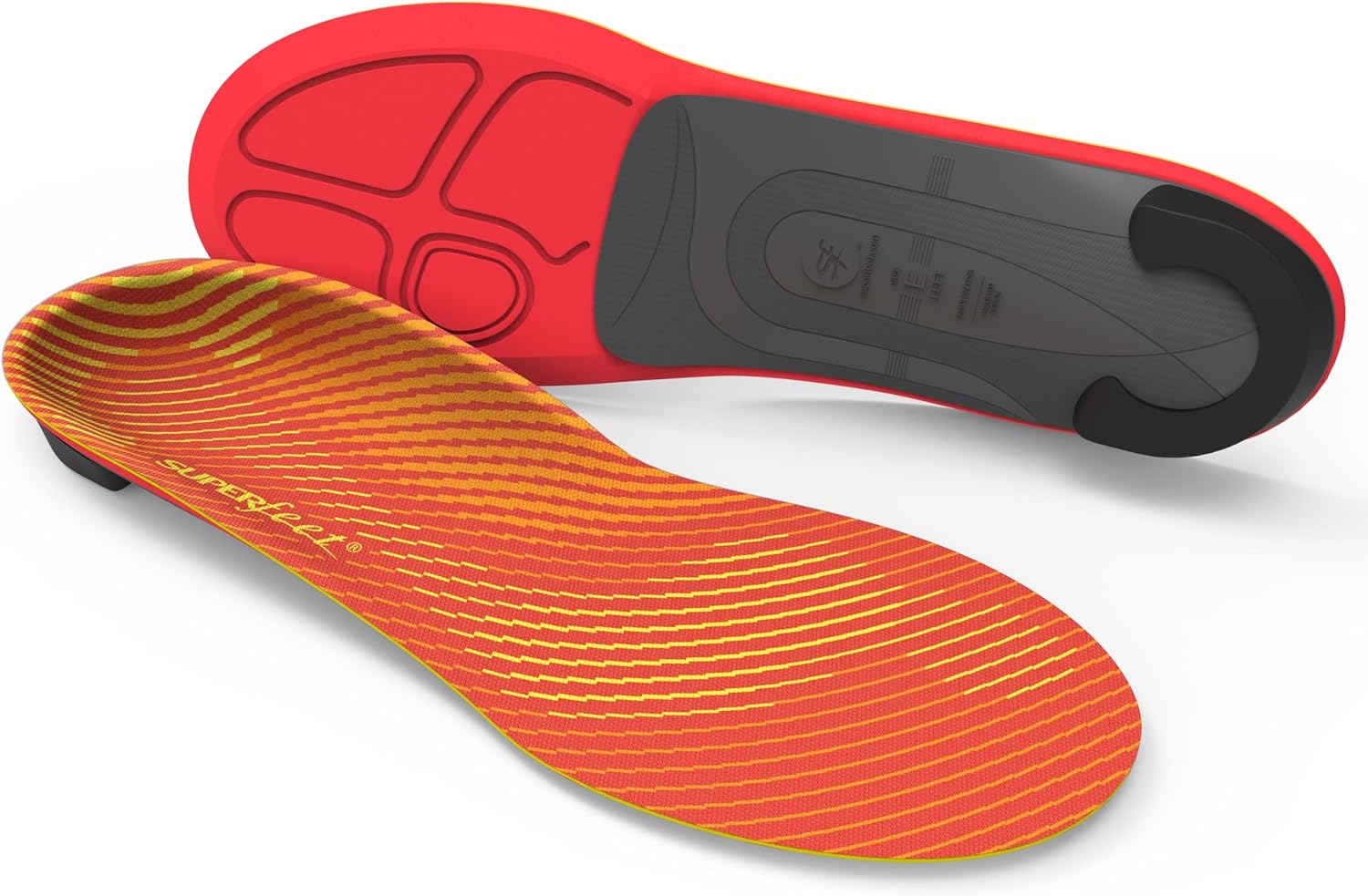
Superfeet has been the reference brand for sports podiatrists in the US since the 1970s, and increasingly so in Spain. Its Run insole combines a carbon fibre plate (EVOLYTE) with AEROSPRING foam and a deep heel cup that stabilizes the calcaneus from the first impact. That heel cup is the key: it does not just cushion, it centres the heel bone and reduces the lateral spread that causes plantar fasciitis.
If you have active or recovering plantar fasciitis, this is the insole most sports physios recommend as a complement. They guarantee 12 months or 800 km of active support — double what the gel options offer.
Strengths
- Deepest heel cup on the list
- Durable carbon plate (800 km guaranteed)
- The one most recommended by sports podiatrists
- Ideal for active or chronic plantar fasciitis
- Trim profile (fits well in running shoes)
Weaknesses
- The priciest of the mid-range insoles
- Can feel stiff at first
- Not for shoes that are very narrow at the heel
Who it's for: runners with plantar fasciitis (active or recurring), runners with a high arch, or anyone who wants the longest-lasting insoles on the market.
View on Amazon8 currexSole RunPro Med — best for overpronation
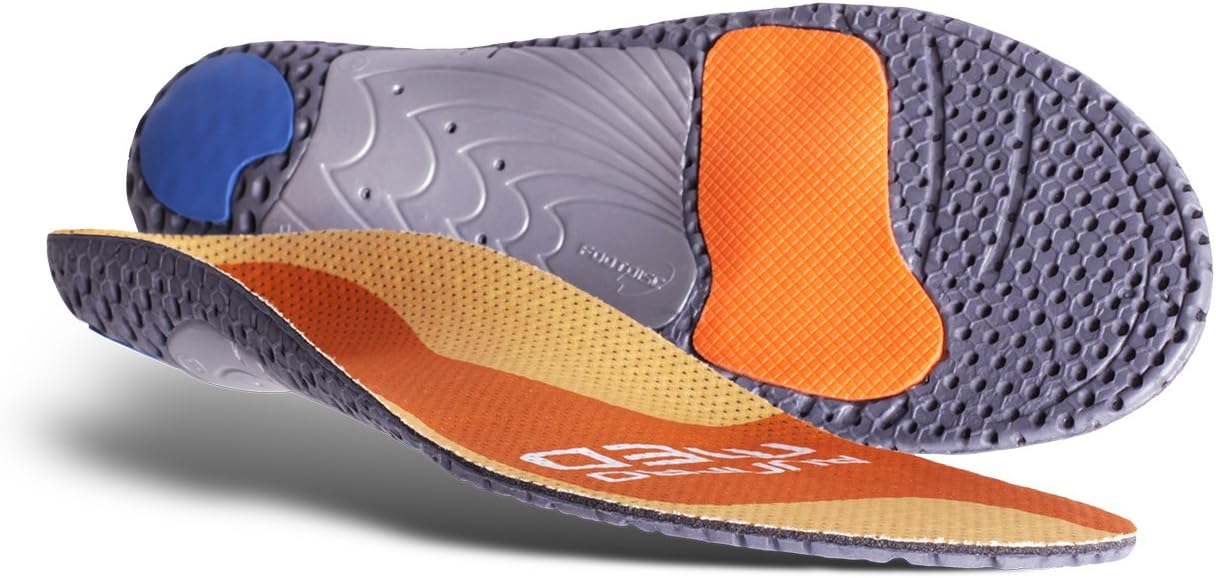
currexSole is the best-selling insole in Europe according to Idealo and Amazon.de data. Its DAT (Dynamic Arch Technology) is semi-rigid: it does not lock the arch the way a rigid orthotic does, it guides and centres the pronation movement within a controlled range. That improves stride efficiency without eliminating the foot's natural cushioning.
The Med version is for a medium arch. There is also a Low (flat foot) and a High (high arch). If you already wear shoes for overpronators but the pronation persists and knee or hip pain shows up, the RunPro is the logical complement. The ASIN listed is EU size 36.5-38.5; other sizes exist — search Amazon ES for currexSole RunPro.
Strengths
- DAT technology, a leader in Europe
- Dynamic correction (not blocking) of pronation
- 3 versions by arch type (Low/Med/High)
- Heel cup optimized for biomechanical guidance
- 3 layers for moisture management
Weaknesses
- Premium price without reaching custom orthotic level
- You need to know your arch for certain (Low/Med/High)
- Availability of specific sizes can vary
Who it's for: runners with medium or marked overpronation, especially those with knee pain while running linked to poor ankle alignment. The first thing to try before asking a podiatrist for custom orthotics.
View on Amazon9 PowerStep Pinnacle Maxx — the premium orthotic alternative
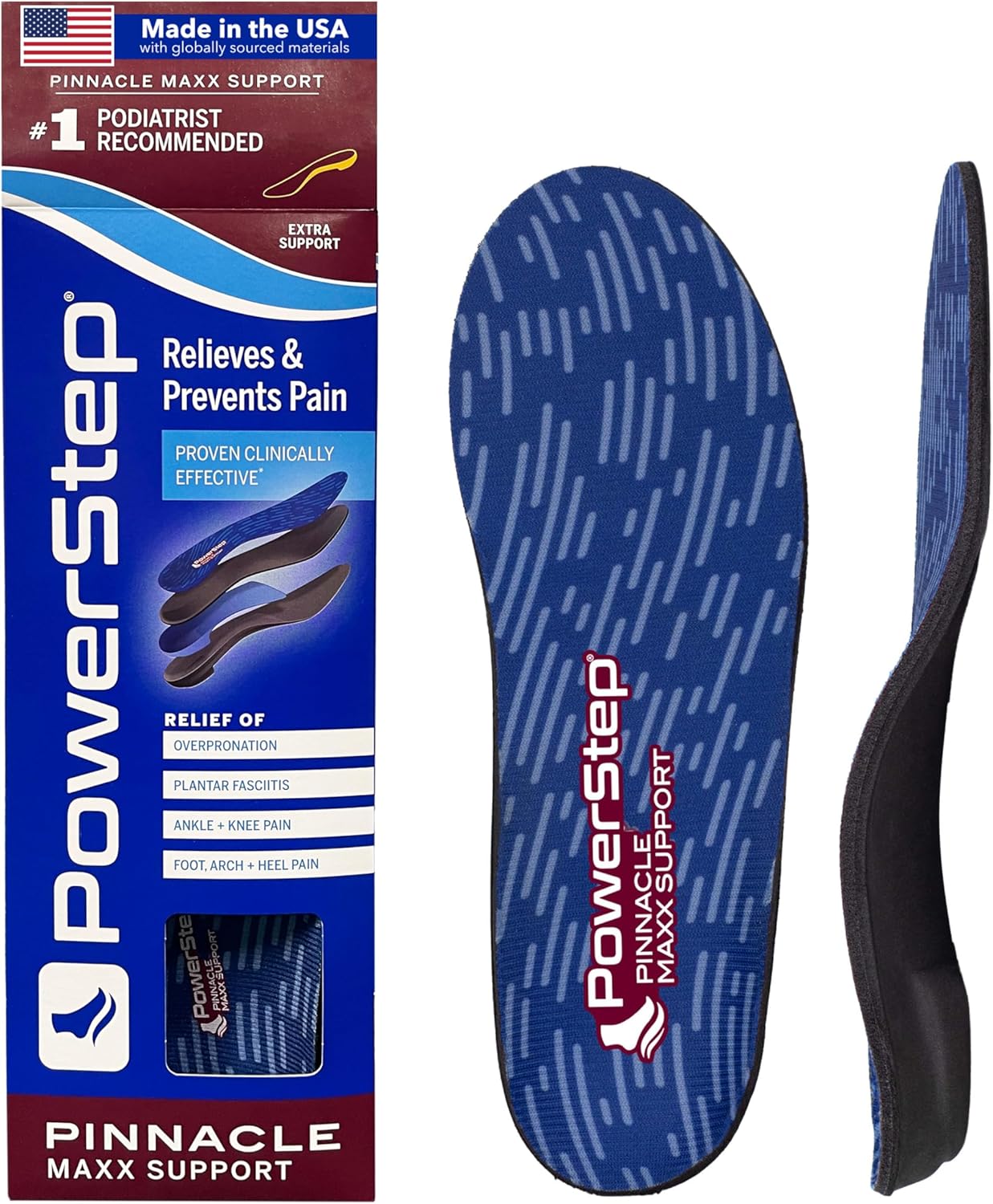
PowerStep Pinnacle is the insole most recommended by podiatrists in the US (from the brand's prescription surveys) and the closest thing to a custom orthotic without the €150-€200 price of a moulded pair. Its semi-rigid base has extra medial arch support to flatten out more marked overpronation. The double-layer foam top cover adds comfort on long sessions.
It is the most expensive option on the list and also the one closest to an orthotic. If your podiatrist has told you that you need orthotics but you want to try something less invasive first, this is the insole that makes most sense to test.
Strengths
- Closest to a custom orthotic without the price
- Maximum medial arch support
- Double-layer top cover for long sessions
- Made in the US with medical-grade materials
- Available on Amazon ES
Weaknesses
- The most expensive on the list
- Thick profile: may not fit minimalist shoes
- Built for maximum support, not for neutral runners
- Less well known in Spain than Sidas or Superfeet
Who it's for: runners with severe overpronation, flat feet, or a history of repeat injuries linked to poor alignment. The ones whose podiatrist has recommended custom orthotics but who want to try something without a mould first.
View on AmazonQuick comparison
| Insole | Price | Type | Arch support | Heel cup | Best for |
|---|---|---|---|---|---|
| riemot Sport | ~€16 | EVA | Basic | No | Entry / comfort |
| Sorbothane Full Strike | ~€18 | Viscoelastic | No | No | Impact absorption |
| Scholl GelActiv Running | ~€16 | Gel | Basic | No | Neutral runner, light running |
| Dr. Scholl's Performance | ~€18 | Gel + support | Moderate | No | Fasciitis / shin splint prevention |
| Sidas 3D Run Protect | ~€30 | 3D + gel | Anatomical | Partial | Best overall value |
| Sidas Run 3Feet Protect Mid | ~€37 | 3Feet + gel | High | Yes | Trail / medium arch |
| Superfeet Run | ~€40 | Carbon + foam | High | Deep | Plantar fasciitis |
| currexSole RunPro Med | ~€40 | Semi-rigid DAT | Dynamic | Optimized | Overpronation |
| PowerStep Pinnacle Maxx | ~€45 | Semi-rigid | Maximum | Deep | Severe overpronation |
Which one should you pick?
If you already have an active training plan and want to line up your gait data with your weekly sessions, at CorrerJuntos you can start the 0-5K plan for free, which includes advice from Coach José on footwear and gear suited to your level.
Train with a plan that fits your gait and your injuries
CorrerJuntos has 0-5K, 10K, half marathon and trail plans. Coach José adapts every week to your injury history and how your body responds. Free to start.
Download CorrerJuntos — freeiOS & Android · No credit card
Frequently asked questions
Do I need insoles if I already have good running shoes?
It depends. If you run pain-free, your shoes suit your gait and you have no history of recurring injuries, you probably don't need them. Insoles are useful when you have marked overpronation, plantar fasciitis, knee pain linked to alignment, a pronounced flat or high arch, or when the original insole in your favourite shoe is no longer in good shape. They are not a universal fix: if you are unsure, a sports podiatrist can tell you in 30 minutes whether you need them.
How much do good running insoles cost?
On Amazon Spain the useful range sits between €15 and €50. Entry-level options (Sorbothane, Scholl GelActiv Running, riemot) cost €15-€20 and work for runners with no structural issues. Mid-range models (Sidas 3D Run Protect, Superfeet Run) cost €30-€40 and add real anatomical support. Premium ones (currexSole RunPro, PowerStep Pinnacle) cost €40-€50. Custom podiatrist insoles cost €80-€200 and are the definitive option for complex cases.
Do insoles help with plantar fasciitis?
Yes, they are one of the most effective conservative treatments for plantar fasciitis. Insoles with a deep heel cup and arch support unload the fascia and reduce pain, especially on that first step in the morning. For plantar fasciitis the best fits are the Superfeet Run (structured heel cup), the Sidas 3D Run Protect (heel gel) and the currexSole RunPro (dynamic DAT arch support). Combine them with Achilles tendon and plantar muscle stretching.
How do I know if I overpronate, supinate or have a neutral gait?
Look at the outsole of your current shoes: wear on the inside of the heel and the arch area means you overpronate. Wear on the outside means you supinate. Even wear means you are neutral. You can also do the wet foot test: wet the sole of your foot and step on paper. If you see almost the whole footprint (a filled-in arch), you have a flat foot and probably overpronate. If the arch is very marked, you have a high arch and possibly supinate. For a precise answer, visit a sports podiatrist or a running shop with free gait analysis. If you already wear shoes for overpronators, pairing them with an insole like the currexSole multiplies the effect.
How long do running insoles last?
Generic gel insoles (Scholl, Sorbothane) last between 400 and 600 km before losing their cushioning. Insoles with a rigid structure (Superfeet, currexSole) hold up for 800-1,000 km because they don't rely on foam alone. The sign that you need to replace them: the gel is flattened, the heel cup has lost its shape, or the pain they had relieved comes back. Simple rule: change them when you change shoes.
Can I use insoles in any running shoe?
Almost always yes, but you have to remove the original insole before putting the new one in so you don't lose the fit. Minimalist or zero-drop shoes have so little internal volume that some insoles simply won't fit. Maximalist shoes (Hoka, Brooks, ASICS Nimbus) have more room and take thicker insoles better. If the insole tightens the fit, you may need to go half a size up.
Is a gel insole better than a rigid one?
It depends on the goal. Gel insoles absorb impact but have little biomechanical action: they cushion well but don't correct your gait. Semi-rigid or structured ones (Superfeet, currexSole, Sidas 3Feet) influence the mechanics of your footstrike, control overpronation and actively support the arch. For neutral runners who just want more comfort: gel. For runners with overpronation, fasciitis or knee pain from poor foot strike: semi-rigid or structured.