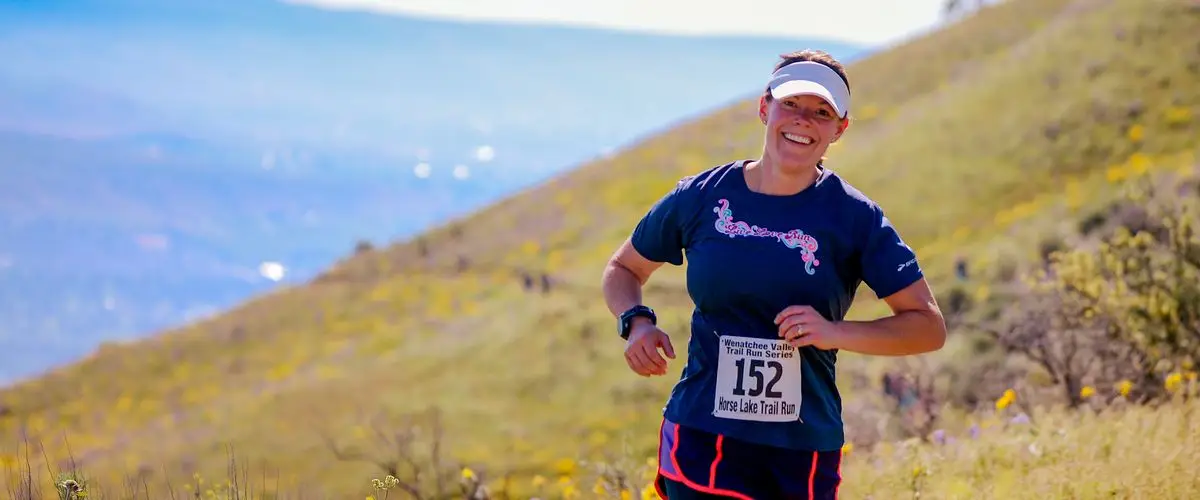
Trail running is far more than lacing up a pair of shoes and heading out into the hills. Unlike road running, the mountains demand specific equipment that can make the difference between a safe, enjoyable outing and a miserable one. Uneven terrain, sudden weather shifts, altitude, lack of cell coverage and long stretches with no aid stations mean every piece of gear serves a critical purpose. You don't need to buy everything on day one, but you do need to know what's essential, what can wait and how much you'll invest at each stage (World Athletics).
In this guide we've organized all the essential trail running gear into clear categories, from trail shoes to emergency first aid kits. We review specific products we've tested and recommend for their value, and at the end we include three detailed budgets so you know exactly how much you'll need depending on your level. If you're just getting started in trail running, this is your roadmap to gearing up without overspending.
Trail running shoes: the foundation of everything
Shoes are the single most important investment you'll make in trail running. Road shoes simply won't cut it on the trails: their smooth outsoles slip on dirt, rock and mud, the midsole doesn't protect against sharp stones and the upper can't handle constant contact with brush and branches. Trail shoes are engineered specifically for uneven terrain and differ from road shoes in three fundamental areas: the outsole, the drop and the protection.
Outsole: grip is everything
A trail shoe's outsole features deeper, more aggressive lugs than a road shoe. Lug depth determines which terrain a shoe handles best. Lugs of 2-3 mm suit packed trails and dry ground. Lugs of 4-5 mm work well on mixed terrain with some mud and loose rock. Lugs of 6 mm or more are built for deep mud, snow and highly technical terrain. The outsole compound also matters: Salomon's Contagrip and HOKA's Vibram Megagrip are the two reference standards for grip and durability. Check our trail shoe guide for detailed terrain-by-terrain comparisons.
Drop: heel-to-toe height difference
Drop is the difference in stack height between the heel and the forefoot, measured in millimeters. A high drop (8-12 mm) encourages heel striking and feels more comfortable for runners transitioning from the road. A low drop (0-4 mm) promotes a more natural midfoot or forefoot strike, ideal for technical terrain where you need to feel the ground. A moderate drop (5-7 mm) is the sweet spot recommended for most trail runners. If you're coming from road shoes with a 10-12 mm drop, don't jump straight to zero: the transition should be gradual to avoid Achilles tendon and plantar fascia injuries.
Protection: rock plates and reinforcements
Quality trail shoes include a rigid plate between the midsole and outsole (rock plate) that shields the sole of your foot from sharp stones and roots. They also feature reinforced toe bumpers and lateral guards to protect your toes and feet from rock impacts. The upper is typically reinforced mesh, tougher than road shoe mesh but also less breathable. Some models include a waterproof membrane (Gore-Tex), useful in winter or very rainy areas but at the cost of reduced breathability in summer.
Trail running vests and packs
There are no trouser pockets in trail running: you need a carrying system for water, food, warm layers, phone, maps and safety gear. The main options are hydration while running vests (race vests) and classic trail packs. The vest has become the modern trail standard thanks to its body-hugging fit, accessibility (everything is within reach in front pockets) and bounce-free stability. For a full vest guide, check our running hydration vests article.
Capacity by distance
The capacity you need depends directly on the distance you'll cover and how far between aid stations. For short trails of 10-25 kilometers, a 5-8 liter vest is plenty. You'll carry one or two 500 ml soft flasks, a couple of gels, your phone and not much else. For mountain marathons of 30-50 kilometers, you need 8-12 liters to carry mandatory gear, extra clothing, solid food and 1-1.5 liters of water. For ultras over 50 kilometers, capacity rises to 12-20 liters, with room for a headlamp, warm layers, a first aid kit, hours of food and up to 2 liters of water.
Fit and stability
A vest that bounces is a vest that's the wrong size or poorly adjusted. A trail vest should hug your torso like a second skin, snug enough to stay put without restricting your breathing. Most quality models let you adjust the chest straps, side straps and sometimes the shoulder straps. Before buying, try it on loaded with real weight (fill the soft flasks with water, stuff in a windbreaker and a few gels) and jump or jog for a few meters. If anything moves, try another size or model. Fit is personal and depends on your body shape: there is no single vest that works perfectly for everyone.
Soft flasks vs. hydration bladders
Soft flasks (collapsible front bottles) have largely replaced hydration bladders with hoses. The reasons are practical: they refill faster at aid stations, they compress as you drink (eliminating sloshing), they let you see exactly how much water you have left and they're much easier to clean. Bladders still make sense on very long ultras where you need more than 1.5 liters of water without stopping to drink by hand. Most modern vests support both systems.
Trail running poles: when and how to use them
Trail poles aren't just for hikers. In mountain races with significant elevation gain, poles let you distribute effort between your upper and lower body, reducing accumulated fatigue in the quads and calves. Biomechanical studies have shown that using poles on steep climbs can reduce leg muscle load by 15-25%, which translates into arriving fresher at the final stages of an ultra.
Find your running with a group
1,100+ runners already train together. Free on iOS.
Carbon vs. aluminum
Carbon poles are significantly lighter than aluminum: a pair of high-end carbon poles weighs 300-400 grams, while an equivalent aluminum pair weighs 500-650 grams. That difference is noticeable in your arms after hours of use. However, carbon is more fragile: a strong lateral impact can snap it, while aluminum bends but doesn't break. For races and training on terrain that isn't excessively rocky, carbon is the preferred choice. For expeditions, very technical terrain with a high risk of impacts, or if you're on a tight budget, aluminum is safer and more affordable (ACSM).
When to use poles
Poles are especially useful in these situations: races with over 1,500 meters of cumulative elevation gain, ultras longer than 50 kilometers where muscle fatigue is a limiting factor, sustained climbs lasting more than 30-40 minutes, snowy or icy terrain where they provide extra stability, and long technical descents where they reduce knee impact. On short trails with little elevation or on very technical terrain where you need your hands free to scramble, poles can be more of a hindrance than a help.
Folding systems
For trail running you need poles that fold or collapse enough to stow in your pack or vest when not in use. The main systems are: Z-fold (three sections with an internal cord, they deploy in a second and are the fastest), telescopic (adjustable in length with twist or clip locks, more versatile) and hybrid (combining a folding section with a telescopic adjustment). For races where you'll be stowing and deploying your poles repeatedly, the Z-fold system is the most practical.
Technical trail running clothing
Trail running clothing is based on the layering system: several thin, purpose-built garments you can add or remove as conditions change, rather than a single heavy piece. This system lets you adapt quickly to the temperature swings common in the mountains, where you can go from sweating on a climb to shivering on a windy summit in a matter of minutes.
Base layer: moisture management
The base layer sits directly against your skin and its primary job is to wick sweat outward to keep you dry. It should be made of synthetic fabric (polyester, nylon, polypropylene) or merino wool. Never, under any circumstances, wear cotton in the mountains: it absorbs sweat, takes hours to dry and robs your body of heat when wet, which can cause hypothermia even in summer. Standard technical running shirts work perfectly as a base layer. Merino wool is superior for temperature regulation and odor control but is more expensive and less durable than synthetics.
Mid layer: thermal insulation
The mid layer provides thermal insulation by trapping warm air between the base and outer layers. In trail running, ultra-light and packable garments are the norm: thin fleeces like Polartec Alpha or synthetic insulated vests like Primaloft. The key is that they're warm enough for a summit stop but light and compact enough to fit in a vest pocket when you don't need them. In summer you can skip the mid layer on most outings. In winter and at high altitude it's essential.
Outer layer: membranes and protection
The outer layer is the waterproof, windproof jacket that protects you from rain, snow, wind and extreme cold. It's the most critical piece of the layering system and the one that generates the most debate. A good trail jacket should be waterproof (minimum 10,000 mm water column, ideally 20,000 mm), breathable (minimum 10,000 g/m2/24h RET, ideally 20,000+), lightweight (under 200 grams so you always carry it), packable (fits in the palm of your hand) and have sealed seams to prevent leaks. The reference membranes are Gore-Tex (the best known and most reliable), Gore-Tex Shakedry (extremely light but less durable), Pertex Shield and Salomon's proprietary membrane. The Gore Wear R7 is a benchmark in the category for its balance of waterproofing, breathability and weight.
Lower body: tights, shorts and socks
For the lower body, running tights (short in summer, long in winter) are the most practical option. Some runners prefer shorts with a built-in liner. Look for models with side or rear pockets to carry gels. Socks deserve a special mention: in trail running you need seamless socks with reinforced toes and heels, made from technical fabric that doesn't retain moisture. A bad sock creates blisters that can ruin a race in the first hour. Merino wool socks are the best option for their moisture management and ability to retain warmth even when wet.
GPS and mountain navigation
On the road you can run without GPS and orient yourself by street names. In the mountains, getting lost is a real and potentially dangerous possibility. A reliable navigation system is fundamental for trail running, especially when you leave marked trails, run in unfamiliar areas or visibility drops due to fog or darkness. The main options are a GPS running watch guide with navigation and a phone with offline map apps.
GPS watches for trail running
A dedicated trail GPS watch offers several advantages over a phone: 20-40 hours of battery in continuous GPS mode (versus 4-6 hours on a phone), an always-on display readable in direct sunlight, a barometric altimeter for precise elevation data, resistance to impacts, water and extreme temperatures, and breadcrumb or full-color map navigation. The most recommended trail models in 2026 are the Garmin Forerunner 265, which offers an AMOLED display, topographic maps and turn-by-turn navigation at a competitive price, and the Suunto 9 Peak Pro, which stands out for up to 40 hours of GPS battery and ultra-rugged construction.
Phone navigation
If your budget doesn't stretch to a GPS watch (or you're just starting out and don't want to invest that much), a phone with apps like Wikiloc, Komoot or AllTrails is a viable alternative for short outings in areas with good coverage. But it has serious limitations: battery drains rapidly with GPS active, the screen is hard to read in sunlight, you have to pull it out of your pocket every time you want to check the route, and if it gets wet or hits a rock you could lose both your navigation and your emergency phone at once. If you use your phone for navigation, carry it in a waterproof case, download offline maps before heading out and bring an external battery pack.
Route planning
Regardless of whether you use a watch or phone, always plan your route before heading out. Load the GPX track onto your device, study the elevation profile, identify water points, possible shelters and escape routes in case of emergency. Tools like Strava Routes, Komoot and Wikiloc let you plan routes, read reviews from other runners and download GPX tracks. Never head out on a new trail without a preloaded track and at least a basic understanding of the course.
Portable nutrition and hydration
In trail running, nutrition and hydration are just as important as physical training. During a multi-hour mountain race you burn between 600 and 1,000 calories per hour and lose between 500 ml and 1.5 liters of sweat per hour (depending on temperature and intensity). If you don't replenish, your performance plummets and the risk of medical issues (hypoglycemia, dehydration, hyponatremia) rises exponentially.
Hydration
The general rule is to drink 400-800 ml per hour of effort, adjusting for temperature and your individual sweat rate. For short trails (under 2 hours), water alone is enough. For longer efforts, add electrolytes (sodium, potassium, magnesium) to your water or alternate between water and an isotonic drink. Effervescent electrolyte tablets are the most practical solution because they take up almost no space and dissolve directly in your soft flask. Don't wait until you're thirsty to drink: by the time you feel thirst, you're already 1-2% dehydrated.
Solid food and gels
Energy gels are the standard fuel in trail running because of their fast absorption and compact format. The general guideline is one gel every 30-45 minutes of intense effort. But on ultras and very long races, your stomach tires of gels and you need to alternate with solid food: nuts, energy bars, dates, boiled potatoes with salt, mini ham or cheese sandwiches. The key is to test your nutrition strategy during long training runs before race day. Never try a new gel or food in competition: your stomach could react badly at the worst possible moment.
Carrying food and water
The front soft flasks on your vest are the most efficient system for keeping water at hand. For solid food, use the front vest pockets where you can reach gels and bars without stopping. For longer races, the rear compartment of the vest is ideal for backup solid food. A trick many ultramarathoners use is preparing zip-lock bags with mixed nuts and salted gummy candies ready to eat without opening individual packages.
Trail running first aid kit
A basic trail running first aid kit doesn't need to be large or heavy, but it should cover the most common mountain emergencies. The idea isn't to carry a hospital on your back but to have the bare minimum to fix minor issues and stabilize major ones until help arrives.
Recommended minimum contents
- Adhesive bandages and tape: For blisters and small cuts. Fabric bandages are better than plastic ones because they adhere better to sweaty skin.
- Cohesive elastic bandage: For ankle sprains, the most common trail injury. It sticks to itself without needing clips.
- Sterile gauze and alcohol wipes: For cleaning wounds from falls on rock.
- Anti-inflammatory (ibuprofen): A couple of tablets for acute pain. Be cautious about taking them during endurance efforts as they can affect kidney function.
- Emergency survival blanket: Weighs 50 grams, takes up less space than a fist and can save your life in case of hypothermia or a forced stop at altitude.
- Whistle: To call for help if you're injured and without cell coverage. Many vests have one built into the chest buckle.
The entire kit fits in a small zip-lock bag weighing under 100 grams. Store it in an accessible vest pocket and check it before every outing to make sure nothing is missing and medications haven't expired.
Mandatory gear for trail races
If you plan to enter organized trail races, you'll need to comply with a mandatory gear list defined in the race rules. Non-compliance usually means a time penalty or outright disqualification. Lists vary by race, distance and weather conditions, but there's a common core that appears in most events.
Typical mandatory gear list
- Mobile phone: With sufficient battery and the race emergency number saved.
- Personal cup or container: Minimum 200 ml. Many races have eliminated disposable cups for environmental reasons.
- Water reserve: Usually between 500 ml and 1 liter minimum.
- Food reserve: Enough to cover at least 2 hours of running without an aid station.
- Emergency survival blanket: Required in virtually every trail race.
- Emergency whistle: Many vests include one as standard.
- Waterproof jacket: With sealed seams and a minimum water column of 10,000 mm. High-altitude races may require 20,000 mm.
- Headlamp with spare battery: Required for races with night stages or that may extend past sunset.
- ID: Government ID, health insurance card and race bib.
Beyond the mandatory list, winter or high-altitude races may also require: gloves, a beanie or buff, a long-sleeve thermal shirt, waterproof long pants and snow crampons. Always check the specific race regulations well in advance so you have time to buy anything you're missing.
Recommended trail running products 2026
We've selected the products we consider the best option in each category this year, based on our direct experience, other runners' reviews and value for money. These are the products we recommend as of today.

1. Salomon Speedcross 6
The Speedcross is the world's best-selling trail shoe for good reason. Its Contagrip outsole with 6 mm lugs delivers exceptional grip on mud, wet dirt and forest trails. The sixth generation improves cushioning with a more responsive EnergyCell+ midsole and a more enveloping upper. Its weak point is wet rock, where the aggressive lugs don't offer as much surface contact as a smoother outsole. If your usual terrain is forest, dirt trails and mud, it's the safe choice. For a more detailed analysis, visit our trail running shoes guide.
Check price on Amazon
2. HOKA Speedgoat 6
The Speedgoat is the go-to shoe for technical trail and long distances. Its generous PEBA cushioning makes it the most comfortable option for ultras and runs over 30 kilometers. The Vibram Megagrip outsole outperforms Contagrip on wet rock and mixed terrain. Its 5 mm drop is a middle ground that encourages natural foot strike without being too aggressive for runners coming from the road. Version 6 reduces weight and improves lateral support.
Check price on Amazon
3. Salomon ADV Skin 12
The ADV Skin 12 is arguably the most popular and highest-rated trail vest on the market. Its SensiFit construction molds to your body like a second skin, virtually eliminating bounce even at fast paces. The 9 pockets are intelligently placed: the front ones are accessible without stopping, the side ones are sized for folded poles and the rear compartment has enough room for the mandatory gear in most races. It comes with two 500 ml soft flasks. It's the benchmark against which every other trail vest is measured.
Purchase link temporarily removed. Destination pending verification.
4. Black Diamond Distance Carbon Z
The Distance Carbon Z from Black Diamond are the benchmark poles for competitive trail running. At just 310 grams per pair, they're among the lightest on the market. The Z-fold system lets you deploy them in under 2 seconds and stow them in your vest in another 2. The carbon construction minimizes arm fatigue on long climbs. The EVA foam grips absorb sweat and don't slip. Their main limitation is that the length is fixed (you must buy the correct size) and carbon doesn't forgive hard lateral impacts against rock.
Check price on Amazon
5. Gore Wear R7 Gore-Tex ShakeDry
The R7 ShakeDry is the lightest and most breathable waterproof jacket you can buy for trail running. At just 110 grams it fits in the palm of your hand and you barely notice you're wearing it. The Gore-Tex ShakeDry membrane has no outer textile layer, which means water rolls straight off the membrane without the jacket absorbing any moisture: give it a shake and it's dry. Breathability is exceptional, far superior to standard Gore-Tex. The price is steep and durability is lower than a jacket with an outer fabric (the exposed membrane degrades faster from vest strap abrasion), but for racing it's unbeatable.
Check price on Amazon
6. Garmin Forerunner 265
The Forerunner 265 is the GPS watch that best balances trail functionality with an accessible price. Its AMOLED display is impressively sharp even in direct sunlight, the topographic maps allow following GPX tracks with turn-by-turn navigation, and the multi-band GPS offers excellent accuracy even under tree canopy and in canyons. The 20-hour GPS battery covers most mountain marathons, though it falls short for ultras over 20 hours. It includes a barometric altimeter, trail VO2max estimation, heat and altitude acclimation, and the full suite of Garmin training metrics.
Check price on Amazon
7. Suunto 9 Peak Pro
The Suunto 9 Peak Pro is built for the longest and most demanding races. Its 40-hour battery in high-precision GPS mode (and up to 300 hours in tour mode) guarantees you won't run out of watch in any ultra, including 100-milers. The titanium and sapphire crystal construction withstands any impact, and the dual-band GPS is extremely accurate. Navigation is breadcrumb-style (no full-color maps like Garmin), but functional and reliable. It's the watch preferred by ultramarathoners who prioritize battery life and durability above smartwatch features.
Check price on Amazon
8. Petzl Swift RL
The Petzl Swift RL is the benchmark headlamp for trail running thanks to its Reactive Lighting technology, which automatically adjusts beam intensity based on ambient light and focus distance. This intelligently optimizes battery life: maximum output when you look down the trail ahead, reduced intensity when you look at the ground nearby. With a 1,100 lumen maximum, it provides enough light to run at speed on technical trails at night. The battery is USB-rechargeable and the elastic headband is comfortable and bounce-free. For more options, visit our running accessories guide.
Check price on AmazonBudget by level: how much does trail running gear cost
One of the most common questions from runners looking to get into trail running is how much money they need. The answer depends on your level, your goals and the distances you're aiming for. We've put together three detailed budgets to give you a clear reference. Prices are approximate and correspond to quality brands in the European market in 2026.
Beginner Basic budget: ~200 €
This budget covers the bare minimum to start doing short trails of up to 20-25 kilometers on moderately technical terrain. It's the initial investment that gets you out on the trails safely and lets you test whether trail running is for you before spending more.
| Gear | Price Range | Priority |
|---|---|---|
| Trail shoes (e.g. Decathlon Evadict MT2) | 60-80 € | Essential |
| Small vest/pack 5L | 40-60 € | Essential |
| Technical shirt | 15-25 € | Essential |
| Short or long tights | 20-30 € | Essential |
| Basic windbreaker | 25-35 € | Recommended |
| Trail socks | 10-15 € | Recommended |
| 500 ml soft flask | 8-12 € | Recommended |
| Estimated total | ~200 € |
Intermediate Complete budget: ~500 €
This budget is for runners who've done several trail races and want to step up to mountain marathons or 30-50 kilometer events. It includes higher-quality gear and the safety and navigation elements that become necessary at longer distances.
| Gear | Price Range | Priority |
|---|---|---|
| Quality trail shoes (e.g. Salomon Speedcross 6) | 120-150 € | Essential |
| 8-12L vest (e.g. Salomon ADV Skin 12) | 100-150 € | Essential |
| Waterproof membrane jacket | 80-120 € | Essential |
| Full technical clothing (2 layers) | 50-80 € | Essential |
| Quality trail socks x2 | 20-30 € | Recommended |
| First aid kit and survival blanket | 15-20 € | Recommended |
| Basic headlamp | 25-40 € | Recommended |
| Estimated total | ~500 € |
Advanced Premium budget: ~1,000 €+
This budget is for experienced trail runners who race regularly in ultras and demanding mountain events. It includes the highest-performance gear available and everything needed for races with extensive mandatory gear lists.
| Gear | Price Range | Priority |
|---|---|---|
| Premium shoes (e.g. HOKA Speedgoat 6) | 150-180 € | Essential |
| 2nd pair of shoes (mud/rock) | 100-150 € | Recommended |
| Premium 12-15L vest | 130-170 € | Essential |
| Gore-Tex ShakeDry jacket | 180-250 € | Essential |
| Carbon poles (e.g. BD Distance Carbon Z) | 120-160 € | Recommended |
| Trail GPS watch (e.g. Garmin FR 265 / Suunto 9) | 300-450 € | Highly recommended |
| High-output headlamp (e.g. Petzl Swift RL) | 80-110 € | Recommended |
| Full technical clothing (3 layers) | 100-150 € | Essential |
| Accessories (cap, gloves, buff, sunglasses) | 40-60 € | Recommended |
| Complete first aid kit | 20-30 € | Essential |
| Estimated total | ~1,200 € |
Common gear mistakes in trail running
After years of mountain running and talking to hundreds of trail runners, these are the gear mistakes we see most often. Avoiding them will save you money, injuries and misery.
Buying shoes in the wrong size
This is the number one mistake. Trail shoes need to be half a size to a full size larger than road shoes. On long, sustained descents, your feet swell from the impact and slide forward inside the shoe. If the fit is snug, you'll end up with black or lost toenails, toe blisters and pain on every downhill. Visit a specialist store, try shoes on at the end of the day (when your feet are most swollen) and check that there's a thumb's width between your big toe and the toe box.
Debuting gear on race day
Never, ever wear new shoes, a new vest, new clothing or new gels on race day. Every piece of gear must be tested and validated in training. Each new pair of shoes needs at least 3-4 outings for your feet to adapt. Each vest needs adjusting under real load. Each new gel can cause stomach problems. If something is going to fail, better that it fails during training 10 km from home than at kilometer 40 of an ultra in the middle of nowhere.
Carrying too much weight
Beginners tend to pack too much out of fear they'll be missing something. Excess weight reduces your performance, tires you faster and increases injury risk. Every extra 100 grams in your pack is felt after 5 hours of running. Carry what's strictly necessary: what's on the mandatory gear list and little else. Learn to distinguish between what's essential and what you bring "just in case" but never use.
Ignoring weather protection
Mountain weather changes in minutes. Heading out without a waterproof jacket because it's sunny in the valley is reckless. At altitude, temperatures can drop 6-8 degrees for every 1,000 meters of ascent, and a rain front or storm can appear with no warning. Always carry a compact waterproof jacket, even in summer. It weighs 100-200 grams and can prevent hypothermia.
Neglecting your feet
Your feet are your primary tool in trail running and the point where most problems concentrate: blisters, black toenails, plantar fasciitis, fungal infections. Use technical seamless socks, trim your toenails before long races, apply petroleum jelly or anti-friction cream to rubbing zones, and dry your feet thoroughly if you cross streams or wet sections. Many ultramarathoners carry a spare pair of socks in their pack to change halfway through a race.
Trail running gear maintenance
Trail running gear is a significant investment. Basic maintenance extends its lifespan and ensures it works properly when you need it. Here are the essential maintenance guidelines for each category.
Shoes
Clean your shoes after every muddy outing with cold water and a soft brush. Never put them in the washing machine or dry them with direct heat (radiator, hair dryer): heat degrades the midsole and adhesives. Remove the insoles and let them air-dry in a ventilated spot. The lifespan of trail shoes is between 600 and 1,000 kilometers depending on the terrain and the runner's weight. When the lugs are worn smooth, it's time for a new pair.
Vest and pack
Hand-wash your vest with cold water and mild soap after every heavy-sweat use. You can machine-wash it on a delicate cycle at 30 degrees inside a mesh bag, without fabric softener. Soft flasks should be rinsed with hot water and soap after every use, especially if you used an isotonic drink. Once a month, clean them with baking soda to remove odors and residue. Leave them open and upside-down to dry.
Technical and waterproof clothing
Jackets with waterproof membranes need specific care. Wash them with a detergent designed for membranes (NikWax Tech Wash or equivalent), never with regular detergent or fabric softener. After washing, tumble-dry on low heat for 20 minutes: the heat reactivates the DWR (durable water repellency) treatment on the surface. If the jacket stops beading water on the surface (water soaks into the outer fabric instead of forming droplets), apply a DWR treatment spray or wash-in treatment.
Electronics
Your GPS watch and headlamp require little maintenance: rinse the watch with fresh water after every sweaty run and check that the optical sensors on the back are clean. Store the headlamp with the battery at half charge (not empty or full) in a dry place. Update the watch firmware regularly to maintain GPS accuracy and access the latest features.
Frequently asked questions about trail running gear
How much money do I need to start trail running?
You can get started with a minimum budget of around 200 euros. The most important investment is a good pair of trail shoes (100-140 euros) and a small vest or pack (40-60 euros). The rest of the essentials like a technical shirt, tights and a windbreaker can be picked up for around 60-80 euros at stores like Decathlon. You don't need poles, a GPS watch or membrane clothing for your first outings. Add gear as you increase the distance and difficulty of your routes.
What trail running shoes should I buy as a beginner?
As a beginner, look for shoes with good cushioning, a multi-terrain outsole and a moderate drop of 6-8 mm. The Salomon Speedcross 6 is a classic choice for its grip on mud and loose dirt. The HOKA Speedgoat 6 is ideal if you prioritize cushioning and comfort over long distances. Avoid minimalist or race-day models for your first outings, as they require specific technique and muscle conditioning. The most important thing is to visit a specialist store, try them on and run a few meters to check the fit.
Do I need poles for trail running?
Poles aren't essential for beginners, but they become very useful in races with significant elevation gain (over 1,500 meters) or long ultra-distance events. They help distribute effort between arms and legs on climbs, reducing quadriceps fatigue by up to 25%. If you're sticking to trails under 30 km with moderate elevation, you don't need them. Carbon poles are lighter but more fragile; aluminum ones are heavier but tougher and more affordable.
What vest or pack do I need based on trail distance?
For short trails of 10-25 km, a 5-8 liter vest carrying water, a gel and your phone is enough. For mountain marathons of 30-50 km, you need 8-12 liters for mandatory gear, extra clothing, food and 1-1.5 liters of water. For ultras over 50 km, you need 12-20 liters with room for a headlamp, warm layers, a first aid kit and solid food. The Salomon ADV Skin 12 is the benchmark in the 12-liter category for its fit and lightness.
What is the mandatory gear for trail races?
Mandatory gear varies by race, but the typical list includes: a personal cup (200 ml minimum), mobile phone with battery, emergency whistle, survival blanket, water reserve (500 ml-1 liter), food reserve, waterproof jacket with sealed seams (minimum 10,000 mm water column), and a headlamp with spare battery for night stages. In winter or at high altitude they may also require gloves, a beanie and a thermal shirt. Always check each race's specific regulations.
GPS watch or phone app for trail running?
For your first outings you can use your phone with an app like Strava or Wikiloc. But if you trail run regularly, a dedicated GPS watch is far superior: 20-40 hours of GPS battery, always-on display, turn-by-turn navigation with preloaded tracks, barometric altimeter, and it handles impacts and water without issue. The Garmin Forerunner 265 offers excellent value with maps and navigation. The Suunto 9 Peak Pro is ideal for ultras with up to 40 hours of battery.
How do I choose technical clothing for trail running?
The key is the layering system. Base layer next to skin of synthetic or merino wool that wicks sweat, never cotton. Mid layer insulation with a thin fleece or Primaloft vest for cold days. Outer layer protection with a waterproof-breathable jacket like Gore-Tex (minimum 10,000 mm water column). For the lower body, tights and always seamless trail-specific socks. The Gore Wear R7 is a benchmark trail jacket for its lightness and breathability.