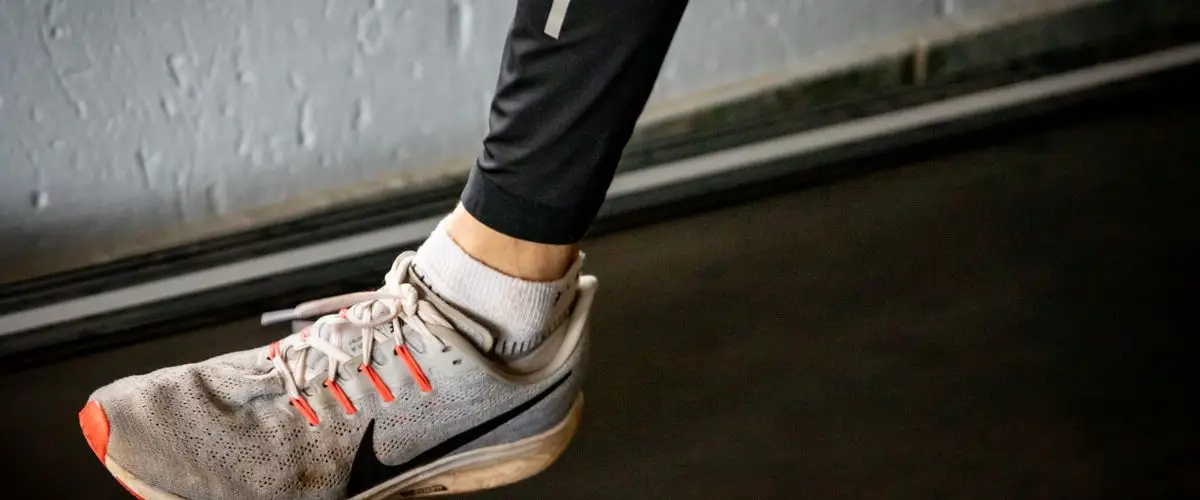
If someone has ever told you that you overpronate, you were probably confused. Does it mean you have a problem? Do you need special shoes? Can you run normally? The short answer is that pronation is a natural foot movement, but when it becomes excessive, it can cause discomfort and injuries that ruin your running experience (ASICS) (World Athletics).
In this guide, we'll clearly explain what pronation is, how to tell if you're an overpronator, what degree of pronation you have, and which are the best stability shoes on the market in 2026. If you're looking for a general guide to running shoes, we have a comprehensive article covering all gait types.
What is pronation and why it matters
Pronation is the natural inward rotation of the foot when it contacts the ground during running. When the foot lands, the arch flattens slightly to absorb impact and distribute forces evenly across the entire structure of the foot and leg. This movement is completely normal and necessary: without pronation, the impact of each stride would go directly to the bones and joints without any biological cushioning (Runner's World).
The problem occurs when pronation is excessive, known as overpronation. In this case, the foot rotates too far inward, the ankle collapses inward, and a chain of misalignments travels up through the tibia, knee, and reaches the hip. This repeated misalignment over thousands of strides can cause plantar fasciitis, shin splints, Achilles tendinitis, iliotibial band syndrome, and knee pain.
According to various biomechanical studies, approximately 50-60% of runners show some degree of pronation. Of those, only a percentage actually need stability shoes. The key is understanding your degree of pronation and acting accordingly, not panicking because someone told you that you overpronate.
Gait types: neutral, overpronation, and supination
To choose the right shoe, you first need to understand the three main gait types. Each one determines how your foot interacts with the ground and what kind of support you need.
Neutral gait
With a neutral gait, the foot lands on the outer edge of the heel and pronation occurs in a controlled manner: the arch flattens just enough to absorb impact, then the foot pushes off from the forefoot area in a balanced way. Shoe wear is distributed evenly across the entire outsole, perhaps with slightly more wear on the center of the heel and the toe area.
Runners with a neutral gait have the widest variety of options when choosing shoes, since they can use neutral models without any issues. If your gait is neutral, we recommend checking our guide to the best road running shoes.
Overpronating gait
With an overpronating gait, the foot lands on the outer heel but then rotates excessively inward. The arch flattens too much, the ankle falls inward, and the final push-off comes from the big toe and second toe instead of being distributed across the entire forefoot. Shoe wear concentrates on the inner heel and the inner toe area.
Overpronation can be mild, moderate, or severe. Mild overpronators often don't need special correction, while moderate and severe overpronators clearly benefit from stability shoes that incorporate technologies to control that excess inward rotation (WHO).
Supinating gait
Supination (or underpronation) is the opposite movement to pronation: the foot rotates outward during the stance phase. The arch remains rigid, doesn't flatten enough, and impact is not absorbed properly. Wear concentrates along the entire outer edge of the outsole.
Supination is much less common than pronation (only affecting 5-10% of runners). Supinators typically need neutral shoes with good cushioning and flexibility, never stability shoes, as these would worsen the problem by pushing the foot even further outward.
How to tell if you're an overpronator
Identifying your gait type doesn't require sophisticated equipment. There are three methods you can use, from the simplest at-home test to the most precise. Ideally, combine several for a complete picture.
Find your running with a group
1,100+ runners already train together. Free on iOS.
1. The wet footprint test
This is the simplest method and you can do it at home. Wet the sole of your foot with water and step onto a sheet of dark paper, cardboard, or a surface that shows the footprint. Observe the shape your foot leaves:
- Full footprint (low arch): If the print shows almost the entire sole with very little curvature in the midfoot area, your arch is low and you likely overpronate. The wider the central band, the greater the pronation tends to be.
- Footprint with moderate curve (normal arch): If the print shows a moderate curve on the inner side, your arch is normal and you probably have a neutral gait or very mild pronation.
- Narrow footprint (high arch): If the print shows only the heel, toes, and a very thin band connecting them, your arch is high and you could be a supinator.
This test has limitations: it tells you the static shape of your foot, but not how it behaves while running. A foot with a low arch doesn't always overpronate excessively, and a foot with a high arch doesn't always supinate. It's a starting point, not a definitive diagnosis.
2. The wear pattern on your shoes
Examine the outsole of shoes you've used for running at least 200-300 kilometers. The wear pattern tells you a lot about your gait:
- Inner wear: If the most worn area is the inner heel and the inner toe section, you're an overpronator. The more pronounced the inner wear, the greater the degree of pronation.
- Even wear: If the wear is relatively even across the entire outsole, with slight emphasis on the center of the heel and the front section, your gait is neutral.
- Outer wear: If the wear concentrates along the entire outer edge of the outsole, you're a supinator.
Additional tip: also look at the upper part of the shoe. If the upper noticeably deforms inward, with the heel collapsing inward, that's a clear sign of overpronation.
3. Biomechanical analysis at a specialist store
This is the most precise method and the one we recommend above any other. Specialist running stores have treadmills with high-speed cameras that record your gait from different angles. A professional analyzes the images in slow motion to determine your type and degree of pronation.
Some stores also have pressure platforms that measure force distribution under your foot during running, providing objective data on how you land. This analysis is usually free at most specialist stores and takes between 10 and 20 minutes. It's a time investment that can save you many injuries and money on unsuitable shoes.
The 7 best shoes for overpronators in 2026
We've selected the seven best stability shoes available on the market in 2026. All these models incorporate specific technologies to control overpronation without sacrificing comfort or performance. We've ranked them from most versatile to most specialized, so you can easily find the model that best suits your profile.
1. ASICS GT-2000 12 - Best value for money

Best for: mild-moderate overpronators, daily runs, beginners
The GT-2000 is ASICS' best-selling stability shoe and has been evolving for over a decade. Version 12 features the FF Blast Plus midsole that delivers reactive cushioning without feeling heavy. The Litetruss support in the midfoot provides stability without being intrusive, allowing the foot to move naturally while controlling excess pronation.
It's an extremely versatile shoe: it works for easy runs, long runs, and even tempo sessions at moderate pace. The engineered mesh upper breathes well and the midfoot fit is firm without squeezing. If you're looking for a single stability shoe that does everything well, this is our top recommendation.
2. Brooks Adrenaline GTS 24 - Guaranteed comfort

Best for: mild-moderate overpronators, long runs, medium-heavy runners
The Adrenaline GTS is a classic that needs no introduction. Brooks uses their GuideRails system instead of a rigid stability post, meaning the support only activates when your foot needs it. During phases where you land neutrally, the shoe doesn't interfere. When you overpronate too much, the guide rails gently redirect your foot.
The DNA Loft v2 midsole provides soft, enveloping cushioning that especially shines on long runs, where comfort is the priority. The 3D Fit Print mesh upper adapts well to both wide and narrow feet. If you like the feeling of running on a cloud with pronation protection, the Adrenaline GTS 24 is your shoe.
3. New Balance 860v14 - Total versatility

Best for: moderate overpronators, all-level runners, daily use
The New Balance 860 is one of the most balanced stability shoes on the market. Version 14 uses a FuelCell midsole in the forefoot combined with a medial stability post that controls pronation progressively. It's not an abrupt correction: the support activates gradually based on the intensity of pronation.
It stands out for its wide last available in multiple widths (B, D, 2E, 4E), making it one of the few stability shoes that truly adapts to all foot types. The blown rubber outsole offers good traction on wet and dry pavement, and durability is excellent: it can exceed 700 km without issues. A solid, no-surprises choice.
4. ASICS Gel-Kayano 31 - Premium maximum support

Best for: moderate-severe overpronators, long runs, heavier runners (+85 kg / 187 lbs)
The Kayano is the crown jewel of ASICS stability. Version 31 marks a turning point with the FF Blast Plus Eco midsole combined with the 4D Guidance System stability technology, which adapts support in real time based on the movement of each stride. The GEL cushioning in heel and forefoot absorbs impact at the most demanding moments.
It's a premium shoe designed for overpronators who need maximum support without compromising comfort. The Knit Upper wraps the foot like a sock, and the PureGEL insole offers an extra layer of cushioning. It's the most expensive shoe on this list, but if you're a moderate-to-severe overpronator running more than 40 km per week, the investment is worth it.
5. Hoka Arahi 7 - Lightweight stability
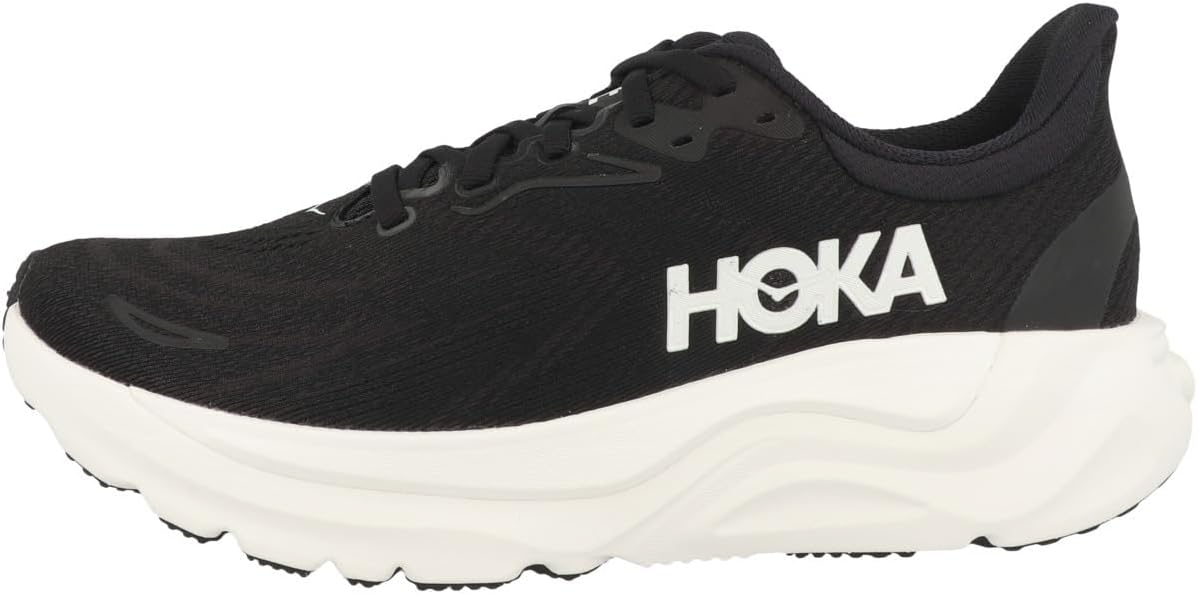
Best for: mild-moderate overpronators, runners who want lightness, faster paces
The Arahi 7 is Hoka's answer for overpronating runners who don't want to feel like they're wearing bricks on their feet. At just 255 grams, it's the lightest stability shoe on this list. It uses the J-Frame system, a support frame that wraps around the midsole sides without adding a rigid dual-density post. The result is stability that guides without blocking.
The compression EVA midsole offers Hoka's characteristic maximal cushioning with a pronounced rocker that facilitates the heel-to-toe transition. If you come from the Hoka world with their Cliftons or Bondis and need stability, the Arahi will feel like home. It also works great for runners who want to roll fast with support, something hard to find in this segment.
Purchase link temporarily removed. Destination pending verification.
6. Nike Air Zoom Structure 25 - Nike versatility

Best for: mild-moderate overpronators, daily use, first stability shoe
The Structure 25 is Nike's stability option that combines their React midsole with a dual-density system in the medial zone. The transition is smooth and the cushioning is firm yet comfortable, without the excessive softness of some other React models. Nike has found a sweet spot between support and a natural ride feel.
The Flyknit upper offers a snug fit that adapts to the foot's contour without pressure points. The Zoom Air unit in the forefoot provides a touch of responsiveness that's welcome during pace changes. At $130, it's the most affordable stability shoe on this list and an excellent option for those trying their first support shoe.
7. Saucony Guide 17 - Support without stiffness
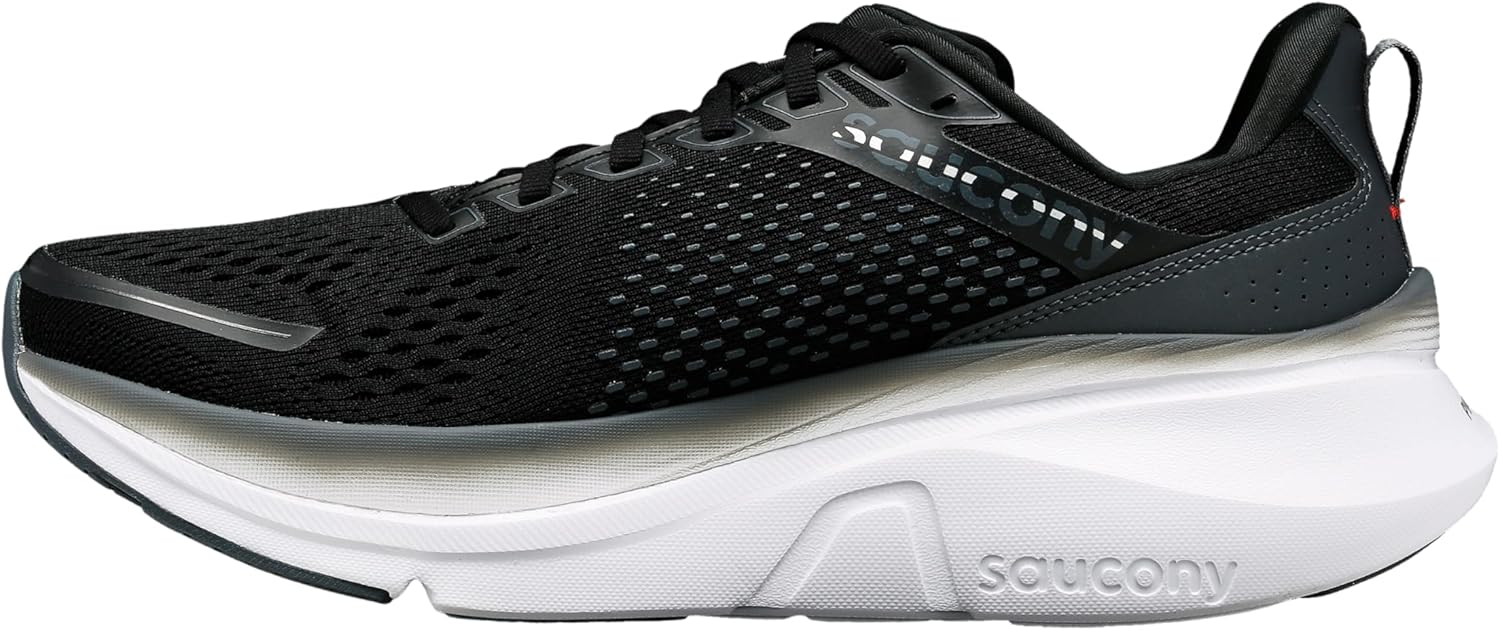
Best for: mild-moderate overpronators, transition from neutral shoes, daily runs
The Saucony Guide 17 uses an arch-centered support system based on dual-density PWRRUN+ foam. The correction is subtle and progressive: you don't feel a hard post under your foot, but rather a natural guiding sensation that prevents the ankle from collapsing inward without limiting foot mobility. It's probably the stability shoe that comes closest to the feel of a neutral shoe.
This makes it the perfect choice for runners coming from neutral shoes who need to add some support without radically changing the running experience. The PWRRUN+ midsole is reactive and durable, and the crystal rubber outsole offers excellent traction even on wet surfaces. If you're looking for discreet stability, the Guide 17 is your model.
If you want to see more shoe options across all categories, check our complete running shoes section where we review neutral, stability, and racing models.
Comparison table
We compare the key specs of all seven shoes so you can see at a glance which one best fits what you're looking for.
| Model | Weight (M) | Drop | Support | Price | Best for |
|---|---|---|---|---|---|
| ASICS GT-2000 12 | 275 g | 8 mm | Medium | ~$140 | Versatility |
| Brooks Adrenaline GTS 24 | 278 g | 12 mm | Medium | ~$140 | Long runs |
| New Balance 860v14 | 282 g | 10 mm | Medium | ~$140 | Wide feet |
| ASICS Gel-Kayano 31 | 295 g | 10 mm | High | ~$180 | Maximum support |
| Hoka Arahi 7 | 255 g | 5 mm | Medium | ~$140 | Lightness |
| Nike Structure 25 | 272 g | 9 mm | Medium | ~$130 | First stability shoe |
| Saucony Guide 17 | 268 g | 8 mm | Medium | ~$130 | Neutral transition |
Mild vs severe pronation: when do you need maximum stability?
Not all overpronators are the same, and not all need the same level of support. Understanding the difference between mild, moderate, and severe pronation is essential for choosing the right shoe and not overdoing or underdoing the correction.
Mild pronation
Your foot rotates slightly inward, but the movement is within normal functional ranges. Your shoe wear shows a slightly more pronounced pattern on the inner side, but it's not dramatic. You generally don't have recurring injuries related to your gait. In this case, you can use either neutral shoes or mild stability shoes. Many mild overpronators run happily with neutral models like the Hoka Clifton or Nike Pegasus without any issues.
Moderate pronation
The foot clearly rotates inward during running. The inner wear on your shoes is evident and you may notice the upper deforming inward with use. You may experience occasional discomfort in the shin area, inner knee, or arch of the foot, especially when you increase your training volume. Medium stability shoes, like most on this list (GT-2000, Adrenaline GTS, Guide, Arahi), are the right choice (ACSM).
Severe pronation
The ankle noticeably collapses inward and shoe wear concentrates extremely on the medial zone. Injuries are frequent and typically include plantar fasciitis, inner knee pain, and hip discomfort. In these cases, you need maximum stability shoes like the ASICS Gel-Kayano 31, and it's highly recommended to complement with custom insoles made by a sports podiatrist. Don't try to resolve severe pronation with shoes alone: seek professional advice.
Exercises to strengthen the ankle and improve stability
Beyond shoes, strengthening the muscles of the foot, ankle, and lower leg is key to reducing the negative effects of excessive pronation. These exercises won't eliminate your pronation (which has a structural component), but they will improve your stability, reduce injury risk, and complement the work of your support shoes. Do them 3-4 times per week, preferably after running or on rest days.
1. Single-leg heel raises
Standing on one leg with the other bent behind you, slowly rise onto the ball of your foot and lower in a controlled manner. Hold the top position for 2 seconds. The goal is to strengthen the triceps surae (calves and soleus) and the ankle stabilizers. Do 3 sets of 12-15 reps per leg. If balance is difficult at first, lightly lean against a wall.
2. Inversion and eversion with resistance band
Sitting on the floor with your leg extended, place a resistance band around the forefoot. Hold the other end with your hand on the same side or anchor it to a fixed point. For inversion, turn the sole of the foot inward against the band's resistance. For eversion, turn outward. Do 3 sets of 15 reps in each direction. These exercises strengthen the peroneals and posterior tibialis, muscles that are fundamental to controlling pronation.
3. Towel curls (toe curls)
Sitting in a chair with bare feet on a towel spread on the floor, try to scrunch the towel toward you using only your toes. This exercise strengthens the intrinsic foot muscles and the plantar arch, improving their natural support capacity. Do 3 sets of 30 seconds per foot. It may seem simple, but in the first few days you'll notice the foot muscles really working.
4. Balance on an unstable surface
Standing on one leg on a cushion, pillow, or balance disc (bosu), hold the position for 30-60 seconds. While doing so, your ankle will make constant micro-adjustments to maintain balance, strengthening all the stabilizing muscles. To make it harder, close your eyes or make small arm movements. Do 3 sets per leg.
These exercises are an excellent complement to your stretching routine before and after running. The combination of strengthening, stretching, and proper shoes is the best comprehensive strategy for overpronating runners.
Frequently asked questions about pronation and stability shoes
How do I know if I'm an overpronator?
There are three main methods to identify if you overpronate. The simplest at-home test is the wet footprint test: wet the sole of your foot and step on paper; if the print is very wide in the midfoot area with little visible arch, you probably overpronate. You can also examine the wear on your current shoes: overpronators wear down the inner side of the outsole significantly more. However, the most precise method is a biomechanical analysis at a specialist running store, where professionals study your gait with cameras and treadmills. Ideally, combine at least two of these methods.
Do overpronators always need stability shoes?
Not always. The need for stability shoes depends on the degree of pronation and whether it's causing you problems. Mild overpronators who run without discomfort or recurring injuries can use neutral shoes without any issues. Only moderate and severe overpronators, especially those experiencing pain in the knees, shins, or arch of the foot, typically need shoes with specific support. The general rule is: if you're not having problems, don't look for solutions.
Can I wear neutral shoes if I'm a mild overpronator?
Yes, absolutely. Many mild overpronators run their entire lives in neutral shoes without experiencing any problems. Mild pronation is a completely functional movement and doesn't necessarily require external correction. If your muscles are strong, your running form is reasonably good, and you're not accumulating gait-related injuries, a neutral shoe with good cushioning can be perfectly suitable for you.
What is overpronation?
Overpronation is the excessive inward rotation of the foot during the stance phase of running. While some pronation is natural and necessary to absorb impact (the arch flattens slightly as a biological shock absorber), overpronation means the ankle shifts too far inward, causing a chain of misalignments that affects the tibia, knee, and hip. This repeated misalignment over thousands of strides can lead to injuries such as plantar fasciitis, shin splints, iliotibial band syndrome, or patellofemoral pain.
Can custom insoles replace stability shoes?
Custom insoles and stability shoes address the problem from different angles, so they can complement each other perfectly. Insoles, designed by a sports podiatrist, correct the specific structure of your foot: the arch position, rearfoot tilt, or specific muscular imbalances. Stability shoes provide more general support throughout the entire gait cycle. For severe overpronators, the combination of both is usually the most effective solution. For mild or moderate overpronators, just one of the two options may be sufficient.
How often should stability shoes be replaced?
Stability shoes have a similar lifespan to neutral shoes: between 600 and 800 kilometers. The support element (medial post, dual-density foam, or guide system) loses effectiveness at the same rate as the shoe's overall cushioning. The signs that it's time to replace are the same: the midsole loses its bounce and feels flat, the outsole is visibly and unevenly worn, and you start noticing discomfort or pain that didn't appear before. A good trick is to log the kilometers on each shoe in your favorite running app.
Can I correct pronation with exercises?
Strengthening the muscles of the foot, ankle, calves, and glutes can significantly improve stability and reduce the negative effects of excessive pronation, but in most cases it won't eliminate it completely. Pronation has an important structural component: the shape of your plantar arch, the alignment of your bones, and the laxity of your ligaments are factors that exercises cannot substantially modify. However, a regular strengthening program can reduce the degree of functional pronation, improve running efficiency, and above all, decrease the risk of associated injuries. Exercises are an excellent complement to good shoes, not a substitute.
Break in your new shoes with a group run
Find runners near you and put your new shoes to the test. Free group runs, all levels welcome.
Join 1,100+ runners
📬 Running Tips in Your Inbox
Routes, training plans, and tips to run better. No spam.
🔒 We respect your privacy. Unsubscribe anytime.