📋 Transparency: This article contains Amazon affiliate links. If you buy through them, we receive a small commission at no extra cost to you. We only recommend products we have analyzed in depth.
A bike trainer is the perfect complement to serious running. While a stationary bike is a standalone unit, a trainer lets you use YOUR OWN road or mountain bike indoors. The result: your exact fit, the saddle you know, your own cleats, and a frame geometry already dialed in to your body.
For runners, a trainer covers three key goals: zero-impact cross-training (rehab from plantar fasciitis, shin splints, Achilles tendinopathy), active recovery between hard sessions, and extra aerobic volume when the weather rules out outdoor running. We analyzed the 10 best bike trainers for runners in 2026 from 120 to 700 euros: magnetic trainers, fluid trainers, smart trainers and cylinder rollers.
Why every runner needs a bike trainer
The average runner trains 3–5 times a week and gets injured at least once a year from accumulated impact volume. Adding 1–2 weekly bike sessions on a trainer fixes the problem without stopping your training.
Four concrete benefits of a bike trainer for runners:
- Zero joint impact: you train your cardiovascular system and lower body without stressing tendons, ligaments or joints. Ideal during periods of plantar fasciitis, Achilles tendinopathy or shin splints.
- Your own bike: unlike a stationary bike, a trainer uses your real road bike with the geometry and fit you already know. A more natural feel that transfers directly to outdoor rides.
- Quality active recovery: 30–45 minutes at Zone 2 the day after a long run accelerates lactate clearance and reduces muscle soreness by up to 40% compared to complete rest.
- Strength cross-training: high-resistance cycling intervals (simulating climbs) build quad and glute strength that translates into a stronger stride and better running economy.
Trainer types: which technology should you choose?
There are 4 main categories of bike trainers:
1. Magnetic trainer (€100–200)
Resistance via adjustable magnets. Most affordable, moderate noise (50–60 dB), good entry point. Best for Zone 2–3 workouts; limited for HIIT due to a fixed resistance curve. Examples: Sportneer and Velo Pro.
2. Fluid trainer (€130–200)
Progressive hydraulic resistance — the harder you pedal, the more resistance. Road-bike feel is much more realistic. Quiet (45–50 dB), ideal for shared flats. Example: Elite Qubo Fluid.
3. Wheel-on smart trainer (€300–450)
App-controlled electronic resistance while keeping your rear wheel on the bike. Compatible with Zwift/TrainerRoad, simulates gradients. Easier to set up than direct-drive but less accurate. Example: Tacx Flow Smart.
4. Direct-drive smart trainer (€400–1500+)
Remove the rear wheel and bolt the bike directly onto the trainer. Maximum power accuracy (±1–2%), simulates gradients up to 18%, very quiet (40 dB), app-controlled. Examples: Elite Rivo, CYCPLUS T2, Thinkrider X3 MAX, Wahoo KICKR Core.
5. Cylinder rollers (€100–200)
Three spinning cylinders on which you rest your bike with no fixed clamp. Requires balance and sharpens your pedaling technique. Pros use them to warm up before races. Foldable and portable. Example: Foldable Cylinder Rollers.
The 10 best bike trainers 2026
We selected ten trainers covering every budget and rider profile — from entry-level magnetic models at 120 euros up to premium smart trainers like the Wahoo KICKR Core. Each one evaluated on flywheel, resistance, build quality, connectivity and value for money.
1. Sportneer Turbo Trainer 6 Settings — Best entry-level for 120 €
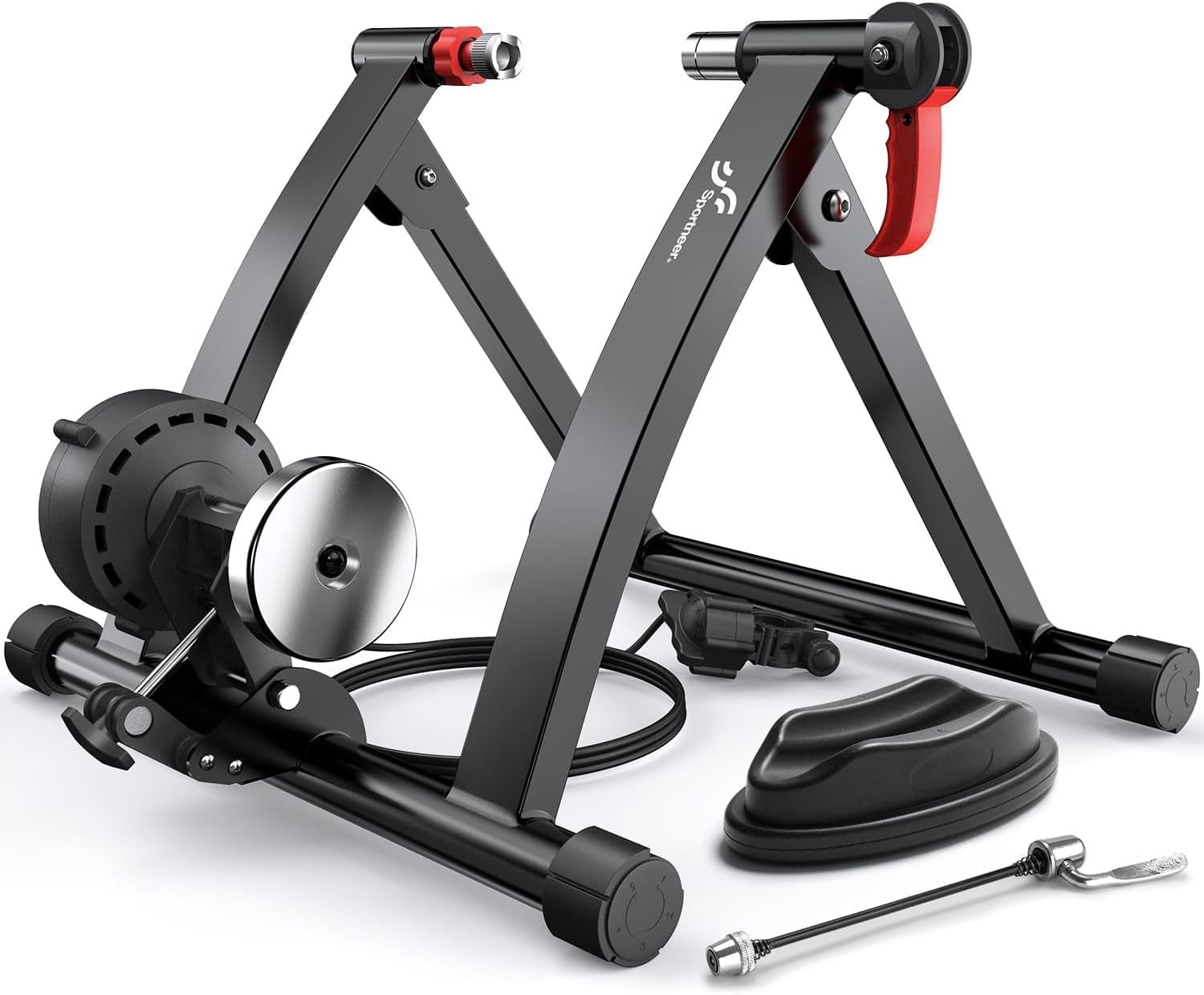
Entry magnetic trainer with 6 resistance levels controlled from your handlebar (remote included). Foldable steel structure, supports up to 150 kg and installs in 10 minutes. For runners who want to try cross-training without spending 300+ euros.
2. Velo Pro Turbo Trainer — Variable resistance for 160 €
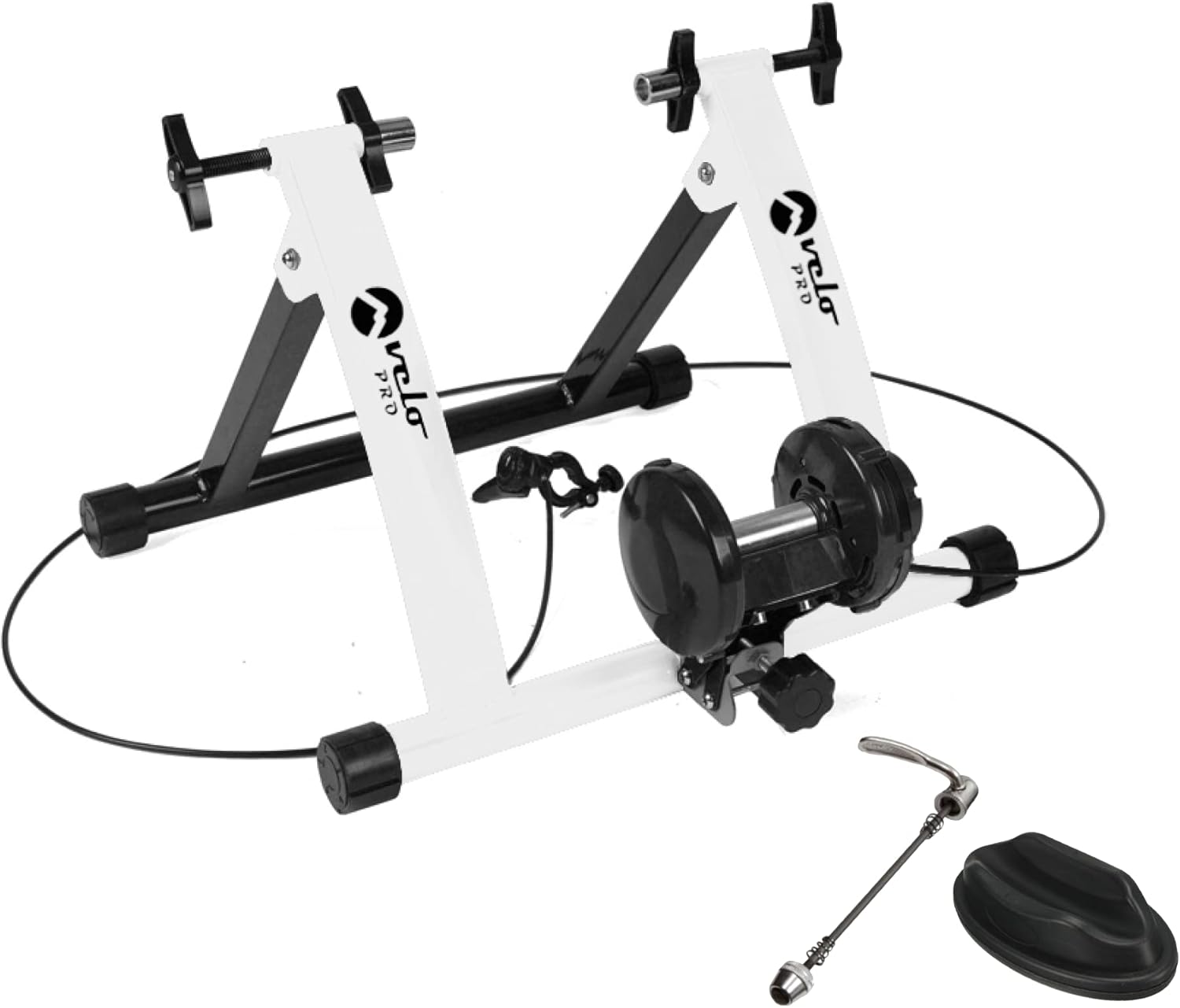
Magnetic trainer with variable resistance, ideal for progressive workouts. British brand with European support. Robust white + black build, compatible with 26-28" road and mountain wheels. Good intermediate option for runners wanting more resistance than entry-level Sportneer.
3. Elite Qubo Fluid — Silent for shared apartments
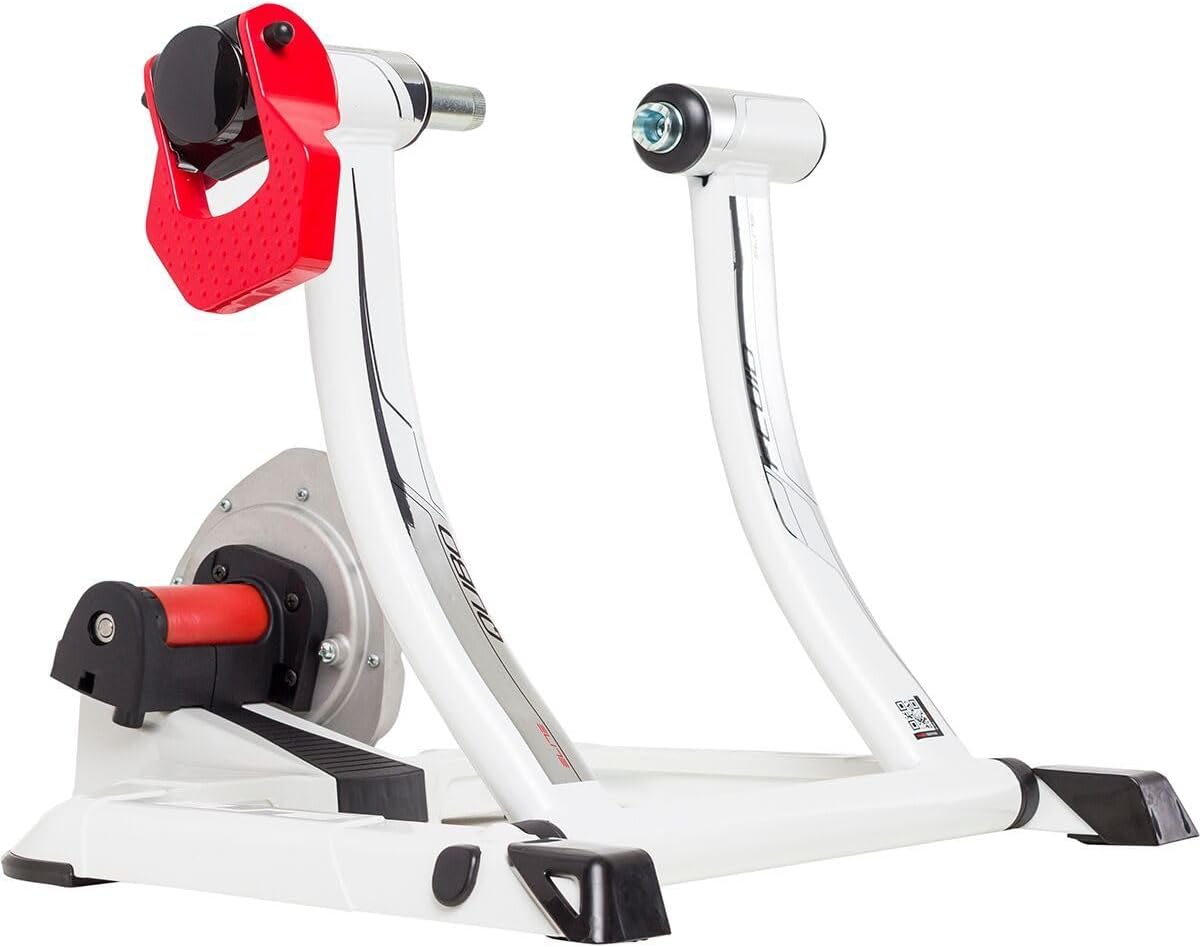
Elite is the leading Italian trainer brand (supplier to World Tour teams). The Qubo Fluid uses progressive hydraulic resistance: the harder you pedal, the more resistance. Sensation very similar to a real road bike, practically silent (45-50 dB). Ideal for runners in apartments with neighbors below or early morning sessions.
4. Elite Rivo Smart Trainer — Premium Elite smart trainer
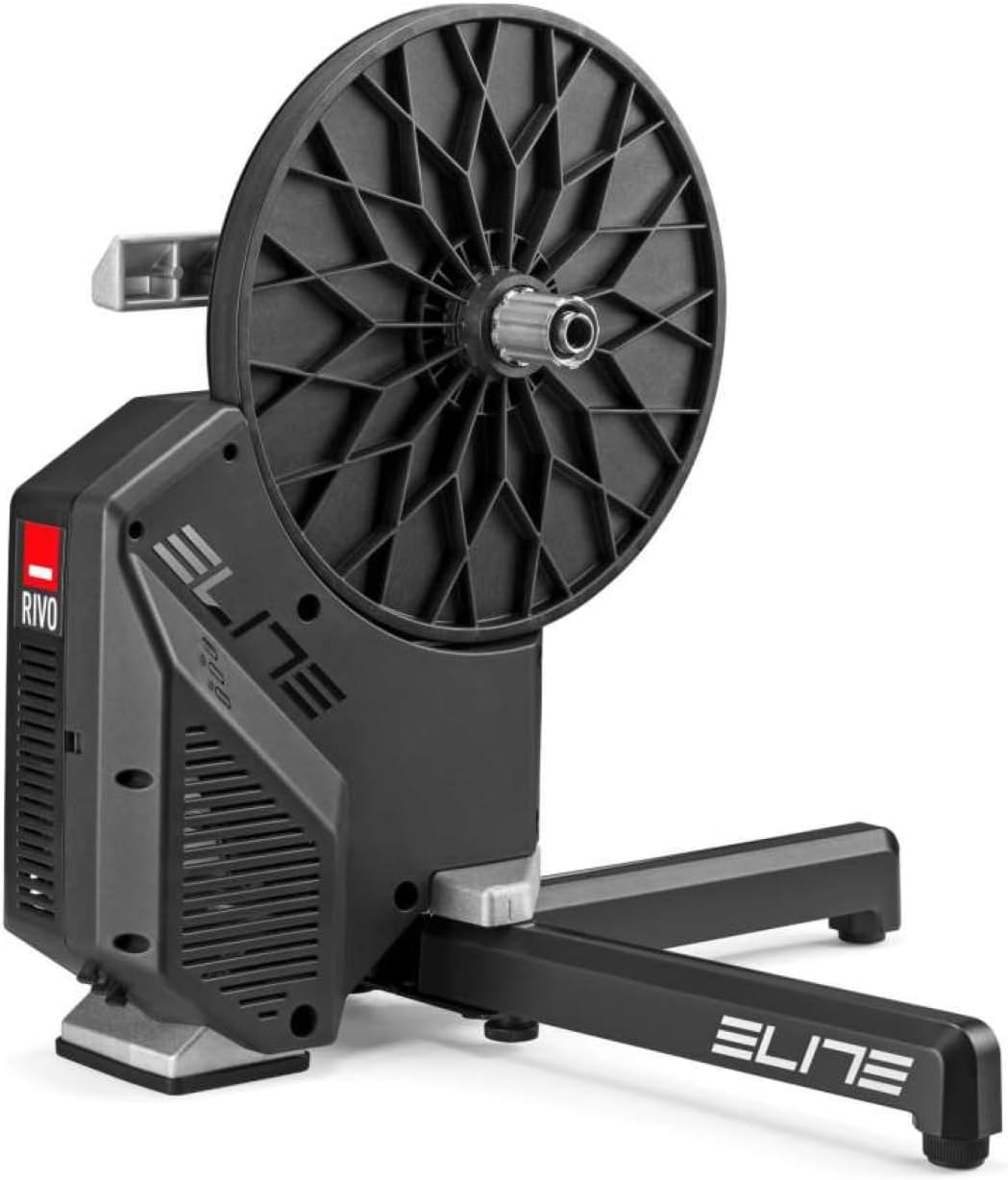
Elite Rivo is a direct-drive smart trainer: remove your rear wheel and screw it directly to the trainer (more precise and quieter than wheel-on). Compatible with Zwift, TrainerRoad, FulGaz, MyETraining. App-controlled electronic resistance, simulates gradients up to 12%. Internal flywheel equivalent to 9 kg of inertia. For serious runners doing advanced cross-training.
5. CYCPLUS T2 Smart Trainer — Most compact smart trainer
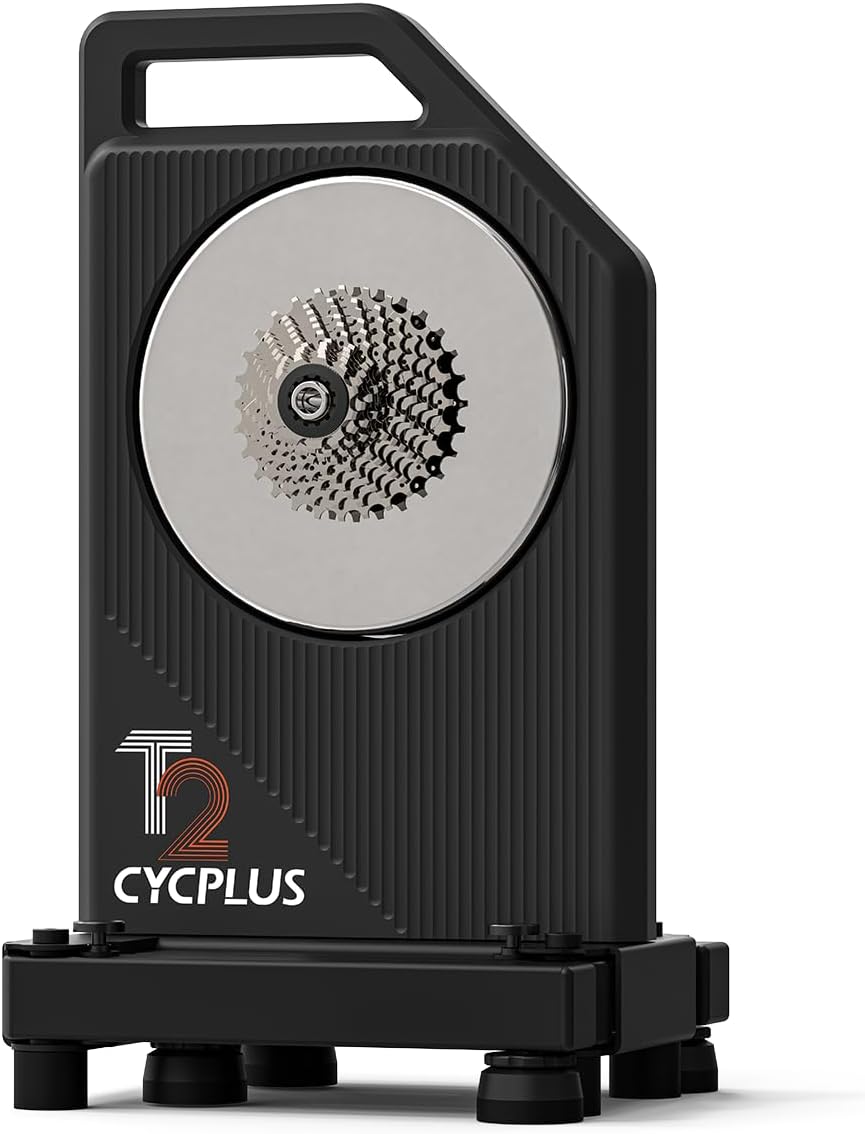
CYCPLUS T2 is one of the most compact smart trainers on the market: takes up half the space of a Wahoo Kickr Core. Direct-drive with Bluetooth + ANT+ sensors, compatible with all apps (Zwift, Kinomap, RGT, FulGaz). Cassette included. For runners with limited home space who want serious training with virtual apps.
6. Thinkrider X3 MAX Smart Trainer — Direct-drive with ±1% precision
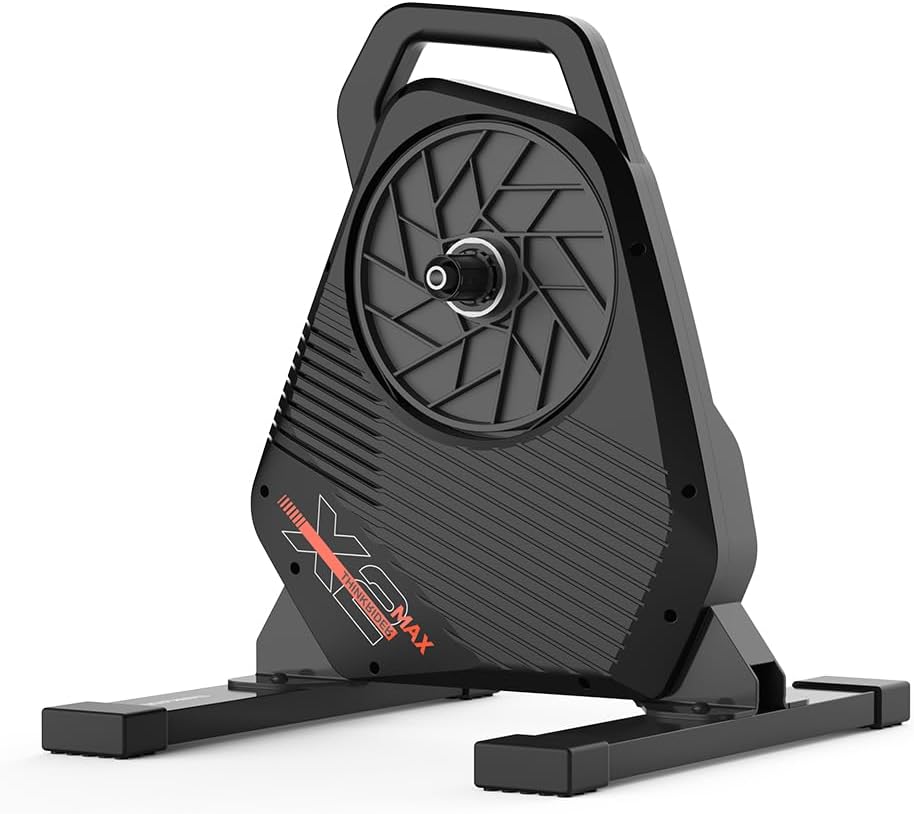
Thinkrider X3 MAX combines ±1% power accuracy (very high for this price range) with gradient simulation up to 18%. Silent direct-drive (40 dB), 6 kg equivalent flywheel, natively Zwift/TrainerRoad/Kinomap compatible via BT+ANT+. For runners who want accurate power data for FTP analysis and polarized training.
7. Wahoo KICKR CORE Zwift — The best-selling smart trainer
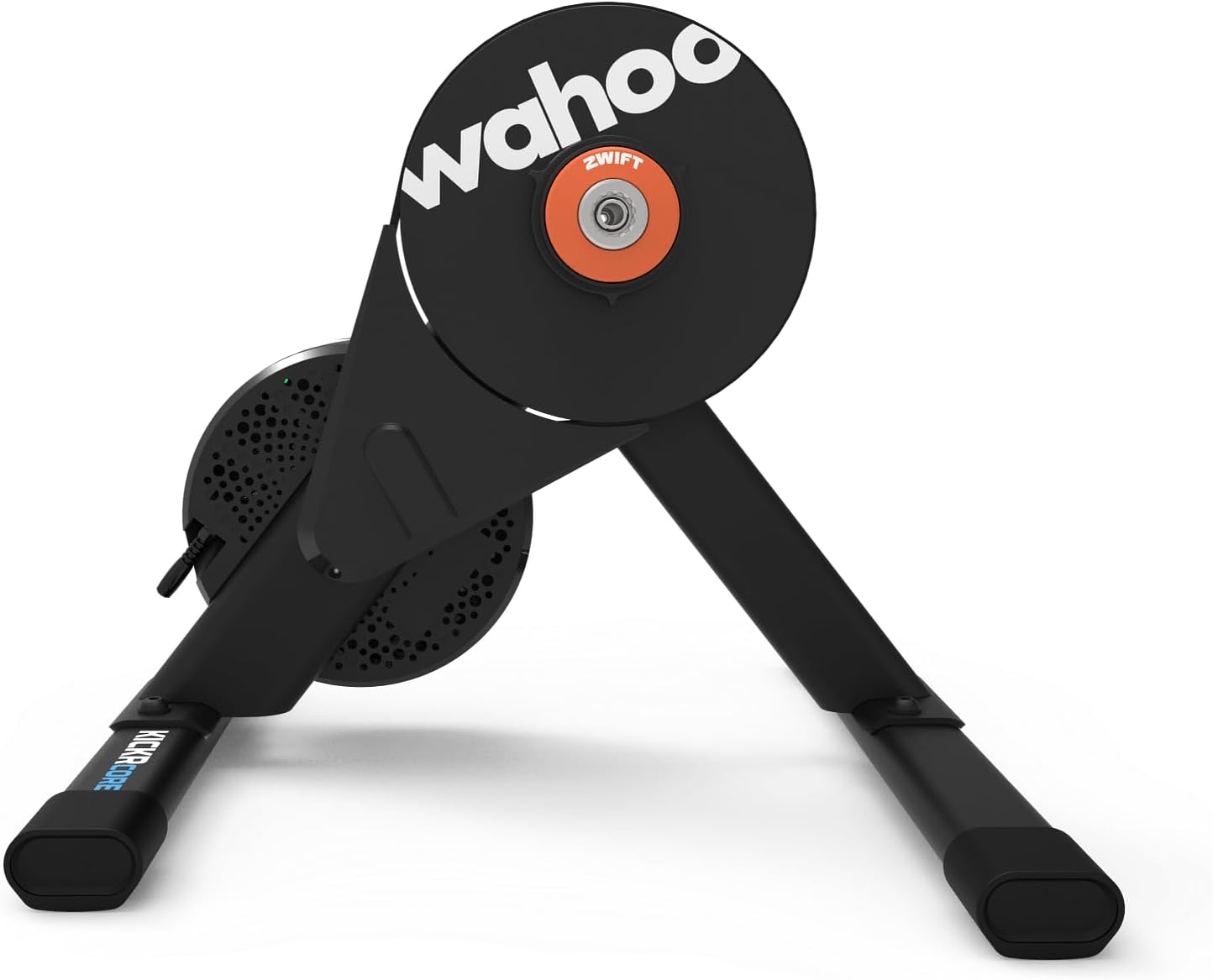
Wahoo KICKR Core is the undisputed reference in premium smart trainers. ±2% accuracy, simulates gradients up to 16%, 5.4 kg equivalent flywheel inertia. Legendary Wahoo build quality (10+ years of heavy use reported by users). "Zwift" edition includes 1 year free Zwift. The investment you recoup over 5+ years of daily use.
8. Wahoo KICKR ROLLR — Smart roller without removing wheel
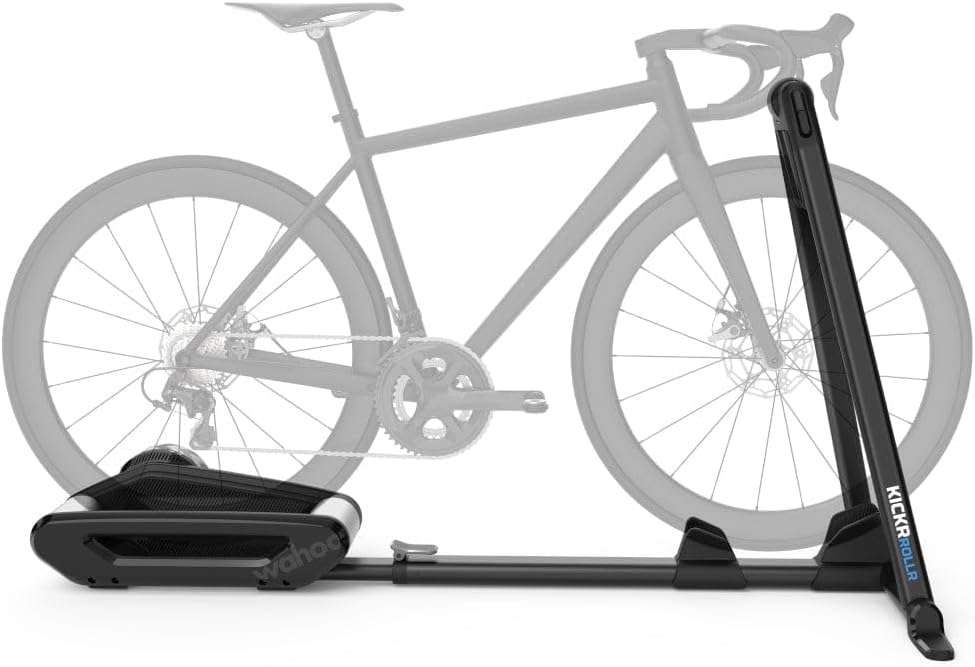
Wahoo KICKR ROLLR is a hybrid between traditional cylinder rollers and smart trainer: place your bike with both wheels mounted (no need to remove the rear wheel). Front stabilizer included. Smart sensors on the rear roller (with optional power sensor). Ideal for runners with an expensive road bike who do not want to disassemble it each time.
9. Foldable Cylinder Rollers — Traditional rollers to improve technique
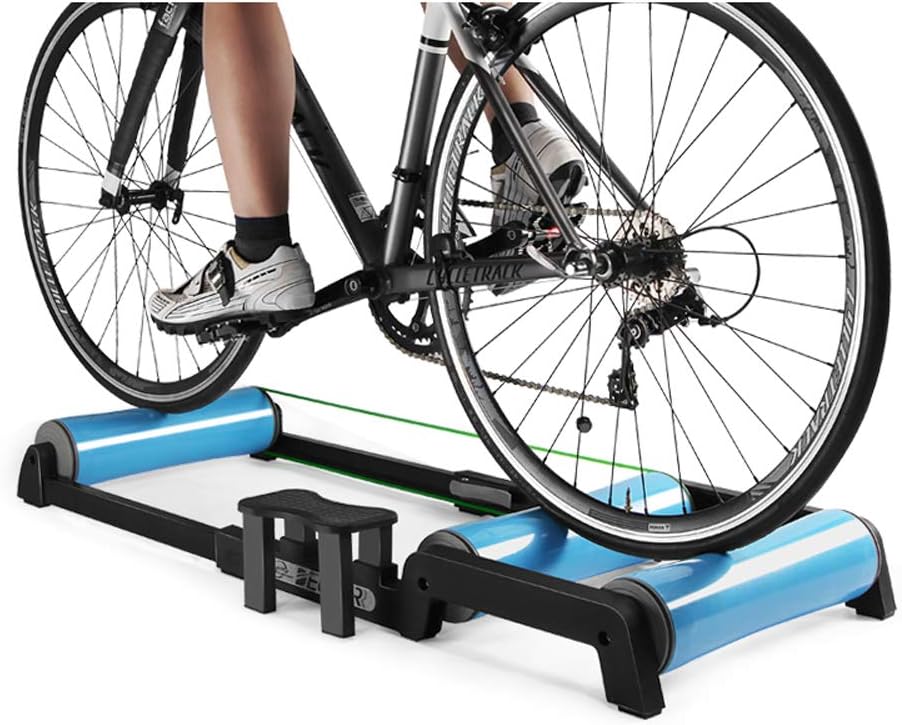
Traditional cylinder rollers (3 rotating cylinders where you place your bike and maintain balance while pedaling). Unique format that trains your balance, pedaling technique and core simultaneously — pros use them to warm up before races. Foldable and portable, no plugs or adjustable resistance: you control intensity with your own pedaling and your bike's gears. For runners who want to improve technical skill in addition to cardiovascular fitness.
10. Tacx Flow Smart Trainer — Tacx with integrated app
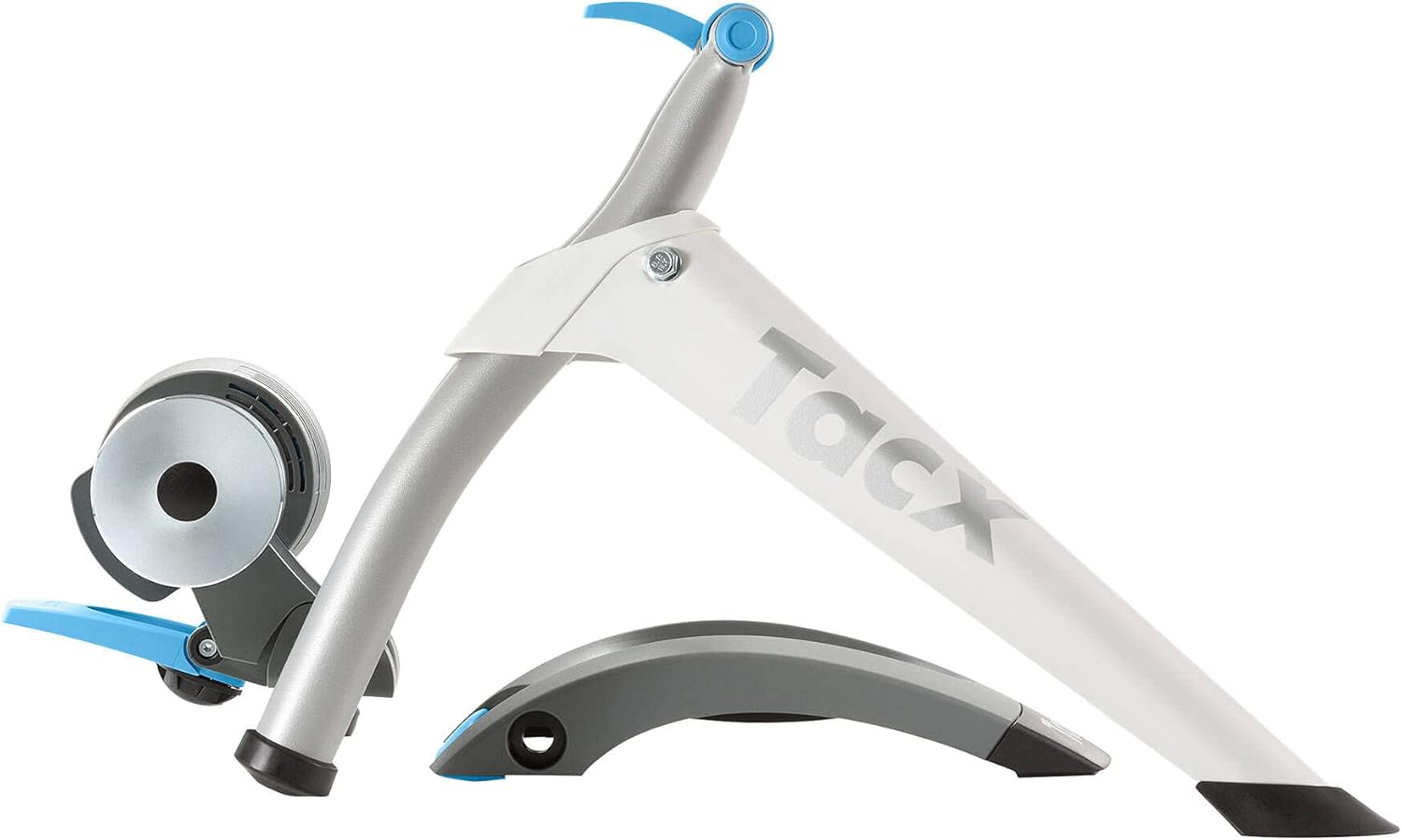
Tacx (Garmin) Flow Smart is wheel-on (keep the wheel on your bike, the trainer presses against the rear wheel). Easier to install than a direct-drive and compatible with Zwift, TrainerRoad and the official Tacx Training app. Simulates gradients up to 6%, controllable from your phone. Garmin warranty (parent brand). For runners who want to get into smart trainers without spending 600+ euros.
Quick comparison
Summary table of the 10 trainers analyzed:
| Model | Price | Type | Apps | Max weight | Score |
|---|---|---|---|---|---|
| Sportneer Turbo Trainer 6 Settings | ~120 € | Entry magnetic | - | 150 kg | 6.8 |
| Velo Pro Turbo Trainer | ~160 € | Entry-mid magnetic | - | 120 kg | 6.9 |
| Elite Qubo Fluid | ~150 € | Fluid (silent) | - | 120 kg | 7.6 |
| Elite Rivo Smart Trainer | ~600 € | Smart direct-drive | Zwift, TrainerRoad | - | 8.9 |
| CYCPLUS T2 Smart Trainer | ~380 € | Compact smart direct-drive | Zwift, Kinomap | - | 8.8 |
| Thinkrider X3 MAX Smart Trainer | ~450 € | Advanced direct-drive smart | Zwift, TrainerRoad | - | 8.7 |
| Wahoo KICKR CORE Zwift | ~700 € | Premium smart direct-drive | Zwift 1yr included | - | 9.4 |
| Wahoo KICKR ROLLR | ~700 € | Hybrid smart roller | Zwift, TrainerRoad | - | 8.7 |
| Foldable Cylinder Rollers | ~130 € | Cylinder rollers | - | - | 6.0 |
| Tacx Flow Smart Trainer | ~350 € | Wheel-on smart trainer | Zwift, Tacx Training | - | 8.4 |
Which trainer to choose based on your runner profile
Beginner runner (0–20 km/week)
If you are just starting out or want to try cross-training, the Sportneer Turbo Trainer (120 €) or the Velo Pro (160 €) cover everything you need. A magnetic trainer is plenty for your level, and the money you save versus a smart trainer (300+ euros more) is better spent on good running shoes.
Injury-prone runner
If you deal with recurring injuries, a trainer is your insurance policy. We recommend the Elite Qubo Fluid (150 €) for its smooth, progressive hydraulic resistance — perfect for Zone 1–2 rehab rides. Fluid resistance is far gentler on joints than the abrupt step changes of a magnetic trainer.
Intermediate runner (20–50 km/week)
If you train 4–5 days a week and want structured workouts, the CYCPLUS T2 Smart (380 €) or the Tacx Flow Smart (350 €) are the best value for money. Native Zwift connectivity, gradient simulation and power data — both let you run serious intervals with precise metrics.
Advanced runner (50+ km/week)
For runners who will integrate 2–3 weekly bike sessions into their plan, the Thinkrider X3 MAX (450 €) delivers ±1% power accuracy (exceptional at this price) while the Wahoo KICKR Core (700 €) offers legendary build quality that will last 10+ years. Either one supports FTP tests, polarized intervals and serious data analysis.
Trail runner / Ultra runner
If you do trail running or ultras, the Wahoo KICKR Core with up to 16% gradient simulation is a game-changer for training long climbs (UTMB, Penyagolosa, Ronda 101 km). The Wahoo KICKR ROLLR (700 €) is also worth a look if you own an expensive road bike and prefer not to remove the rear wheel each session.
Frequently asked questions
Do I need to be a cyclist to use a bike trainer?
No. As a runner you only need to know how to pedal and own a bike (any road bike, mountain bike or hybrid works). A trainer requires no advanced cycling technique. For beginners we recommend any entry-to-mid magnetic or fluid model; cylinder rollers demand more balance and are better suited to experienced cyclists.
What is the difference between a wheel-on and a direct-drive smart trainer?
A wheel-on trainer presses against your bike's rear tire (easier to set up, less precise, noisier). A direct-drive trainer requires you to remove the rear wheel and attach the bike directly to the trainer's cassette (more accurate, quieter, better for Zwift). For occasional use, wheel-on is perfectly fine. For daily training and serious workouts, direct-drive is the better investment.
Do I need a specific bike to use a trainer?
Any road or mountain bike with working gears will do. Wheel-on trainers work with wheels from 26" to 29". Direct-drive trainers require you to remove the rear wheel and thread the bike onto the trainer's cassette — compatible with most modern thru-axle road standards. Check your bike's thru-axle specification before buying.
How loud is a bike trainer?
Noise varies by type: magnetic trainers produce 50–60 dB (similar to a normal conversation), fluid trainers 45–50 dB, and smart direct-drive trainers around 40 dB (very quiet). Most treadmills are actually louder. If you live in a shared flat, prioritize a fluid or smart direct-drive trainer.
Does it work with Zwift?
Smart trainers connect natively to Zwift via Bluetooth or ANT+. You will need a Zwift subscription (around €16/month). Non-smart trainers (magnetic, fluid, cylinder rollers) can also be used with Zwift by adding external speed and cadence sensors (€15–30), although without automatic resistance control.
How much resistance or power output do I need for running cross-training?
For Zone 1–2 recovery sessions almost any trainer is sufficient. For HIIT or Zone 4–5 intervals, look for a trainer that simulates at least 6–8% gradients. For FTP testing and serious data analysis, you need a smart trainer with ±2–3% power accuracy as a minimum. For advanced training, ±1% (Thinkrider X3 MAX or higher) is ideal.
Is a bike trainer better than a stationary bike for runners?
It depends on your situation. If you already own a quality road or mountain bike, a trainer makes full use of that investment and replicates your exact position and geometry. If you do not own a bike, a stationary bike is more convenient as an all-in-one unit. For advanced runners with a road bike, a trainer is clearly the better option for feel and biomechanical carry-over.
Combine your trainer with an adaptive training plan
At CorrerJuntos we have built running plans that integrate bike cross-training intelligently: when your body needs to recover, the plan schedules a cycling session instead of a run. No guesswork, fewer injuries.
View CorrerJuntos plans →