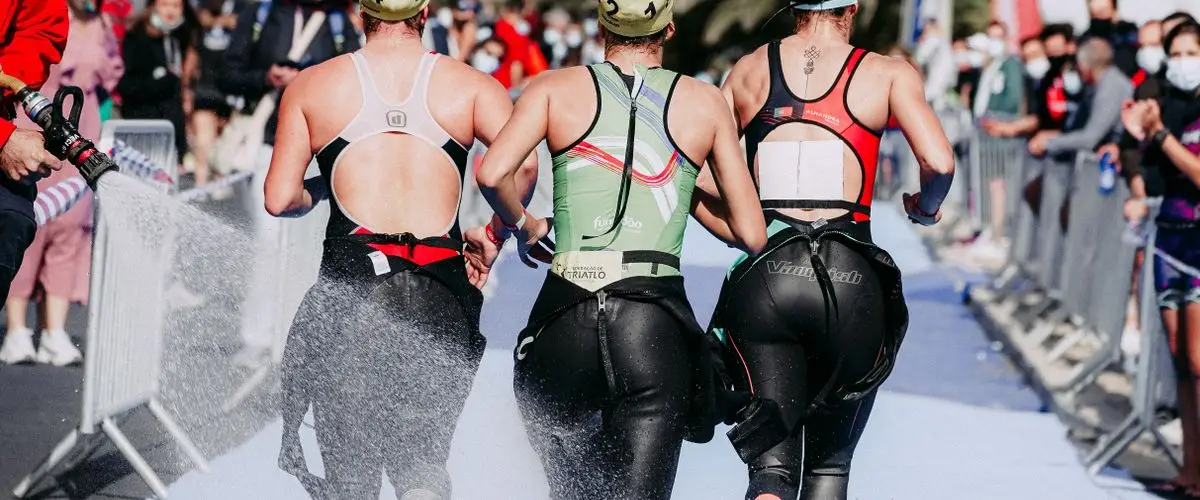
If you’ve been running for months or years and feel ready for a new challenge, the sprint triathlon is the natural next step. You already have the hardest part: a solid aerobic base and the endurance mindset. You just need to learn efficient swimming and smart cycling.
This guide covers the complete transition from runner to triathlete: formats, the advantages you already have, what you need to learn, gear, a 16-week plan for your first sprint, and the mistakes to avoid. No fluff, no empty promises.
Why triathlon is the natural next step for runners
Triathlon is not a sport reserved for superathletes. It’s a logical evolution for any runner seeking variety, fewer injuries, and a challenge that combines endurance with new skills.
Cross-training that reduces injuries
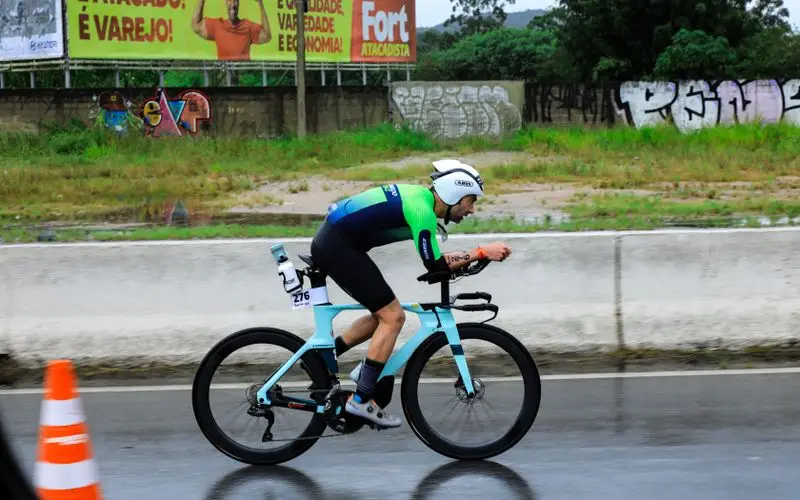
Running is a repetitive impact sport. Each stride generates 2-3 times your body weight in force on joints and tendons. Adding swimming (zero impact) and cycling (minimal impact) reduces accumulated load without sacrificing cardiovascular training volume. This kind of cross-training is one of the most effective ways to stay healthy as a runner.
Dallam et al. demonstrated in their study “Effect of a season of triathlon training” (Journal of Sports Sciences, 2005) that athletes who combine all three disciplines show significantly lower overuse injury rates than single-sport runners, while maintaining equivalent VO2 max improvements.
Improves your running performance
The multisport paradox: running fewer kilometers but adding cycling and swimming can improve your running economy. Cycling develops specific strength training in quadriceps and hamstrings. Swimming improves lung capacity and breathing control. Both contribute to better overall cardiovascular efficiency.
Renewed motivation
After years of running, new stimuli reignite motivation. Learning freestyle technique, mastering transitions, and planning three disciplines add a strategic complexity that running alone doesn’t offer. Our cycling meetups at CorrerJuntos are growing 45% quarter over quarter, reflecting this trend.
Triathlon formats
There are five main triathlon formats, regulated by World Triathlon. Each has fixed distances:
| Format | Swim | Bike | Run | Estimated time |
|---|---|---|---|---|
| Super Sprint | 400 m | 10 km | 2.5 km | 0:40 - 1:00 h |
| Sprint | 750 m | 20 km | 5 km | 1:10 - 1:45 h |
| Olympic | 1,500 m | 40 km | 10 km | 2:00 - 3:30 h |
| 70.3 (Half Ironman) | 1,900 m | 90 km | 21.1 km | 4:30 - 7:00 h |
| Ironman | 3,800 m | 180 km | 42.2 km | 8:00 - 17:00 h |
For your debut, the sprint format (750 m swim, 20 km bike, 5 km run) is the right choice. The swim is manageable even for basic swimmers, the bike doesn’t require huge endurance, and the final run is your home turf. If 750 m of swimming intimidates you, look for a super sprint with just 400 m. You might also want to try a duathlon first to ease into multisport racing without the swim.
Your advantage as a runner
As a runner, you arrive at triathlon with advantages other beginners don’t have:
Developed aerobic base
Years of running have built a powerful cardiovascular engine: capillaries, mitochondria, cardiac stroke volume. This base transfers directly to swimming and cycling. Your heart already knows how to work at high intensity for prolonged periods.
Endurance mindset
You know what it means to suffer at kilometer 35 of a marathon or push through the last 200 m of a 1,000 m interval. That mental toughness is irreplaceable and will give you an enormous advantage when your legs feel heavy coming out of T2. Recognizing the signs of overtraining is also a skill you have already developed.
Training discipline
You already have established training habits: waking early, following plans, managing fatigue, periodizing. Adding two disciplines is more a question of organization than willpower.
What you need to learn
Swimming: the critical discipline
Swimming is where you’ll invest the most time learning. It’s not about swimming fast — it’s about swimming efficiently. Priorities:
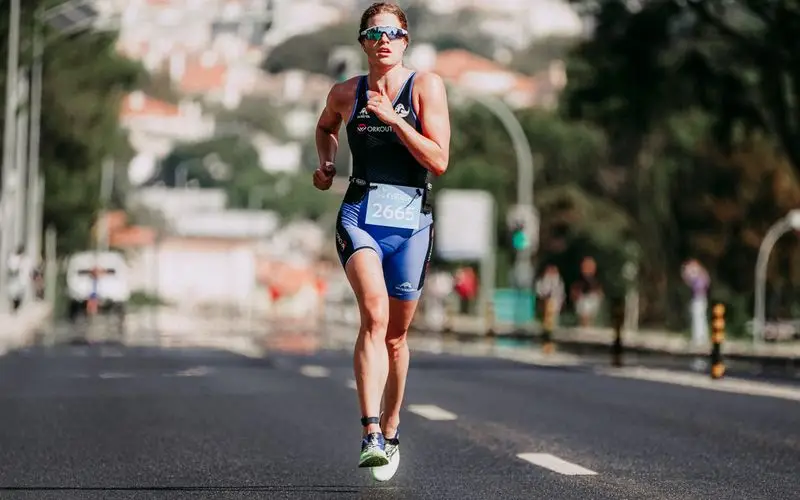
- Freestyle technique: horizontal body position, hip rotation, correct hand entry. An 8-10 session course with a coach makes a massive difference.
- Bilateral breathing: learn to breathe on both sides (every 3 strokes). It gives you symmetry and adaptability to waves and other swimmers in open water.
- Open water swimming: practice at least 3-4 sessions in a lake or sea before race day. Open water has no lane lines and no walls to rest at. Sighting is a skill you must train.
- Wetsuit: if the water is below 22°C, the wetsuit is mandatory (and a huge advantage). It adds buoyancy and speed. Try it before race day — the sensation is different from swimming in a swimsuit.
Cycling: efficiency over power
- Gear shifting: learn when and how to shift. Anticipate climbs — don’t wait until you’re stuck. Maintain a cadence of 80-95 rpm.
- Peloton riding: in most sprint triathlons, drafting is not allowed, but you must know how to maintain the regulatory distance (usually 12 m) and overtake safely.
- Nutrition on the bike: the bike leg is the time to eat and drink. Practice opening energy gels and drinking from your bottle at race pace.
- Aerodynamic position: even without aero bars, lowering your elbows and reducing your frontal area saves 1-2 minutes over 20 km.
T1 and T2 transitions
Transitions are the “fourth sport” of triathlon. Practicing them is free time gained.
- T1 (swim → bike): remove your wetsuit quickly (use petroleum jelly on wrists and ankles), put on your helmet BEFORE touching the bike, mount after the mount line.
- T2 (bike → run): dismount before the dismount line, rack your bike, remove your helmet AFTER racking the bike, slip on running shoes with elastic laces.
Gear needed: minimum vs ideal budget
You don’t need to break the bank for your first triathlon. But you do need specific gear you didn’t have as a runner.
Swimming
- Swimsuit or tri-suit: a training swimsuit for the pool and, if possible, a tri-suit (one-piece) for race day. The tri-suit has a thin chamois for cycling that doesn’t interfere with swimming or running.
- Swim goggles: essential. For open water, choose mirrored or polarized lenses to reduce glare. Bring a spare pair on race day.
- Wetsuit: mandatory when water temperature is below 22°C. Triathlon wetsuits range from €150 (entry) to €600+ (race). For your debut, a mid-range one (€250-350) is more than enough. You can also rent.
Cycling
- Road bike: any functional road bike will do for your first sprint. You don’t need carbon or deep-section wheels. A used aluminum bike (€400-800) works perfectly. If you already have a hybrid or gravel bike, that works too.
- Certified helmet: mandatory, no exceptions. Must meet CE EN 1078 standards. From €40.
- Elastic-lace running shoes: your regular running shoes with laces replaced by elastic bands (€2). Lets you slip them on in 3 seconds without tying.
Budget comparison
| Item | Minimum | Ideal |
|---|---|---|
| Swimsuit / tri-suit | €20 (swimsuit) | €120 (tri-suit) |
| Swim goggles | €15 | €35 |
| Wetsuit | €0 (rent €30-50) | €300 |
| Bike | €0 (already own) | €800 (used) |
| Helmet | €40 | €100 |
| Elastic laces | €2 | €2 |
| Race belt | €10 | €10 |
| Total | ~€90 | ~€1,370 |
16-week sprint triathlon training plan
This plan is designed for a runner with a base of 20-30 km/week who wants to complete their first sprint triathlon (750 m + 20 km + 5 km). It includes 5-6 weekly sessions with gradual progression across all three disciplines. For structured running-only programs, check our training plans.
Phase 1: Learn swimming + maintain running (weeks 1-4)
Goal: acquire basic freestyle technique, introduce easy cycling, maintain running base.
| Day | Session | Details |
|---|---|---|
| Monday | Swim technique | 45 min: freestyle drills (kick, stroke, breathing). 25 m pool. |
| Tuesday | Easy run | 35-45 min at comfortable pace (zone 2) |
| Wednesday | Easy bike | 45-60 min at 80-90 rpm cadence |
| Thursday | Continuous swim | 30 min: swim 400-600 m continuously (rest between lengths if needed) |
| Friday | Rest or yoga | Joint mobility and stretching |
| Saturday | Long run | 50-60 min at easy pace |
| Sunday | Long bike | 60-75 min progressive ride |
Phase 2: Combine all 3 disciplines (weeks 5-8)
Goal: increase swim volume, introduce bike intervals, first brick sessions.
| Day | Session | Details |
|---|---|---|
| Monday | Swim | 50 min: 200 m warm-up + 8×50 m freestyle (15 s rest) + 200 m technique + 200 m cool-down |
| Tuesday | Run intervals | 10 min warm-up + 6×800 m at 5K pace (2 min recovery) + 10 min cool-down |
| Wednesday | Bike intervals | 60 min: 15 min warm-up + 4×5 min zone 4 (3 min recovery) + 15 min cool-down |
| Thursday | Open water swim | 30-40 min: sighting and breathing practice in lake or sea (if available) |
| Friday | Rest or strength | 40 min: squats, core, proprioception. See our guide on injury prevention for runners. |
| Saturday | Brick session | 40 min bike + 20 min run immediately after |
| Sunday | Long run | 55-70 min at easy pace |
Phase 3: Brick sessions and race simulation (weeks 9-12)
Goal: consolidate brick sessions, practice transitions, simulate race pace.
| Day | Session | Details |
|---|---|---|
| Monday | Swim | 55 min: 300 m warm-up + 6×100 m race pace (20 s rest) + 4×50 m sprint + 200 m cool-down |
| Tuesday | Tempo run | 10 min warm-up + 25 min at triathlon pace + 10 min cool-down |
| Wednesday | Long bike | 75-90 min with race-pace intervals |
| Thursday | Swim + transition | 40 min swim + T1 practice (wetsuit removal, bike mount) |
| Friday | Rest | Full rest or 20 min mobility |
| Saturday | Long brick | 50 min bike with last 10 min hard + 25 min run at race pace |
| Sunday | Easy run | 40-50 min active recovery |
Phase 4: Race simulation + taper (weeks 13-16)
Goal: full race simulations, perfect transitions, reduce volume before race day.
| Day | Session | Details |
|---|---|---|
| Monday | Swim | 45 min: 750 m continuous at race pace + technique drills |
| Tuesday | Easy run | 30-40 min recovery jog |
| Wednesday | Bike skills | 50 min with cornering, braking, and pace-change practice |
| Thursday | Full simulation | 500 m swim + 15 km bike + 3 km run (race pace, transitions included) |
| Friday | Rest | Full rest |
| Saturday | Activation | 20 min easy swim + 20 min easy bike + 15 min run with 4×30 s sprints |
| Sunday | Rest | Full rest (reduce everything in week 16) |
Nutrition for beginner triathletes
Triathlon nutrition has added complexity compared to running: you must manage food intake during the bike leg without it causing problems on the run.
Before the race (3-4 hours)
- Carbohydrate-rich breakfast that’s easy to digest: white bread with honey, oatmeal with banana, rice with jam. Our pre-workout nutrition guide covers this in detail.
- Avoid excess fiber, fat, and protein.
- 500 ml of water with electrolytes in the 2 hours before the race.
During the race (sprint)
- Swim: you can’t eat or drink. Arrive well hydrated.
- T1: a sip of water or sports drink if needed.
- Bike: 1 gel with 25-30 g of carbohydrates + bottle with sports drink. For complete race day nutrition strategies, see our dedicated guide. Eat in the first half of the leg to allow digestion before running.
- T2: a sip of water. No solid food.
- Run: water at aid stations if needed. In a 5 km sprint run, you shouldn’t need more fuel.
Recovery
Within 30-60 minutes post-race, consume 1-1.2 g/kg of carbohydrates + 0.3 g/kg of protein. A recovery shake, fruit with nuts, or a turkey sandwich all work well.
Race day: logistics and strategy
Your first triathlon race day requires logistical planning. The race itself is only part of it; arriving prepared and organized makes the difference.
Before the race
- Arrive 2 hours before your wave start. You need time to park, collect your race number, set up transition, and warm up.
- Set up your transition area with order: helmet open on the handlebars, sunglasses inside, running shoes with elastic laces by the rear wheel, gel already in your jersey pocket.
- Locate the entrances and exits of the transition area. Identify your bike’s row with a visual reference. A multisport GPS watch helps you track each leg and transitions automatically.
- Warm-up: 10 min easy jog + 3-4 strides + 5 min easy swim if the organizer allows it.
Race strategy
Millet et al. demonstrated in their study “Physiological differences between cycling and running” (European Journal of Applied Physiology, 2009) that the bike-to-run transition causes significant biomechanical disruption in the first minutes of running, with a 2-6% increase in energy cost. The key is managing this impact:
- Swim: start conservatively. Don’t compete for position in the water. Find your rhythm, stay calm, and sight every 6-8 strokes. If you panic, flip onto your back and breathe.
- T1: don’t rush. Walk briskly to your bike, remove your wetsuit calmly. Nerves make you trip.
- Bike: first 2 km easy to stabilize heart rate. Then build to planned pace. Eat and drink in the first half.
- T2: quick but controlled. Slip on shoes with elastic laces, head out running.
- Run: the first 500 m will be tough (cement legs). Start 15-20 s/km slower than your target pace and accelerate progressively. The last 2 km are your territory — this is where you overtake.
Common mistakes runners make in triathlon
- Dedicating 70% of training to running: you already know how to run. Invest 40% of your time in swimming (your weak point), 30% in cycling, and 30% in running.
- Ignoring swim technique: swimming more meters without technique only reinforces bad habits. Invest in a basic freestyle course with a qualified coach.
- Not practicing in open water: the pool and the sea are different sports. Anxiety, limited visibility, and no walls to rest at change everything. Practice at least 4 sessions before race day.
- Starting too fast in the swim: the adrenaline of a mass start spikes your heart rate. Stay calm for the first 100-200 m.
- Not practicing transitions: 2-3 minutes lost in T1 + T2 means 5 minutes given away. Practice 6-8 times before race day.
- New bike without a proper fit: an incorrect position causes lower back, knee, and neck pain. Get a basic saddle and handlebar adjustment before training.
- Eating too much on the bike: in a 40-50 minute sprint bike leg, one gel and one bottle is enough. Overeating causes gastric distress when running.
- New gear on race day: never debut a wetsuit, goggles, shoes, or gels in competition. Everything must be tested in training.
- Forgetting the helmet: no helmet, no bike. Immediate disqualification. And it must be buckled before you touch the bike.
- Underestimating accumulated fatigue: the final run doesn’t feel like a fresh 5K. Adjust expectations: your pace will be 20-40 s/km slower than in a standalone race.
Find your running group
1,100+ runners already train together. Free on iOS.
Frequently asked questions
How long do I need to prepare for a sprint triathlon?
A minimum of 12 weeks if you already have a running base and know basic freestyle swimming. If you need to learn swimming from scratch, 16-20 weeks. The ideal plan for a runner is 16 weeks with gradual progression across all three disciplines.
Do I need to be a strong swimmer for a sprint triathlon?
You need to be able to swim 750 m of continuous freestyle. You don’t need to be fast, but you need to be efficient. An 8-10 session course with a swim coach is the best investment you can make. If 750 m intimidates you, look for a super sprint with just 400 m.
How much does it cost to start triathlon?
With a minimum budget of around €90 (helmet, goggles, swimsuit, elastic laces) you can debut if you already own a bike and running shoes. Sprint registration typically costs €40-80. A wetsuit can be rented for €30-50 on race day.
Can I use my mountain bike or hybrid for a triathlon?
Yes, for your first sprint you can use any functional bike with gears. It’s not optimal, but it’s perfectly valid. You’ll lose 3-5 minutes compared to a road bike, but you’ll complete the race without any issues. What matters is that the bike is serviced and the helmet is certified.
What is the difference between a sprint and Olympic triathlon?
Sprint is half the distance: 750 m swim + 20 km bike + 5 km run (1:10-1:45 h). Olympic doubles it: 1,500 m + 40 km + 10 km (2:00-3:30 h). For your debut, sprint is the right choice. Step up to Olympic after completing 2-3 sprints.
How do I manage the fear of open water swimming?
Fear of open water is normal and common. Three strategies: 1) practice at least 4 sessions in a lake or sea before race day, 2) at the start, position yourself at the back or side to avoid physical contact in the pack, 3) if you panic, flip onto your back and breathe until it passes. Nobody disqualifies you for stopping.
Can I do a triathlon solo or do I need a club?
You can register and race individually, without a club or permanent federation license (you can buy a day license for €10-20). That said, training with a triathlon group or club is highly recommended: it gives you coached swim sessions, group bike rides, and experienced training partners.
What will my time be in my first sprint triathlon?
A runner with a solid base who has trained for 12-16 weeks can expect to finish a sprint in 1:15-1:45 h. The swim typically takes 15-25 min, the bike 35-50 min, and the run 22-30 min, plus 3-6 minutes of transitions. Your goal in your first triathlon should be finishing, not the clock.
Conclusion
If you’re a runner looking for a new challenge, the sprint triathlon is the natural progression. You already have the aerobic engine, the endurance mindset, and the training discipline. What you’re missing — swimming technique, cycling experience, and transition practice — can be learned in 16 weeks with consistency and a structured plan.
You don’t need a huge budget or expert swimming skills. You need the willingness to learn, a helmet, swim goggles, and the drive to step outside your comfort zone. Cross-training will make you a more complete athlete, reduce your injury risk, and renew the motivation that pure running may no longer provide. You can also find training partners in your area to share the journey.
On race day, when you exit the water, pedal 20 km, and arrive at T2 knowing the last 5 km of running are your territory, you’ll understand why 80% of runners who try a triathlon come back for more. Triathlon is addictive. And as a runner, you start with an advantage.