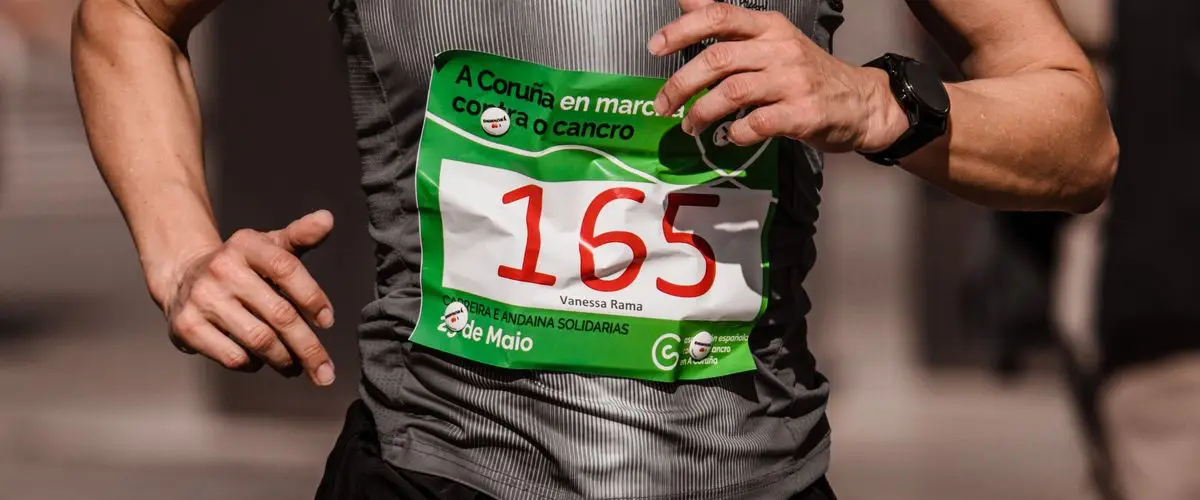
Cadence —the number of steps per minute (spm) you take while running— is one of the most important and most misunderstood technical variables in running. For years, the mantra has been that the ideal cadence is 180 spm. But science tells a different story.
In this guide we analyze what cadence really is, why it matters for your performance and joint health, how to measure yours, and how to improve it progressively and safely. Whether you are following our beginners guide or chasing a PR, cadence optimization applies to every level. Backed by peer-reviewed studies from PubMed and analysis of over 500 activities logged in the CorrerJuntos community.
What is running cadence
Cadence (also called step rate or stride frequency) is the number of steps you take per minute while running. It is measured in spm (steps per minute). If you take 170 steps in one minute, your cadence is 170 spm.
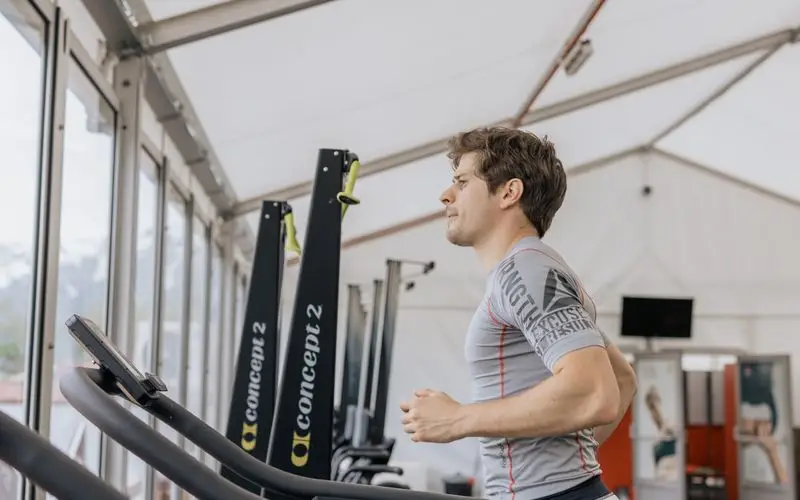
It is one of the two variables that determine your running speed. The formula is simple:
To run faster, you can increase cadence, increase stride length, or both. But as we will see, excessively increasing stride length has negative consequences, while optimizing cadence is generally beneficial. Understanding your VO2 max can help you contextualize how cadence improvements translate into aerobic efficiency.
Typical cadence ranges
Cadence varies significantly depending on the runner’s level, pace, height, and individual biomechanics:
- Beginners: 150-165 spm — long strides, prolonged ground contact time
- Intermediate: 165-175 spm — better efficiency, less ground contact time
- Advanced: 175-190 spm — optimized stride, high performance
- Elite: 180-200+ spm — varies depending on pace and distance
At CorrerJuntos, we analyzed GPS data from over 500 logged activities. Our community’s average cadence is 164 spm, with the fastest runners (sub-5:00/km) averaging 182 spm. 68% of our beginner runners have a cadence below 165 spm. You can find runners nearby to practice cadence drills together.
The 180 spm myth
The origin of the 180 spm rule is attributed to Jack Daniels, the legendary running coach, who observed during the 1984 Los Angeles Olympics that most elite runners had cadences above 180 spm.
The problem is that this observation has become a universal rule that it is not. Subsequent studies show that elite runners vary between 160 and 200+ spm depending on pace, distance, and their physical characteristics. A 6’3” runner has a different optimal cadence than a 5’5” runner, even at the same pace.
The reality is that 180 is a useful reference, not a universal target. What matters is that your cadence is appropriate for your pace and biomechanics, and that you are not an overstrider.
Why cadence matters
Cadence is not just a number to obsess over. It has direct implications in three critical areas: injury prevention, energy efficiency, and performance.
Joint impact reduction
The landmark study by Heiderscheit et al. (2011) demonstrated that increasing cadence significantly reduces impact forces on the knee and hip. The mechanism is simple: by taking more frequent steps, each step is shorter, which reduces overstriding (landing with the foot well ahead of the center of mass).
Source: Heiderscheit BC, Chumanov ES, Michalski MP, et al. Effects of step rate manipulation on joint mechanics during running. Med Sci Sports Exerc. 2011;43(2):296-302. PubMed 20581720
Key findings from the study:
- A 5% increase in cadence reduces knee loading by 20%
- A 10% increase in cadence reduces hip impact forces by 30-35%
- Ground contact time decreases, reducing accumulated stress and lowering the risk of overtraining
These findings were confirmed by Lenhart et al. (2014), who specifically demonstrated that increasing cadence reduces patellofemoral forces (the joint between the kneecap and the femur), one of the most affected areas in runner’s knee.
Source: Lenhart RL, Thelen DG, Wille CM, et al. Increasing running step rate reduces patellofemoral joint forces. Med Sci Sports Exerc. 2014;46(3):557-564. PubMed 24002342
Energy efficiency and running economy
Running economy (RE) measures how much oxygen you consume at a given pace. Better RE means running faster with less effort. Proper recovery and hydration also play a role in maintaining efficient form. Cadence influences RE because:
- Less vertical oscillation: a higher cadence reduces unnecessary vertical movement (bouncing up and down)
- Better elastic energy return: tendons store and release energy more efficiently with shorter ground contact times
- Less braking force: by avoiding overstriding, you reduce the braking force at each step
A study by Schubert et al. (2014) reviewed the literature on the relationship between cadence, stride length, and running mechanics, concluding that cadence manipulation is an effective tool for modifying biomechanics without complex interventions.
Source: Schubert AG, Kempf J, Heiderscheit BC. Influence of stride frequency and length on running mechanics: a systematic review. Sports Health. 2014;6(3):210-217. PubMed 24790690
Relationship with performance
Optimizing cadence will not automatically make you faster, but it will allow you to:
- Reduce the risk of injuries that take you out of training
- Maintain more consistent technique under fatigue
- Run more efficiently at long distances (half marathon, marathon). Pair cadence work with a structured 5K training plan for maximum results
- Improve responsiveness during pace changes
How to measure your current cadence
Before trying to improve anything, you need to know where you stand. Here are the ways to measure your cadence, from simplest to most precise:
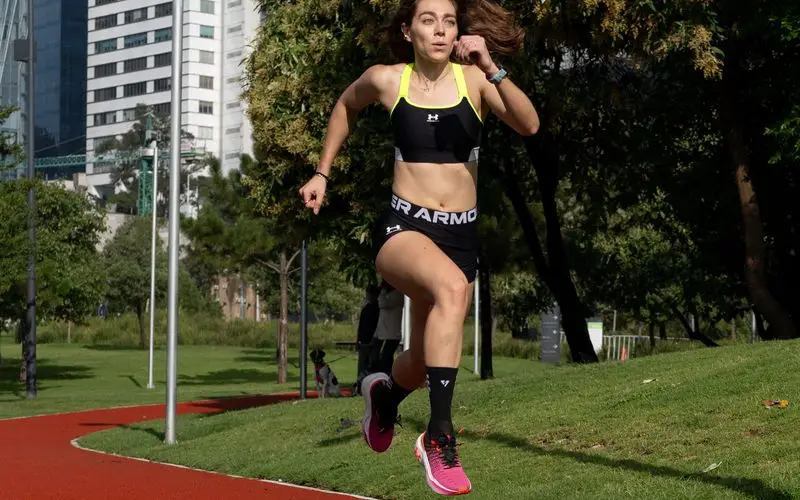
Manual method (free, instant)
Run at your usual pace for a few minutes until you stabilize. Then count the steps of one foot for 30 seconds and multiply by 4. Or count both feet for 30 seconds and multiply by 2. Do it 3 times and average the results.
GPS watch (high accuracy)
Most modern GPS watches measure cadence automatically via accelerometer:
- Garmin: all Forerunner, Fenix, Venu models (“Cadence” data field on run screen)
- COROS: PACE 3, APEX 2, VERTIX 2 (native metric)
- Apple Watch: from watchOS 9 onwards, displays cadence in the Workout and Health apps
- Polar, Suunto: available on all models with GPS
A GPS watch gives you both average cadence and real-time cadence, allowing you to make adjustments during the run.
Running apps
If you do not have a GPS watch, several apps measure cadence using your phone’s accelerometer:
- Strava: shows cadence if you use a linked GPS watch
- Nike Run Club: estimated cadence with the phone in hand or on the arm
- CorrerJuntos: automatically records cadence using the phone’s motion sensor
Running pod or external accelerometer
For maximum accuracy, a foot pod like Stryd or the Garmin Running Dynamics Pod measures cadence directly at the foot or waist, eliminating the margin of error from wrist-based accelerometers.
How to improve cadence step by step
If your cadence is significantly below the optimal range for your pace (check the table below), you can benefit from increasing it. But do it gradually. Forcing a sudden change is counterproductive.
The 5% rule: gradual increases
Never increase your cadence by more than 5-10% at once. If your usual cadence is 160 spm, your first target should be 168 spm (5% more), not 180.
Work at that cadence for 3-4 weeks until it feels natural. Then increase another 5%. This progressive approach prevents muscular overload and allows your neuromuscular system to adapt. Complement this process with proper stretching before and after each session.
Digital metronome
The most direct way to train cadence. Set a metronome to your target cadence and synchronize your steps with the beat:
- Free apps: Metronome Beats (iOS/Android), Pro Metronome, or simply search “metronome BPM” on Google
- Spotify: there are running playlists organized by BPM (170 bpm, 175 bpm, 180 bpm)
- GPS watches: Garmin and COROS have configurable cadence alerts that warn you if you drop below your target range
Start using the metronome only during the first 10 minutes of your easy runs. Over time, you will internalize the rhythm and no longer need it. Make sure your pre-run nutrition is on point so you can focus on technique rather than energy levels.
Cadence drill: 4×2 minutes
This exercise is one of the most effective for reprogramming your cadence pattern:
- Warm up for 10 minutes at easy pace (your normal cadence)
- Run 2 minutes at your target cadence (with metronome), maintaining your usual running pace
- Return to your natural cadence for 3 minutes
- Repeat 4 times (total: 8 min at target cadence, 12 min at normal cadence)
- Cool down for 10 minutes easy
The key is not to increase your speed when you increase cadence. Steps should be shorter and more frequent, not more powerful. If you find yourself running faster, consciously shorten your stride.
Short hill repeats for high cadence
Running uphill at high cadence is an excellent exercise because the incline naturally forces shorter steps:
- Find a hill of 50-80 meters with moderate gradient (5-8%)
- Run up at high cadence (your target + 5 spm) with short, quick steps
- Walk down to recover
- Repeat 6-8 times
This drill develops reactive strength (the ability of the Achilles tendon and foot musculature to generate quick force) while ingraining high cadence patterns. You can also measure your aerobic progress with a Cooper test every few weeks.
Cadence progressions during easy runs
During your weekly easy runs, dedicate the last 10 minutes to gradually increasing cadence: 5 minutes at +3% and 5 minutes at +5%. This trains cadence under fatigue conditions, which is when it tends to drop the most.
Abraham Márquez Rodríguez, running coach: “In my 15 years of coaching, the single technical change with the biggest impact on injury prevention is increasing cadence by 5%. It is free, requires no equipment, and results show within 3-4 weeks.”
Target cadence table by pace
Optimal cadence is not a fixed number: it increases with speed. This table shows recommended ranges for each running pace, based on scientific literature and data from the CorrerJuntos community:
| Pace (min/km) | Recommended cadence (spm) | Typical level |
|---|---|---|
| 7:00/km (11:15/mi) | 155-165 | Beginner / Easy run |
| 6:00/km (9:39/mi) | 165-175 | Intermediate / Moderate run |
| 5:00/km (8:03/mi) | 175-185 | Advanced / 10K pace |
| 4:30/km (7:14/mi) | 180-190 | Advanced / Half marathon pace |
| 4:00/km (6:26/mi) | 185-195 | Elite / Sub-3h marathon pace |
| 3:30/km or faster | 190-200+ | Elite / 5K-10K race pace |
Cadence and injury prevention
The relationship between low cadence and injuries is well documented. The primary mechanism is overstriding: landing with the foot significantly ahead of the body’s center of mass.
Overstriding as the #1 risk factor
When the foot lands far from the center of gravity, a braking force is generated that the body must absorb at each step. At 160 spm, that is 160 impacts per minute. In a 10K run at 6:00/km, that is 9,600 impacts. If each impact is 20% higher than necessary due to overstriding, the cumulative damage is enormous.
The injuries most associated with overstriding and low cadence include:
- Patellofemoral pain syndrome (runner’s knee): the most common running injury, directly correlated with excessive knee impact forces
- Medial tibial stress syndrome (shin splints): tibial periosteum overload from repetitive impact with excessive heel striking
- Plantar fasciitis: increased load on the plantar fascia when landing with an extended foot
- Achilles tendinopathy: excessive load from overly large stretch-shortening cycles
- Tibial stress fractures: the tibia absorbs more force per step when overstriding
A study by Willson et al. (2014) investigated the relationship between step length reduction and joint forces, confirming that cadence manipulation is an effective intervention for reducing mechanical loads in runners with knee injuries.
Source: Willson JD, Sharpee R, Meardon SA, Kernozek TW. The effects of step length on patellofemoral joint stress in female runners with and without patellofemoral pain. Clin Biomech. 2014;29(3):243-247. PubMed 24439441
Cadence as a rehabilitation tool
Many sports physiologists and podiatrists use cadence increase as a first-line intervention for lower limb injuries. It is a simple modification that does not require orthotics, shoe changes, or prolonged rest. Activities like cross-training can also support the transition by building supporting muscle groups.
A prospective study by Bramah et al. (2019) found that injured runners who increased their cadence by 7.5% experienced significant pain reduction and improved their biomechanics within 4 weeks.
Source: Bramah C, Preece SJ, Gill N, Herrington L. A 10% increase in step rate improves running kinematics and clinical outcomes in runners with patellofemoral pain. Am J Sports Med. 2019;47(14):3406-3413. PubMed 31657964
Common mistakes when working on cadence
Improving cadence is a process that requires patience and the right approach. These are the mistakes we see most frequently:
1. Forcing 180 spm from day one
If your natural cadence is 158 spm, jumping straight to 180 is a 14% increase. Your musculoskeletal system is not prepared for that change. The result: overload injuries in calves, Achilles tendon, and feet. Increase by 5% every 3-4 weeks.
2. Sacrificing comfort for numbers
If running at a certain cadence feels extremely uncomfortable after several weeks of adaptation, it may not be your optimal cadence. Ideal biomechanics are those you can maintain naturally and in a relaxed state. Not everyone should run at 180 spm.
3. Ignoring running pace
Your cadence should vary with speed. It is normal to have 162 spm during easy running at 6:30/km and 178 spm during intervals at 4:30/km. Do not try to maintain the same cadence across all workouts. High cadence during slow easy runs can lead to forced, unnatural technique.
4. Not allowing adaptation time
The neuromuscular system needs a minimum of 6-8 weeks to automate a new cadence pattern. During the first weeks, you will notice that you have to think constantly about your steps; that is normal. Over time, the new pattern becomes automatic.
5. Working on cadence without strength training
A higher cadence demands more work from calves, soleus, and foot musculature. If you do not complement with strength training exercises (calf raises, squats, plyometrics), you may develop new injuries from the increased demand.
6. Measuring cadence only during fresh workouts
Cadence tends to drop with fatigue. If you only measure it during the first kilometers, you will have an incomplete picture. Review your cadence during the last kilometers of long runs: that is where maintaining it really matters.
Find your running group
1,100+ runners already train together. Free on iOS.
Frequently asked questions
What is the ideal cadence for running?
There is no universal ideal cadence. It depends on your height, pace, level, and biomechanics. As a reference, most runners benefit from cadences between 165 and 185 spm, with higher values for faster paces. The 180 spm rule is a useful reference point but not a target for everyone.
How can I tell if my cadence is too low?
If your cadence is below 155 spm at any pace, or if you suffer recurring knee, shin, or plantar fascia injuries, it is likely that low cadence with overstriding is part of the problem. Measure your cadence across several workouts and compare it with the pace-based range table.
Will increasing cadence make me run faster?
Not directly. If you increase cadence while maintaining stride length, yes, you will be faster. But the initial goal is to increase cadence and reduce stride length to improve biomechanics. Over time, the greater efficiency may translate into better race times.
How long does it take to permanently change my cadence?
Most runners need between 6 and 12 weeks to automate a 5% cadence increase. The first 10-14 days require conscious attention during each session. After that, the pattern becomes progressively more automatic.
Should cadence be the same across all workouts?
No. Cadence naturally varies with running pace. It is normal to have 160-165 spm during easy runs and 180-185 spm during fast intervals. Do not try to force the same cadence in every workout.
Is it better to use a metronome or music with a specific BPM?
Both work. A metronome is more precise and allows exact adjustments. Music with a specific BPM is more motivating and enjoyable. For the first weeks, we recommend a metronome. Once you have internalized the rhythm, you can switch to Spotify playlists organized by BPM.
Should taller runners have a lower cadence?
Generally yes. A 6'3" runner has longer legs and a naturally wider stride, so their optimal cadence may be 5-10 spm lower than a 5'5" runner at the same pace. What matters is avoiding overstriding, not reaching a specific number.
Can I improve cadence by running on a treadmill?
Yes, the treadmill is a great environment for cadence work because the pace is constant and you can focus on technique without worrying about the route. Set up a metronome and synchronize your steps. The treadmill also makes it easy to see if you are overstriding.
Conclusion
Cadence is one of the most accessible technical parameters with the greatest impact on a runner’s health and performance. The scientific evidence is clear: an appropriate cadence reduces joint impact forces, improves running efficiency, and decreases the risk of the most common running injuries.
Forget the 180 spm dogma. Instead, measure your current cadence, calculate a target 5% higher, and work progressively over 6-8 weeks. Use a metronome, include cadence drills in your routine, and complement with strength exercises for calves and feet. The most cost-effective technical change you can make requires no equipment, costs no money, and shows results within weeks.
If you use CorrerJuntos, you can monitor your cadence in every activity and track your progress over time. The most cost-effective technical change you can make as a runner requires no equipment, costs no money, and shows results within weeks. You just need to count your steps.