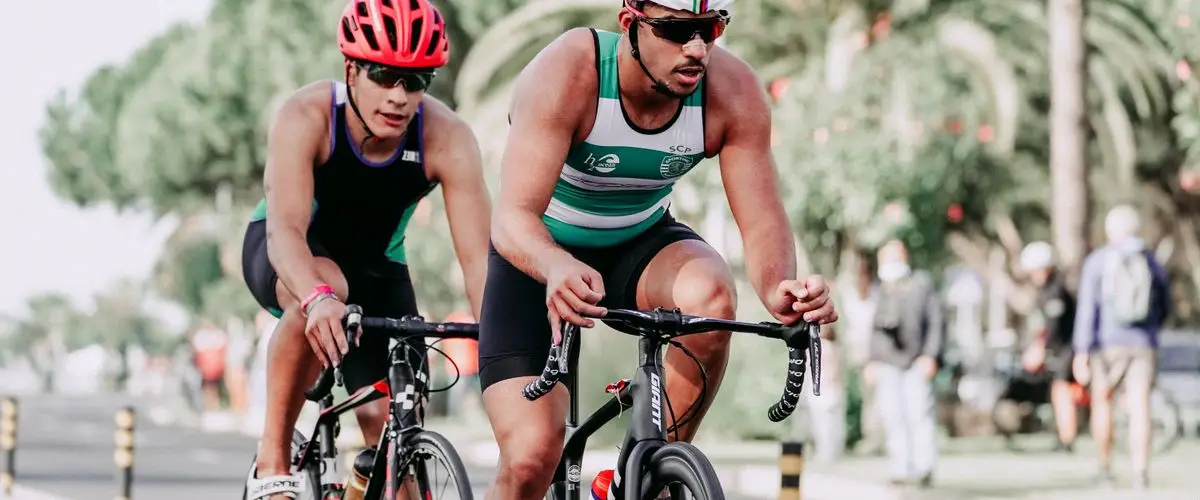
If you are a runner looking for a new challenge without having to jump into a pool, the duathlon is the perfect competition for you. It combines what you already know —running— with cycling, in a format that leverages your aerobic base while pushing you to develop new capabilities.
The duathlon (run + bike + run) is more accessible than the triathlon, requires no swimming, and provides a cross-training stimulus that reduces injuries and improves your running performance. This guide covers everything you need: formats, gear, a 12-week plan, transitions, nutrition, and major duathlon events for 2026.
What is a duathlon
A duathlon is a multisport competition consisting of three segments: running, cycling, and running, in that order. Unlike the triathlon, it does not include swimming, making it the ideal gateway to the multisport world for runners. If you are interested in the full swim-bike-run format, see our guide on triathlon.
The format was standardized by World Triathlon (formerly ITU) and features national and international championships in over 50 countries.
Main formats
| Format | Run 1 | Bike | Run 2 | Estimated time |
|---|---|---|---|---|
| Sprint | 5 km | 20 km | 2.5 km | 1:00 - 1:30 h |
| Standard | 10 km | 40 km | 5 km | 2:00 - 3:00 h |
| Long distance | 10 km | 60 km | 10 km | 3:00 - 4:30 h |
| Powerman (ultra) | 10 km | 150 km | 30 km | 6:00 - 9:00 h |
For your first duathlon, the sprint format (5-20-2.5) is the smartest choice. The distances are manageable, total duration is around ninety minutes, and it lets you experience transitions without excessive fatigue.
Why runners should try duathlon
Duathlon is not just a triathlon alternative for non-swimmers. It is a strategic complement for any runner, backed by scientific evidence.
1. Cross-training with real benefits
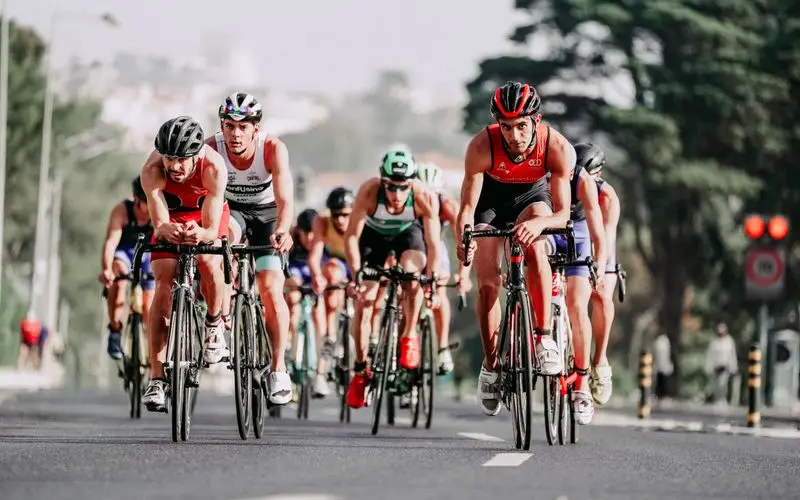
The American College of Sports Medicine (ACSM) recommends cross-training as a strategy to improve overall fitness and reduce overuse injury risk (ACSM Physical Activity Guidelines, 2023). Cycling is particularly effective as cross-training for runners because it targets the same primary muscle groups (quadriceps, hamstrings, glutes) without the repetitive impact of running. Combining cycling with strength training amplifies these benefits even further.
2. Improves running economy
A study published in the Journal of Strength and Conditioning Research demonstrated that adding cycling sessions to a runner’s training program improved running economy by 3-5% over 8 weeks, through specific muscular strength development without additional impact fatigue (Millet et al., J Strength Cond Res, 2014).
3. Injury prevention
The British Journal of Sports Medicine published a systematic review confirming that single-sport runners have significantly higher overuse injury rates than multisport athletes (Videbeck et al., BJSM, 2015). Alternating running with cycling reduces cumulative impact volume without sacrificing cardiovascular load. For more strategies, read our complete guide on injury prevention.
4. Variety and motivation
After months of running-only training, adding cycling provides new stimuli that break the monotony. Multisport group runs in our CorrerJuntos community grew 40% in 2025, reflecting a clear trend toward training diversification among runners. You can find your training partner through our matching system and find runners in your city who share your multisport goals.
Gear you need for your first duathlon
You do not need to spend a fortune to start in duathlon. Here is what is essential and what is optional:
Essential
- Road or gravel bike: any bike in good condition with working gears will do for your debut. You do not need a triathlon bike or carbon frame. A gravel bike is especially versatile if the course has mixed terrain sections.
- Certified helmet: mandatory in competition. Must meet CE EN 1078 standards. No helmet, no bike segment —no exceptions.
- Running shoes: your regular training or racing shoes. Look for a versatile model you can put on quickly in transition.
- Fitted athletic clothing: avoid loose clothing that creates wind resistance on the bike. A cycling jersey or tight-fitting technical shirt works well.
- Race belt: lets you switch your bib number position (front for running, back for cycling) without safety pins.
Recommended (not required)
- Clipless cycling shoes + cleats: improve pedaling efficiency by 15-20%, but require practice for transitions. For your first duathlon, regular shoes with flat pedals are fine.
- Sport sunglasses: protect from wind, dust, and insects during the bike segment.
- Multisport GPS watch: to monitor segment times. Most Garmin and COROS watches have a “multisport” mode with automatic transitions.
- Tri-suit: a one-piece outfit for all three segments with a thin chamois that works for cycling without bothering you while running. Ideal but not essential for beginners.
12-week training plan
This plan is designed for a runner with a 20-30 km/week base preparing for a sprint duathlon (5-20-2.5 km). It includes 5-6 weekly sessions with gradual progressions and the crucial combined sessions (“brick sessions”).
Phase 1: Cycling adaptation (weeks 1-4)
Goal: build cycling base, maintain running volume, learn efficient pedaling.
| Day | Session | Details |
|---|---|---|
| Monday | Easy run | 30-40 min at comfortable pace (zone 2) |
| Tuesday | Bike | 45-60 min easy spin, cadence 80-90 rpm |
| Wednesday | Rest or yoga | Joint mobility and stretching |
| Thursday | Brick session | 30 min bike + 15 min run immediately after |
| Friday | Strength | Squats, deadlifts, core, proprioception (40 min). See our training plans for structured options. |
| Saturday | Long bike | 60-75 min progressive ride |
| Sunday | Long run | 45-60 min easy pace |
Phase 2: Specific development (weeks 5-8)
Goal: increase intensity, extend brick sessions, simulate race paces. Watch your cadence to optimize running efficiency.
| Day | Session | Details |
|---|---|---|
| Monday | Interval run | 10 min warm-up + 6×800 m at 5K pace (2 min recovery) + 10 min cool-down |
| Tuesday | Bike intervals | 60 min: 15 min warm-up + 4×5 min in zone 4 (3 min recovery) + 15 min cool-down |
| Wednesday | Active recovery | 30 min swimming or walking |
| Thursday | Long brick session | 45 min bike with last 10 min hard + 20 min run at duathlon pace |
| Friday | Strength + core | Single-leg squats, hip thrusts, planks (45 min) |
| Saturday | Long bike | 75-90 min with race-pace intervals |
| Sunday | Long run | 50-70 min progressive (last 15 min at duathlon pace) |
Phase 3: Race preparation (weeks 9-12)
Goal: full simulations, perfect transitions, final tapering.
| Day | Session | Details |
|---|---|---|
| Monday | Tempo run | 10 min warm-up + 20-25 min at duathlon pace + 10 min cool-down |
| Tuesday | Bike skills | 60 min with cornering, braking, and pace change drills |
| Wednesday | Rest | Full rest or 20 min mobility |
| Thursday | Race simulation | 3 km run + 15 km bike + 2 km run (race pace) |
| Friday | Maintenance strength | Light circuit 30 min (dropped in weeks 11-12) |
| Saturday | Easy bike | 45-60 min recovery spin |
| Sunday | Easy run | 40-50 min (reduced to 30 min in week 12) |
The key: brick sessions
Brick sessions (combined bike-run workouts) are the cornerstone of duathlon training. They train your body for the specific transition from pedaling to running, where legs feel heavy and biomechanics change dramatically.
Start with short brick sessions (30 min bike + 10-15 min run) and progress toward full simulations. The “cement legs” feeling when getting off the bike improves significantly with practice —your body adapts within 4-6 sessions.
Transitions: T1 and T2
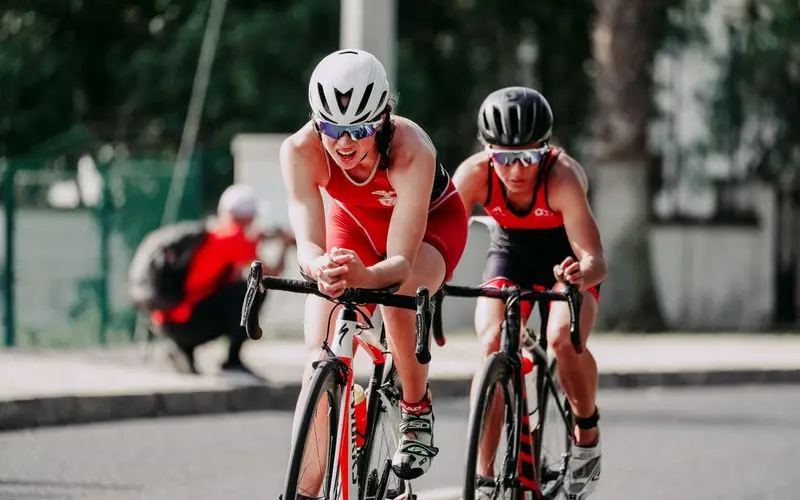
In duathlon, transitions are the “fourth segment.” A beginner can lose 3-5 minutes in transitions that an experienced athlete completes in 45-60 seconds. Practicing them is free time you gain without extra physical effort.
T1: Run → Bike
- Run into your spot in the transition area. Locate your bike before the race —use a visual reference (balloon, colored tape).
- Put your helmet on before touching the bike. Leaving without a helmet means disqualification.
- If using clipless shoes: have them pre-clipped on the pedals and run barefoot with the bike. If using flat pedals: change shoes (optional) or run and ride in the same ones.
- Mount the bike after the mount line (usually marked with arches or signs).
T2: Bike → Run
- Dismount the bike before the dismount line. Slow down well in advance.
- Run with the bike to your spot and rack it on the stand.
- Remove your helmet after racking the bike.
- Switch to running shoes if needed. A trick: use elastic laces instead of regular laces to slip on in 3 seconds.
- Head out running. The first 500 m will feel uncomfortable (cement legs). It is normal and it passes.
Transition area organization
Lay everything out logically next to your bike:
- Helmet open on the handlebars, sunglasses inside
- Cycling shoes (if using) next to the front wheel
- Running shoes next to the rear wheel, elastic laces already installed
- Race belt open and ready to put on
- Gel or bar next to the cycling shoes to pocket in your jersey
Nutrition and hydration in duathlon
Proper race day nutrition for a sprint duathlon is relatively straightforward: if the race lasts 1-1.5 hours, you do not need a complex strategy. But doing it right makes the difference between finishing strong or crawling to the line.
Before the race (3-4 hours)
- Breakfast rich in easily digestible carbohydrates: white bread with honey, oatmeal with banana, rice with jam. See our detailed guide on what to eat before running.
- Avoid excess fiber, fat, and protein: they slow digestion.
- Hydration: 500 ml of water with electrolytes in the 2 hours before.
During the race
- Sprint (<1.5 h): One gel with 25-30 g of carbs at T1 or during the bike is enough. Check our review of the energy gels that work best for multisport. Drink water at bike aid stations.
- Standard (2-3 h): 40-60 g of carbs/hour. Carry 1-2 gels + bottle with sports drink on the bike. An additional gel at T2.
- Long distance: Full nutrition plan with 60-90 g carbs/hour. Combine gels, bars, and liquid.
After the race
Recovery window of 30-60 minutes: intake of 1-1.2 g/kg of carbohydrates + 0.3 g/kg of protein. A recovery shake, turkey sandwich, or chocolate milk all work perfectly. Learn more about optimal post-workout recovery nutrition.
Common beginner mistakes in duathlon
After analyzing results and testimonials from hundreds of first-timers, these are the most frequent mistakes:
- Going out too fast on the first run: Race-day adrenaline makes you run 30-45 s/km faster than planned. You pay for it on the bike and in the second run. Use your GPS and control your pace from kilometer one.
- Not practicing transitions: Losing 3 minutes at each transition means 6 minutes given away. Practice T1 and T2 at least 5 times before racing.
- Neglecting the bike segment: Many runners dedicate 80% of training to running. In a sprint duathlon, the bike takes up 40-50% of total time. Train cycling at least 3 times per week.
- Poorly fitted bike: An incorrect position causes lower back pain, knee pain, and power loss. Get a basic fit: seat height (leg almost extended at the bottom of the pedal stroke) and handlebar position.
- Ignoring nutrition: Even in a 1.5-hour sprint, a gel on the bike can make the difference between finishing strong or hitting the wall.
- Not scouting the course: If possible, ride the bike course the day before. Identify dangerous corners, climbs, descents, and road surface. For the run, locate transition entry/exit points.
- New gear on race day: Never debut shoes, helmet, tri-suit, or gels in competition. Everything should be tested in training.
- Not warming up: Arrive 90 minutes early, set up your transition calmly, and do 15-20 min of easy jogging + 4-5 progressive strides before the start.
Duathlon race calendar 2026
Duathlon events take place year-round across Europe and North America. Here are some major events to consider:
| Month | Event | Location | Format |
|---|---|---|---|
| March | World Triathlon Duathlon Series | Various (Europe) | Sprint / Standard |
| April | Duathlon National Championships (various countries) | Varies annually | Standard |
| May | Powerman Zofingen | Switzerland | Long distance |
| June | Duathlon European Championships | Varies annually | Sprint / Standard |
| September | Powerman Alicante | Spain | Long distance |
| October | Powerman World Series Finals | Varies annually | Long distance |
| November | Fall Duathlon Series (various) | UK, Netherlands | Sprint |
Check your national triathlon federation’s official calendar for local events in your area. Most sprint duathlons are capped at 200-500 participants and fill up weeks in advance.
Find your running group
1,100+ runners already train together. Free on iOS.
Frequently asked questions
How much does a duathlon entry cost?
Entry fees for a sprint duathlon range from $30-60 for local races to $50-100 for national-level events. You may also need a one-day license ($10-20) that includes race insurance.
Can I use a mountain bike for a duathlon?
Yes, although you will lose time compared to a road or gravel bike. On paved courses, the difference can be 5-10 minutes over 20 km due to the higher rolling resistance of wide tires. It is perfectly fine for your debut, but consider switching to slick tires.
Do I need a federation license?
For official federation-sanctioned races, yes. You can get a one-day license ($10-20) that includes insurance, or an annual license (~$100) if you plan to race multiple events. Some popular non-sanctioned races do not require one.
How many weeks do I need to prepare?
If you already run 20-30 km/week, a minimum of 8 weeks with 3 weekly cycling sessions. Ideally 12 weeks to arrive with confidence. If you have no running base, you will need 16-20 weeks.
Is duathlon easier than triathlon?
For a runner, yes. You do not need to swim or have pool access, and you already excel at two of the three segments (running). The logistics are simpler (no wetsuit, swim cap, goggles) and transitions are faster. However, the second run after cycling is a unique challenge that does not exist in triathlon.
How do I avoid 'cement legs' when getting off the bike?
Brick sessions (bike + run back-to-back) are the key. Your body adapts within 4-6 sessions. Other tricks: increase pedaling cadence to 90+ rpm for the last 2 km of the bike to 'loosen' your legs, and start the run at a pace 15-20 seconds per km slower than your target to find your rhythm.
Can I use the CorrerJuntos app to train for duathlon?
Yes. CorrerJuntos tracks running and cycling activities, lets you follow training plans, and connects you with other runners in your area who also train multisport. Multisport group runs are increasingly popular in our community of 1,200+ runners.
What happens if I crash during the bike segment?
If you can continue, keep racing. Your race license insurance covers medical assistance during the event. If you have a mechanical issue, most races provide basic mechanical support. Tip: check brakes, tires, and gears the day before.
Conclusion
Duathlon is the natural progression for any runner who wants to expand their horizons without the swimming barrier. It combines what you already master with cycling, a sport that complements running exceptionally well: it improves your running economy, reduces injury risk, and adds variety to your training.
With 12 weeks of specific preparation and a smart approach to transitions, you can complete your first sprint duathlon with confidence. You do not need expensive gear or cycling expertise: you need consistency, a structured plan, and the desire to compete.
At CorrerJuntos, you can find other runners in your area who already practice cycling as a complement, join multisport group runs, and follow training plans to prepare for the leap into multisport. Download the app and start today.