
Your First Half Marathon: 20 Tips That Make the Difference
What nobody tells you before your first 21K. Pacing, fuelling, logistics and how to reach km 21 with something left in the tank.
What nobody tells you before your first 21K. Pacing, fuelling, logistics and how to reach km 21 with something left in the tank.
I have run more than 10 half marathons. The first one was the most special, and the one where I made the most mistakes. This article gathers the 20 tips I wish I had read before that first start line: from the ones that save you a rookie error at km 3 to the ones that decide whether you reach km 21 running or walking.
21.1 km
the exact distance of a half marathon, measured down to the metre
67%
of finishers are amateur runners with less than 3 years of experience
+15 sec/km
the most expensive mistake in a first half marathon — going out too fast in km 1
Tapering
the last week matters as much as the 14 before it — don't waste it training too hard
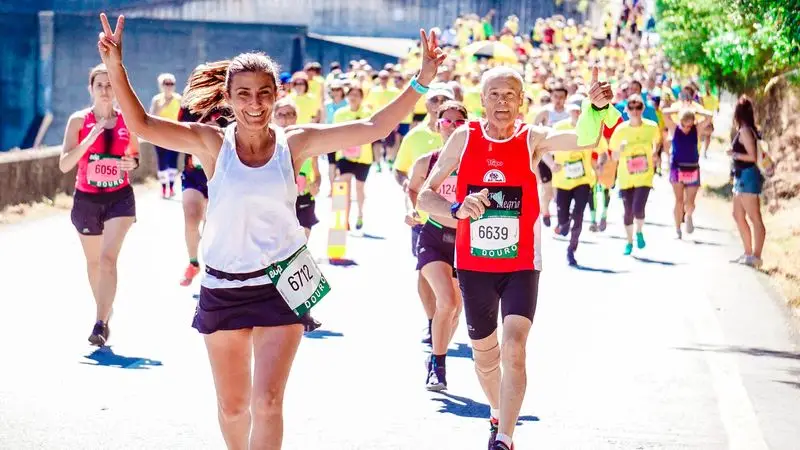
Tip 1 — Make sure you can run 8-10km without stopping before you sign up. This is not about pace, it is about aerobic capacity. If you still cannot run 8km non-stop, build that base before you commit to 21km. A runner who already covers 8-10km has the foundation to finish a half marathon after 14-16 weeks of specific preparation. If you are not there yet, the route through a first 5K is the shortest way to get there.
Tip 2 — Pick a race with a generous cut-off (3 hours or more). Half marathons have time limits. For your first one, look for at least a 3-hour cut-off. Plenty of community races give 3h30 or even 4h — with that margin you can mix running and walking without worrying about the sweeper bus.
Tip 3 — Sign up at least 14-16 weeks in advance. That window is not arbitrary: it is the minimum for structured preparation from a base of 8-10km. Signing up 8 weeks out and forcing the training is the recipe for arriving on race day injured or overcooked.
Tip 4 — Choose a local race for your first one. Remove variables. No travel, no hotel, no unfamiliar city, no jet lag. Knowing the course, sleeping in your own bed and having breakfast in your own kitchen cuts the logistical stress and lets you focus on the only thing that matters: running.
Tip 5 — Train at least 3 days a week for the 3 months before. Consistency beats intensity. A runner who trains 3 days a week for 12 weeks arrives better prepared than one who trains 6 days a week for 4. The body needs time, not urgency.

Tip 6 — The Sunday long run is the most important session: never skip it. The long run is where you build aerobic endurance and teach your body to keep moving for more than 90 minutes. It is the one session with no substitute. You can miss a fartlek session or a recovery day, but the long run is sacred.
Tip 7 — 80% of your training should be slow (slow enough to talk in full sentences). This is the most common beginner mistake: running every session too hard and finishing every run on the edge. Easy runs, the ones where you can hold a conversation without gasping, are what build the aerobic base. Faster is not better.
Tip 8 — Train with the gels and the shoes you will use on race day. Your body needs to get used to the gels you plan to take during the race. A brand-new gel on the big day can cause stomach trouble in the hardest kilometres. Same with shoes: never race a half marathon in fresh trainers — use a pair with at least 80-100km on them.
Tip 9 — Race at least one 10K, 4-6 weeks out. A 10K before your first half marathon gives you something no training session can: real racing experience. You learn to manage nerves, you rehearse race-day logistics, you see how the aid stations work and you get a concrete pace reference.
Tip 10 — Actually rest on the rest days in the plan. Rest is not wasted time: it is when the body absorbs the training and improves. Runners who respect their rest days arrive fresher and with fewer injuries than those who add extra kilometres on their own, convinced that more is better.

Tip 11 — Cut volume by 40-50% but keep some intensity. Tapering does not mean stopping: it means running less volume while keeping a session with some pace so the body does not go flat. A 20-25 minute run with 4-5 strides at race pace on the Tuesday or Wednesday keeps the nervous system switched on.
Tip 12 — Try nothing new on race day: clothes, shoes, gels, breakfast. This rule is absolute. Every new item you introduce on race day is a risk factor. Chafing from km 8 with a new shirt, blisters from unbroken-in shoes or stomach trouble from an untested gel can undo months of preparation.
Tip 13 — Collect your race number the day before. Most races let you pick up your bib on the Saturday. If it is your first time, always do it the day before: race-morning queues create stress, you arrive at the start mentally tired and you can lose your warm-up. Use the bib pick-up to get to know the start area.
Tip 14 — Pack your bag on Saturday night. Minimum list: chip checked, bib with safety pins, shoes checked, technical socks, race kit, 3 gels, belt or vest to carry them, a small water bottle, and a change of clothes and shoes for afterwards. Doing it the night before removes the Sunday-morning scramble.
Tip 15 — Sleep well on Thursday and Friday. On Saturday night, nerves mean many runners sleep badly or barely at all. That is normal and it does not affect performance much if you slept well the two nights before. It is the sleep you banked during the week that counts — not the last night.

Tip 16 — Have breakfast 2-3 hours before and eat exactly what you eat in training. The ideal breakfast is rich in easily digested carbohydrate and low in fibre and fat: oats with banana and honey, toast with jam, white rice. Around 400-500 kcal. Drink 400-500ml of water or sports drink between waking up and the start. Never try anything new. Our full guide to race-day nutrition covers the details.
Tip 17 — Arrive 40-45 minutes early to warm up and find your corral. Time evaporates before the start of a big community race. You need time for the bag drop, for the toilet queue (there is always a long one), to find your start corral and to do 10 minutes of warm-up and dynamic stretching. Runners who arrive 15 minutes before the gun usually start with stress on board.
Tip 18 — Run the first 5km slower than feels necessary. This is the most important of the 20. Adrenaline, music, atmosphere and the crush of the pack will all push you into a pace that will destroy you at km 16. Going out 15 seconds per kilometre too fast has exponential consequences in the closing kilometres. Trust the watch, not the feeling. If you are unsure what your number should be, start from realistic beginner paces.
Tip 19 — Use every aid station — walking 8 seconds to drink properly costs you nothing. Plenty of beginners run past aid stations so they don't "lose time". Mistake. Walking 8-10 seconds at each station so you can actually drink (instead of wearing the cup) does not meaningfully hurt your finishing time. Dehydration does: performance drops by up to 20% once you have lost 2% of your body weight.
Tip 20 — From km 16 to 21 it is supposed to hurt — that is where the training shows. The last 5km of a first half marathon are the hardest part mentally. The legs are heavy, glycogen is running low and the distance left looks impossible. This is exactly where those long runs prove their value: your body has been here before. Break the remaining course into small segments and tick them off one by one.
Use this checklist the night before and on the morning of the race so nothing important gets forgotten:
If you have no previous racing experience, these paces will help you plan your strategy and set up the alerts on your GPS watch:
| Target time | Pace needed | Conservative start (km 1-5) | Split at km 10 |
|---|---|---|---|
| 2h00 | 5:41/km | 5:55-6:00/km | 57:00-58:00 |
| 2h15 | 6:23/km | 6:38-6:43/km | 1:04-1:05 |
| 2h30 | 7:06/km | 7:20-7:25/km | 1:13-1:14 |
| 2h45 | 7:49/km | 8:05-8:10/km | 1:20-1:22 |
| 3h00 | 8:31/km | 8:45-8:50/km | 1:27-1:28 |
Download the CorrerJuntos app and find runners in your city who are also preparing their first half marathon. Training with company makes the long runs far more bearable and makes it much more likely that you actually make it to the start line.
More than 1,100 runners already train together in Spain
How long do I need to prepare for my first half marathon?
If you can already run for 30 minutes without stopping, 14-16 weeks with the right plan is enough to finish your first 21K. If you are starting from scratch, plan for 24 weeks: 8 to get to 30 minutes of continuous running and 16 for the half marathon plan itself.
Do I need to have raced a 10K first?
It is not compulsory, but it helps a lot. Racing a 10K 4-6 weeks before your first half marathon gives you logistics and pacing experience that makes the longer distance far less intimidating.
Is it normal for my legs to hurt from km 16 onwards?
Completely normal. Most runners feel muscular fatigue between km 15-17, especially in a first half marathon. Long-run training is what prepares you to hold on through that stretch — it is the difference between finishing running and finishing walking.
Can I walk during the half marathon?
Yes, and plenty of runners do it on purpose. Alternating running and walking (run-walk) is a valid, efficient way to complete the 21K. Walking through the aid stations so you can actually drink is especially smart.
How many gels do I need in my first half marathon?
For finishing times between 2h and 2h30, 2-3 gels: one at km 7, another at km 13, an optional one at km 18. You must have tested those exact gels in training to check that your stomach tolerates them before race day.
What is a realistic target time for a beginner?
Between 2h15 and 2h45 depending on your fitness. For a first half marathon the main goal should be to finish — the time will come in the next one. A runner who finishes in 2h30 enjoying it is doing better than one who finishes in 2h15 suffering.
When can I run another half marathon after the first one?
Take 2 weeks off running (you can walk, swim and cycle — no impact), then 3-4 weeks of easy running before racing again. Racing sooner than that raises your risk of injury and overtraining.
How do I handle the nerves before the start?
Nerves are normal and physiologically useful: they switch on the nervous system and improve performance. Breathe deeply, trust the training and remember that the worst that can happen is finishing slower than you hoped. That is not a failure — it is the starting point for your second half marathon.
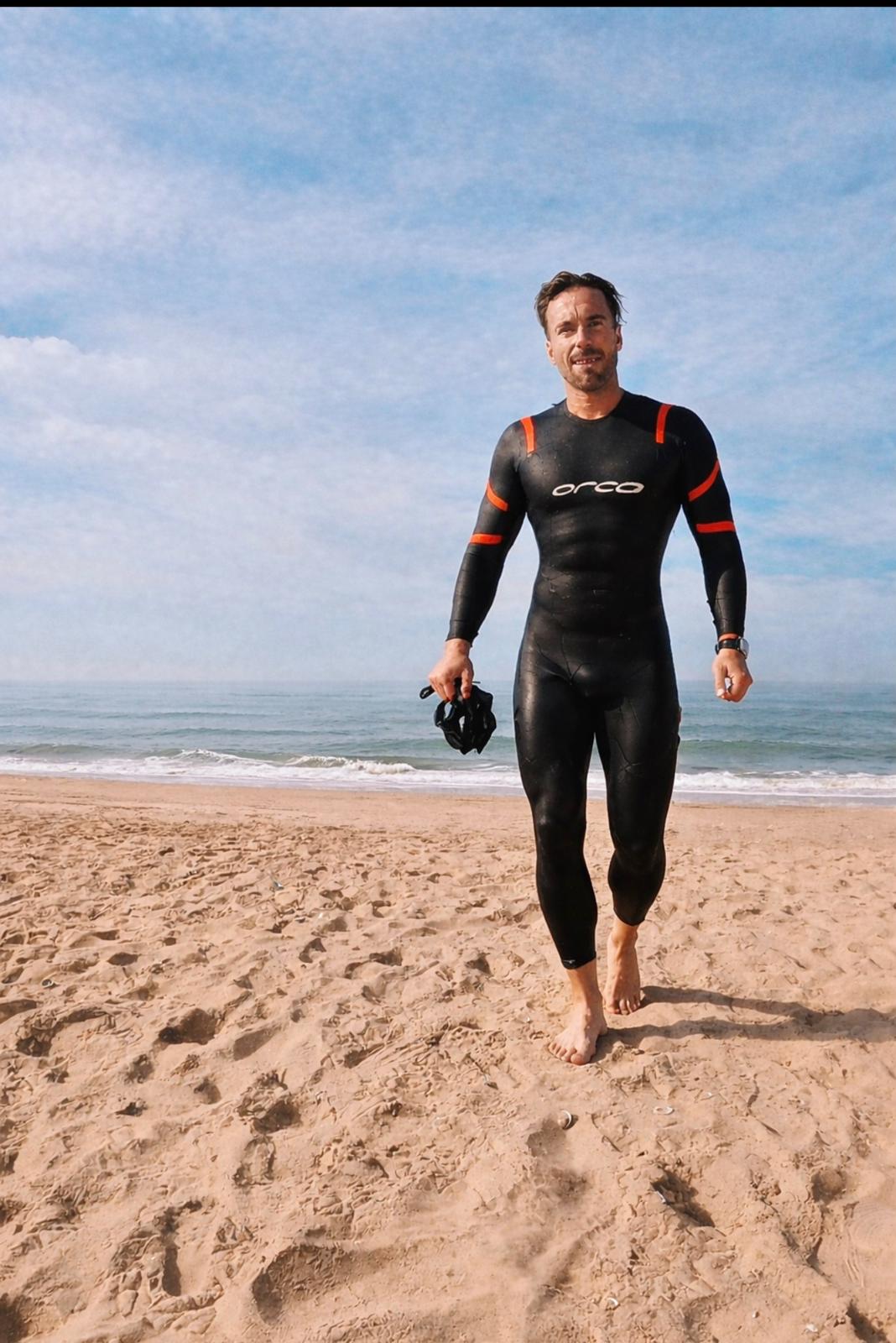
Has been running since 2014 and competes in triathlon. He founded CorrerJuntos in 2025 with one simple idea: that no runner should have to train alone.
Training plans, nutrition advice and running news. No spam.
We respect your privacy. Unsubscribe whenever you want.