
The half marathon is, for many runners, the next big step after completing a 10K. At 21.1 km, it is long enough to be a serious challenge but short enough that it does not require months of extreme preparation. It is the distance that marks the transition from casual runner to distance runner.
In this guide we will cover everything you need to arrive at the start line prepared and cross the finish line with a smile: from the prerequisites to race day strategy, including the training plan, key workouts, nutrition and gear.
Why the half marathon is the perfect distance
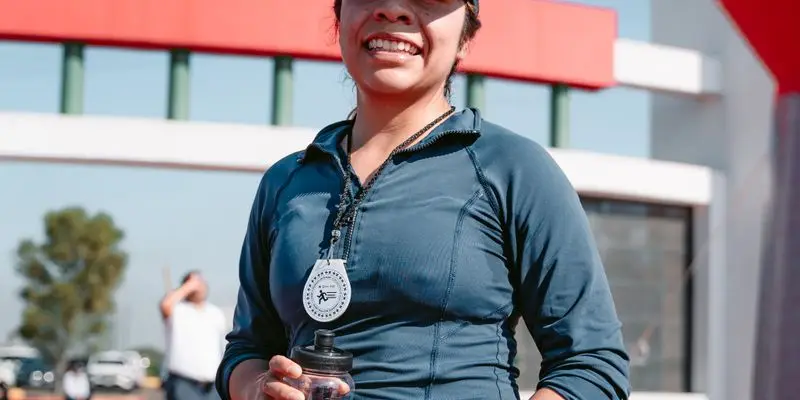
The half marathon occupies a unique space in the world of running. Unlike the 10K, which many runners can complete with minimal preparation, 21.1 km demands real planning: you need to train aerobic endurance, manage nutrition during the race and develop the mental toughness to endure more than ninety minutes of continuous effort.
At the same time, it does not carry the extreme physical toll of a marathon. Post-race recovery is much faster (days, not weeks), the risk of injury during preparation is lower, and you can run several halves per year without compromising your health.
The half marathon is also a perfect platform for deciding whether you want to take the leap to the marathon. If you enjoy the 12-16 week preparation, have the discipline for long runs and are motivated by the process, the 42K is a natural progression. If you prefer more frequent races with less impact on your daily life, the half marathon may be your ultimate distance.
Prerequisites: your base before starting
Before beginning a specific half marathon training plan, you need a solid aerobic base. You do not need to be a veteran runner, but you should meet some minimums for the preparation to be safe and effective.
- Weekly mileage base: you should be running at least 20-25 km per week consistently for a minimum of 8 weeks before starting the specific plan.
- 10K experience: having completed at least one 10K (in a race or in training) is practically essential. Knowing how to manage a race lasting more than 45 minutes gives you valuable information about your pace and your body.
- Consistency: 3 regular weekly runs for at least 2 months. Consistency is more important than volume.
- No active injuries: starting a half marathon preparation with a latent injury (plantar fasciitis, runner's knee, Achilles tendinitis) is a recipe for disaster. Resolve it first.
12-16 week training plan: general structure

A well-structured half marathon training plan has three distinct phases. Whether you choose 12 or 16 weeks, the logic is the same: build a base, develop specifically and sharpen before the race.
Phase 1: Base building (weeks 1-4)
The goal is to gradually increase weekly volume until reaching 70-80% of your planned peak volume. Sessions are predominantly aerobic: easy runs at conversational pace. The long run starts around 12-14 km and grows 1-2 km per week.
Phase 2: Specific development (weeks 5-10/12)
This is where quality is introduced: tempo runs, intervals and progressive runs. The long run continues to grow (up to 18-20 km) and you begin practicing race nutrition with gels. This is the phase where performance and confidence are built.
Phase 3: Tapering (weeks 11-12 / 13-16)
The final two weeks see volume reduced by 30-40% while maintaining the intensity of quality sessions. The goal is to arrive at race day rested but sharp, with fresh legs and high confidence.
Typical weekly schedule (4 days):
- Monday: Rest or cross-training (swimming, cycling, yoga)
- Tuesday: Quality session (tempo, intervals or progressive)
- Thursday: Easy run (30-45 min at conversational pace)
- Saturday or Sunday: Long run
Key workouts: tempo, intervals and long run
Not all kilometers are equal. The difference between a generic plan and effective preparation lies in the quality sessions. These are the three that cannot be missing from your training.
Tempo run (threshold pace)
The tempo run is a continuous run of 20-40 minutes at the pace you could sustain for one hour in competition (approximately your 10K pace + 10-15 seconds per km). It is the most specific session for the half marathon because it trains the body's ability to tolerate and recycle lactic acid.
Example: 15 min warm-up + 25 min at tempo pace + 10 min cool-down.
Intervals
Intervals improve VO2max and speed. For half marathon training, the most useful are long intervals: 4-6 x 1,000m at 5K pace with 2-3 min recovery, or 3-4 x 2,000m at a slightly more controlled pace. They are not as fast as intervals in a 5K plan, but they are longer.
Example: 15 min warm-up + 5 x 1,000m (5K pace) with 2:30 recovery + 10 min cool-down.
Long run
The crown jewel of half marathon preparation. The long run trains aerobic endurance, efficiency in using fat as fuel, mental toughness and gives you the opportunity to practice everything you will do on race day: nutrition, hydration, gear.
Nutrition for the half marathon

Nutrition can make or break your half marathon. Unlike a 10K, where you can run without needing to refuel, in 21 km your body will need carbohydrate and electrolyte replenishment during the race.
Pre-race weeks: carb loading
You do not need aggressive carb loading like for a marathon, but it is advisable to increase the proportion of carbohydrates in your diet 2-3 days before the race. This helps maximize muscle glycogen stores. Aim for 7-10 g of carbohydrates per kg of body weight per day.
The night before
A familiar dinner, nothing new. Pasta, rice or potato with lean protein (chicken, turkey, white fish). Avoid excess fiber, heavy sauces and foods you have not tried before. The dinner should be satisfying but not heavy.
Pre-race breakfast
2.5 to 3 hours before the start. The classic that works: toast with jam, a banana and coffee. Avoid dairy, excess fiber and fats. If you are nervous and cannot eat much, an energy drink or an oat smoothie can be an easier-to-digest liquid alternative.
During the race
For most runners who will take between 1:45 and 2:30 to complete the half, the recommended strategy is:
- Gel 1: around km 8-10
- Gel 2: around km 15-16
- Water: a couple of sips at each aid station (approximately every 5 km)
If you prefer alternatives to gels, energy chews or candied fruit cubes work just as well. The important thing is to test your energy gel or chosen product during long training runs.
Essential gear

For your first half marathon you do not need an endless equipment list. These are the items that make a real difference.
Running shoes
Without a doubt, the most important investment. For a first half, prioritize cushioning and comfort over lightness and responsiveness. Mid-to-high range daily trainers are the most sensible choice. Check our guide to the best running shoes for beginners to choose yours.
Find the best cushioned running shoes for your half marathon.
GPS watch
Not mandatory, but enormously useful. A GPS watch lets you monitor pace in real time, which prevents the most common mistake in a first half: starting too fast. It also gives you heart rate and cumulative distance data.
Check the best GPS running watches available in 2026.
Technical clothing
A breathable technical shirt (never cotton), tights or shorts you have trained in, anti-blister socks and, if it is cold, a thin layer you can remove and toss after the first km. Vaseline on friction areas (nipples, groin, armpits) prevents painful chafing over long distances.
Useful accessories
- Running belt or vest: to carry your gels.
- Cap or visor: if it is sunny. Protects and reduces perceived temperature.
- Sports sunglasses: reduce visual fatigue and protect from wind.
- Anti-chafe nipple covers: small investment, great comfort over long distances.
Race day: complete strategy
You have trained for 12-16 weeks. Now it is time to execute. The race day strategy is simple but requires discipline.
Before the start
- Arrive at least 1 hour before the start. You need to pick up your bib (if you have not done so already), drop off your bag, queue for the toilet and warm up.
- Warm-up: 10 minutes of easy jogging + dynamic mobility (high knees, butt kicks, hip rotations). No static stretching before the race.
- Position yourself in the starting corral that matches your estimated pace. Do not go to the front unless you plan to run sub-1:30.
Pacing strategy: negative split
The safest and most effective strategy for a first half marathon is the negative split: running the second half slightly faster than the first.
The first third of the race always feels easy. The adrenaline, the atmosphere and fresh legs make you feel like you can go faster. It is a trap. The kilometers you run too fast at the beginning are paid back with interest in the final third.
Aid stations
Slow down slightly when approaching an aid station. Grab the cup with your hand, pinch the top to form a spout and drink while walking if necessary. Do not try to drink while running at full speed in the early kilometers.
The wall at km 16-18
It is normal to feel a dip between km 16 and 18. Glycogen stores begin to run low and muscular fatigue accumulates. This is the moment to remember your training, take the second gel and reduce the world to "just one more kilometer." Mental toughness is built during long runs, and this is where you use it.
Common mistakes to avoid

After years of accompanying runners through their first half marathon, these are the mistakes we see time and time again.
- Starting too fast. This is the number 1 mistake. The excitement of the start makes you run 20-30 sec/km faster than your target pace. From km 15 onward you pay for it dearly.
- Wearing new gear on race day. New shoes, new shirt, new gels. Nothing new on race day. Everything should be tested during long training runs.
- Ignoring in-race nutrition. It is "only" 21 km, but if you take more than 1:45, your body needs fuel. Do not wait until you feel hungry to take a gel.
- Increasing volume too quickly. The 10% rule still applies: do not increase weekly volume by more than 10% from one week to the next. Tendons and bones adapt more slowly than muscles.
- Skipping the taper. The final two weeks before the race should see reduced volume. Many runners feel they are "not training enough" and add sessions. Mistake. The taper is where the body assimilates all previous work.
- Comparing yourself to others. Your first half is your first half. The only valid goal is to finish healthy and, if possible, enjoying it. There will be time for chasing times later.
- Not running easy runs truly easy. 80% of your weekly kilometers should be at a comfortable pace. If all your easy runs are "kind of fast," you are not training the aerobic system optimally and you accumulate chronic fatigue.
- Ignoring injury signals. Pain that persists for more than 3 days or worsens when running is not "normal training soreness." It is a signal that something needs attention. Better to stop for 5 days in time than to miss the race due to a serious injury.
Frequently asked questions
How long does it take to prepare for a half marathon from scratch?
If you are starting from absolute zero (no running base), you will need 20 to 24 weeks: 8-10 weeks to build an aerobic base running 3 times per week, then 12-16 weeks of specific half marathon preparation. If you already run 20-30 km per week regularly, a 12-week plan is sufficient.
What pace should I run in my first half marathon?
The golden rule for your first half marathon is to start conservatively. A good goal is to maintain a pace you can hold comfortably for the first 15 km. As a reference, your half marathon pace should be approximately 15-20 seconds per kilometer slower than your 10K pace. Never go out faster than what you have trained for.
How many weekly km should I run to prepare for a half marathon?
For a first half marathon, the ideal range is 30 to 50 km per week during peak volume weeks. You do not need to run more than 50 km per week to finish successfully. The key is completing at least one long run of 18-20 km before race day.
Do I need to take energy gels during a half marathon?
Yes, it is recommended. After 60-75 minutes of continuous running, muscle glycogen stores begin to deplete. An energy gel at km 8-10 and another at km 15-16 can make a significant difference in your final performance. Always test gels during long training runs, never try anything new on race day.
Do I need to run 21 km long runs before the race?
No, it is neither necessary nor recommended to run the full 21.1 km in training. The recommended maximum long run for a half marathon is 18-20 km, done 2-3 weeks before the race. Accumulated weekly volume and the combination of quality sessions (tempo, intervals) are more important than a single full-distance long run.
What shoes do I need for a half marathon?
For your first half marathon, prioritize shoes with good cushioning and stability, not lightweight racing shoes. Models like the ASICS Gel-Nimbus, Nike Pegasus, HOKA Clifton or New Balance Fresh Foam 1080 are excellent choices. The most important thing is that you have tested them on long runs (minimum 3-4 long runs with them) before race day.
How many times per week should I train for a half marathon?
For a beginner runner, 3-4 weekly sessions are sufficient to prepare for a half marathon successfully. A typical distribution includes: one long run, one quality session (tempo or intervals), one easy run and optionally a fourth day of easy running or cross-training. More advanced runners can do 5-6 sessions.
What should I eat the night before and the morning of the half marathon?
The night before: a dinner rich in easily digestible carbohydrates (pasta, rice, potato) with lean protein and low fiber. Avoid new or spicy foods. The morning of the race: have breakfast 2.5-3 hours before the start. A classic breakfast is toast with jam, a banana and coffee. Avoid excess fiber, fats and dairy.
Prepare your half marathon with CorrerJuntos
Personalized training plan, progress tracking and a community of runners that accompanies you to the finish line.