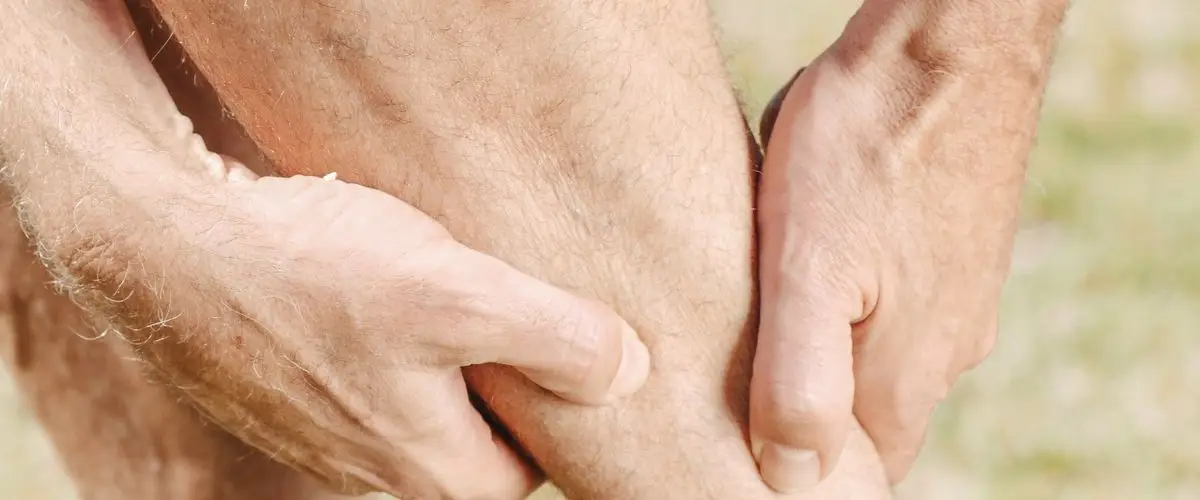
Shin Splints: Why Your Shins Hurt When Running and How to Fix It
The most common injury among beginner runners. Learn to identify medial tibial stress syndrome, treat it early and prevent it from turning into a stress fracture.
The most common injury among beginner runners. Learn to identify medial tibial stress syndrome, treat it early and prevent it from turning into a stress fracture.
If you've ever felt a dull, persistent pain along the inner edge of your shin during or after running, you probably already know about shin splints, also called medial tibial stress syndrome (MTSS). It is the most common overuse injury among beginner runners and one of the most frustrating: it develops gradually, gets worse if you ignore it and can progress to a stress fracture if you keep training through the pain.
This guide covers everything you need to know as a runner: from understanding what is happening in your tibia at the anatomical level to the specific exercises that speed up recovery, the shoes that help, how to prevent setbacks and when you absolutely need to see a professional to rule out more serious complications.
The tibia is the main long bone in your lower leg, the one that bears most of the impact every time your foot strikes the ground while running. This bone is covered by a connective tissue membrane called the periosteum, which is rich in nerve endings and blood vessels. It is precisely this membrane that becomes inflamed and irritated in shin splints.
The injury mechanism is fairly straightforward: several calf muscles attach to the tibia through the periosteum, mainly the tibialis posterior, the soleus and the flexor digitorum longus. When you run, these muscles contract repeatedly and exert constant traction on the periosteum. If the load exceeds the tissue's ability to adapt, the periosteum becomes inflamed and the characteristic pain along the inner edge of the shin appears.
The more precise clinical term is medial tibial stress syndrome (MTSS). This name better describes what is happening: a spectrum of repetitive stress damage ranging from periosteum inflammation to, in severe cases, a stress reaction in the bone itself that can precede a stress fracture.
Although both injuries share the same area and origin (overload), there are important differences you should know:
Shin splints have a characteristic pain pattern that allows fairly accurate identification. Recognizing the symptoms early is essential to prevent the injury from progressing.
Shin splints typically follow a four-phase progression that reflects how they worsen if left untreated:
Shin splints are almost always the result of a combination of factors. There is rarely a single cause. Understanding what is contributing to your particular case is essential for choosing the right treatment and preventing recurrence.
Find your running with a group
1,100+ runners already train together. Free on iOS.
The number one cause, by far. Bone and periosteum adapt to mechanical load, but they need time. When you increase weekly mileage too quickly, add interval sessions without a sufficient base, or prepare for a race in too short a timeframe, load exceeds the tissue's ability to adapt. The 10% rule exists for a reason: don't increase weekly volume by more than 10%.
Always running on asphalt or concrete multiplies the impact force your tibias receive. Asphalt returns up to 98% of impact energy, while dirt or grass absorb a significant portion. If your regular route is 100% asphalt, your tibias are receiving maximum mechanical load on every stride.
Overpronation (excessive inward rotation of the foot on landing) increases the pull of the tibialis posterior on the periosteum. Runners with flat feet or fallen arches are at higher risk because their muscles have to work harder to stabilize the foot, generating more stress at the tibial insertion. A study in the British Journal of Sports Medicine identified excessive pronation as one of the most consistent risk factors.
Shoes with over 700-800 km of use lose between 30% and 50% of their cushioning capacity. Without that impact absorption, your bones and muscles take on the additional load. Wearing shoes with insufficient cushioning for your weight or the wrong type of support for your gait also plays a role.
People who go from being sedentary to running regularly without a gradual adaptation phase are the most vulnerable. Bone needs 6 to 8 weeks to adapt to a new level of mechanical load. That is why couch-to-5K programs alternate walking and running: it is not about cardiovascular capacity, but about protecting the musculoskeletal system.
The calf muscles are the first line of defense against impact when running. If the soleus and calves are weak, they absorb less force and the tibia receives more direct load. A strong soleus can reduce tibial load by up to 30% according to biomechanical models.
Treatment for shin splints is staged and depends on which phase you are in. The good news is that the vast majority of cases respond well to conservative treatment without the need for invasive procedures.
Exercises are the backbone of shin splints treatment and prevention. These are the ones with the strongest scientific evidence for runners. Perform this routine once a day during recovery, and 3 times a week as preventive maintenance.
Standing on a step or curb, rise to the tiptoe position using both feet (2 seconds). Then lower slowly on one leg only, letting your heel drop below step level (4 seconds). This eccentric movement strengthens the soleus and calves specifically for running. 3 sets of 15 reps per leg. Progress by adding weight (a loaded backpack) when it becomes easy.
Walk on the balls of your feet with knees slightly bent for 30 meters. Keep your core engaged and heels as high as possible. This exercise strengthens the calves, soleus and intrinsic foot muscles functionally. 3 sets of 30 meters with 30 seconds rest between sets.
Walk supporting only your heels with your toes lifted upward (dorsiflexion) for 30 meters. This exercise is crucial because it strengthens the tibialis anterior, the muscle on the front of the shin that acts as the antagonist to the posterior muscles. 3 sets of 30 meters. You'll feel the burn on the front of the leg.
Seated with your leg extended, loop a resistance band around the top of your foot and anchor it to a fixed point. Pull your toes toward you (dorsiflexion) against the band's resistance, and slowly return to the starting position. 3 sets of 20 reps. This exercise isolates the tibialis anterior specifically and is one of the most effective for preventing shin splints.
Stand on one leg with the knee slightly bent and hold your balance for 30-45 seconds. To increase difficulty: close your eyes, use a pillow or unstable surface, or add arm movements. This exercise activates all the stabilizing muscles of the leg and ankle. 3 reps per leg.
Seated on a chair or bench with feet flat on the floor (you can place weight on your knees), raise your heels while keeping the balls of your feet on the ground. Lift in 2 seconds, hold 1 second at the top, and lower in 3 seconds. Unlike the straight-leg raise (which targets the gastrocnemius more), the bent knee isolates the soleus, which is the most relevant muscle for shin splints. 3 sets of 15 reps.
Lying on your back with one knee bent and foot flat on the floor, lift your hips until your body forms a straight line from knee to shoulder. The other leg stays extended in the air. Hold 2 seconds at the top and lower in 3 seconds. Hip weakness alters leg biomechanics and increases tibial load. 3 sets of 12 reps per side.
With your rear foot elevated on a bench or chair, bend your front knee to 90 degrees and push back up. Control the descent in 3 seconds. This exercise strengthens the quads, glutes and hip stabilizers unilaterally, improving running biomechanics. 3 sets of 10 reps per leg.
The right footwear won't cure shin splints on its own, but the correct shoes significantly reduce the mechanical load on the tibia and are a fundamental part of both treatment and long-term prevention.
Check out our complete running shoe guide for detailed options and specific recommendations based on your foot type and level.
For runners with flat feet or overpronation, arch-support insoles can significantly reduce the load on the tibial periosteum. Options range from generic arch-support insoles (Superfeet, Sorbothane) to custom insoles made by a sports podiatrist after a gait analysis. If overpronation is a factor in your shin splints, custom insoles are a worthwhile investment.
If you've already had shin splints, you know you don't want a repeat. And if you haven't had them yet, these strategies will help you avoid them. Prevention is built on four fundamental pillars.
The 10% rule is the single most important prevention principle. Don't increase weekly mileage by more than 10%. Also, avoid adding volume and intensity in the same week: if you increase mileage, keep the pace easy. If you add speed sessions, don't increase total mileage. If you're just starting to run, follow a walk-run program for the first 6-8 weeks.
Alternating between asphalt, dirt, grass and track reduces repetitive load on the tibia. Each surface distributes impact differently, preventing constant overload on the same structures. Try to do at least 30% of your weekly training on soft surfaces. Check out our city route guides to find options with varied terrain.
Having 2-3 pairs of shoes and rotating them between workouts reduces injury risk by up to 39%. Each pair has a different geometry, drop and cushioning that distributes mechanical stress differently. It also allows the midsole foam to recover between uses, keeping cushioning optimal for longer.
Incorporate strengthening exercises into your weekly routine even when you have no pain. A minimal preventive routine includes:
Running at a cadence of 170-180 steps per minute (instead of 150-160) reduces stride length and, with it, the impact force on the tibia. Don't try to change your cadence all at once: add 5% every two weeks until you reach your optimal cadence. A metronome or your GPS running watch guide's cadence alerts can help with this process.
Every kilogram of body weight multiplies the load on the tibia by 2 to 3 times with each running stride. Maintaining a healthy weight directly reduces mechanical stress. Also, make sure you get enough calcium (1000-1300 mg/day) and vitamin D to maintain good bone density, as bone weakness is a risk factor.
Most shin splints resolve with self-care and the exercises described above. However, there are situations that require professional evaluation to rule out complications, especially a stress fracture.
When a doctor needs to rule out a stress fracture, the main diagnostic tools are:
The return to running must be more gradual than you'd probably like. Impatience is the main enemy of recovery: coming back too soon or too fast is the number one cause of relapse. Follow this protocol and you will protect your recovery.
Don't return to running until you can meet all of these criteria pain-free:
Mild cases (pain only at the start of the run) can improve in 2-4 weeks with relative rest and conservative treatment. Moderate cases usually require 4-8 weeks. If shin splints have become chronic from continuing to train through pain, recovery can extend to 3-6 months. The key is to act at the first symptoms and never run through the pain.
It depends on the phase. If you're in phase 1 (pain only at the start that disappears once warmed up), you can maintain a reduced volume on soft surfaces. If you're in phase 2-3 (pain during or after the run), you should significantly reduce or stop and switch to non-impact activities like cycling, swimming or the elliptical. Running through intense pain can lead to a stress fracture.
Shin splints produce a diffuse pain along several centimeters of the inner edge of the tibia. A stress fracture causes highly localized pain at a specific point that you can pinpoint with one finger. Additionally, a stress fracture often hurts when hopping on one leg (hop test), may hurt at rest and worsens with any activity. If in doubt, see a doctor for an MRI.
Yes, significantly. Shoes with insufficient cushioning, excessively worn out (over 700-800 km) or unsuitable for your foot type increase stress on the tibia. Look for shoes with good impact absorption and, if you overpronate, stability support models. Check out our running shoe guide for detailed recommendations.
Yes, cryotherapy is very helpful, especially in the acute phase. Apply ice along the painful area for 15-20 minutes after training, 2-3 times a day. Direct ice massage (rubbing an ice cube on the tibia for 8-10 minutes with skin protection) is particularly effective for shin splints because it treats the entire inflamed area of the periosteum.
On their own, no. Shin splints respond well to conservative treatment and most runners recover fully. The risk lies in ignoring them: if you continue training through pain, they can progress to a bone stress reaction or a stress fracture, which does require weeks or months of complete rest. When treated early, it is a very manageable injury.
You can maintain your cardiovascular fitness with non-impact activities: cycling, swimming, elliptical, rowing or aqua-running (pool running with a flotation vest). Additionally, you should do the strengthening exercises described in this guide: eccentric calf raises, toe walks and heel walks, single-leg balance, tibialis anterior strengthening and hip exercises. These exercises not only maintain fitness but also speed up recovery.
Find groups that run at your pace while you recover. Coming back is easier with support.
Join 1,100+ runners
Routes, training plans and tips to run better. No spam.
We respect your privacy. Unsubscribe anytime.