
CORRERJUNTOS
Matching Cities Blog
Log in Join
Home/Blog/Intervals & Fartlek
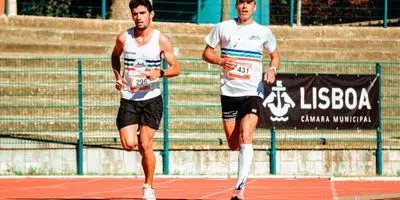
Runner doing speed intervals on an athletic track

Intervals & Fartlek: Complete Speed Guide

Everything you need to know about interval training: track intervals, fartlek, recovery and how to integrate them into your plan.

Training · March 15, 2026 · 10 min read
In this article
  • What Are Intervals and Fartlek?
  • Benefits of Interval Training
  • Types of Intervals
  • Fartlek: The Speed Play
  • 10 Sample Workouts by Level
  • Managing Recovery
  • Common Mistakes

What Are Intervals and Fartlek?

If you want to run faster, you need to train faster. But not just any way. Interval training is the most effective tool for improving your speed, VO2max and running efficiency.

Intervals are structured workouts: you run a set distance at a specific pace, rest for a fixed time, and repeat. Classic example: 8x400m at 5K pace with 90 seconds recovery.

Fartlek (Swedish for "speed play") is more free-form: you alternate fast and easy efforts based on feel, terrain or visual landmarks. There's no rigid structure, and that's precisely its advantage.

Both work your cardiovascular system in complementary ways. Intervals develop pace precision; fartlek develops adaptability and mental toughness.

Athletic track with marked lanes for speed intervals

Benefits of Interval Training

  • Improves your VO2max: The maximum oxygen your body can use. Higher VO2max = faster sustainable pace.
  • Raises your anaerobic threshold: You can run faster before accumulating lactate. This translates directly to better race times.
  • Improves running economy: Your body learns to run faster using less energy. More efficient stride, less vertical bounce.
  • Strengthens your heart: Intervals increase cardiac stroke volume more than easy running.
  • Breaks monotony: Short, intense and mentally stimulating sessions. Easy runs can be boring; intervals never are.

Types of Intervals by Distance

Short intervals (100-400m)

Work on pure speed and running form. Pace: faster than your 5K pace. Long recovery (equal to or greater than effort time).

  • 100m strides: Ideal for pre-race activation. Not full sprints.
  • 200m: Work on power and speed. 6-10 reps with 60-90s recovery.
  • 400m: The classic. Enough distance to work VO2max without excessive stress. 8-12 reps with 90s-2 min recovery.

Medium intervals (800-1000m)

The sweet spot of interval training. Work VO2max and threshold equally. Pace: between your 5K and 10K pace.

  • 800m: 6-10 reps at 5K pace with 2 min recovery. The most versatile session.
  • 1000m: 5-8 reps at 5K-10K pace with 2-3 min recovery. Excellent for 10K and half marathon prep.

Long intervals (1600-3000m)

Work anaerobic threshold and specific endurance. Pace: 10K pace or slightly faster.

  • 1600m (1 mile): 4-6 reps at 10K pace with 3 min recovery. Essential for marathon training.
  • 2000-3000m: 3-4 reps at 10K-half marathon pace. For advanced runners preparing half or full marathon.

Fartlek: The Speed Play

Fartlek was born in Sweden in the 1930s and remains one of the most effective and fun workouts around. The key: there are no fixed rules.

Time-based fartlek

Alternate fast and easy periods by time. Example: 1 min fast / 1 min easy x 10. Or pyramid: 1-2-3-4-3-2-1 minutes fast with 1 min easy between each.

Landmark fartlek

Use the terrain as your guide: sprint to the next lamppost, recover to the intersection, push hard up the hill, easy down. The purest and most fun version of fartlek.

Structured fartlek

A hybrid: you have a defined structure but you're not on a track. Example: 6x3 min at 10K pace with 2 min easy through a park. Same quality as track intervals, with the variety of natural terrain.

Group of runners doing fartlek training in a park

10 Sample Workouts by Level

Beginner (less than 6 months running)

  1. 8x200m at fast but controlled pace, with 200m jog recovery.
  2. 20-min fartlek: 1 min fast / 2 min easy x 7. Start and finish with 5 min easy.
  3. 6x400m at 5K pace with 2 min walk/jog recovery.

Intermediate (1-3 years running)

  1. 8x800m at 5K pace with 90s easy jog.
  2. Pyramid fartlek: 1-2-3-4-3-2-1 min hard with 1 min easy between each.
  3. 5x1000m at 10K pace with 2:30 recovery.
  4. Mixed: 4x400m fast + 4x800m at 10K pace + 4x400m fast (rec 90s/2 min/90s).

Advanced (3+ years, races regularly)

  1. 5x1600m at 10K pace with 3 min recovery. Great for sub 3:30 marathon prep.
  2. 40-min fartlek: alternate 2 min hard (10K pace) / 1 min easy x 13.
  3. 10x1000m alternating 5K and marathon pace (5 each) with 2 min recovery.
The 80/20 rule: Only 20% of your weekly training should be high intensity (intervals, fartlek, tempo). The remaining 80% should be easy running. More is not better: it's the direct path to injury.

Gear for your intervals

GPS running watch guide: Garmin Forerunner 265 — Programmable interval workouts and real-time VO2max metrics.

Fast shoes: Nike Vaporfly 3 for racing · Nike Pegasus 41 for training.

Heart rate monitor: Garmin HRM-Pro Plus — Monitor heart rate zones during intervals.

Managing Recovery

Recovery between reps is as important as the effort itself. Too short and you can't maintain pace; too long and you lose the stimulus:

  • Short intervals (200-400m): Recovery equal to or greater than effort time. Easy jog or walk.
  • Medium intervals (800-1000m): 1:1 to 1:1.5 ratio (2-3 min). Easy jog, never standing still.
  • Long intervals (1600m+): 50-75% of effort time (3-4 min). Easy jog.
  • Fartlek: Recovery is part of the training. Run easy, don't walk (except beginners).

A good sign: at the end of recovery, your heart rate should have dropped to zone 2-3. If it hasn't, you need more time or the intervals are too intense.

Common Mistakes

  • Running intervals too fast: If you can't maintain the same pace on the last rep as the first, you're going too fast. Start conservatively.
  • Skipping warm-up: Minimum 10-15 min easy jog + 4-6 strides before intervals. Your muscles need to be warm.
  • Doing intervals every day: 1-2 quality sessions per week. No more. Your body needs 48-72 hours to absorb the stimulus.
  • Skipping cool-down: 10 min easy jog + stretches after finishing. Cool-down is mandatory.
  • Comparing yourself to others: Your interval paces are unique. The runner next to you may be faster, but that doesn't change your plan.

Do Intervals with a Group

Group intervals are transformative. Someone to set the pace, positive pressure from others, and support when the last rep hurts. On CorrerJuntos there are specific interval and fartlek meetups in over 58 cities.

Find your interval group

5,000+ runners already train together. Free on iOS & Android.

Download free

📋 More training guides

10K Training Plan
Training · 10K

10K Training Plan

Read guide →
Half Marathon Plan
Training · Half Marathon

Half Marathon Plan

Read guide →
Marathon Sub 3:30
Training · Marathon

Marathon Sub 3:30

Read guide →
Periodization
Training · Planning

Periodization

Read guide →
Tapering Guide
Training · Pre-race

Tapering Guide

Read guide →
José Márquez
José Márquez Founder of CorrerJuntos · Sub-3:30 Marathoner

Runner since 2012 and sub-3:30 marathoner. Founded CorrerJuntos with a simple idea: no runner should have to train alone.

Share: WhatsApp X 📋 Copy link

Train together, progress faster

Find runners at your level and train as a group. The motivation you need, for free.

Join 5,000+ runners

App Store Google Play
📬 Running Tips in Your Inbox

Training plans, nutrition and tips to run better. No spam.

🔒 We respect your privacy. Unsubscribe anytime.
🎉 Subscribed! We'll send you the best running tips.

Error subscribing. Please try again.

Related articles
10K Training Plan Half Marathon Plan Zone Training Sub 3:30 Marathon Plan
CorrerJuntos

Spain's most active running community. Run together, improve together.

Explore
Cities Places Events Blog App
Company
About Us Investors Contact Sponsors Media Kit
Legal
Privacy Policy Terms of Use Cookie Policy

© 2026 CorrerJuntos. All rights reserved. Made with ❤️ for runners.