
If someone tells you creatine is only for people who want massive muscles, that person is stuck in the 1990s. Scientific research over the past two decades has revealed that creatine offers profound benefits for runners of all distances: from those racing 5Ks to ultramarathoners (World Athletics) (WHO).
In this article we will review 7 creatine benefits specifically relevant to runners, each backed by studies published in peer-reviewed scientific journals. No gym anecdotes. Just science you can apply to your training.
What is creatine (and why you should care as a runner)
Creatine is a molecule your body naturally produces from three amino acids: arginine, glycine, and methionine. It is stored primarily in skeletal muscle (95%) as phosphocreatine, and its main function is to regenerate ATP —your cells' energy currency— during intense efforts.
Your body produces roughly 1 gram per day and you get another gram from your diet (red meat and fish). But your muscle stores are not fully saturated naturally. Supplementing with creatine monohydrate fills them to 100%, which opens the door to a series of benefits that go well beyond the phosphagen energy system.
Why should you care as a runner? Because running is not purely aerobic. Every pace change, every hill, every finishing sprint in a race, every interval session relies partly on the phosphocreatine system. And the indirect benefits —recovery, bone protection, brain function— are just as relevant for someone logging 40 km a week as they are for a bodybuilder.
Benefit 1: Faster recovery between sessions
The study: Santos et al. (2004)
Publication: Life Sciences · PMID: 15234757
The researchers studied experienced runners who completed a 30 km race. The group supplemented with creatine (20 g/day for 5 days before the race) showed significant reductions in markers of muscle damage and inflammation after the race: creatine kinase (CK), lactate dehydrogenase (LDH), prostaglandin E2 (PGE2), and tumor necrosis factor alpha (TNF-α), all reduced by approximately 30% compared to the placebo group.
What does this mean in practice? Creatine can reduce the inflammation and muscle damage that occurs after long or intense workouts. Less muscle damage means faster recovery. And faster recovery means you can train more frequently and at higher quality.
For a runner training 4-5 days a week, the difference between needing 48 or 72 hours to recover from an interval session is enormous. Creatine does not eliminate the need for rest, but it can shorten that window and reduce the muscle soreness you carry from one day to the next.
Practical application: If you do high-volume weeks, interval blocks, or are preparing for a race with demanding workouts, creatine can help you absorb the training load better without accumulating as much residual fatigue.
Benefit 2: Greater muscle glycogen stores
The study: Robinson et al. (1999)
Publication: Journal of Applied Physiology · PMID: 10567349
Find your running with a group
1,100+ runners already train together. Free on iOS.
This study demonstrated that creatine supplementation combined with a high-carbohydrate diet produced a 21% increase in muscle glycogen stores, significantly more than carbohydrate loading alone. The protocol combined creatine (20 g/day) with a high carbohydrate intake during the loading phase (Mayo Clinic).
Glycogen is your primary fuel when running at moderate to high intensities. Every half marathon or marathon runner knows what it feels like to hit the wall: that moment when glycogen stores are depleted and your legs simply stop responding.
A 21% increase in muscle glycogen is a real competitive advantage. It will not transform you into a different runner, but it can delay the onset of fatigue in the final kilometers of a long race. It is like starting with your fuel tank slightly fuller.
Practical application: Combine daily creatine supplementation with a carbohydrate-loading strategy before long races (half marathon, marathon, ultra). The synergistic effect of creatine plus carbohydrates maximizes your energy reserves.
Benefit 3: Finishing kick and pace changes
The study: Skare et al. (2001)
Publication: Scandinavian Journal of Medicine & Science in Sports · PMID: 11252461
The researchers evaluated the effect of creatine on runners and found significant improvements in repeated sprint capacity and finishing kick performance. The supplemented subjects maintained speed better across consecutive sprints and were able to accelerate more effectively at the end.
Think about how many situations within a race require explosive efforts: passing someone on a hill, responding to another runner's pace change, that final sprint in the last 200 meters before the finish line. All of these efforts depend heavily on the phosphocreatine system.
With saturated creatine stores, your ability to generate rapid energy in those critical moments improves. We are not talking about running faster throughout the entire race, but about having that extra reserve when you need it most. The difference between a strong last kilometer and a mediocre one may come down to your phosphocreatine levels.
Practical application: Especially useful for 5K and 10K runners, where pace changes and the finishing kick are decisive. Also relevant for interval sessions (400 m repeats, 800 m repeats, interval training and fartleks), where recovery between repetitions depends partly on phosphocreatine resynthesis.
Benefit 4: Bone protection against stress fractures
The study: Chilibeck et al. (2017) — Meta-analysis
Publication: Medicine & Science in Sports & Exercise · PMID: 28410246
This meta-analysis reviewed the accumulated evidence on creatine and bone health. The main conclusion: creatine supplementation, combined with resistance exercise, significantly reduces the rate of bone loss. The effect is especially relevant for bone mineral density of the hip and lumbar spine.
Stress fractures are one of the most feared injuries among runners. The repetitive impact of running subjects bones (especially the tibia, metatarsals, and hips) to constant loading. If bone remodeling cannot keep pace with micro-damage, a stress fracture develops.
Creatine works at the cellular level by stimulating the activity of osteoblasts (the cells that build new bone) and improving the signaling that regulates bone formation. It is not a substitute for calcium, vitamin D, or strength training, but it adds an extra layer of protection.
Practical application: Especially important for female runners (higher risk of the female athlete triad and stress fractures), masters runners (40+ years old), and anyone significantly increasing their weekly mileage. Combine creatine with strength training and adequate calcium and vitamin D intake.
Benefit 5: Brain function under fatigue
The study: McMorris et al. (2006)
Publication: Psychopharmacology · PMID: 16826400
The researchers subjected participants to sleep deprivation and prolonged exercise, then evaluated cognitive function. The creatine-supplemented group showed significant improvements in decision-making, reaction time, and mood under fatigued conditions, compared to placebo.
When you are 30 km into a marathon, your brain is fatigued too. Your ability to make decisions (pacing, nutrition, hydration while running, trail navigation), maintain focus, and manage mental suffering depends on the energy available in the brain. And the brain also uses phosphocreatine (ACSM).
Creatine crosses the blood-brain barrier and contributes to cerebral energy metabolism. Under fatigued conditions —such as the final hours of a long race, an early-morning workout after poor sleep, or an overnight ultra— that extra reserve can make the difference between good decisions and avoidable mistakes.
Practical application: Relevant for marathon runners, ultrarunners, trail runners (where technical decision-making is constant), and anyone training under accumulated fatigue or sleep deprivation.
Benefit 6: Better thermoregulation in heat
The study: Kilduff et al. (2004)
Publication: International Journal of Sport Nutrition and Exercise Metabolism · PMID: 15076798
This study analyzed thermoregulation during exercise in the heat and found that creatine-supplemented subjects showed a lower core temperature and reduced heart rate during exercise in hot conditions, compared to the placebo group.
If you have ever run in summer, you know how quickly heat destroys your performance. Hyperthermia is one of the main limiters in summer races, and the associated dehydration compounds the problem.
Creatine improves thermoregulation through an elegant mechanism: by increasing intracellular water (inside the muscle), it creates an additional water reservoir that facilitates heat dissipation. It is like having a more efficient cooling system. This directly contradicts the myth that creatine dehydrates you —it actually does the opposite.
Practical application: Essential for runners in hot climates, summer races, or midday training. Also useful if you are preparing for a race in a warmer climate than you are accustomed to.
Benefit 7: Less post-race muscle damage
The study: Cooke et al. (2009)
Publication: Journal of the International Society of Sports Nutrition · PMID: 19490606
Cooke and colleagues investigated the effect of creatine on recovery after intense exercise that induces muscle damage. Results showed that the creatine-supplemented group regained muscle strength and range of motion significantly faster than the placebo group, with lower blood levels of creatine kinase (CK).
This benefit complements the first (Santos et al.), but with an important nuance: while Santos focused on inflammatory markers after a long race, Cooke demonstrated that creatine accelerates functional recovery —that is, how quickly you return to performing at 100%.
For a runner in competition season or with races coming up, this is invaluable. If you race one weekend and have another race two weeks later, the speed of recovery determines how many useful training days you can fit in between.
Practical application: Especially relevant during competition seasons with back-to-back races, after very demanding sessions (hill repeats, long runs at pace, competitions), and for runners accumulating high weekly volume.
How to take creatine as a runner
The good news is that the creatine supplementation protocol is extremely simple. You do not need complicated plans, cycles, or unusual combinations. The science is clear:
Dosage
3-5 grams daily of creatine monohydrate. That is it. No more, no less. The ISSN Position Stand (2017, PMID: 28615996) confirms that this dose is sufficient to saturate muscle stores in 3-4 weeks and keep them full indefinitely.
Loading phase?
Not necessary. The traditional loading phase (20 g/day for 5-7 days) saturates stores more quickly (in one week rather than four), but frequently causes digestive discomfort (bloating, diarrhea). If you are in a hurry because a race is coming up, you can do it. If not, simply start with 3-5 g/day and let saturation happen gradually.
Optimal timing
After training, alongside a meal or shake containing carbohydrates and protein. The insulin released by the carbohydrates facilitates creatine transport into muscle. On rest days, take it with any meal. What matters most is daily consistency, not exact timing (PubMed).
Type of creatine
Creatine monohydrate. Full stop. It is the most studied, most effective, and cheapest form. Other variants (HCl, ethyl ester, buffered, kre-alkalyn) have not been shown to be superior in any rigorous scientific study. You can look for the Creapure seal as a purity guarantee, but any creatine monohydrate from a reputable manufacturer works.
What to mix it with
Water, juice, in your post-workout shake, with food... Creatine monohydrate dissolves reasonably well (better in warm liquids) and has no significant taste. Mixing it with simple carbohydrates (juice, fruit) slightly improves absorption, but it is not essential.
- Daily dose: 3-5 grams of creatine monohydrate
- Timing: Post-workout with food (carbohydrates + protein)
- Loading phase: Optional, not necessary
- Type: Monohydrate (preferably Creapure)
- Duration: Continuous, no cycling or breaks needed
- Cost: Approximately €5-10/month (one of the cheapest supplements)
Top picks — creatine monohydrate
4 brands with pure monohydrate (Creapure included). Same active ingredient, different cost per dose. Affiliate links to Amazon Spain.
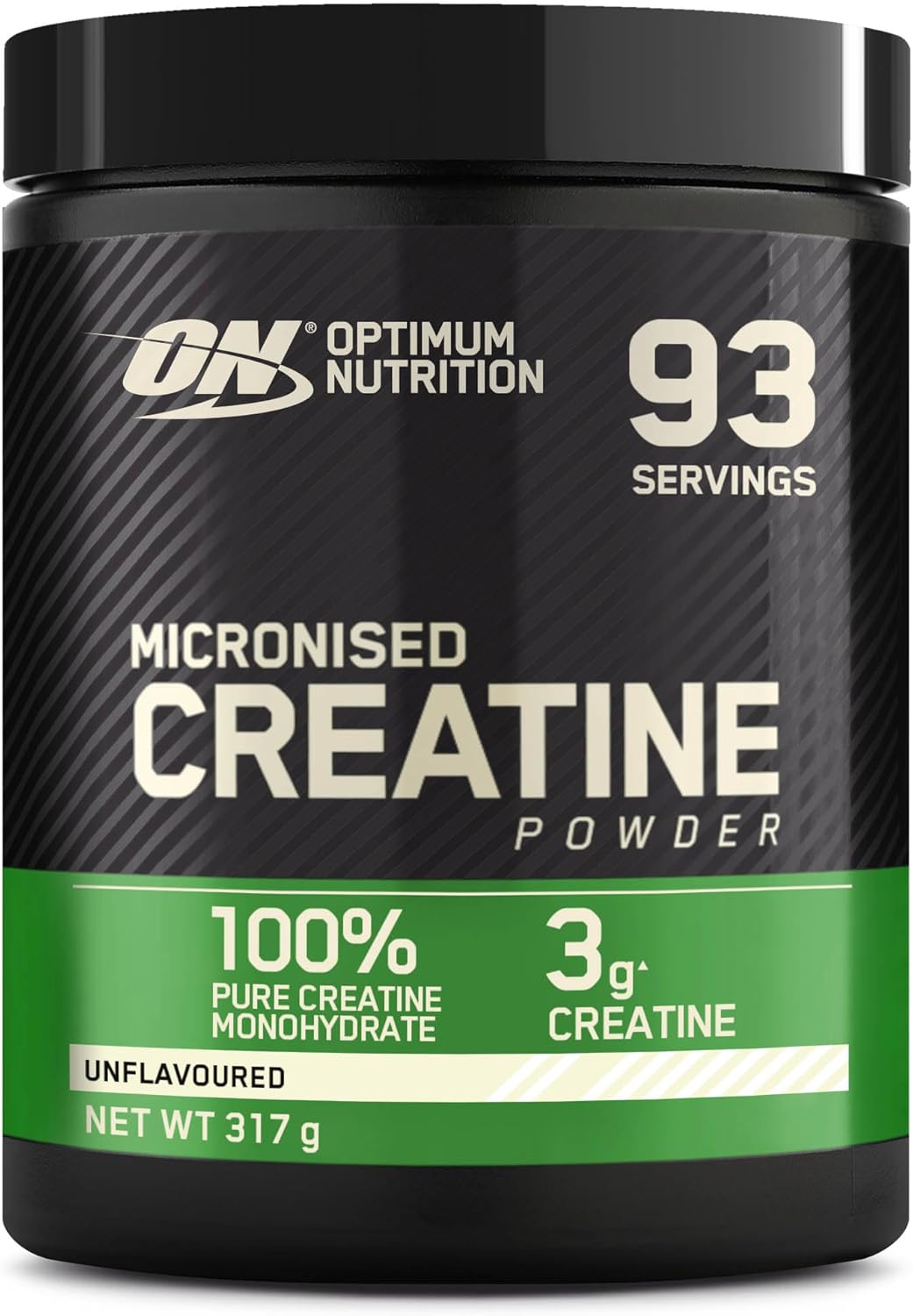
Optimum Nutrition Micronised
317 g · 93 servings · ~€30 — the best-seller, micronised, flavour-neutral.
View on Amazon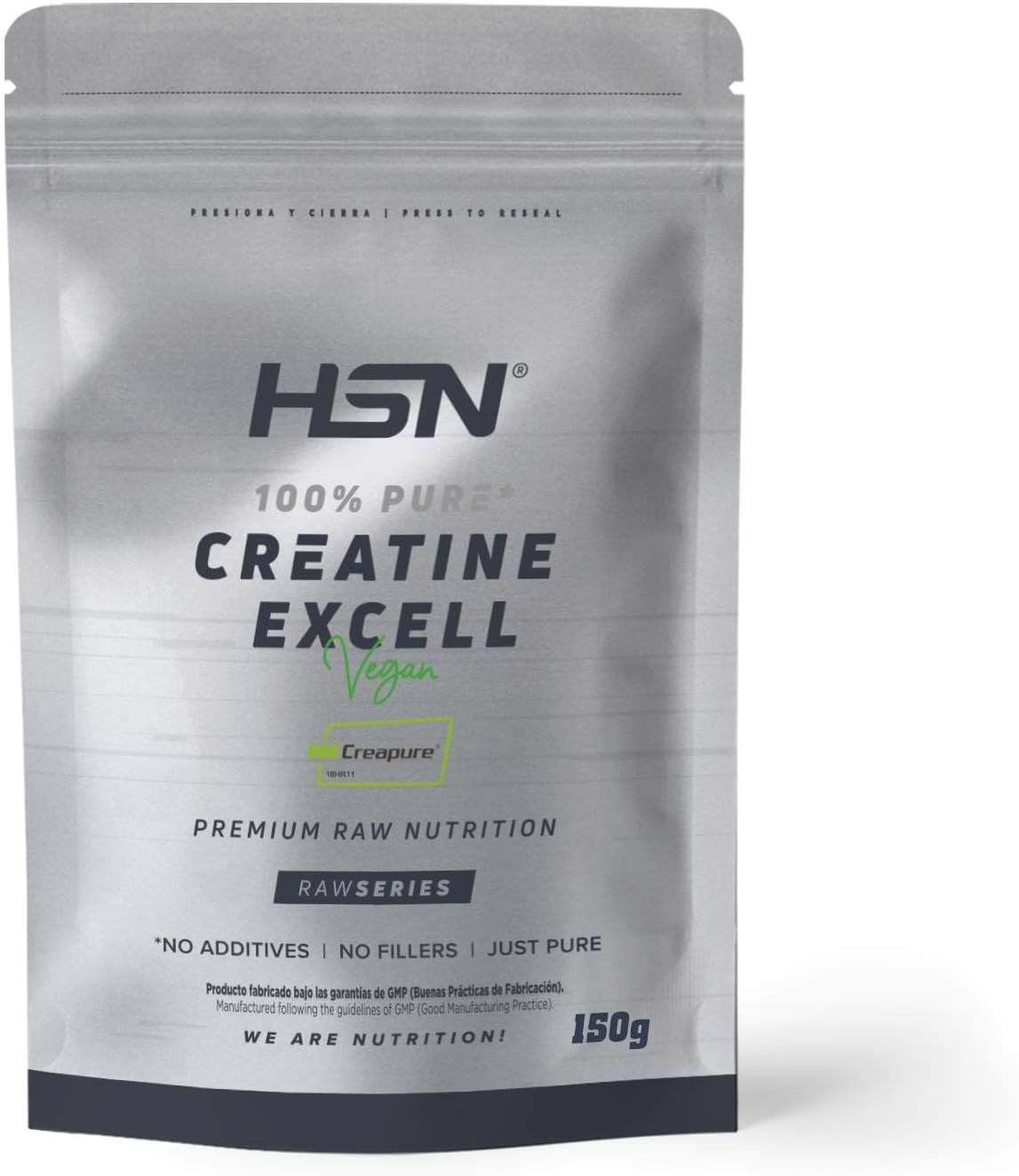
HSN Creatine Excell · Creapure
150 g · Creapure seal (>99.9% pure) · ~€15 — the anti-doping benchmark.
View on Amazon
* Affiliate links — the price for you stays the same. Pair with post-workout nutrition (protein + carbs) for optimal absorption.
Creatine myths debunked
“Creatine makes you gain weight / causes water retention”
Creatine can increase body weight by 0.5 to 1.5 kg, but this is intracellular water (inside the muscle), not subcutaneous water or fat. You will not look bloated. On the contrary, intracellular water is beneficial: it hydrates muscle cells and supports protein synthesis. This small weight increase has no negative impact on running performance.
“Creatine damages your kidneys”
False. Poortmans and Francaux (2000, PMID: 10999421) published a long-term study demonstrating that creatine supplementation does not alter glomerular filtration rate or any kidney function marker in healthy individuals. Subsequent studies lasting up to 5 years have confirmed these results. Creatine is safe for your kidneys if you are healthy. If you have a pre-existing kidney condition, consult your doctor before supplementing.
“Creatine dehydrates you”
Quite the opposite. As we saw in the Kilduff et al. (2004) study, creatine improves intracellular hydration and thermoregulation. By drawing water into muscle cells, it acts as an additional water reservoir. There is no scientific evidence that creatine causes dehydration or muscle cramps.
“Creatine is only for bodybuilders”
The ISSN Position Stand (2017, PMID: 28615996) —the most important reference document on creatine— explicitly states that creatine offers benefits for strength, power, endurance, and intermittent sport athletes. The 7 studies reviewed in this article demonstrate specific benefits for runners. The evidence is overwhelming.
“You need to cycle creatine”
No. Continuous supplementation with 3-5 g/day is perfectly safe and does not cause any negative adaptations. Your body does not stop responding to creatine over time, and stopping it offers no physiological advantage. The only consequence of stopping is that your stores return to baseline levels within 4-6 weeks.
“Creatine causes hair loss”
This myth comes from a single 2009 study (van der Merwe et al.) that found an increase in DHT (dihydrotestosterone) with creatine supplementation in rugby players. That study has never been replicated, it did not measure hair loss directly, and the DHT levels remained within the normal physiological range. No systematic review has found a causal relationship between creatine and hair loss.
Frequently asked questions
Does creatine help with running?
Yes. Although traditionally associated with strength sports, creatine offers proven benefits for runners: it accelerates recovery between sessions, increases muscle glycogen stores, improves sprint capacity and pace changes, protects bones against stress fractures, and enhances brain function under fatigue. The ISSN confirms it is effective for all types of athletes.
How long does creatine take to work?
With 3-5 grams daily of creatine monohydrate, muscle stores become saturated in 3-4 weeks. From that point on, you will notice improvements in performance and recovery. If you do a loading phase (20 g/day for 5-7 days), saturation is reached in one week, but it may cause digestive discomfort and is not necessary.
Does creatine damage your kidneys?
No. Long-term studies (over 5 years) have found no negative effects on kidney function in healthy individuals. Poortmans and Francaux (2000) demonstrated that creatine does not alter glomerular filtration rate or kidney markers. It is the most studied supplement in history with over 500 safety studies.
Can I take creatine before running?
Yes, you can take it at any time of day. Evidence suggests that taking it after training, with carbohydrates and protein, maximizes absorption. If you take it before running, do so at least 30-60 minutes beforehand to avoid gastrointestinal discomfort. The most important factor is daily consistency.
Does creatine cause weight gain or water retention?
Creatine can increase weight by 0.5-1.5 kg through intracellular water retention (inside the muscle), not subcutaneous retention. It is not fat or visible bloating. Intracellular water is beneficial: it hydrates muscle cells and supports recovery. This small weight increase does not negatively affect running performance.
What type of creatine is best for runners?
Creatine monohydrate is the only form with solid scientific evidence. It is the most studied, effective, and affordable. Other forms (HCl, ethyl ester, buffered) have not been shown to be superior. Look for the Creapure seal as a purity guarantee, though any monohydrate from a reputable manufacturer works.
Is creatine safe long-term?
Yes. The ISSN Position Stand (2017) concludes that creatine monohydrate is safe both short- and long-term in healthy individuals. Studies lasting up to 5 years have found no adverse effects. There is no need to cycle it or take breaks. It is the supplement with the strongest safety evidence in all sports science literature.