10 Best Trail Running Poles 2026
Full comparison of trail poles: foldable, telescopic, aluminum and carbon. Everything you need to know to choose the right ones.
Full comparison of trail poles: foldable, telescopic, aluminum and carbon. Everything you need to know to choose the right ones.
Trail running poles have gone from being an optional accessory to an essential tool for any runner heading into the mountains. Not only do they reduce joint impact and increase propulsion on climbs, but on technical descents they can literally prevent a fall and a serious injury. If you are training for an ultra or tackling trails with significant elevation gain, poles make the difference between enjoying the course and arriving destroyed at the finish.
In this comparison we have analyzed the 10 best trail running poles available in 2026, from affordable aluminum options for beginners to competition carbon poles used by elite runners in the most demanding ultras in the world. So you can choose the model that best suits your level, type of trail and budget.
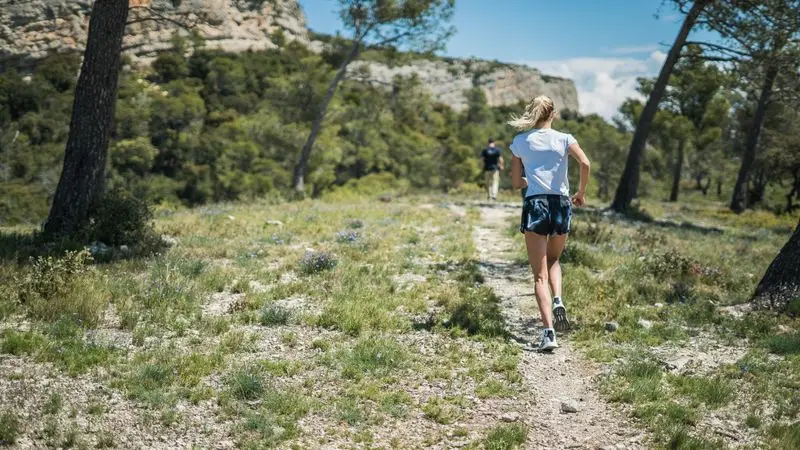
Poles are especially effective on climbs with more than 300-400m of continuous elevation gain. By leaning on them, you distribute the effort across all four limbs and reduce the load on quads, glutes and calves by up to 25%. This allows you to save more energy for the second half of the race, when your legs need it most. The correct technique is to take a stride and plant both poles simultaneously slightly behind the front foot.
On descents with rocks, roots or unstable terrain, poles act as two additional points of contact with the ground. They improve balance, reduce knee and hip impact, and give you extra reaction time if your foot slips. For downhill technique, poles are placed slightly ahead of the body to brake momentum.
In ultras and long-distance trails, poles compensate for the muscle fatigue that appears after 5-6 hours of running. When your legs no longer have the strength to absorb impact correctly, poles distribute the load and help maintain efficient technique all the way to the finish. Many race organizations include them as mandatory gear precisely for their protective effect. If you are just starting out in trail running, check our guide on trail races for beginners.
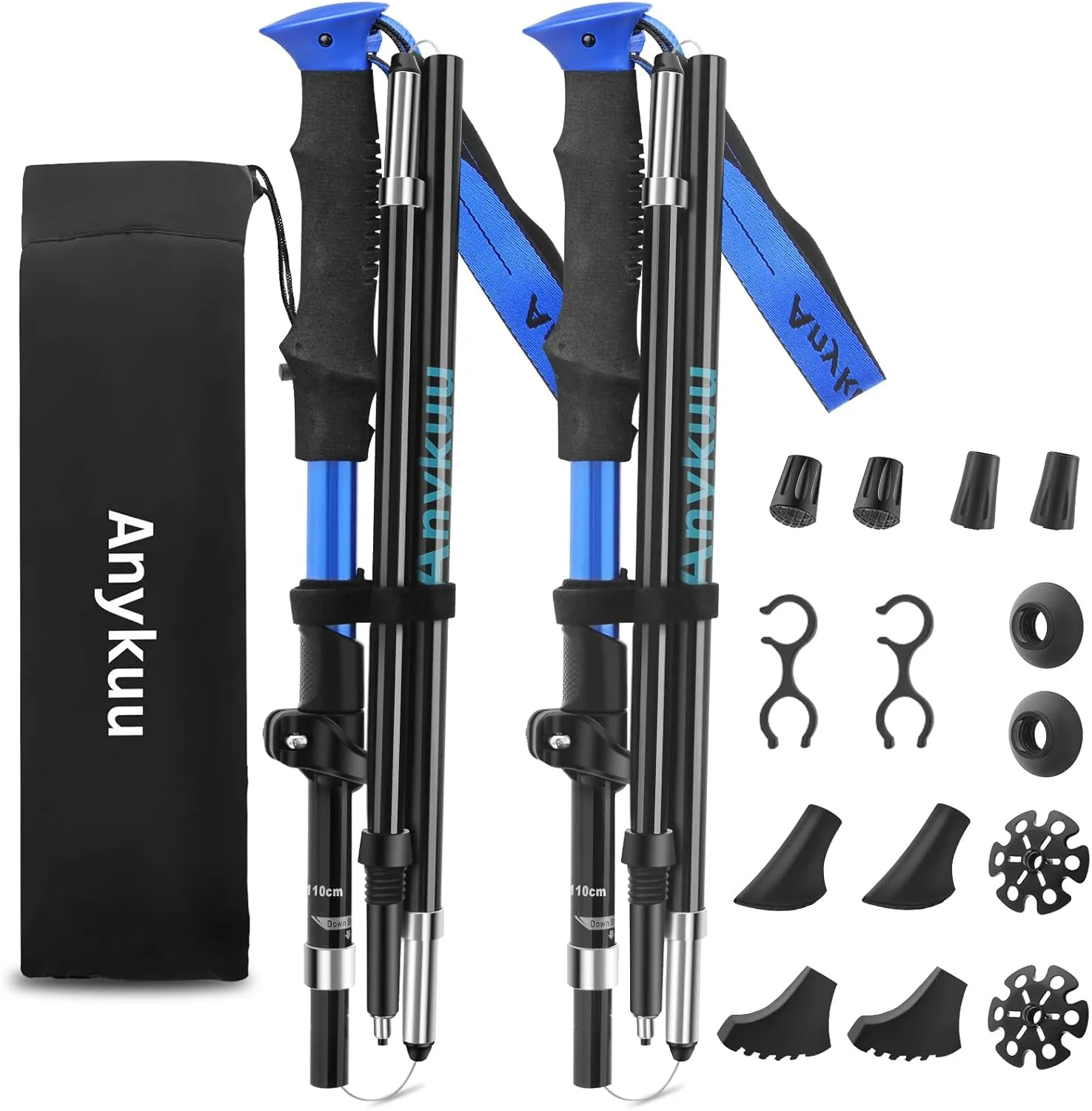
The best option for getting started in trail running with unbeatable value for money. Made from 7075 aluminum alloy (the same used in mid-range poles), with an EVA grip that provides good hold even with sweaty hands. They are foldable and adjustable between 110 and 130 cm, adapting to different heights and terrains. When folded they are very compact and fit in any trail backpack. For someone just starting out, it is hard to ask for more at this price.
Check Price on Amazon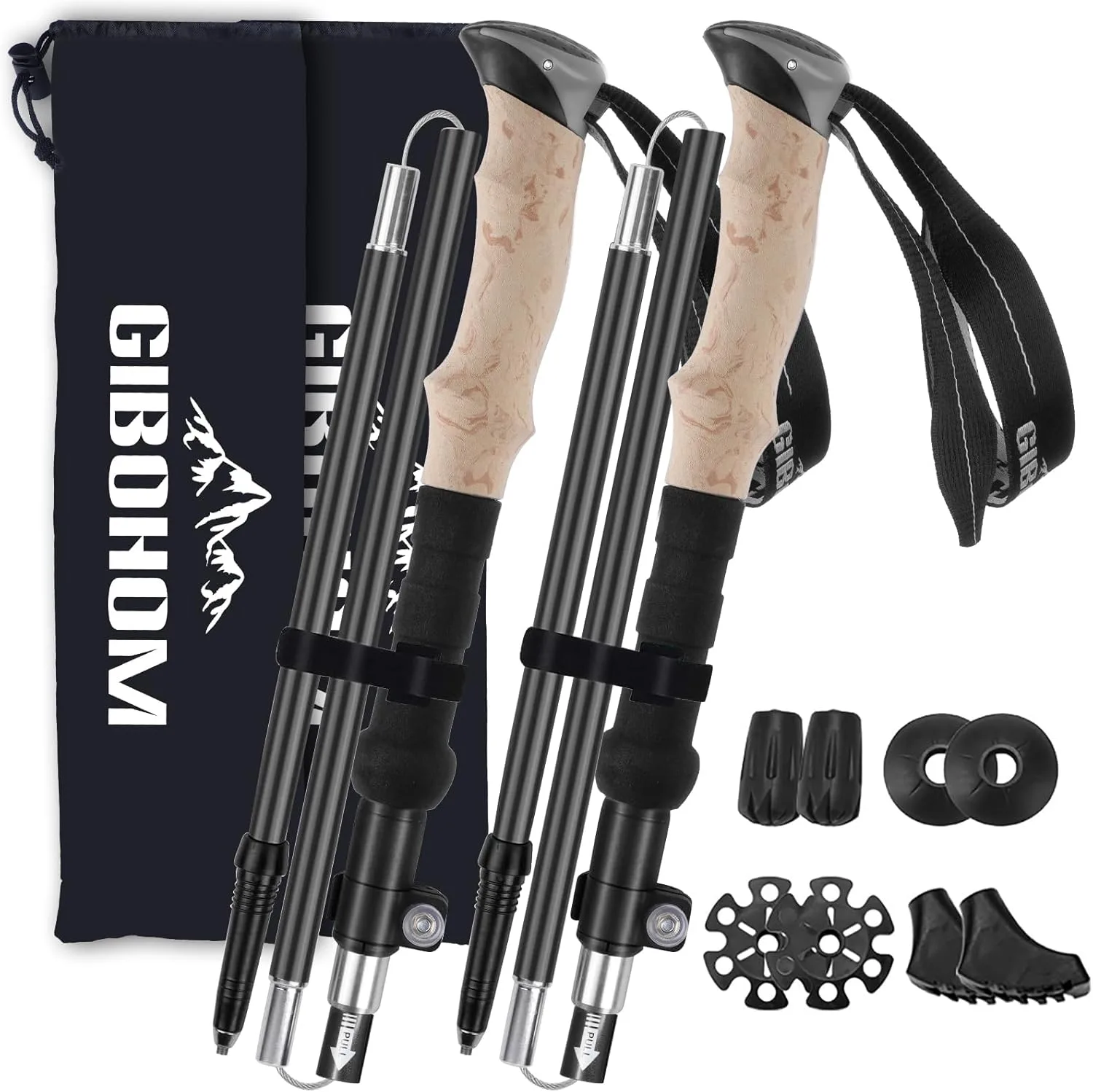
Versatile for both trail running and Nordic walking, these 7075 aluminum poles include an anti-shock system that reduces joint impact on technical descents. Adjustable between 105 and 125 cm, they include four pairs of rubber tips for different surfaces (asphalt, dirt, rock). A good option if you are looking for poles you can also use for hiking and easier paths, not just for racing.
Check Price on Amazon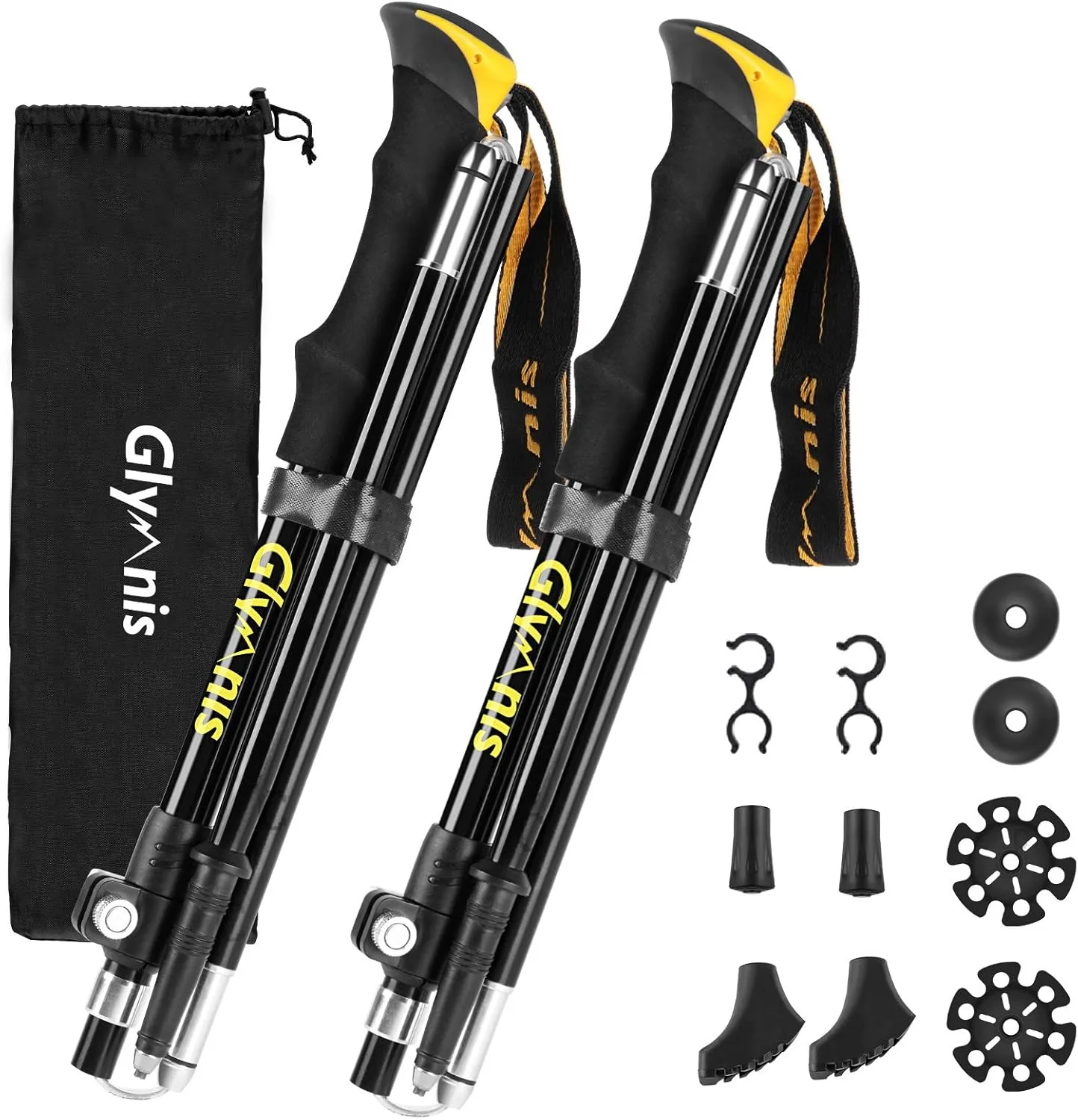
If you are looking for the most compact poles on this list, these are your choice. At just 36 cm when folded, they are perfect for carrying on the side of your backpack or even in the pocket of your trail vest when you do not need them (on flat stretches or easy forest terrain). Made from 7075 aluminum with EVA grip, adjustable up to 130 cm. One of the lightest models in its aluminum category, making them ideal for runners who want them available without adding weight to their backpack.
Check Price on Amazon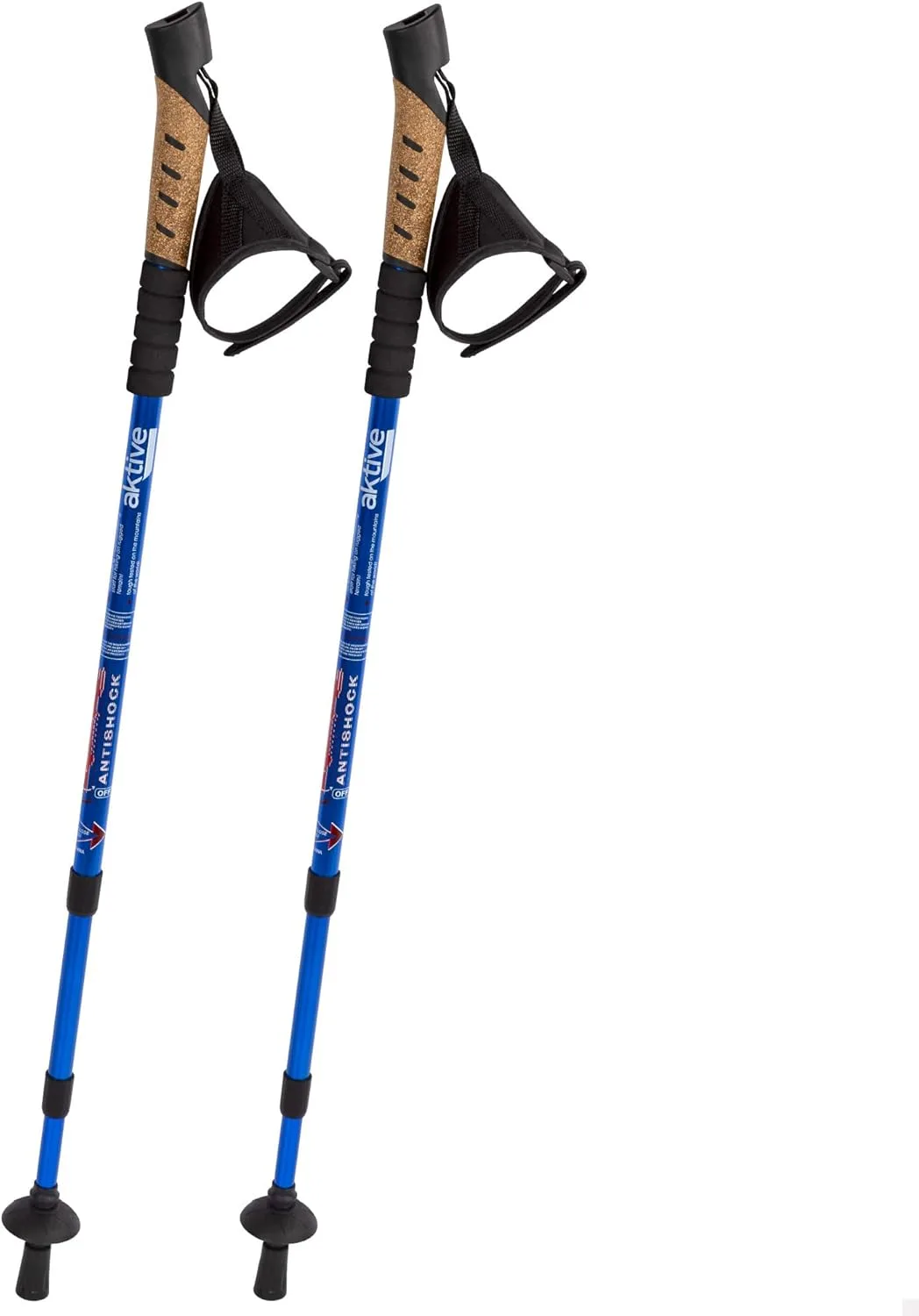
An affordable and functional option for those looking for simple and reliable poles for not-too-technical trails. Comfortable rubber grip, interchangeable metal or rubber tip depending on the terrain, quick-lock system and adjustable strap. They are telescopic, which allows very precise length adjustment. Ideal for hiking and low-to-medium difficulty trails where you do not need the extreme lightness of competition models.
Check Price on Amazon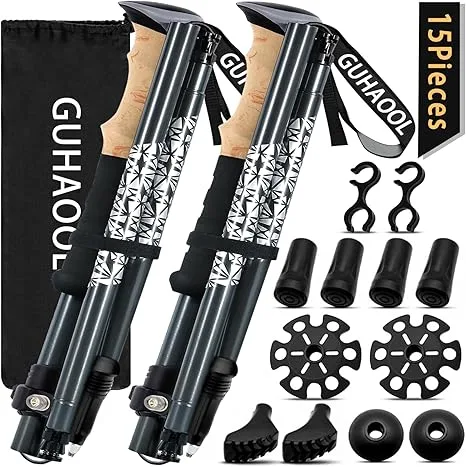
The absolute benchmark in competition trail running poles. Ultralight thanks to their full carbon construction, with the Z-pole rapid folding system that lets you stow or deploy them in seconds without releasing the strap. These are the poles used by elite runners in ultras like UTMB, Western States or Tor des Geants. Their weakness is the price and that carbon, though light, can break from a strong lateral impact against a rock. For racing on demanding trails, they are the number one choice.
Check Price on Amazon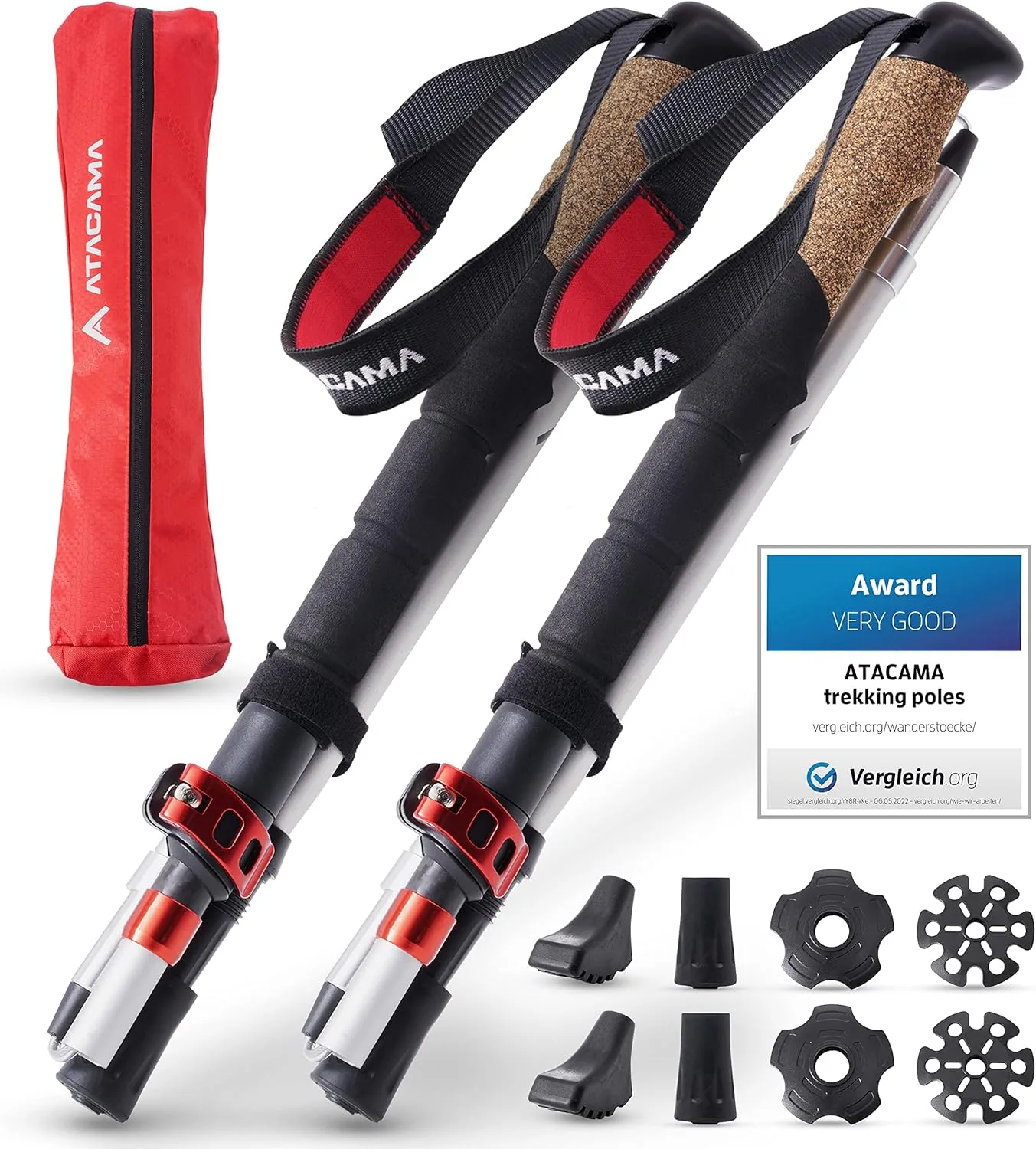
A premium balance between lightness and durability thanks to the combination of 3K carbon and 7075 aluminum. The natural cork handle is one of its strongest points: it absorbs hand sweat better than EVA and prevents slipping in hot or rainy conditions, something especially valued in long-distance races. They are extendable and adjustable, adapting to different terrains. An excellent option for the runner who wants to step up to premium materials without reaching the price of pure carbon.
Check Price on AmazonFind a group for your next trail
1,100+ runners already train together. Free on iOS.
Leki is one of the most respected brands in mountain poles and the Micro Trail Vario is their flagship model for trail running. Its speed lock system allows you to adjust the length with one hand in seconds, very practical when you need to change pole length between climbs and descents without stopping. Sturdy and lightweight construction, ergonomic strap system that reduces wrist fatigue during ultras. Ideal for long trails where you need maximum reliability over many hours.
Check Price on Amazon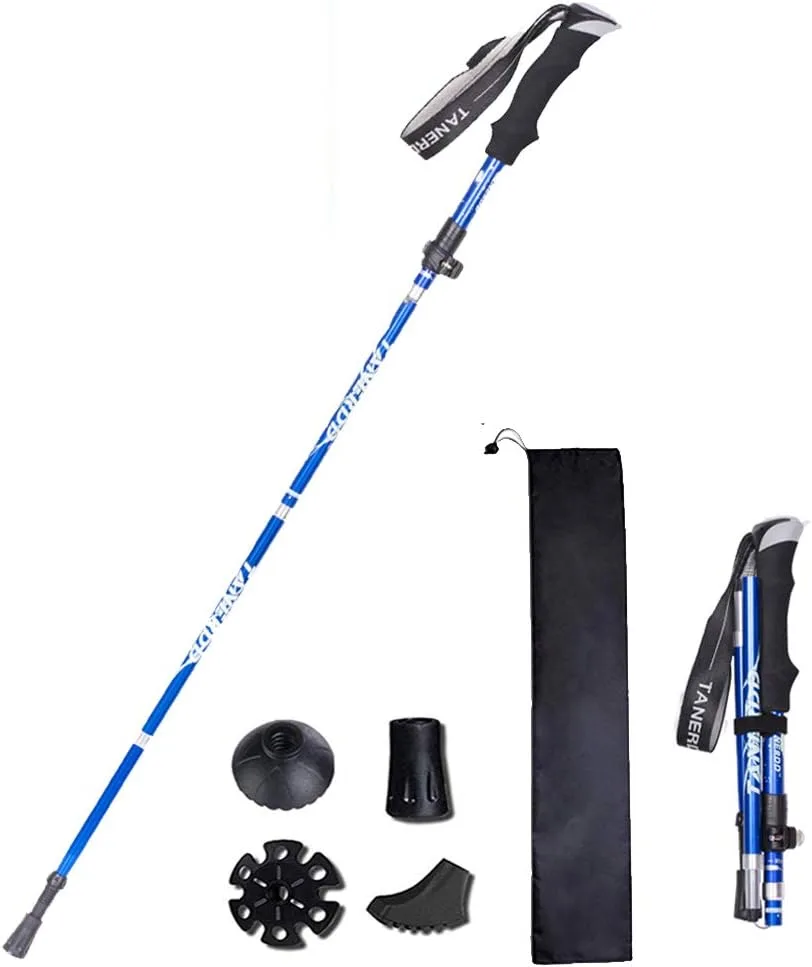
Cork is the most breathable material for pole grips: it absorbs moisture from sweat and provides a firm hold even when hands are wet from rain or exertion. This foldable model with anti-shock system and non-slip tips is perfect for long-distance races in summer, when heat makes hands sweat more. The anti-shock cushioning reduces tension in wrists and elbows on rocky terrain.
Check Price on Amazon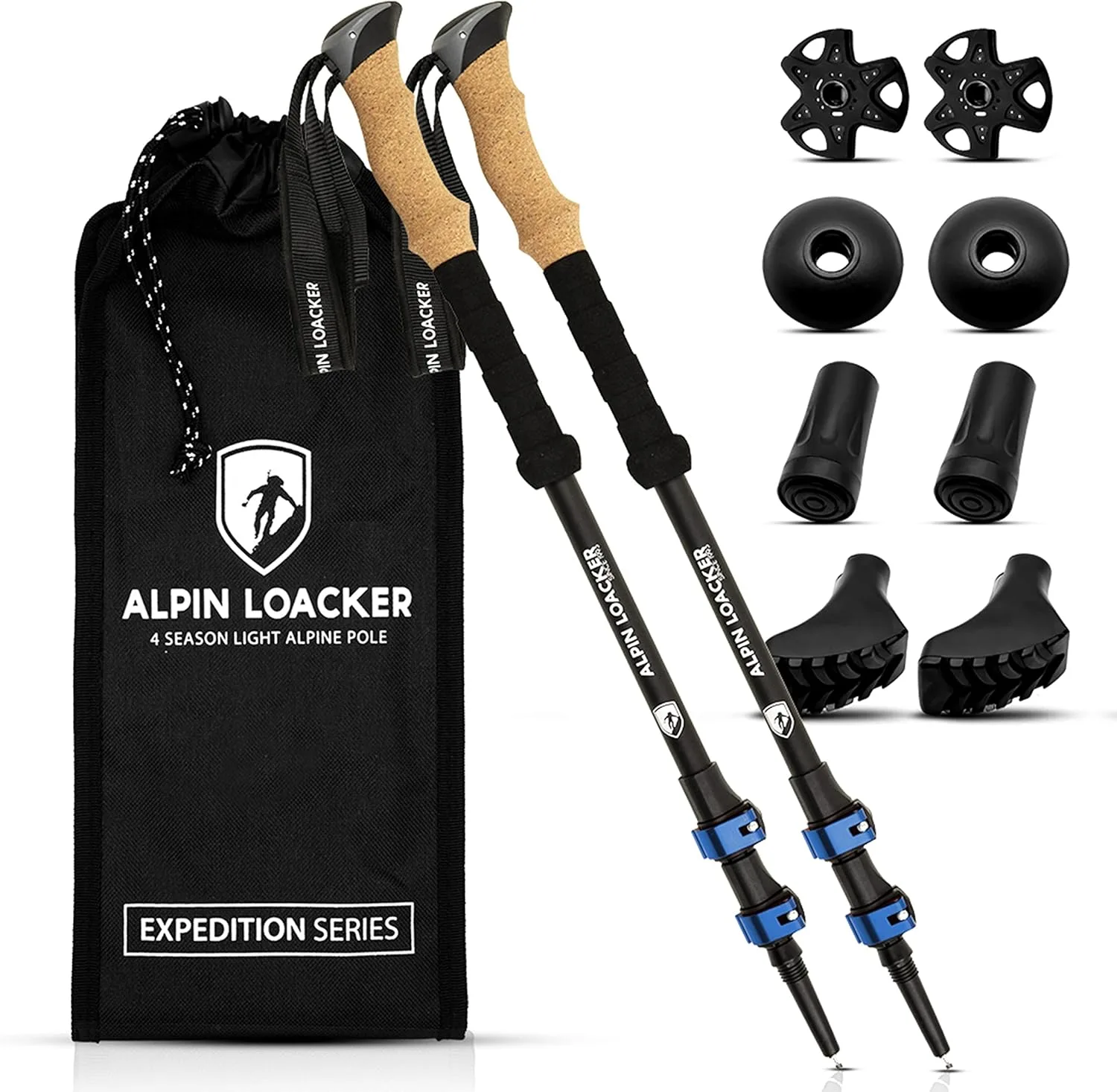
A complete and versatile kit that includes lightweight aluminum poles, a carry bag and multiple accessories (tips for different terrains). Compatible with trail running, Nordic walking and hiking, their height is adjustable to suit each user and terrain. If you are looking for poles that work for the weekend trail run as well as a family hike or morning Nordic walk, the ALPIN LOACKER are a very reasonable purchase without sacrificing quality.
Check Price on Amazon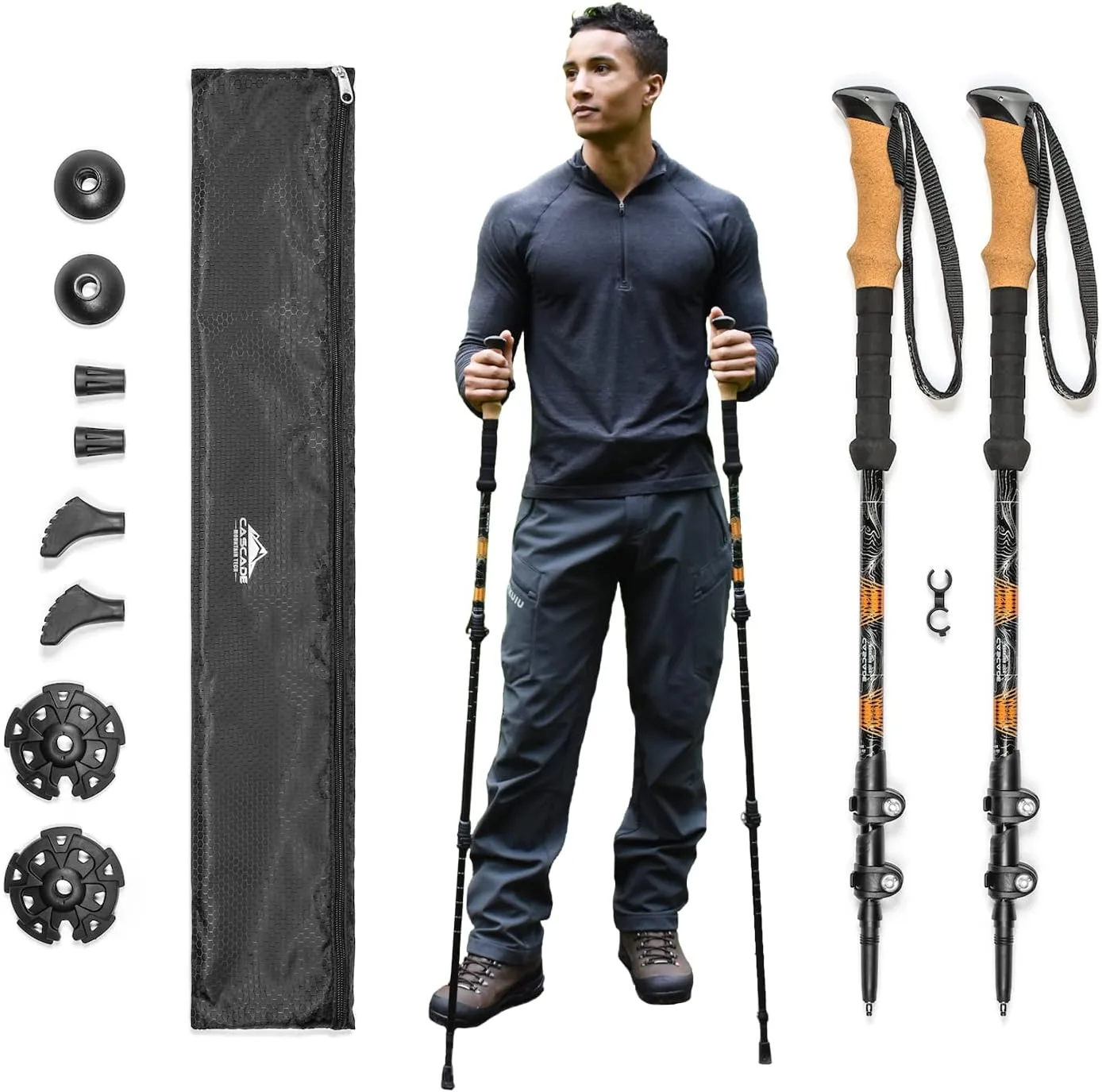
An American brand with millions of units sold worldwide and a solid reputation in the hiking and trail market. The quick-lock system allows you to adjust the length in seconds, the lightweight aluminum keeps weight in check and the set of 2 poles includes everything you need to get started. Proven reliability at a very affordable price. Perfect for the runner who wants something functional and durable without complications or premium brands. A very popular choice among recreational trail runners.
Check Price on Amazon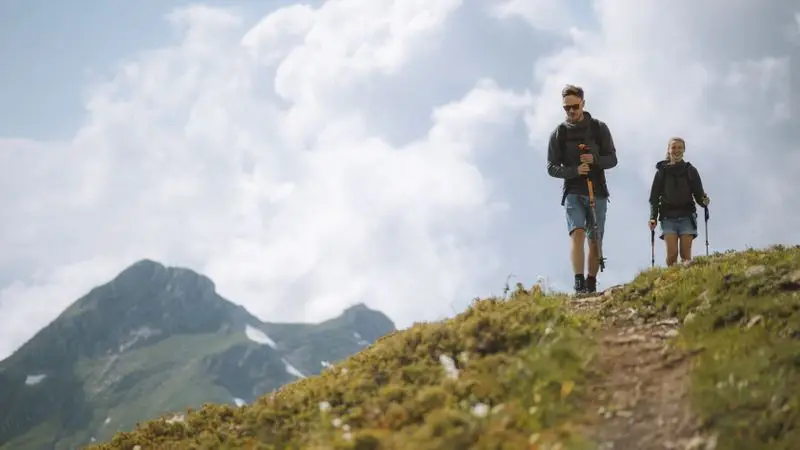
Aluminum (especially 7075, high-strength) is cheaper, more resistant to lateral impacts and handles knocks better without breaking. Carbon is up to 30% lighter but more fragile: a hard hit against a rock can snap it. For regular training, technical trails with risk of bumps and beginners, aluminum is the smarter choice. For racing and ultras where every gram counts, carbon is worth the extra investment.
Foldable poles (Z-pole type or similar) collapse to 30-40 cm, fit in the side or back of your trail vest and deploy in seconds. They are the preferred option in active trail running. Telescopic poles allow more precise length adjustment, are sturdier and their locking mechanism tends to last longer, but they are longer when collapsed. For hiking or ultras where you want maximum adjustment versatility, telescopic poles have the edge. For competitive trail running, foldable poles win.
The EVA (polyethylene foam) grip is the most common in the mid-range: lightweight, affordable and comfortable. The cork grip is the most premium: thermoregulating, sweat-absorbing and offering better hold with wet hands, ideal for long distances. The rubber grip is the cheapest but can cause blisters during prolonged efforts. For trails over 3 hours, cork or high-quality EVA are clearly superior.
Competition trail poles weigh between 90 and 200 grams per pair. For training and hiking, between 200 and 400 grams is a reasonable range. The correct length is one where, when gripping the pole in use position, your elbow forms a 90-degree angle. Many runners use their poles 5-10 cm shorter than the theoretical measurement for greater agility and less interference with stride. Adjustable models are the most practical option for adapting to different terrains.
| Pole | Material | Type | Grip | Price range |
|---|---|---|---|---|
| Anykuu 7075 | Aluminum 7075 | Foldable | EVA | Budget |
| GIBOHOM 7075 | Aluminum 7075 | Foldable | EVA + anti-shock | Budget |
| Glymnis 7075 | Aluminum 7075 | Ultra-compact foldable | EVA | Budget |
| AKTIVE | Aluminum | Telescopic | Rubber | Budget |
| Black Diamond Carbon Z | Pure carbon | Foldable Z-pole | Premium EVA | High |
| Atacama Carbon 3K | Carbon 3K + Al 7075 | Telescopic | Natural cork | Mid-high |
| Leki Micro Trail Vario | Aluminum/Carbon | Foldable speed lock | EVA with cork extension | High |
| Cork Anti-Shock Pole | Aluminum | Foldable | Breathable cork | Mid |
| ALPIN LOACKER | Lightweight aluminum | Telescopic | EVA | Budget-mid |
| Cascade Mountain Tech | Aluminum | Telescopic | EVA | Budget |
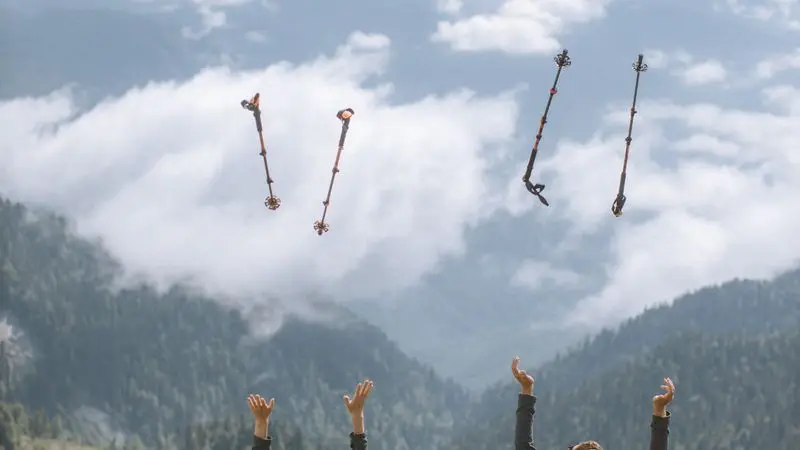
Poles are recommended on trails with more than 1000m of elevation gain or distances over 40km. On long climbs they reduce leg effort by up to 25% and on technical descents they provide stability and protect your knees. Many ultras include them as mandatory gear.
Aluminum is more resistant to impacts and more affordable, ideal for beginners. Carbon is lighter (up to 30% less) but more fragile against lateral impacts. For racing choose carbon; for training and technical trails with rocks, aluminum is safer.
The general rule is that when gripping the pole, your elbow should form a 90-degree angle. For trail running, many runners use them 5-10cm shorter than for hiking for greater agility. Adjustable models let you adapt the height to the terrain.
Foldable poles are more compact (30-40cm folded) and store better in a backpack, ideal for trail running. Telescopic poles are sturdier and allow more precise height adjustment, better for hiking and long ultras.
It depends on the organization. Most ultras and mountain trails do allow them, and many include them as mandatory gear. In some shorter or urban races they may be prohibited. Always check the race regulations.
Train and race in the mountains with partners at your level.
Join 1,100+ runners
Routes, training plans and tips to run better in the mountains. No spam.
🔒 We respect your privacy. Unsubscribe anytime.