Transparency: This article contains affiliate links to Amazon. If you buy through them, we receive a small commission at no extra cost to you. This does not change the price or our editorial selection. Health notice: the information in this article is general and informational. It does not replace the diagnosis or treatment of a doctor or physiotherapist. If you have persistent knee pain, the right move is to see a professional.
The knee is the joint that takes the most punishment in running. That is not an opinion, it is biomechanics: on every stride it absorbs between 3 and 5 times your body weight. If you run 10 km, your knee takes millions of impacts over the course of a year. That it hurts at some point is no surprise. Knowing what to put on when it does hurt is a different story.
I went through the knee supports available on Amazon ES this June 2026 looking for the three things a runner actually needs: that they do not slide down mid-run, that the type of support matches the specific problem (patellar tendinitis is not treated the same way as IT band syndrome), and that the price is honest. This is the guide I wish I had found the first time my knee hurt at kilometre 8.
The 3 types of knee support for running
Before we talk about specific products, you need to understand that "knee support" is not one single thing. There are three types and each one solves a different problem. Using the wrong one does not just fail to help, it can make the injury worse.
Type 1: Compression sleeve
An elastic tube that slides up the leg and wraps the whole knee. Usual materials: nylon and spandex, thin neoprene or knitted compression fabric. It applies even 360° pressure across the joint. What it is for: IT band syndrome (pain on the outer side), chondromalacia (pain under the kneecap when going down stairs), diffuse knee pain with no clear origin, and general prevention during hard training. Advantage for running: it is the least intrusive on long runs because it has no edges that rub and creates no pressure points.
Type 2: Patellar strap
A narrow neoprene band that wraps the knee just below the kneecap. It applies targeted pressure on the patellar tendon to reduce the tension during flexion and extension. What it is for: patellar tendinitis (specific pain just below the kneecap, especially running downhill or going down stairs) and Osgood-Schlatter syndrome. Important: the strap has to sit in exactly the right place to work. Placed over the kneecap or too low, it does nothing.
Type 3: Hinged brace (with patella opening or side hinges)
A stiffer structure in neoprene or technical fabric that can include metal side stays, an opening for the kneecap or extra fastening straps. What it is for: ligament instability, post knee surgery, severe chondromalacia, mild to moderate arthritis during exercise. Downside for running: these are the heaviest and the hottest. For long-distance running they can get uncomfortable. For runners with a diagnosed injury and treatment under way, they are the option.
What to look for before buying a knee support for running
1. It must not slide down mid-run
The most common problem with cheap knee supports: by kilometre 2 they are around your ankle. Look for non-slip silicone on the top and bottom edges, especially on sleeves. Hinged braces with velcro straps are safer. Patellar straps with a metal buckle (not velcro alone) hold pressure better through the stride.
2. Breathability of the material
Neoprene traps a lot of heat and holds sweat. For summer running or long runs, knitted fabrics or technical mesh are far more comfortable. The difference between wearing a neoprene support for 10 km in August and wearing a compression knit is noticeable.
3. The right size (this matters more than it sounds)
A sleeve that is too tight can restrict circulation. Too loose and it gives no compression and slides down. Measure the circumference of your knee at kneecap height. Most brands have their own size chart, so always check the one for that specific product before buying.
4. Which specific problem it is for
I explained this above, but I am repeating it because it is the most important part: the type of support has to match the type of pain. A compression sleeve does little for patellar tendinitis. A patellar strap does little for IT band pain. If you do not know what you have, start with a compression sleeve (less risk of using it wrong) and go see a physio.
The 9 best knee supports for running 2026
CAMBIVO Knee Brace with Gel Pad and Stabilisers — ~€25
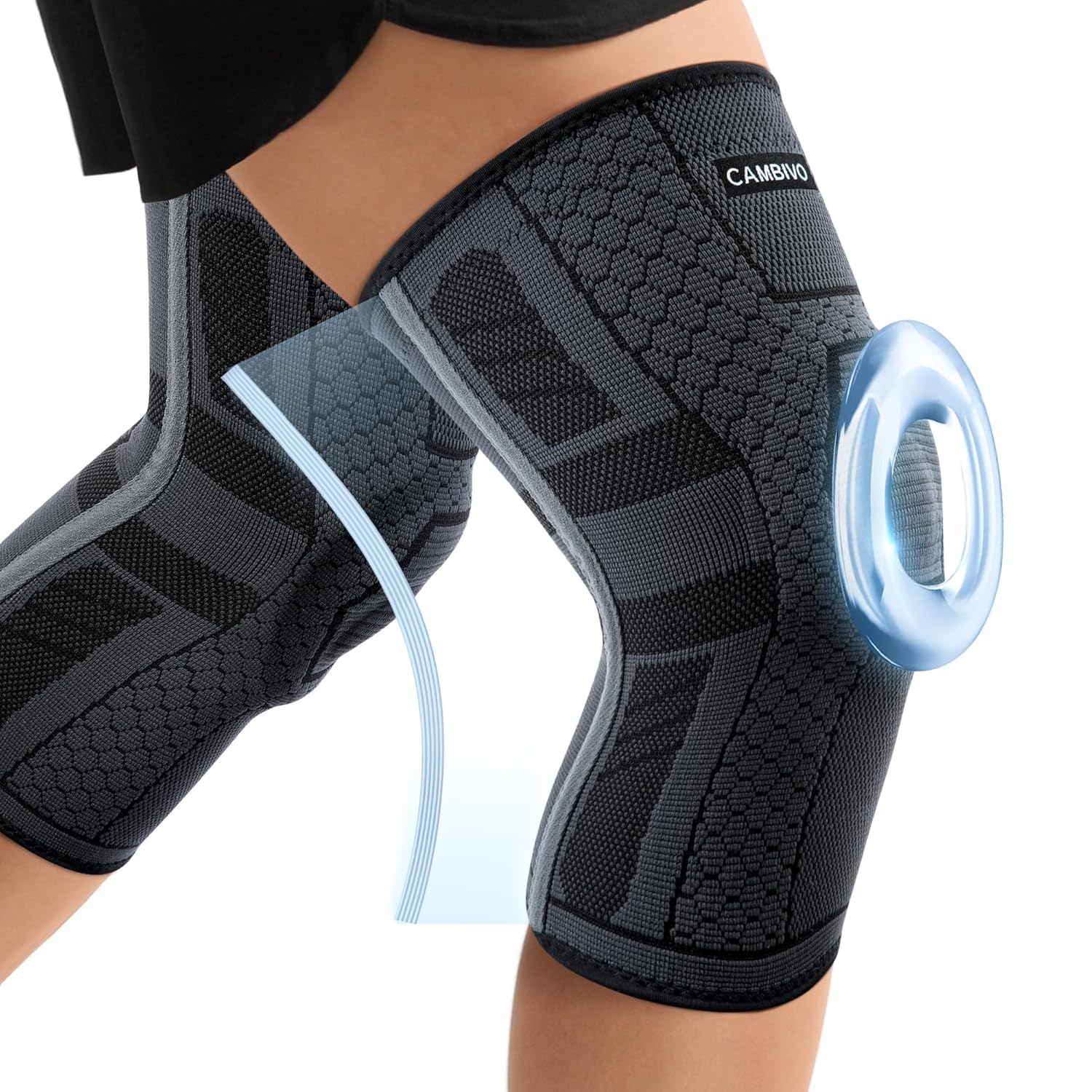
The CAMBIVO with gel sits right between a pure compression sleeve and a hinged brace. The silicone gel ring around the kneecap protects and centres the patella through the movement, cutting friction in the joint. The two side stays (one inner, one outer) add lateral stability without limiting the knee's range of motion. The fabric mixes neoprene (warmth, firm compression) with mesh panels behind the knee (ventilation).
For the runner with diffuse knee pain, mild chondromalacia, or coming back to running after a mild ligament sprain, it is the most complete option in the selection at a reasonable price. The silicone bands inside stop it from sliding down mid-run. CAMBIVO is the best-selling knee support brand on Amazon ES for a concrete reason: the value for money is real, not just marketing.
Pros
- Silicone gel ring centres the kneecap
- Side stays give real stability
- Non-slip bands on the inside
- Neoprene+mesh mix: breathes better than pure neoprene
- Reasonable price for what it offers
Cons
- Traps more heat than a plain sleeve
- Slow to dry after heavy sweating
- Not the lightest in the selection
Who it is for: the runner with diffuse knee pain, mild to moderate chondromalacia, or coming back to running after a knee sprain. Also for runners over 40 whose joints "feel" every change of pace.
View on AmazonABYON ELITE Hinged Brace with 4-Way Straps — ~€29
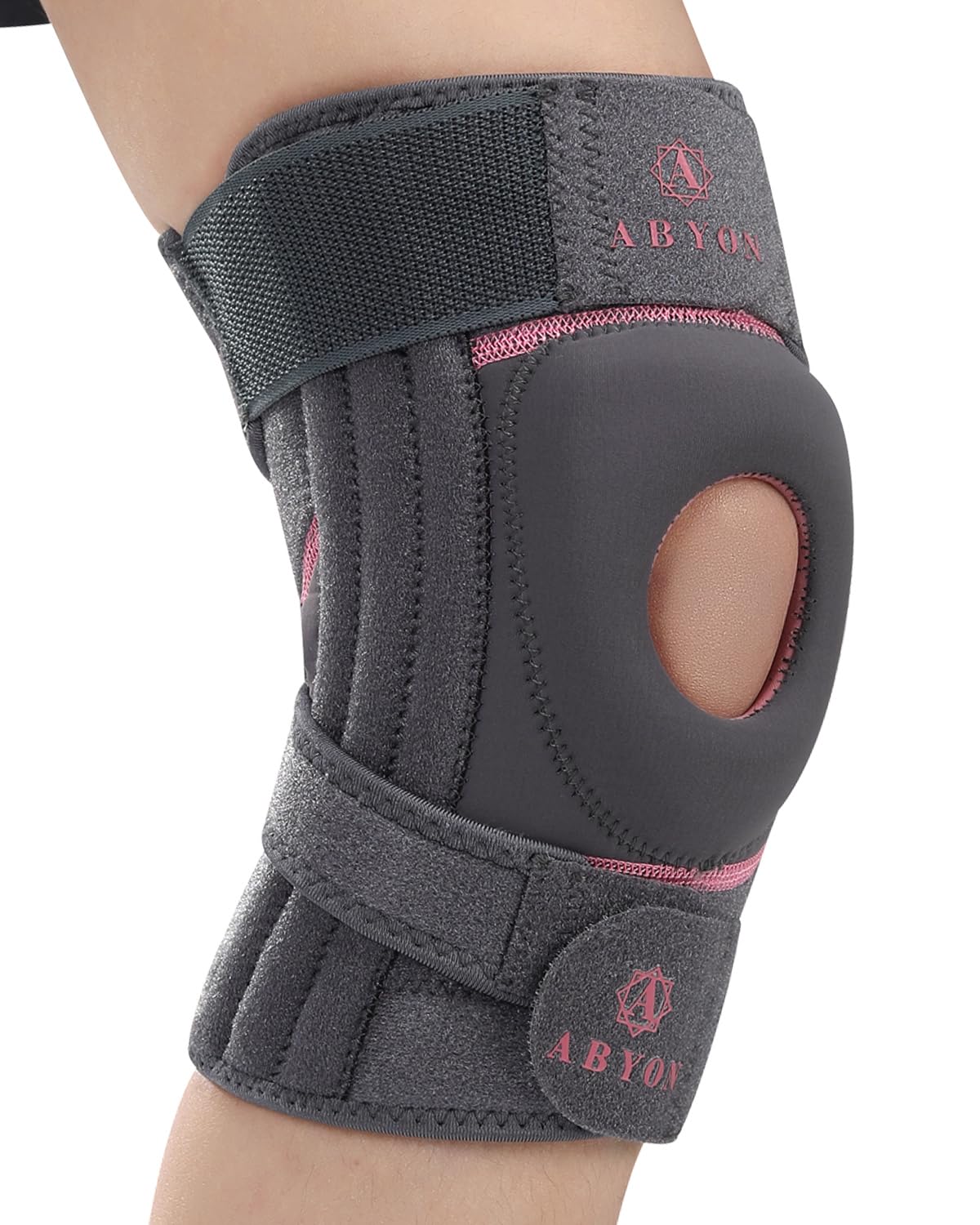
The ABYON ELITE is the most complete hinged brace in the selection for its price bracket. The oval patella opening takes pressure off the kneecap during knee flexion and extension, which makes it especially useful for chondromalacia and for runners with patellofemoral syndrome. The four adjustment straps (two upper, two lower) let you dial in the level of compression and hold in each zone.
What sets the ABYON apart from other cheap hinged braces is the double side stays: they give medial and lateral stability without blocking movement in the sagittal plane (flexion and extension). For runners with lateral knee instability who want to keep training under a physio's supervision, it is the most sensible option at this price.
Pros
- Patella opening takes load off the kneecap
- 4 straps: precise adjustment by zone
- Double side stays give stability
- Suitable for chondromalacia and mild ligament injuries
- Affordable for a hinged brace
Cons
- Heavier than a sleeve: you feel it on long runs
- Traps more heat (dense premium neoprene)
- Can slide down if the straps are not properly adjusted
Who it is for: the runner with diagnosed chondromalacia, lateral knee instability, or in the return-to-training phase after a mild meniscus or ligament injury.
View on AmazonCAMBIVO Patellar Strap 2-Pack — ~€16
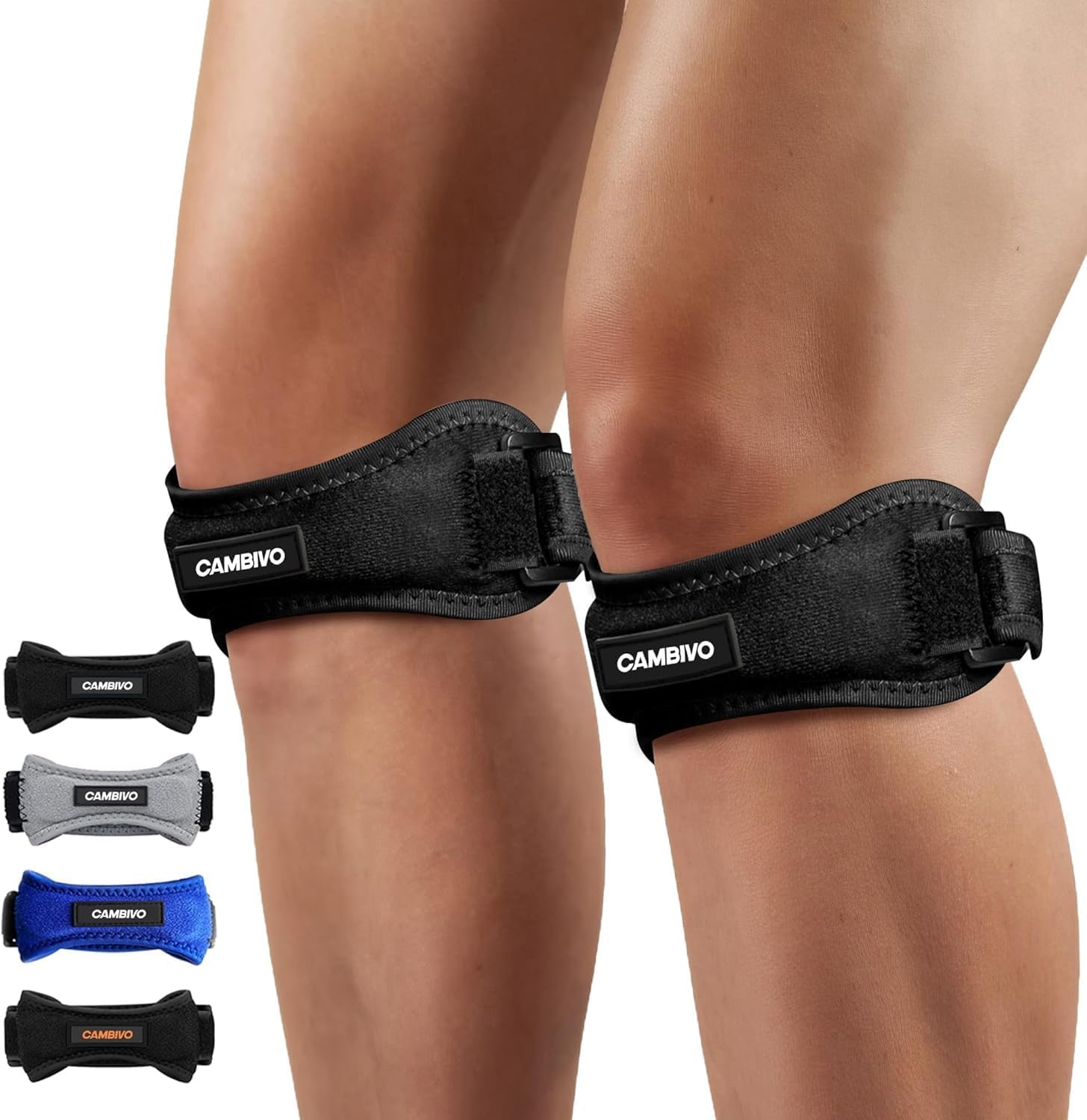
The CAMBIVO patellar strap is the reference product for patellar tendinitis on Amazon ES. That is not marketing: the sheer volume of reviews (thousands) with high ratings reflects that the product does what it promises, which is to apply pressure on the patellar tendon to cut the tension at the exact spot that hurts when you run or go down stairs.
The butterfly-shaped central neoprene pad spreads the pressure across the tendon instead of creating a single compression point. The velcro is double so it does not give way mid-jog. It comes as a 2-pack, which matters because plenty of runners with tendinitis have it in both knees or want a spare. The fit should be firm but not tight: if you feel tingling or the circulation cuts off, it is too tight.
Pros
- Specific to patellar tendinitis
- 2-pack: both knees or a spare
- Pad spreads the pressure
- Double velcro: does not give way mid-jog
- 4 colour options
Cons
- Patellar tendinitis only: no use for other problems
- Needs precise placement to work
- Not the most comfortable on very long runs (1.5h+)
Who it is for: the runner with specific pain below the kneecap (patellar tendinitis), especially going down hills or stairs, or at the start of a run before it eases off once warm.
View on Amazonbonmedico Patellar Strap for Running — ~€12
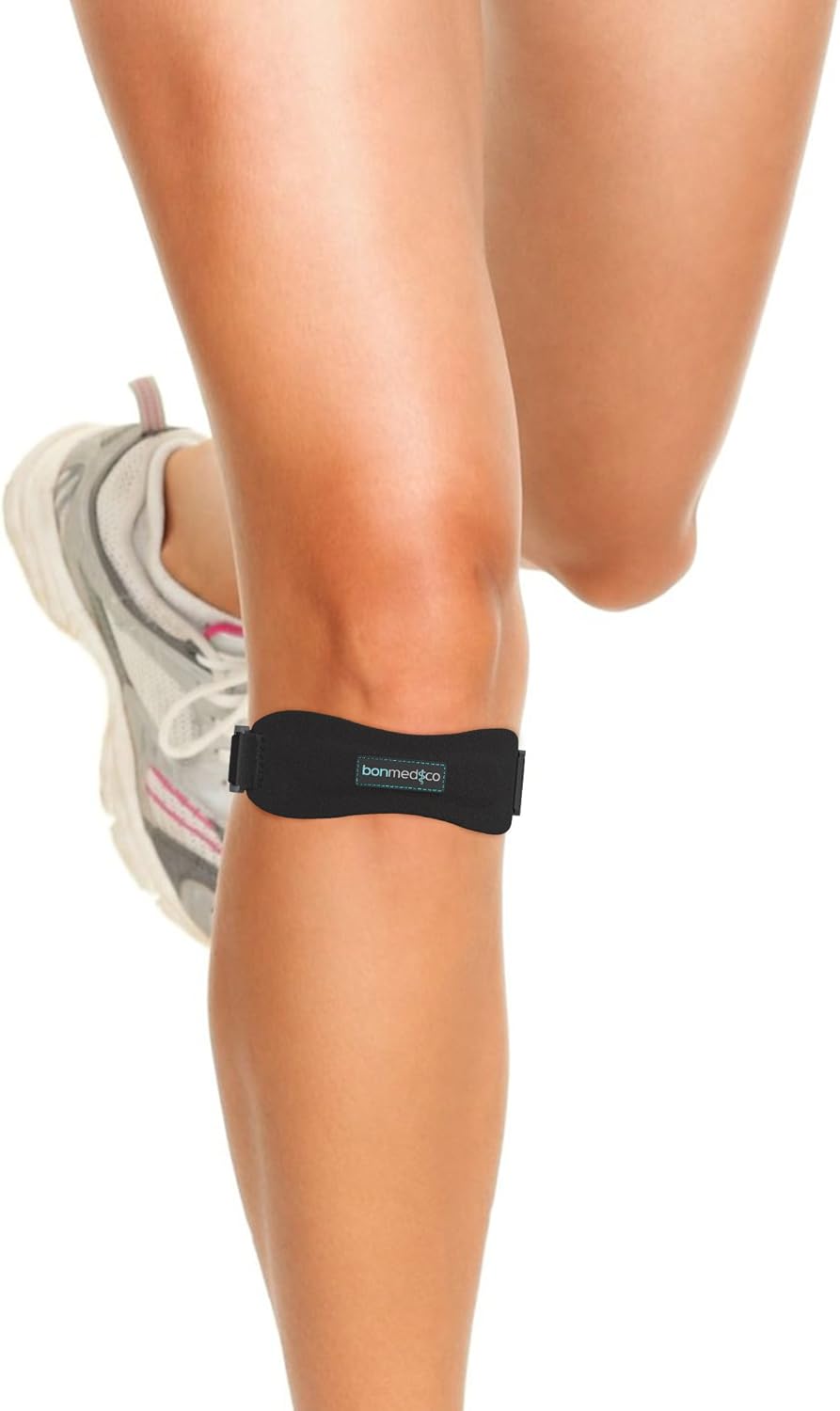
The product photo says it all: a person running with this strap on. It is the patellar strap in the selection most clearly built for active running. Its ultra-low profile (very thin neoprene, no exaggerated padding) makes it almost imperceptible while you run. Nothing sticks out, nothing rubs against your leg as you lift the knee, nothing creates friction points against your kit.
The combination of velcro and metal buckle keeps it from giving way even when the outer fabric gets damp with sweat. At €12 it is the cheapest strap in this selection. The trade-off: less padding than the CAMBIVO, so the pressure on the tendon is more direct. If you have sensitive skin or plan to wear it on runs over 90 min, the CAMBIVO may be more comfortable.
Pros
- Ultra-low profile: ideal while running
- Velcro + buckle: does not slip
- Cheapest of the straps
- Almost invisible under clothing
Cons
- Less padded than the CAMBIVO
- More direct pressure on the tendon
- Single unit (not a 2-pack)
Who it is for: the runner with mild patellar tendinitis who wants the most discreet, lightest strap possible in order to keep racing. Also for anyone who gets hurt during a race and needs to finish the course.
View on AmazonBodyprox Compression Sleeve 2-Pack — ~€14
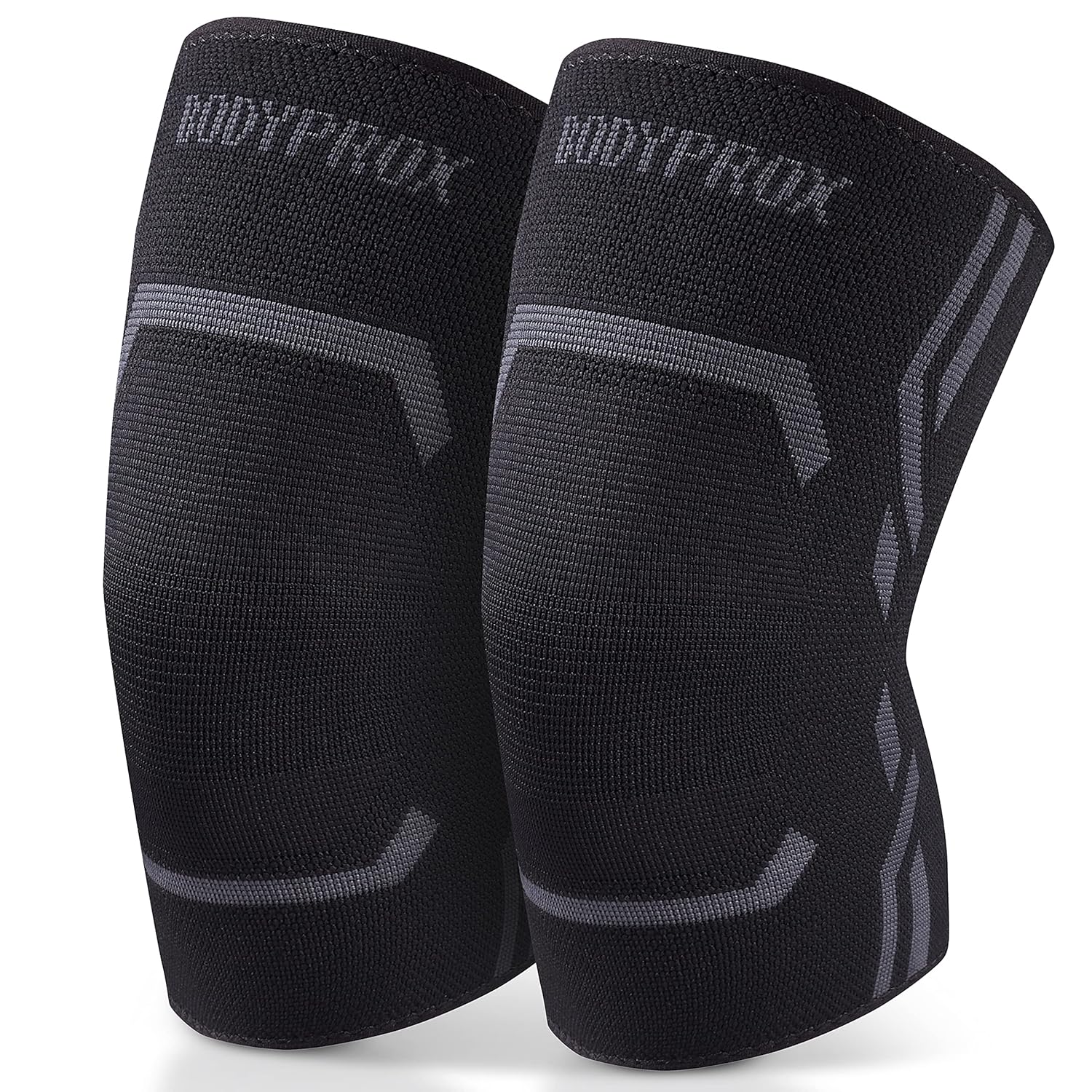
The Bodyprox is the best-selling compression sleeve on Amazon ES for running and it makes sense: at €14 for a 2-pack (€7 per unit) it delivers a level of quality that makes buying just one hard to justify. The nylon and spandex fabric is more breathable than neoprene, which makes it right for summer and long runs. The silicone non-slip on both edges stops it sliding down on most legs.
The compression is firm but not excessive, aimed at general support and better proprioception (the brain "senses" the position of the knee better, which can reduce the risk of a bad landing). For IT band pain, diffuse pain or prevention, it is the most price-efficient option in the selection. For serious joint injuries, it falls short.
Pros
- 2-pack at €14: best price per unit
- Very breathable (nylon, not neoprene)
- Silicone non-slip on the edges
- Light: you barely notice it while running
Cons
- No side stabilisers
- Not suitable for severe chondromalacia or instability
- Softer compression than hinged braces
Who it is for: the runner with mild to moderate pain or IT band pain looking for general compression support. Also for runners who want prevention during hard training without spending much.
View on AmazonNativoDex Non-Slip Compression Sleeve — ~€10
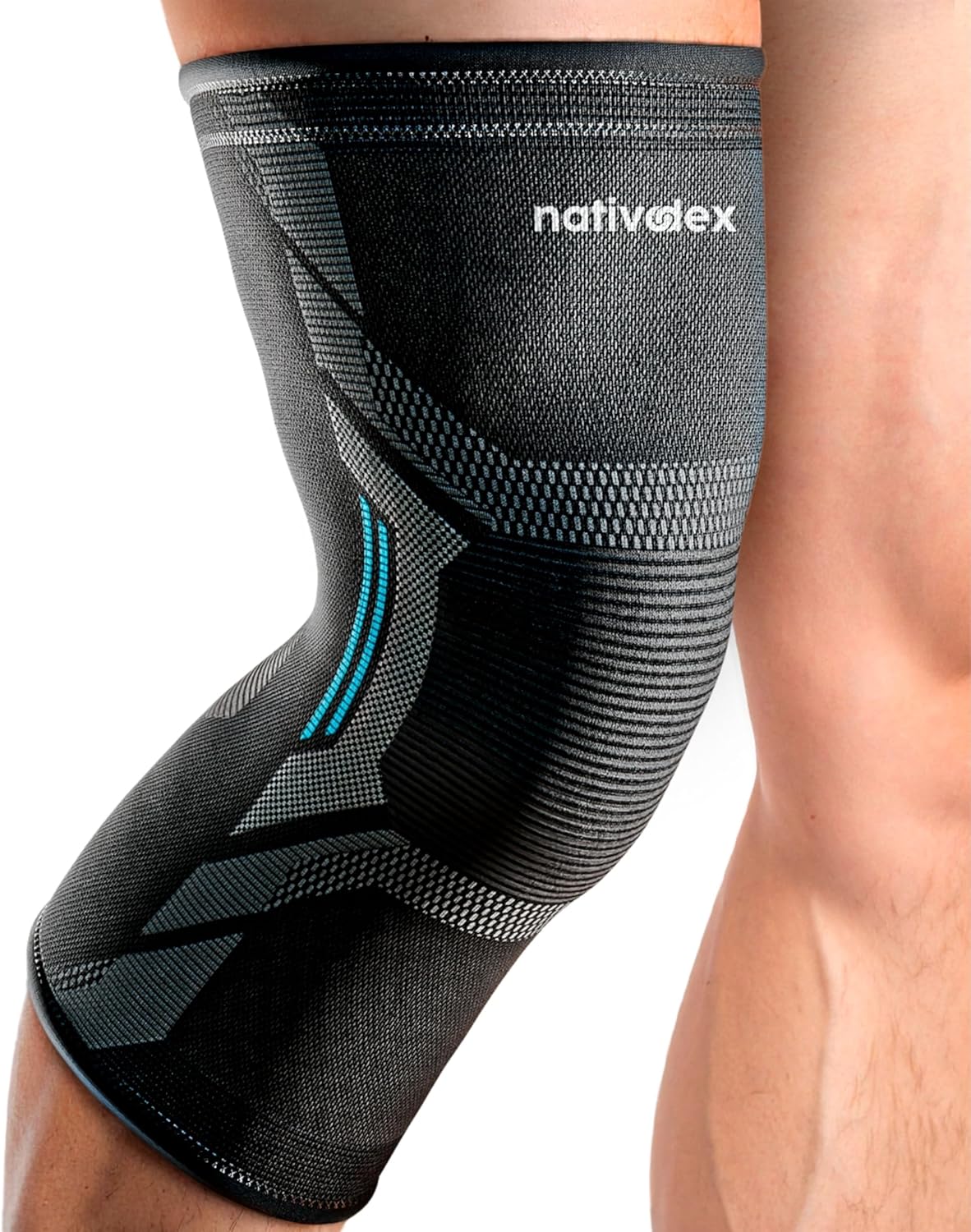
The NativoDex is the cheapest option in this comparison and the one that asks for the least commitment: €10 for a discreet, light compression sleeve. The knitted fabric is thinner than neoprene, which makes it especially comfortable in summer and in sports where you wear tights or close-fitting kit. The inner grip prevents the sliding that is standard on cheap sleeves.
It is the option for anyone who wants to test whether a compression sleeve helps before investing in something more sophisticated, or for anyone with mild pain that does not need stabilisers. Honestly: for runners with active injuries there are better options on this list. For preventive use or the occasional niggle, it does the job.
Pros
- Cheapest in the selection
- Knitted fabric: very breathable
- Discreet under running tights
- Good for testing without committing budget
Cons
- No stabilisers and no padding
- A single unit
- Minimal compression: prevention or mild niggles only
Who it is for: the runner with a mild niggle or who wants to wear preventive compression. Not recommended for an active injury.
View on AmazonFEVAN Compression Sleeve 2-Pack — ~€10
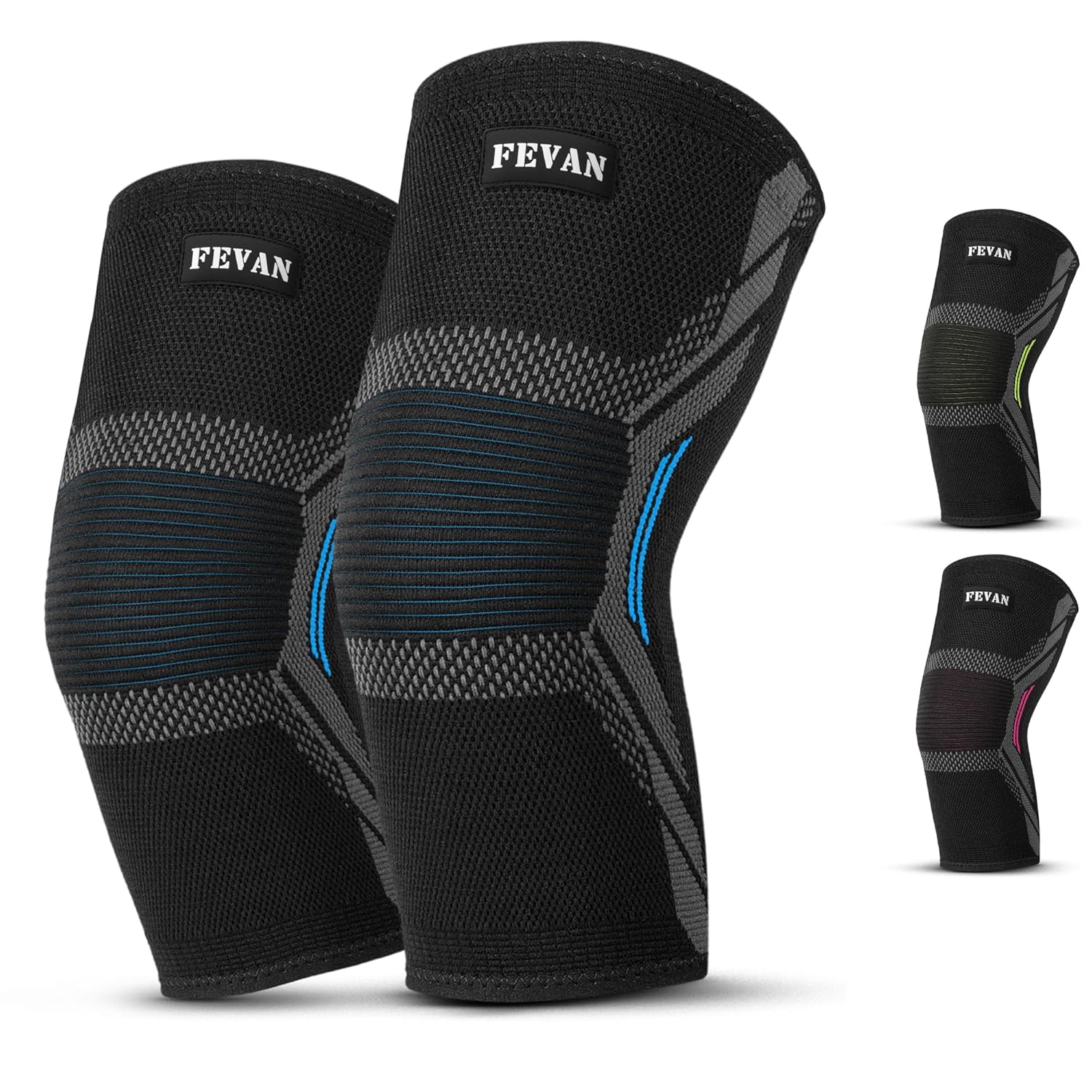
The FEVAN competes head-on with the Bodyprox in the 2-pack sleeve segment. At €10 for the pack (€5 per unit) it is the cheapest option per unit in the whole selection. The technical nylon fabric with the blue detailing in the main photo looks more athletic than a generic sleeve, with zoned compression (stronger on the sides, softer behind the knee).
Where the FEVAN beats the Bodyprox is in the design around the kneecap: there is a fabric reinforcement that helps centre the patella passively. Where the Bodyprox wins is reputation and number of reviews. For mild niggles and prevention, the two perform similarly.
Pros
- 2-pack at €10: unbeatable price
- Reinforcement around the kneecap
- Zoned compression
- 3 colours available
Cons
- No side stabilisers
- Fewer reviews than Bodyprox (less feedback)
- Not suitable for serious joint injuries
Who it is for: the runner who wants two compression sleeves at minimum cost, to use on both knees or to keep a spare in a trail pack pocket.
View on AmazonAGPTEK Patellar Strap 2-Pack — ~€17
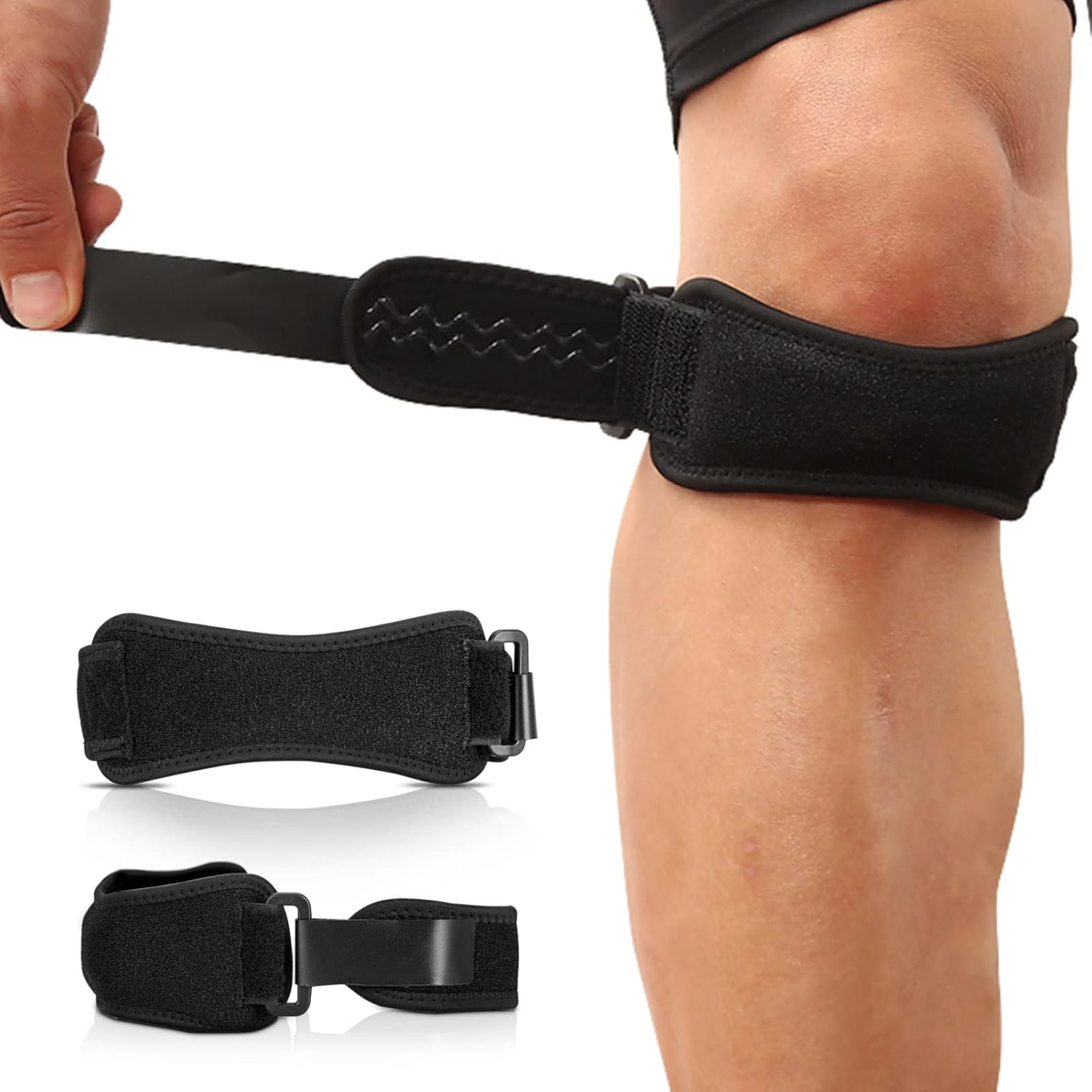
The AGPTEK stands apart from other patellar straps thanks to its metal buckle closure (visible in the photo) on top of the velcro. That makes it more stable under working pressure: velcro can give way when the fabric is damp with sweat, a buckle does not. The central padded insert spreads the pressure over the tendon more gently than a flat strap.
The combination of neoprene (the body of the strap, which keeps the area warm) and nylon (the outer adjustment strap, which does not irritate the skin) is more comfortable on long runs. A 2-pack at €17 makes the per-unit price reasonable. A direct alternative to the CAMBIVO strap if you want a metal buckle closure.
Pros
- Metal buckle: safer than velcro alone
- Soft central padding over the tendon
- 2-pack at a reasonable price
- Neoprene+nylon mix: comfortable on long runs
Cons
- Slightly pricier than the CAMBIVO strap
- The buckle can be uncomfortable with a lot of contact against clothing
- Patellar tendinitis only
Who it is for: the runner with patellar tendinitis who prefers a buckle closure over pure velcro, or who has had trouble with other straps sliding once they sweat.
View on AmazonZamst RK-1 Plus Sports Knee Brace — ~€73
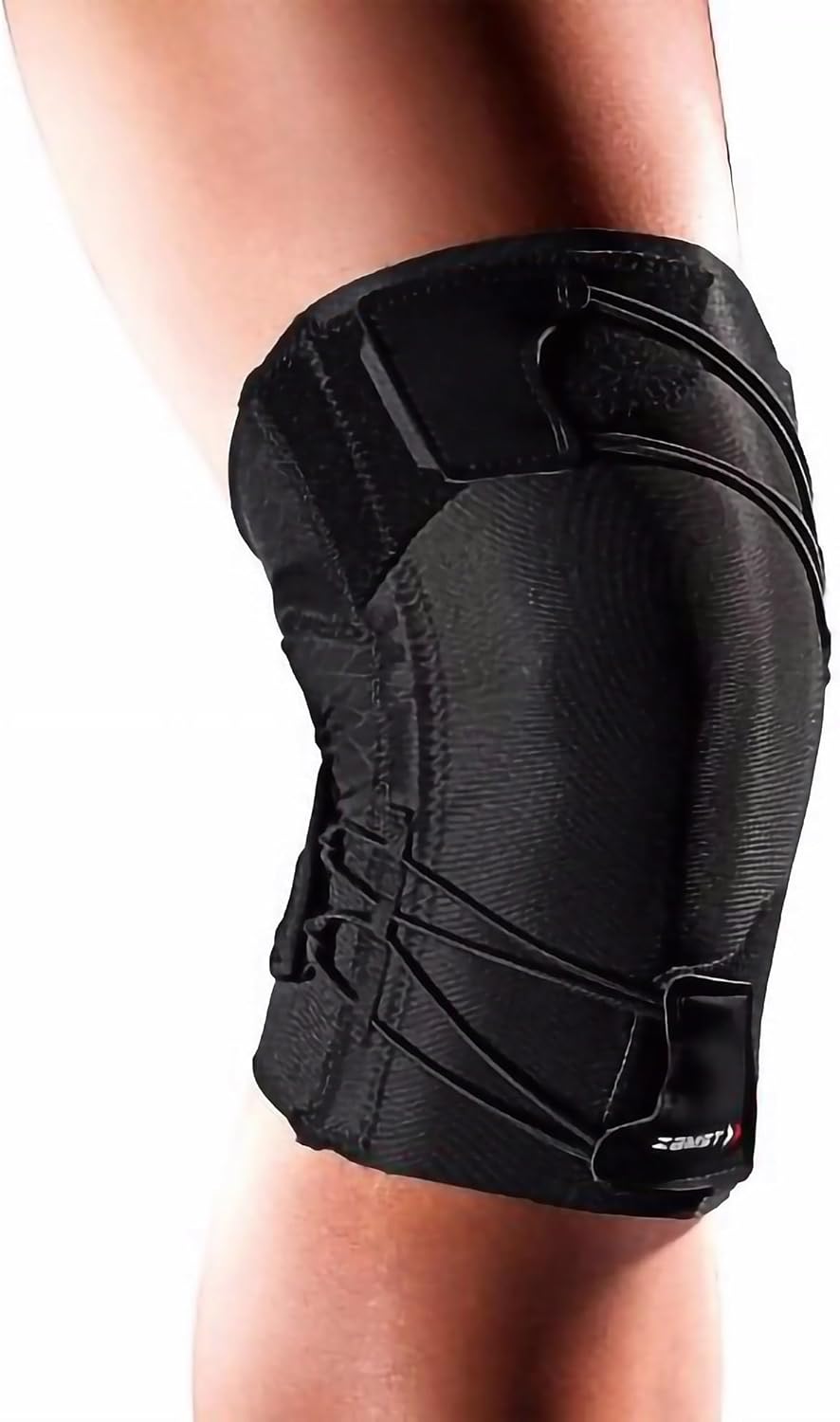
Zamst is a Japanese sports orthopaedics brand used on the ATP tennis tour, in the NBA and in elite athletics. That is not marketing: sports physiotherapists know Zamst and prescribe it. The RK-1 Plus uses a dual X-strap system around the kneecap that stabilises patellar tracking more precisely than any generic €25-30 hinged brace.
At €73 it is the most expensive in this selection and the only one I would not buy without first comparing it against what your physiotherapist tells you. If you have a diagnosed injury that requires a hinged brace to keep training, the Zamst RK-1 Plus is what physios recommend. If you only have mild pain or want prevention, there are more than enough options at a fraction of the price on this same list.
Pros
- Benchmark brand in professional sports orthopaedics
- X-Strap system: precise patellar stabilisation
- Material quality far above the generics
- Recommended by sports physiotherapists
Cons
- The most expensive in the selection (€73)
- Overkill for mild pain or prevention
- Buying it without a physio consultation can be money badly spent
Who it is for: the runner with a diagnosed injury (severe chondromalacia, patellofemoral instability, ligament injury in active recovery) who is following a physiotherapy protocol. If your physio recommends a quality hinged brace, this is the pick.
View on AmazonComparison table
| Knee support | Type | Price | What for | Pack |
|---|---|---|---|---|
| CAMBIVO Sleeve+Gel | Hinged | ~€25 | Chondromalacia, diffuse pain | 1 unit |
| ABYON ELITE | Hinged | ~€29 | Instability, chondromalacia | 1 unit |
| CAMBIVO Strap | Patellar strap | ~€16 | Patellar tendinitis | 2 units |
| bonmedico | Patellar strap | ~€12 | Tendinitis, race day | 1 unit |
| Bodyprox | Compression sleeve | ~€14 | IT band, prevention | 2 units |
| NativoDex | Compression sleeve | ~€10 | Mild niggle, prevention | 1 unit |
| FEVAN | Compression sleeve | ~€10 | Prevention, IT band | 2 units |
| AGPTEK | Patellar strap | ~€17 | Patellar tendinitis | 2 units |
| Zamst RK-1 Plus | Professional hinged | ~€73 | Serious injury, physio-led | 1 unit |
Which one to choose for your problem
Patellar tendinitis (pain below the kneecap running downhill)
You need a patellar strap. The options: CAMBIVO Strap (2-pack, more padded) or bonmedico (more discreet, better for racing). The strap has to sit just below the kneecap, not over it. If you also have swelling in the knee, add a compression sleeve over the strap.
IT band syndrome (pain on the outer side of the knee)
A compression sleeve. The even pressure it applies reduces the friction of the IT band as it passes over the lateral femoral condyle. Options: Bodyprox 2-Pack or FEVAN 2-Pack. Pair it with IT band stretching (foam roller on the outside of the thigh) and a temporary cut in mileage.
Patellar chondromalacia (diffuse pain under the kneecap, worse on stairs)
A support with a gel ring, or a hinged brace that centres the kneecap. First option: CAMBIVO with Gel. If the chondromalacia is severe or you have instability: ABYON ELITE or Zamst RK-1 (if your physio recommends it).
Prevention during hard training (no active injury)
A light compression sleeve. The most efficient option: FEVAN 2-Pack at €10 or Bodyprox 2-Pack at €14. There is no need for a hinged brace for prevention if you do not have ligament instability.
Return to training after a meniscus or ligament injury
Always under a physio's supervision. If the physio clears you to run with a support: ABYON ELITE or Zamst RK-1 Plus. Do not run with a meniscus or ligament injury without a medical diagnosis and clearance to go back to exercise.
On the subject of the runner's full kit, if you want to look at what else feeds into knee pain from the ground up, take a look at our guide on how to choose running shoes and our pick of the best running shoes. For post-injury recovery, the best recovery drinks for runners guide can round out the protocol. And to understand what is actually behind the pain before you buy anything, our guide to runner's knee is the place to start.
Gear is one part of the equation. Smart training, gradual load progression and rest are the others. If you want a training plan matched to your level and your target races, the CorrerJuntos app includes plans with a built-in coach that adjust the volume when you flag a niggle.
Train with a plan that respects your knees
CorrerJuntos plans include gradual mileage progression, recovery days and complementary strength sessions. Coach José guides you through every session.
Download CorrerJuntos freeAvailable on iOS and Android · Free 0→5K plan
Frequently asked questions
What kind of knee support do I need to run with knee pain?
It depends on the problem. Patellar tendinitis (pain below the kneecap when running downhill): a patellar strap such as the CAMBIVO or the bonmedico. IT band syndrome (pain on the outer side of the knee): a compression sleeve. Chondromalacia or diffuse pain: a sleeve with a gel ring, or a hinged brace. If you do not know what you have, see a physiotherapist before buying.
Can I keep running with a knee support on?
If the pain is mild (1-3/10), running with a support while you treat the cause with a physio is reasonable. If the pain is moderate to severe (4+/10) or gets worse during the run, stop and see a doctor. A knee support is not a substitute for a diagnosis.
What is the difference between a compression sleeve and a patellar strap?
The sleeve wraps the whole knee with even pressure (useful for IT band pain and diffuse pain). The strap is a narrow band that applies targeted pressure below the kneecap (specific to patellar tendinitis). They are different products for different problems.
How do I know what size to buy?
Measure the circumference of your knee at kneecap height. The usual pattern: S = 33-36 cm, M = 36-40 cm, L = 40-44 cm, XL = 44-48 cm. If you fall between sizes, size up for sleeves (more comfort) and size down for straps (more pressure). Check each brand's own size chart.
How long can I wear a knee support while running?
Compression sleeves: the whole run, even 2-3 hours. Patellar straps: take them off when you finish, because constant pressure can irritate the skin. Neoprene hinged braces: they trap heat, so in summer and on long runs they can get uncomfortable. If the pain increases during the run with the support on, stop.
Is it worth paying more for a brand like Zamst?
It depends. The €10-15 products (Bodyprox, NativoDex, FEVAN) work perfectly well for mild pain or as prevention for runners with no active injury. If you have an injury diagnosed by a physio and you are going to wear the support on every run for months, the difference in material quality, durability and fit precision of a Zamst (€73) or a NEENCA (€50) is noticeable. Zamst in particular is a brand used by sports physiotherapists. If the pain is serious and the support is part of your treatment, spending €30-70 makes sense. If it is just occasional prevention, a €10-25 model is enough.
Can a knee support make my injury worse?
Yes, if you use it badly. A sleeve that is too tight restricts circulation. A strap in the wrong position does not help and can add pressure where it should not. Using a support to mask pain that should be making you stop can aggravate the underlying injury. A knee support is temporary help, not a definitive treatment.