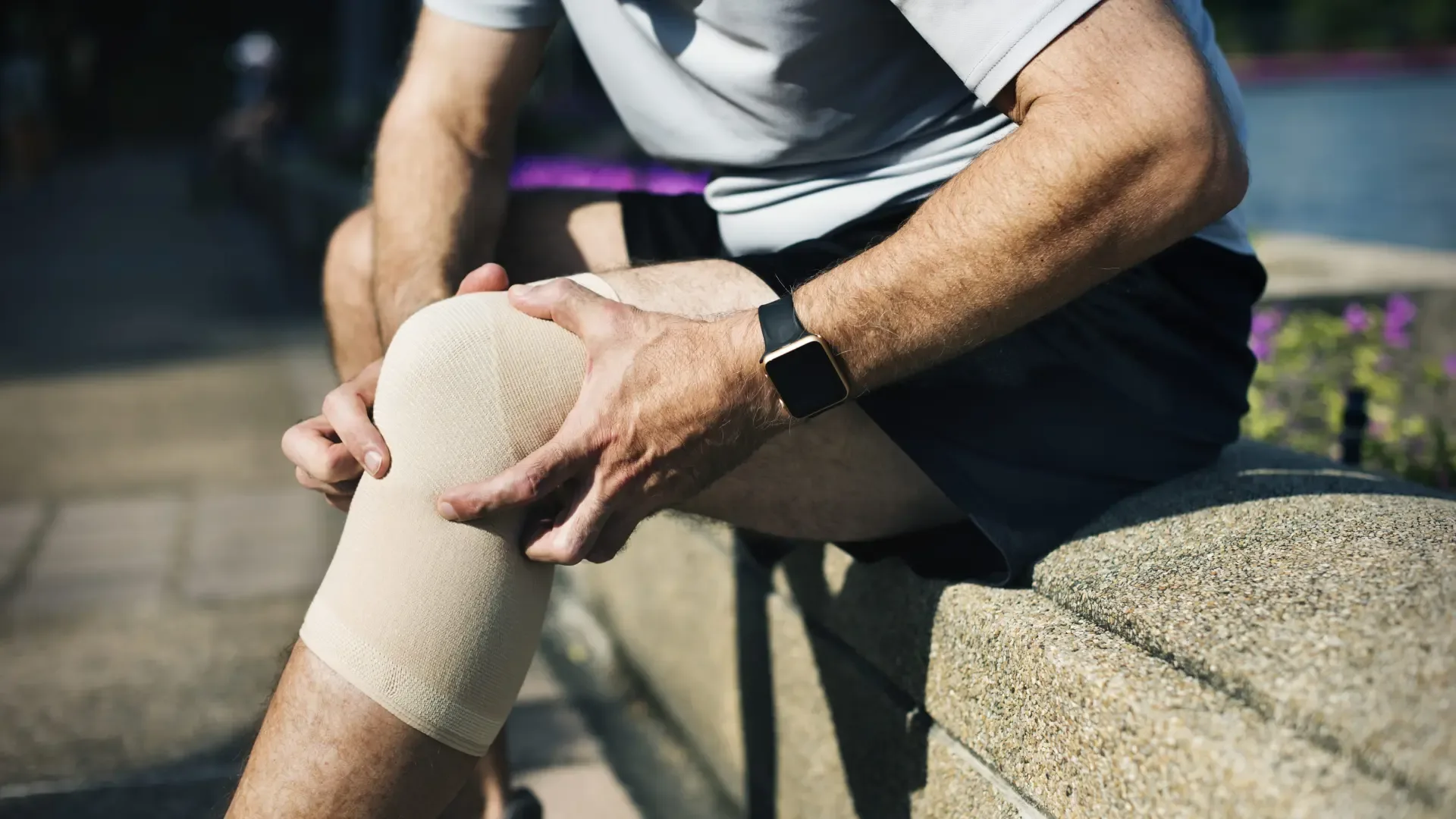
Few things frustrate a runner more than an injury. Weeks or months without being able to do what you love, watching your fitness fade away while others keep logging kilometres. The temptation to come back too early is enormous, and it is precisely that impulse that causes the majority of relapses.
The truth is that returning to running after an injury demands just as much discipline as the hardest workout you have ever done. It is not about picking up where you left off. It is about rebuilding your foundation intelligently, respecting the biological timelines of tissue healing and strengthening the structures that failed in the first place. If you do it right, you will not just come back. You will come back stronger and with a significantly lower risk of getting hurt again.
In this guide we cover when it is truly safe to start, the most common injuries and their recovery timelines, a progressive week-by-week plan, the essential strengthening exercises and the mistakes you must avoid at all costs. If you are coming back after a long break and noticing muscle soreness, you might also find our guide on sore muscles after running helpful.
1. When is it safe to run again?
The most common question in any sports physiotherapy clinic is: when can I run again? The answer is never a fixed date on the calendar. Instead, it is a set of functional criteria your body must meet before it can handle the repetitive impact of running. Every stride generates forces between two and three times your body weight, which means your tissues need to be prepared to absorb thousands of impacts per session. Rushing this process is the single fastest path to a setback.
Medical clearance
The first step, and one that is non-negotiable, is getting the green light from a healthcare professional. This is especially critical for stress fractures, muscle tears, ligament injuries and any surgical intervention. A sports medicine doctor can evaluate through imaging (X-ray, ultrasound, MRI) whether the tissue has healed enough to tolerate load. Do not self-diagnose. Many injuries look healed on the outside when internally the repair process is still ongoing. A premature return based on guesswork rather than clinical evidence is one of the most common reasons runners end up injured a second time.
Pain-free walking test (30 minutes)
Before you jog a single step, you should be able to walk briskly for 30 continuous minutes without pain, limping or post-exercise swelling. If walking causes discomfort, your body is not ready for the impact of running. This test is simple but remarkably reliable: walking generates roughly half the ground reaction force of running, so if you cannot clear this threshold, running will multiply the problem. Perform this test on several consecutive days. A single pain-free walk is not enough. You need consistency over at least a full week before moving on.
Single-leg balance test
Running is essentially a series of single-leg hops. If you cannot maintain your balance on the injured leg for at least 30 seconds with your eyes open (and 15 seconds with your eyes closed), your joint stability and proprioception have not recovered sufficiently. Perform the test barefoot on a firm surface. Compare the injured leg with the healthy one: if there is a noticeable difference, you need more proprioception work before you run. Exercises such as single-leg stands on an unstable surface, wobble board drills and single-leg mini squats can help close this gap.
Full range of motion
The affected joint must have a range of motion equal to, or very close to, that of the healthy joint. A knee that does not flex fully, an ankle that lacks dorsiflexion or a hip with restricted movement will force your body to compensate with other structures, creating new problems elsewhere in the kinetic chain. Assess both active range of motion (you move the joint yourself) and passive range of motion (someone else moves it for you). Both should be symmetrical. If they are not, targeted stretching and mobilisation work should be your priority before reintroducing running.
Muscle soreness vs. injury pain
Learning to distinguish between these two types of pain is fundamental for a safe return. Muscle soreness (DOMS) is diffuse, bilateral, appears 24 to 48 hours after exercise and diminishes as you warm up. Injury pain is localised, unilateral, can appear during the activity itself, worsens under load and is often accompanied by swelling. If during your comeback you feel pain that matches the second description, stop immediately and reassess. This distinction sounds straightforward in theory but becomes surprisingly difficult when you are eager to get back out there. When in doubt, always err on the side of caution.

2. Most common running injuries
Understanding the most frequent running injuries, their causes and their recovery timelines will help you set realistic expectations. Every injury follows its own biological healing schedule, and that timeline cannot be accelerated no matter how much you want it to. Trying to cut the process short is the number one cause of relapse, and it often turns a manageable acute injury into a chronic condition that haunts you for months or even years.
Runner's knee (patellofemoral syndrome)
Pain at the front of the knee, around or behind the kneecap, that worsens when climbing or descending stairs, sitting for long periods or running downhill. It is usually caused by quadriceps weakness (particularly the vastus medialis), hip imbalances or an excessive jump in training volume. Typical recovery requires 4 to 8 weeks of active rehabilitation before returning to running, combining quadriceps strengthening, glute activation and proprioception work. Many runners overlook the hip connection, but weak gluteal muscles are often the root cause rather than the knee itself.
Iliotibial band syndrome (ITBS)
Pain on the outer side of the knee that appears at the same point in every run (same kilometre mark, same duration). It is a friction injury of the iliotibial band over the lateral femoral condyle, common in runners who increase volume too quickly or run extensively on cambered surfaces. Recovery takes 3 to 6 weeks with myofascial release, hip abductor strengthening and cadence correction. Foam rolling the IT band area can provide temporary relief, but the lasting fix is almost always strengthening the hip muscles that control pelvic stability.
Shin splints (medial tibial stress syndrome)
Pain along the inner edge of the tibia, especially in the lower third. Extremely common in beginner runners or in those who ramp up mileage too aggressively. Shin splints represent inflammation of the periosteum (the membrane covering the bone) and, if left untreated, can progress to a stress fracture. Recovery typically takes 2 to 6 weeks of relative rest, followed by a gradual return with posterior tibialis and calf strengthening. If you find that your endurance has dropped significantly when you come back, our guide on how to build running endurance can help you rebuild it systematically.
Plantar fasciitis
Sharp, stabbing pain in the heel or sole of the foot, particularly intense with the first steps in the morning. The plantar fascia is a band of connective tissue that supports the arch of the foot, and its inflammation is one of the most persistent injuries in running. Recovery takes 6 to 12 weeks, sometimes longer. It requires specific fascia stretching, intrinsic foot strengthening, frozen bottle massage and, in many cases, a review of your footwear. Runners with low arches and those who spend long hours standing during the day are at higher risk.
Achilles tendinopathy
Pain and stiffness in the Achilles tendon, especially at the start of a run or the day after training. Tendons recover more slowly than muscles because they have a significantly lower blood supply. Rehabilitation is based on eccentric exercises (the Alfredson protocol) that stimulate collagen regeneration within the tendon. Recovery takes a minimum of 8 to 12 weeks with carefully controlled progressive loading. The Alfredson protocol calls for heel drops performed from the edge of a step: 3 sets of 15 repetitions, twice daily, for at least 12 weeks. Patience is non-negotiable with this one.
Stress fracture
The most serious injury on this list. A micro-fracture in the bone caused by repetitive loading that exceeds the bone's remodelling capacity. Most frequently seen in the metatarsals, tibia and fibula. It requires complete rest from impact for 6 to 8 weeks (confirmed by imaging), followed by an extremely gradual return of at least 6 additional weeks. Risk factors include calcium and vitamin D deficiency, low energy availability (undereating relative to training load), sudden spikes in mileage and worn-out running shoes.
| Injury | Location | Typical recovery | Rehabilitation focus |
|---|---|---|---|
| Runner's knee | Front of knee | 4–8 weeks | Strengthen quads and glutes |
| ITBS | Outer knee | 3–6 weeks | Hip abductors, foam rolling |
| Shin splints | Inner tibia | 2–6 weeks | Reduce volume, strengthen calves |
| Plantar fasciitis | Sole of foot | 6–12 weeks | Stretching, intrinsic foot work |
| Achilles tendinopathy | Achilles tendon | 8–12 weeks | Eccentrics (Alfredson protocol) |
| Stress fracture | Tibia / metatarsal | 12–16 weeks | Complete rest + very gradual return |
Free Plan: couch to 5K plan in 8 Weeks
Week by week, rest days included. Perfect for coming back after an injury.
Download free plan3. Progressive return-to-running plan (6 weeks)
This plan is designed for runners who have passed the safety criteria from section 1 and have medical clearance to resume impact activity. The progression follows the principle of gradual loading: each week adds a slightly greater stimulus than the previous one, giving your tissues time to adapt. Intensity is controlled using RPE (rate of perceived exertion on a 1 to 10 scale), not pace. Forget about your min/km or min/mile splits during these 6 weeks. Your GPS running watch guide and Strava will survive.
Week 1: Walking only
Walk for 30 minutes a day for 4 to 5 days, alternating between flat terrain and gentle inclines. The purpose is to confirm that your body tolerates the load without an inflammatory reaction. Include the strengthening exercises from section 4 on alternate days. If pain or swelling appears, step back and consult your physiotherapist. Do not rush past this week even if you feel fine. This stage establishes the baseline from which everything else builds. RPE target: 2 to 3 out of 10.
Week 2: Walk-jog 4:1
Alternate 4 minutes of walking with 1 minute of very easy jogging, for a total of 25 to 30 minutes. Complete 3 sessions this week with at least one rest day between each. The jog should feel ridiculously slow. If you can hold a full conversation without any breathlessness, you are on track. If you cannot, slow down even further. Pay close attention to how your body responds in the 24 hours after each session. Any lingering pain or swelling is a sign to remain at this level for an additional week. RPE target: 3 to 4 out of 10.
Week 3: Walk-jog 2:1
Move to intervals of 2 minutes walking and 1 minute jogging for 30 minutes, across 3 to 4 sessions during the week. By the end of the week, you can try a 1:1 ratio (1 minute walking, 1 minute jogging) if you have no discomfort. Continue with the strengthening exercises on alternate days. Monitor how your body reacts in the 24 hours following each session. If soreness lingers beyond the normal post-exercise window, hold steady at the current ratio for a few more days before progressing. RPE target: 4 out of 10.
Week 4: Jogging with walking breaks
Jog continuously for 5 minutes, then walk for 1 minute. Repeat for a total of 30 to 35 minutes. Complete 3 to 4 sessions. Your total jogging volume this week sits around 20 to 25 minutes per session. If at any point you feel pain (not to be confused with mild muscular discomfort), drop back to the previous week's format for a few days. This is the week where most runners start feeling confident, and confidence can be dangerous. Stick to the plan. RPE target: 4 to 5 out of 10.
Week 5: Continuous easy running
Run continuously for 20 to 25 minutes at a conversational pace. If you need an occasional brief walking break, that is perfectly fine. Aim for 3 to 4 sessions during the week, without exceeding a 10% increase over the total volume of the previous week. This is a critical moment in the comeback: many runners feel good and want to push the pace. Resist the temptation. Your cardiovascular system recovers faster than your musculoskeletal system, which means your lungs might feel ready for a pace your tendons cannot yet handle. RPE target: 5 out of 10.
Week 6: Normalised training
Run for 25 to 35 continuous minutes across 4 sessions during the week. You can begin introducing slight pace variations (gentle negative splits in the final 5 minutes), but no intervals, hard hill repeats or races just yet. The 10% rule remains in effect: do not increase your weekly volume by more than 10% compared to the previous week. From here, add volume and intensity gradually week by week until you reach your regular training level. If you are wondering whether you can train every single day, we recommend reading our article on whether it is OK to run every day.
Coming back from injury and looking for company?
Find runners near you who match your pace with CorrerJuntos. Free.
Download app
4. Strengthening to prevent re-injury
The vast majority of running injuries are not traumatic (falls, ankle rolls). They are overuse injuries: a tissue that receives more load than it can absorb, repetition after repetition, until it fails. Targeted strengthening increases the load-bearing capacity of muscles, tendons and bones, turning your body into a more impact-resistant structure. This is not optional supplementary work. It is an essential part of your training, and neglecting it is essentially choosing to get injured again.
Eccentric exercises for tendons
Eccentric exercises (where the muscle lengthens under tension) are the gold standard for both rehabilitation and prevention of tendinopathies. The Alfredson protocol for the Achilles tendon consists of controlled heel drops from the edge of a step: 3 sets of 15 repetitions, twice daily, for a minimum of 12 weeks. For the patellar tendon, decline eccentric squats (on a 25-degree decline board) follow the same principle. The critical detail is that the lowering phase must be slow (3 to 4 seconds) and controlled. Speed through the eccentric phase and you lose the therapeutic benefit entirely. These exercises may cause mild discomfort during the first few weeks, but that discomfort should be manageable and should not worsen over successive sessions.
Hip strengthening
Weakness in the hip muscles (gluteus medius, gluteus minimus, external rotators) is a contributing factor in runner's knee, ITBS, shin splints and plantar fasciitis. If the hip does not adequately stabilise the pelvis during running, the knee, tibia and foot absorb abnormal loads that they were never designed to handle. Essential exercises include:
- Clamshells: Lie on your side with knees bent at 90 degrees, open the top knee without allowing the pelvis to roll. 3 sets of 15 per side. Add a resistance band once it becomes easy.
- Glute bridges: Lie on your back with knees bent, raise your hips by squeezing the glutes. 3 sets of 12. Progress to single-leg bridges once you have mastered the bilateral version.
- Single-leg deadlift: Stand on one leg, hinge forward at the hips while keeping your back straight as the free leg extends behind you. 3 sets of 10 per side. Use dumbbells to progress.
- Lateral band walks: With a resistance band around your knees, take lateral steps while maintaining slightly bent knees. 3 sets of 12 steps per direction.
Core stability
A weak core causes the pelvis to oscillate excessively during running, generating compensations that cascade down the kinetic chain. You do not need aesthetic abdominals. You need dynamic stability that transfers directly to the running gait. Front and side planks (30 to 60 seconds), bird-dogs (3 sets of 10 per side), dead bugs (3 sets of 10) and pallof presses are the exercises most transferable to running. Perform this routine 2 to 3 times per week as a complement to your running days. These sessions do not need to be long. Fifteen to twenty minutes of focused work is enough to make a meaningful difference.
Ankle mobility
Limited ankle dorsiflexion is a risk factor for plantar fasciitis, Achilles tendinopathy and shin splints. A simple test: stand facing a wall and try to touch the wall with your knee while keeping your heel on the ground. If you cannot do this with your toes more than 10 centimetres from the wall, you need to work on mobility. Banded ankle mobilisations, calf stretches on a step and ankle circles should be part of your daily routine. This is one of those areas where a few minutes of consistent daily practice yields far greater results than occasional lengthy sessions.
Foam rolling protocol
The foam roller does not cure injuries, but it is a useful tool for maintaining muscle and fascial tissue quality. Spend 5 to 10 minutes after each session rolling your quadriceps, hamstrings, calves, glutes and the iliotibial band area. Sustain pressure on tender spots for 20 to 30 seconds before moving on. Do not roll directly over joints or areas with acute pain. Foam rolling works best as a daily habit rather than something you only remember when something already hurts. Consistency matters more than intensity here.

5. Mistakes that delay your recovery
After treating thousands of injured runners, sports physiotherapists identify the same mistakes again and again. Avoiding them can save you weeks or months of frustration and prevent a one-off injury from becoming a chronic problem that fundamentally changes your relationship with running.
Coming back too soon
This is the number one mistake by a significant margin. As soon as the pain disappears, many runners assume they are healed. But the absence of pain does not mean the tissue has fully recovered its structural integrity. Tendons need weeks of progressive loading to regain their original resilience. Bones need months to remodel their damaged microarchitecture. Returning too early subjects fragile tissue to high loads, which almost guarantees a relapse. Respect the timelines even if you feel great. Feeling good is not the same as being ready.
Ignoring pain signals
Pain is information, not an obstacle to overcome with willpower. A pain that appears at the same point in every run, that increases during the session or that forces you to alter your running form is a clear signal that something is wrong. The runner's mindset (endure, push through, never quit) is a virtue in competition but can be genuinely destructive during rehabilitation. Listening to pain early prevents much longer forced breaks later. Think of it this way: a two-day pause now is always better than a two-month setback because you kept pushing.
Skipping rehabilitation exercises
Many runners faithfully perform strengthening exercises during the first weeks and abandon them as soon as they can run again. This is a serious mistake. Rehabilitation exercises should be maintained for at least 12 weeks after resuming running, and general prevention exercises should become a permanent part of your routine. If the injury occurred because of muscular weakness, stopping your strengthening work the moment you how to start running again is recreating the exact conditions that injured you in the first place. The exercises that got you back to running are the same ones that will keep you running.
Not addressing the root cause
An injury always has a cause (or several): excessive volume, inappropriate shoes, muscular weakness, mobility deficits, poor running mechanics, training surface or nutritional deficiency. If you treat the symptom (the pain) but not the cause, the injury will return. A good sports physiotherapist does not just treat the damaged structure. They identify and correct the factors that led to the injury. Ask your therapist to explain what went wrong and what specific changes you need to make. This understanding is as valuable as the hands-on treatment itself.
Chasing your pre-injury pace
Trying to run at the pace you held before the injury from day one is a recipe for disaster. Your cardiovascular system loses fitness faster than your musculoskeletal tissues recover it. This means your heart and lungs may feel ready for a pace that your tendons, bones and muscles cannot yet tolerate. The result is tissue overload and a high probability of re-injury. Guide your effort by RPE (perceived exertion), not by your GPS watch. Your previous form will return. Give it time. The runners who come back strongest are the ones who had the patience to hold back in the early weeks.
Running with active inflammation
If a joint or tendon is inflamed (swollen, warm, red), running does not help. It makes things worse. Inflammation is a repair process that needs time and the right conditions to resolve. Running on inflamed tissue prolongs the inflammatory phase, delays healing and can convert an acute injury into a chronic one. Wait until the inflammation has completely subsided before reintroducing load. If you are unsure whether what you are experiencing is normal post-exercise response or genuine inflammation, apply the rule of two: if swelling or warmth persists for more than two hours after rest, treat it as inflammation and consult your physiotherapist.
Frequently asked questions
Can I run with mild pain?
It depends on the type of pain. Mild muscle soreness (DOMS) that fades during the first few minutes of running is generally acceptable. However, any joint pain, pain that worsens while running, sharp or stabbing pain, or pain localised to bone is a warning sign that should stop you immediately. The general rule is: if the pain changes your running form (limping, involuntarily shortening your stride, shifting weight to one side), you must stop. Consult a sports physiotherapist before continuing.
How long does it take to regain my previous fitness level?
As a general reference, it takes roughly twice the duration of your time off to regain your previous level. If you spent 4 weeks without running, you will need about 8 weeks to return to your previous form. For breaks of 3 months or longer, recovery can take 4 to 6 months. The good news is that your body has muscular and cardiovascular memory: you will regain fitness faster than the first time you reached that level. The key is patience and consistency, not intensity.
Should I use a knee brace or ankle support when returning to running?
Knee braces and ankle supports can provide a feeling of security, but they should not replace active rehabilitation. If you need an external support to run without pain, you are probably not ready to come back yet. Elastic compression supports can help reduce residual swelling during the first weeks of your return, but the goal should be to strengthen the area until you no longer need any support. Consult your physiotherapist about whether using a support is appropriate for your specific situation.
Come back to running. Come back with company.
Find runners near you who match your pace and rediscover the joy of running. Free.
Join 1,100+ runners
Recovery tips in your inbox
Plans, strengthening routines, injury prevention and gear. No spam.