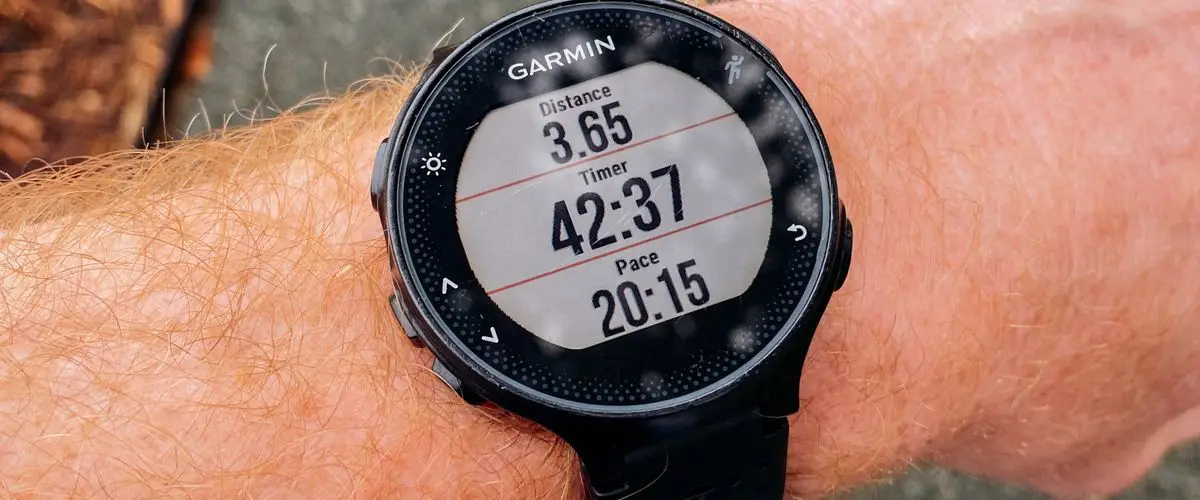
The Big Question: Smartwatch or Sports Watch?
If you are shopping for a watch to accompany your runs, you have probably fallen into the trap of comparing two worlds that, while they look similar on the outside, are built on completely different philosophies. On one hand you have general-purpose smartwatches like the Apple Watch or Samsung Galaxy Watch -- devices designed to be the hub of your digital life that also happen to include sports features. On the other hand, dedicated GPS sports watches like the Garmin Forerunner, COROS PACE or Polar Pacer -- tools built from the ground up to measure, analyse and improve your performance as a runner (World Athletics).
The confusion is understandable. In 2026, both categories have converged significantly in terms of specs. Smartwatches have improved their sports sensors and running metrics. GPS sports watches have added AMOLED displays, notifications and smartwatch features. The line between them is increasingly blurred, and that makes the buying decision harder for a runner who simply wants a good watch to train with (ACSM).
But the differences remain real and significant. It is not about which is objectively better, but about which one fits your running habits, your goals and the way you use a watch outside of running. A casual runner who heads out three times a week and wants WhatsApp on the wrist has very different needs from a marathoner chasing a sub-3:30 who needs to analyse weekly training load.
In this guide we will dissect both categories honestly. No brand favouritism, no unnecessary jargon, and concrete recommendations by runner profile. If you want a broader view of the GPS watch market, check out our GPS running watches section with all models and updated prices. And if you already know you want a sports watch but aren't sure which model, our guide on how to choose a GPS running watch will help you decide.
What Is a Smartwatch and What Is a GPS Sports Watch
Before comparing, it is worth defining clearly what belongs to each category, because some models sit in an interesting grey area.
General-purpose smartwatch
A smartwatch is a computer on your wrist. Its primary purpose is to extend your smartphone's functionality: receiving notifications, replying to messages, making calls, handling NFC payments, installing third-party apps and monitoring your overall health. The two best-known representatives are the Apple Watch (iPhone only) and the Samsung Galaxy Watch (works with Android and, with limitations, iPhone). Both include GPS and sports sensors, but sport is just one feature within a much broader ecosystem. Their full operating systems (watchOS and Wear OS respectively) let you install all kinds of apps, from Spotify to Uber to smart-home controllers (WHO).
GPS sports watch
A GPS sports watch is designed from the hardware to the software with one primary goal: measuring and analysing your athletic performance with the greatest possible accuracy. Brands like Garmin (Forerunner, Fenix, Enduro), COROS (PACE, APEX, VERTIX) and Polar (Pacer, Vantage, Grit X) dominate this category. Their GPS tends to be more accurate, their battery lasts significantly longer, their training metrics are deeper, and their ergonomics are designed to work with sweat, rain and movement. In return, their smartwatch features are more limited: you receive notifications but can't reply fluidly, there is no large app store, and the user interface is sport-oriented.
The hybrid zone: Garmin Venu
There is an in-between category that deserves special mention. The Garmin Venu 3 is the best example: a watch with a bright AMOLED display, elegant everyday design, smartwatch features like Bluetooth calls, voice assistant and message replies, yet with the full Garmin Connect ecosystem of training metrics, 14-day battery life and multi-band GPS. It is the most successful attempt at combining the best of both worlds in a single device. It is not as powerful a smartwatch as the Apple Watch, nor as running-focused as a Forerunner, but it comes close to both ends of the spectrum.
To browse all models with detailed specs, visit our GPS running watches section.
Smartwatch Advantages for Running
Smartwatches are not bad for running. In fact, for certain runner profiles they are the best option. Here are their real advantages and why millions of people run perfectly well with an Apple Watch or Galaxy Watch.
Find your running with a group
1,100+ runners already train together. Free on iOS.
- Full, interactive notifications: You can read and reply to WhatsApp, Telegram, email and any app directly from the wrist. You don't just see a preview -- you can dictate a reply, use preset quick responses or even type on a mini keyboard. For anyone who needs to stay reachable during runs, this is a huge advantage.
- Music and podcasts without your phone: Both the Apple Watch and Galaxy Watch let you store offline music from Spotify, Apple Music, YouTube Music and other services. Pair Bluetooth headphones, head out without your phone and enjoy your full music library on the wrist. Higher-end Garmin watches also offer this, but smartwatches support more services and playlist management feels smoother.
- Contactless payments: Apple Pay and Samsung Pay work in virtually every shop. Finish your run, walk into a cafe, tap your wrist and pay. No wallet, no phone. Garmin Pay also exists but has fewer compatible banks in many regions.
- Everyday design: Smartwatches are designed to be stylish. You can wear an Apple Watch to a business meeting, a dinner or any social event without it looking out of place. Many GPS sports watches, with their polymer cases and technical appearance, are less versatile aesthetically. If you want one watch for everything, a smartwatch blends better into life off the road.
- App ecosystem: The Apple Watch App Store and Wear OS Play Store offer thousands of apps. From native Strava to meditation apps, smart-home controls, Google Maps or action-camera controllers. GPS sports watches have a much more limited app catalogue, generally restricted to watch faces and data widgets.
- Advanced health features: The Apple Watch includes a regulator-approved ECG, atrial fibrillation detection, blood oxygen measurement, menstrual cycle tracking and fall detection with automatic emergency calling. These health features go beyond sport and can be decisive for people with specific medical conditions.
- Total phone integration: If you have an iPhone, the Apple Watch becomes a natural extension of your phone. You can unlock your Mac with the watch, ping your iPhone to find it, control the phone's camera, use the watch as a presentation remote and much more. This synergy has no equivalent in GPS sports watches.
GPS Sports Watch Advantages
If running is your main sport and you want to get the most out of every workout, GPS sports watches offer advantages that smartwatches simply cannot match. This is where Garmin, COROS and Polar justify their existence.
- Battery that lasts weeks, not hours: This is the most impactful difference in day-to-day use. A COROS PACE 3 lasts 24 days in smartwatch mode and 38 hours with active GPS. A Garmin Forerunner 265 offers 13 days and 24 hours of GPS. Compared to the day and a half of an Apple Watch, it is a different universe. No nightly charging, uninterrupted sleep tracking, and you will never run out of battery mid-race.
- More accurate GPS: Mid-to-high-end GPS sports watches use multi-band GPS (L1+L5) with chipsets optimised specifically for outdoor movement tracking. In practice, this means your recorded distance, instant pace and map trace are more faithful to reality, especially in urban canyons, under tree cover and in mountainous terrain. The difference is most noticeable during interval workouts where pace changes rapidly.
- Deep running metrics: Sports watches offer a level of analysis that smartwatches cannot reach. Training Load (cumulative training stress), Training Readiness, HRV Status (overnight heart rate variability), Running Dynamics (cadence, vertical oscillation, ground contact time, left-right balance), Race Predictor (estimated times for 5K, 10K, half and marathon), real-time Stamina, native running power... These are tools that let intermediate and advanced runners optimise their training in a serious way.
- Durability and toughness: GPS sports watches are built to take a beating. Reinforced polymer or titanium cases, Gorilla Glass or sapphire crystals, 5 ATM or higher water resistance, and designs that withstand impacts, scratches and extreme conditions. If you do trail running, train in heavy rain or tend to be rough on your devices, a sports watch survives better than a smartwatch.
- Physical buttons: Most GPS sports watches include physical buttons for controlling workouts, in addition to the touchscreen. This is crucial during a run: buttons work with gloves, with sweaty hands, in the rain and without accidental taps. Starting an interval, pausing an activity or marking a lap with a button is more reliable than touching a screen when you are at 175 bpm.
- Built-in training plans: Garmin, COROS and Polar include adaptive training plans directly on the watch. Garmin Coach adjusts your sessions based on your progress and fitness level. COROS offers structured plans that sync to the watch and guide you through each session. Polar has built-in fitness tests that assess your condition and suggest suitable workouts. Smartwatches rely on third-party apps for this.
- Lighter weight: A COROS PACE 3 weighs 39 grams. A Garmin Forerunner 265 weighs 47 grams. An Apple Watch Series 10 weighs 36-39 grams (depending on size), but the Samsung Galaxy Watch Ultra reaches 60 grams. In general, mid-range GPS sports watches are lighter than feature-equivalent smartwatches, which matters on long runs.
- Universal compatibility: Garmin, COROS and Polar watches work with both iPhone and Android without limitations. The Apple Watch works only with iPhone. If you switch phones or use Android, a GPS sports watch gives you total freedom.
Head-to-Head: Running Features
Let's pit both types of watch against each other feature by feature, focusing exclusively on running capabilities. This table will help you evaluate what matters most for your level and goals as a runner.
| Feature | Smartwatch | GPS Sports Watch |
|---|---|---|
| Optical HR accuracy | Very good (Apple Watch leads) | Good-Very good (Garmin Elevate v4) |
| GPS accuracy | Good (dual-band on recent models) | Excellent (optimised multi-band) |
| Running Dynamics | Basic (cadence, power) | Full (cadence, oscillation, ground contact, balance) |
| Training Load | Limited or via third-party apps | Native and detailed (acute, chronic, ratio) |
| Recovery | Basic (estimated rest time) | Advanced (overnight HRV, Body Battery, Nightly Recharge) |
| Estimated VO2max | Yes (Apple: Cardio Fitness) | Yes (Firstbeat / EvoLab, more granular) |
| Programmed intervals | Limited (requires apps) | Native (create in app, execute on watch) |
| Race Predictor | Not native | Yes (5K, 10K, half, marathon) |
| Running power | Yes (Apple Watch native) | Yes (Garmin, COROS, Stryd compatible) |
| Real-time Stamina | No | Yes (Garmin Forerunner 265+) |
| On-watch maps | Google Maps (Galaxy), Apple Maps | Offline topographic maps (high end) |
| Pace/HR alerts | Yes (basic) | Yes (configurable by zone and workout type) |
As you can see, smartwatches handle the basics of running competently, but GPS sports watches provide a far deeper level of training metrics, recovery analysis and performance tracking. If all you need is pace, distance, heart rate and an estimated VO2max, a smartwatch is enough. If you want training load, race prediction, overnight HRV and full running dynamics, you need a sports watch. For more detail on these features, read our guide on how to choose a GPS running watch.
Battery Life: The Biggest Gap
If there is one factor that radically separates smartwatches from GPS sports watches, it is battery life. We are not talking about marginal differences: a GPS watch can last 10 times longer than a smartwatch. This gap has enormous practical implications for runners.
Smartwatches: 1-2 days, 6-12 hours of GPS
The Apple Watch Series 10 lasts approximately 18 hours of normal use (essentially one full day) and between 6 and 7 hours with active GPS recording. The Samsung Galaxy Watch 7 offers similar figures: 1-2 days of normal use and about 8 hours of GPS. This means you need to charge your smartwatch every night, which has several consequences for a runner. First, you cannot track sleep continuously without charging breaks. Second, if you forget to charge one evening, you have no watch for your morning run. Third, for races longer than 5-6 hours (slow marathons, ultras, long hikes), battery may not be enough.
GPS sports watches: 7-30 days, 20-60 hours of GPS
GPS sports watch battery life is in another league. The COROS PACE 3 delivers 24 days in smartwatch mode and 38 hours of active GPS. The Garmin Forerunner 265 offers 13 days and 24 hours of GPS. The Polar Pacer Pro reaches 7 days and 35 hours of GPS. Even entry-level models like the Garmin Forerunner 55 provide 14 days and 20 hours of GPS. This completely changes your relationship with the device: you charge the watch once every two weeks, sleep and recovery tracking is continuous and uninterrupted, and you can run a 100-kilometre ultra without worrying about battery.
Real-world implications for runners
For marathon training: If your goal is to finish a marathon in 4-5 hours, you need at least 6-7 hours of GPS with a safety margin (in case you want to record your warm-up and cool-down). An Apple Watch cuts it close. A Garmin Forerunner 265 gives you over 20 hours of margin. The peace of mind of knowing battery will not be an issue on race day is worth a lot.
For ultra trail and long distances: If you run ultras, long mountain trail races or multi-stage events, a smartwatch is ruled out. You need at least 25-30 hours of real GPS, something only mid-to-high-end GPS sports watches offer. The COROS PACE 3 with its 38 hours is the best value in this scenario.
For travel and destination races: When you travel to a race in another city or country, you don't always have easy access to a charger. A watch that lasts two weeks takes one worry out of your bag. A smartwatch that needs daily charging means carrying the specific proprietary cable and finding a plug every night.
How Much Does Each Type Cost?
Price is a decisive factor for many runners, and there are some surprises here. The general perception is that smartwatches are more expensive, and at the high end that is true. But a breakdown by price range reveals interesting nuances.
Smartwatches: 250-800 euros
The price range for smartwatches with competent running GPS is broad. The Apple Watch SE 2 starts at around 250 euros and offers basic GPS with the Apple ecosystem. The Apple Watch Series 10 sits between 450 and 500 euros. The Samsung Galaxy Watch 7 is around 300-350 euros. And at the high end, the Apple Watch Ultra 2 reaches 800 euros. The problem for runners is that even the cheapest model (Apple Watch SE 2) costs more than excellent GPS sports watches with far superior running features.
GPS sports watches: 150-500 euros
GPS sports watches cover a narrower price range with better value for money for running. The Polar Pacer starts at around 180 euros with accurate GPS and solid training metrics. The COROS PACE 3, arguably the best value on the market, comes in at 230 euros (frequently on sale below 200). The Garmin Forerunner 265 sits at 350 euros with an AMOLED display and the full Garmin ecosystem. And the Garmin Forerunner 965 with colour maps reaches 550 euros. For the price of an Apple Watch Series 10, you could buy a COROS PACE 3 with double the GPS battery, deeper training metrics and more accurate GPS.
The real value of every euro
If you evaluate value purely from a running perspective, GPS sports watches win hands down. For 230 euros, a COROS PACE 3 offers training features that surpass a 500-euro Apple Watch. But if you factor in smartwatch functions, apps, payments, interactive notifications and everyday design, the equation changes. An Apple Watch can replace your daily watch, your wallet and your phone in many situations. A GPS sports watch is fundamentally a training tool that also sends you notifications.
Check our detailed analysis of the best value GPS running watches for top picks at every budget.
Recommended Models by Profile
To simplify your decision, we have selected four models that cover the most common runner profiles. Each is the best in its category for a specific type of user.

Apple Watch Series 10 - For the casual runner who wants a smartwatch
~449 eurosThe Apple Watch Series 10 is the best smartwatch on the market and a competent running companion for recreational runners. Its 2,000-nit OLED display is the brightest in its class, the heart rate sensor is one of the most accurate available, and the dual-frequency GPS delivers good accuracy in most environments.
For running, it provides metrics like pace, distance, heart rate, cadence, running power, vertical oscillation and estimated VO2max (Cardio Fitness). The native Workout app has improved considerably and now lets you create custom interval workouts. Strava integration is seamless and you can manage playlists from Apple Music, Spotify or Deezer on the wrist.
The limitations for serious runners are clear: 6-7 hours of GPS battery is tight for slow marathons, training load and recovery metrics are not on par with Garmin or COROS, and there are no built-in adaptive training plans. But if you run 3-4 times a week without chasing competitive goals and want the best smartwatch for everything else, the Apple Watch Series 10 is hard to beat.
Strengths: Best smartwatch on the market, exceptional display, very accurate HR sensor, full Apple ecosystem, apps, payments, health.
Limitations: Limited running battery (6-7 h GPS), shallower training metrics, iPhone only, high price relative to running features.

COROS PACE 3 - For the serious runner on a budget
~230 eurosThe COROS PACE 3 remains, in 2026, the GPS watch with the best value for money on the market for running. For 230 euros (frequently below 200 on sale) you get performance that rivals watches costing 350-400 euros.
At just 39 grams it is one of the lightest GPS watches around. The 38-hour GPS battery is exceptional: it covers a 100 km ultra with no problem. Multi-band GPS is accurate, and the COROS EvoLab platform includes advanced metrics like Training Load, Base Fitness, Running Power, Recovery Timer and Threshold Pace -- all subscription-free. COROS training plans sync to the watch and guide you through each session.
The touch MIP display is not AMOLED, which means the colours are not vibrant and it won't impress aesthetically, but it is perfectly readable in sunlight and contributes to the exceptional battery life. There is no offline music or NFC payments, so you will need your phone for music. It works with both iPhone and Android.
To compare this model with its main rival, read our Garmin Forerunner 265 vs COROS PACE 3 analysis.
Strengths: Best value for money, 38 h GPS battery, featherweight (39 g), multi-band GPS, advanced metrics with no subscription.
Limitations: MIP display without vibrant colour, no offline music, no NFC, COROS ecosystem less extensive than Garmin.

Garmin Forerunner 265 - For the intermediate runner who wants it all
~349 eurosThe Garmin Forerunner 265 is arguably the most balanced running watch of 2026. It has everything a runner could need, with a gorgeous AMOLED display and the Garmin Connect ecosystem that remains the industry standard.
The 1.3-inch AMOLED display at 416x416 pixels delivers vibrant colours, true blacks and good sunlight readability. Once you try AMOLED, going back to MIP feels like a downgrade. The 24-hour GPS battery is more than enough for marathons and most shorter ultras. Garmin Connect is the most complete analytics platform: Training Readiness, HRV Status, Morning Report, Race Predictor, real-time Stamina, Running Power, running dynamics and adaptive Garmin Coach training plans.
It includes offline music with Spotify, Deezer and Amazon Music, so you can run phone-free. Garmin Pay handles contactless payments. Phone notifications reach the watch with quick-reply options. It combines physical buttons with a touchscreen -- the best of both interaction systems.
Strengths: Outstanding AMOLED display, full Garmin Connect ecosystem, offline music, Garmin Pay, elite-level metrics, buttons + touchscreen.
Limitations: Shorter battery than COROS (24 h vs 38 h), higher price, 47 grams (heavier than COROS PACE 3).

Garmin Venu 3 - The best of both worlds
~449 eurosThe Garmin Venu 3 is the watch that comes closest to being a full smartwatch with the metrics of a Garmin sports watch. If your debate is Apple Watch vs Garmin Forerunner and you don't want to sacrifice anything from either world, the Venu 3 is your answer.
Its 1.4-inch AMOLED display is bright and crisp, with an elegant design that works for everyday wear. It includes Bluetooth calls directly from the watch, a voice assistant, reply to messages by voice or text, offline music with Spotify and other services, and Garmin Pay. It is the closest thing to a smartwatch that Garmin has ever made.
But beneath that smartwatch shell beats a pure Garmin heart. You get full Garmin Connect access: Training Readiness, HRV Status, Body Battery, Sleep Coach, Morning Report, advanced running metrics and Garmin Coach adaptive training plans. The 14-day smartwatch battery and 26-hour GPS battery are far superior to any general-purpose smartwatch. Multi-band GPS is accurate, the Elevate v4 heart rate sensor is capable, and it supports external chest straps.
What the Venu 3 sacrifices compared to the Forerunner 265 is some depth in pure running metrics (no real-time Stamina or certain advanced dynamics), and compared to the Apple Watch it sacrifices the app ecosystem, tight iPhone integration and features like ECG. But as a compromise between two worlds, it is the best there is in 2026.
Strengths: Closest thing to smartwatch + sports watch, Bluetooth calls, voice assistant, full Garmin Connect, 14-day battery, elegant design.
Limitations: Pricier than the FR265, lacks some advanced Forerunner running metrics, limited app ecosystem vs Apple Watch.
Model Comparison Table
The five most relevant models in the smartwatch vs GPS sports watch debate, compared spec by spec. For the full catalogue with more models, visit our GPS running watches section.
| Spec | Apple Watch S10 | Samsung GW7 | Garmin FR265 | COROS PACE 3 | Polar Pacer Pro |
|---|---|---|---|---|---|
| Type | Smartwatch | Smartwatch | GPS Sports | GPS Sports | GPS Sports |
| Display | OLED 1.7" | AMOLED 1.5" | AMOLED 1.3" | MIP 1.2" | MIP 1.2" |
| Smartwatch battery | ~18 h | ~40 h | 13 days | 24 days | 7 days |
| GPS battery | ~7 h | ~8 h | 24 h | 38 h | 35 h |
| GPS | Dual-band | Dual-band | Multi-band | Multi-band | Single-band |
| Weight | 36-39 g | 33-42 g | 47 g | 39 g | 41 g |
| Offline music | Yes | Yes | Yes | No | No |
| NFC payments | Apple Pay | Samsung Pay | Garmin Pay | No | No |
| Training Load | Not native | Basic | Advanced | Advanced | Advanced (TL Pro) |
| Race Predictor | No | No | Yes | Yes | Running Index |
| Compatibility | iPhone only | Android + iPhone | Android + iPhone | Android + iPhone | Android + iPhone |
| Price | ~449 € | ~319 € | ~349 € | ~230 € | ~250 € |
Verdict: Which Should You Buy?
After analysing both categories in depth, the decision boils down to one fundamental question: what role does running play in your life and what else do you need from your watch? Here is our honest decision tree.
Choose a smartwatch if...
- You run recreationally 2-3 times a week without following a strict training plan.
- Notifications, apps and contactless payments are as important to you as sports features.
- You want a single, elegant device for running and the rest of your day, without switching watches.
- You are already embedded in the Apple ecosystem (iPhone, Mac, AirPods) and want that synergy.
- You don't race longer than 5-6 hours and limited battery is not a problem for your type of training.
- You value health features like ECG, fall detection and blood oxygen beyond sport.
Our recommendation: Apple Watch Series 10 if you have an iPhone. Samsung Galaxy Watch 7 if you have Android.
Choose a GPS sports watch if...
- Running is your main sport and you train 3 or more times a week with improvement goals.
- You are preparing for road races, half marathons, marathons or ultras and need deep training metrics.
- Battery life is a priority: you don't want to charge the watch every night and need long-range autonomy.
- GPS accuracy matters for interval workouts and sessions where exact pace is key.
- You prefer physical buttons to control workouts reliably under any conditions.
- You don't need a smartwatch because you carry your phone or don't care about interactive notifications.
Our recommendation: COROS PACE 3 for the best value. Garmin Forerunner 265 for the most complete ecosystem. Both analysed in detail in our best value GPS running watch guide.
Choose a hybrid if...
- You want advanced smartwatch features (calls, music, payments) but with Garmin training metrics.
- You need Android and iPhone compatibility without ecosystem restrictions.
- You are looking for an elegant everyday design with a two-week battery instead of one day.
- You don't want to compromise on either smartwatch or sports features, even if that means neither is the absolute best.
Our recommendation: Garmin Venu 3. It is the best compromise between both worlds available in 2026.
Frequently Asked Questions
Can I use an Apple Watch to train for a marathon?
Yes, you can use an Apple Watch to train for a marathon. The Apple Watch Series 10 and Ultra 2 include accurate GPS, optical heart rate, running metrics like cadence and power, and pace alerts. The main limitation is battery: the Series 10 offers about 6-7 hours of GPS, enough to finish most marathons but without much margin if your race runs longer than expected. The Ultra 2 reaches 12 hours, which is more comfortable. If you need 5+ hours of GPS with a generous safety margin, a Garmin Forerunner 265 (24 hours) or COROS PACE 3 (38 hours) will give you more peace of mind. During daily training, having to charge every night can be annoying if you also want to track sleep.
Is GPS accuracy better on a sports watch than a smartwatch?
Generally, yes. Mid-to-high-end GPS sports watches like the Garmin Forerunner 265 and COROS PACE 3 use multi-band GPS (L1+L5) with chipsets optimised for sports tracking. This translates into greater distance and pace accuracy, especially in urban environments with tall buildings, under dense tree cover and in mountainous areas with weak signal. The Apple Watch has a competent dual-frequency GPS, but independent comparisons tend to give the edge to Garmin and COROS for instant pace accuracy and the fidelity of the map trace. The difference is most evident during short interval workouts and sudden pace changes, where the sports watch GPS responds more quickly.
Which watch has the best wrist-based heart rate sensor?
The Apple Watch has one of the best optical heart rate sensors on the market, with clinical studies backing its accuracy both at rest and during exercise. Close behind is the Garmin Elevate v4 found in the Forerunner 265 and higher models, which has improved markedly in detecting rapid intensity changes. The COROS PACE 3 sensor is competent for daily training but can be slightly less accurate during high-intensity intervals. The Polar Pacer Pro with Precision Prime technology also delivers very reliable readings. In all cases, if you need clinical-grade accuracy during threshold or very intense interval workouts, a chest strap like the Polar H10 remains superior to any wrist-based optical sensor, regardless of watch brand.
Is a Garmin Venu worth it over an Apple Watch for running?
It depends on what you weigh more heavily. The Garmin Venu 3 offers the full Garmin Connect ecosystem with advanced training metrics (Training Readiness, HRV Status, Body Battery, Sleep Coach), 14-day battery life in smartwatch mode and 26 hours of GPS, and works with both iPhone and Android. The Apple Watch offers better Apple ecosystem integration, more available apps, a better display, health features like ECG and fall detection, and a more polished smartwatch experience. If your priority is running and training analysis, the Venu 3 wins clearly. If you want the best overall smartwatch that also tracks your runs competently, the Apple Watch is the answer. The Venu 3 is especially attractive if you use Android, because the Apple Watch is not an option.
Can I use Strava with a smartwatch or do I need a GPS sports watch?
You can use Strava with both types of watch without any issue. The Apple Watch has the Strava app available on the App Store, letting you record activities directly from Strava on the watch or sync workouts recorded with the native Apple Workout app. The Samsung Galaxy Watch also has Strava in its store. Garmin, COROS and Polar watches automatically sync activities to Strava through their own platforms (Garmin Connect, COROS App, Polar Flow). The practical experience is slightly different: on smartwatches you can use the native Strava app on the watch, while on GPS watches you record with the manufacturer's app and it syncs automatically afterwards. Both methods work well and your Strava followers will not notice any difference.
How long does the battery last on a smartwatch vs a GPS sports watch?
Battery life is the most significant difference and the one with the greatest daily impact. An Apple Watch Series 10 lasts approximately 18 hours in normal use (one full day) and 6-7 hours with active GPS recording. A Samsung Galaxy Watch 7 offers about 40 hours in normal use and 8 hours of GPS. By contrast, a COROS PACE 3 lasts 24 days in smartwatch mode and 38 hours with active GPS. A Garmin Forerunner 265 offers 13 days and 24 hours of GPS. This means a smartwatch requires mandatory daily charging, while a GPS sports watch needs charging once or twice a month. For long races, the difference is decisive: a 10-hour ultra is impossible with a standard Apple Watch but poses no problem at all for a COROS PACE 3.
Which watch is best for a beginner runner?
For a beginner runner, the answer depends on what else you want from the watch beyond running. If you already have an iPhone and want one device for notifications, music, payments, health and also to log your runs, the Apple Watch Series 10 is an excellent all-in-one option. If your priority is running and you want the best value for money in pure sports features, the COROS PACE 3 at around 230 euros offers multi-band GPS, 38-hour battery and advanced metrics that will accompany you from your first run to your first marathon. The most honest advice for a beginner is this: don't obsess over the watch. What matters is building the running habit, stacking up kilometres and enjoying the process. To get started, even your phone with a good running app is enough. A GPS watch is an investment that makes more sense once you are running regularly and want data to improve. Check our beginner's guide to running if you are taking your first steps.