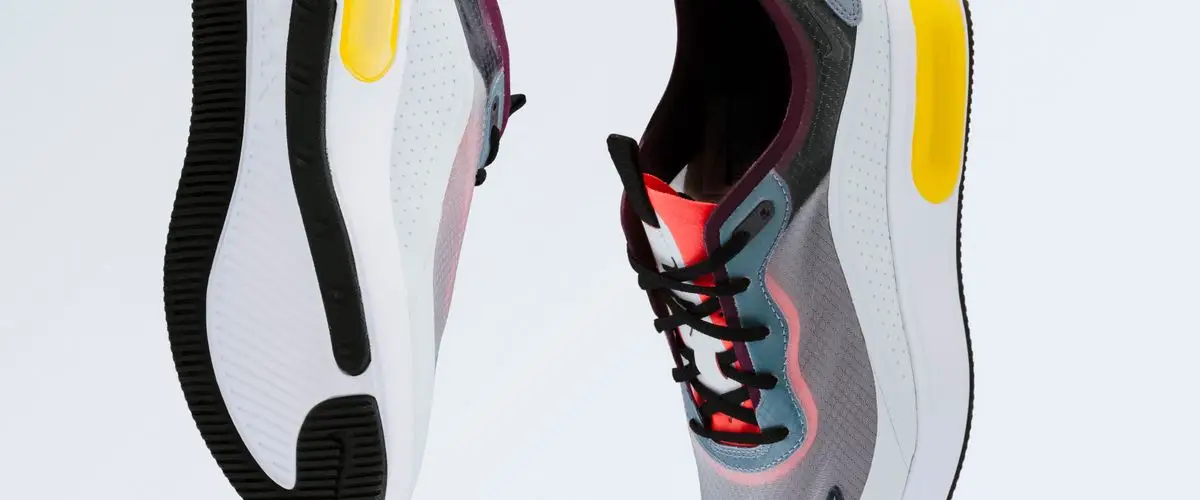
Running Shoes vs Regular Shoes: Why the Difference Matters
Find out why running-specific footwear protects your joints and boosts your performance compared to regular sneakers.
Find out why running-specific footwear protects your joints and boosts your performance compared to regular sneakers.
The fundamental difference between running shoes and regular shoes comes down to cushioning. When you run, each stride generates an impact force of 2 to 3 times your body weight. That impact repeats thousands of times during a single run: over a 5K you take roughly 3,500 strides, and over a 10K about 7,000.
Running shoes are specifically engineered to absorb that repetitive impact. They use technical foams such as high-density EVA, TPU, or PEBA that return energy and protect your joints. Regular shoes, whether fashion sneakers or generic athletic shoes, use basic foams designed for walking or standing around. They are not built to handle the constant force of running.
This is not a minor detail. Without adequate cushioning, all that impact force transfers directly to your knees, hips, and spine. In the short term you might not notice anything, but over weeks and months, soreness and injuries inevitably follow.
A running shoe has several purpose-built components that you simply will not find in a regular sneaker. Understanding each part helps explain why there is such a significant gap in performance and protection.
This is the heart of the shoe. It contains 20 to 40 mm of technical foam with varying densities between the heel and the forefoot. That density variation creates the shoe's drop, which guides your foot naturally from landing through toe-off. In a regular shoe, the midsole is flat and uniform throughout.
Running shoes use breathable, lightweight mesh that lets your foot ventilate during exertion. Regular shoes prioritize aesthetics: synthetic leather, heavy fabrics, or rigid materials that trap heat and moisture. An overheated foot develops blisters and discomfort far sooner than it should.
The outsole of a running shoe features a traction pattern designed specifically for road or trail surfaces, with durable rubber reinforcements in high-wear zones. Regular shoes tend to have flat soles made for indoor surfaces or casual walking, without the grip you need to run safely.
Running shoes include a rigid reinforcement around the heel that keeps your foot centered and stable on impact. This heel counter prevents the ankle from shifting laterally, reducing the risk of sprains. In a casual shoe, this support is minimal or nonexistent.
🏃 Free Plan: couch to 5K plan in 8 Weeks
Go from zero to running 5K in 8 weeks. Download the full training plan as a PDF.
Download free planRunning in shoes that were not designed for the task is not just a comfort issue. There are concrete risks that affect your body from the very first run.
Without adequate cushioning, the impact of every stride transfers directly to your knees, hips, and spine. This accelerates joint wear and can lead to runner's knee, shin splints, and chronic lower-back pain.
Regular shoes do not provide the lateral support you need when your foot lands in motion. The ankle is left exposed to involuntary rolls, especially on uneven surfaces or when turning corners.
Non-breathable materials trap moisture, and the last of a regular shoe is not shaped for the repetitive foot movement of running. This creates excessive friction that produces blisters, while an insufficient toe box puts pressure on your nails with every downhill stride.
Lack of arch support is a direct cause of plantar fasciitis in runners. Running shoes include adapted arch support and foam that distributes pressure evenly. A flat shoe overloads the plantar fascia with every step.
Find your running with a group
1,100+ runners already train together. Free on iOS.
The short answer: the moment you decide to run regularly. You do not need to wait until you are covering 10K or running four times a week. If you head out two or three times a week, even for just 20 minutes each time, a basic pair of running shoes makes a massive difference in protection and comfort.
You do not need to spend $200 either. There are excellent daily trainers in the $80 to $120 range that deliver the cushioning and support you need. The important thing is that they are shoes designed specifically for running — not gym shoes, cross-trainers, or tennis shoes that may look similar on the outside but are very different on the inside.
If you are coming from a sedentary lifestyle and want to start running from scratch, a good pair of running shoes is your first and most important investment. They protect your body during its most vulnerable phase, when your muscles and joints have not yet adapted to the impact of running.
If this is your first time buying running shoes, these are the criteria that truly matter. Forget trends and marketing hype — focus on the basics.
The best shoe is the one that fits your foot. Every brand has a different last: Nike tends to run narrow, New Balance and Brooks offer wider options, and ASICS sits somewhere in between. Try on several models and pick the one that feels natural from the very first step.
If you do not know your pronation type, start with a neutral shoe that has solid cushioning. Models like the Brooks Ghost, the ASICS Gel-Nimbus, or the Nike Pegasus are safe bets for beginners. They are versatile, protective, and forgiving of technique errors.
Your feet swell when you run due to increased blood flow and repetitive impact. You need roughly a thumb's width of space between your longest toe and the front of the shoe. Always buy half a size or a full size larger than your everyday shoes.
For a comprehensive guide covering every factor you should consider, check out our article on how to choose running shoes. And if you want to compare specific models, visit our running shoes section with detailed reviews.
Technically you can, but it is not recommended. Regular sneakers lack the cushioning and support needed for running. The repetitive impact without proper protection significantly increases the risk of injury to your knees, ankles, and back.
Cushioning. Running shoes use technical foams with varying densities designed to absorb the impact of thousands of strides. Regular shoes have basic foams meant for walking, not for handling the forces generated by running.
From the very first mile. The repetitive impact starts with your first stride, regardless of distance. If you plan to run regularly, a basic pair of running shoes will protect your joints and make the experience far more comfortable.
Find running groups in your city and share miles with other runners.
Join 1,100+ runners
Routes, training plans, and tips to run better. No spam.
🔒 We respect your privacy. Unsubscribe anytime.