Running at night changes everything. The familiar park trail becomes an adventure, the empty early-morning roads are all yours, and the cool evening air makes every run feel better. But none of that matters if you can't see where you're going. A good headlamp is the single most important piece of gear for night running, and the difference between a bad one and a good one is enormous (World Athletics).
We've tested over 20 headlamps over the past two years, logging hundreds of kilometers in the dark on city streets, park trails and mountain paths. This guide brings you the 7 that genuinely stood out, along with everything you need to know to choose the right one for your type of running.
Top 7 running headlamps ranking
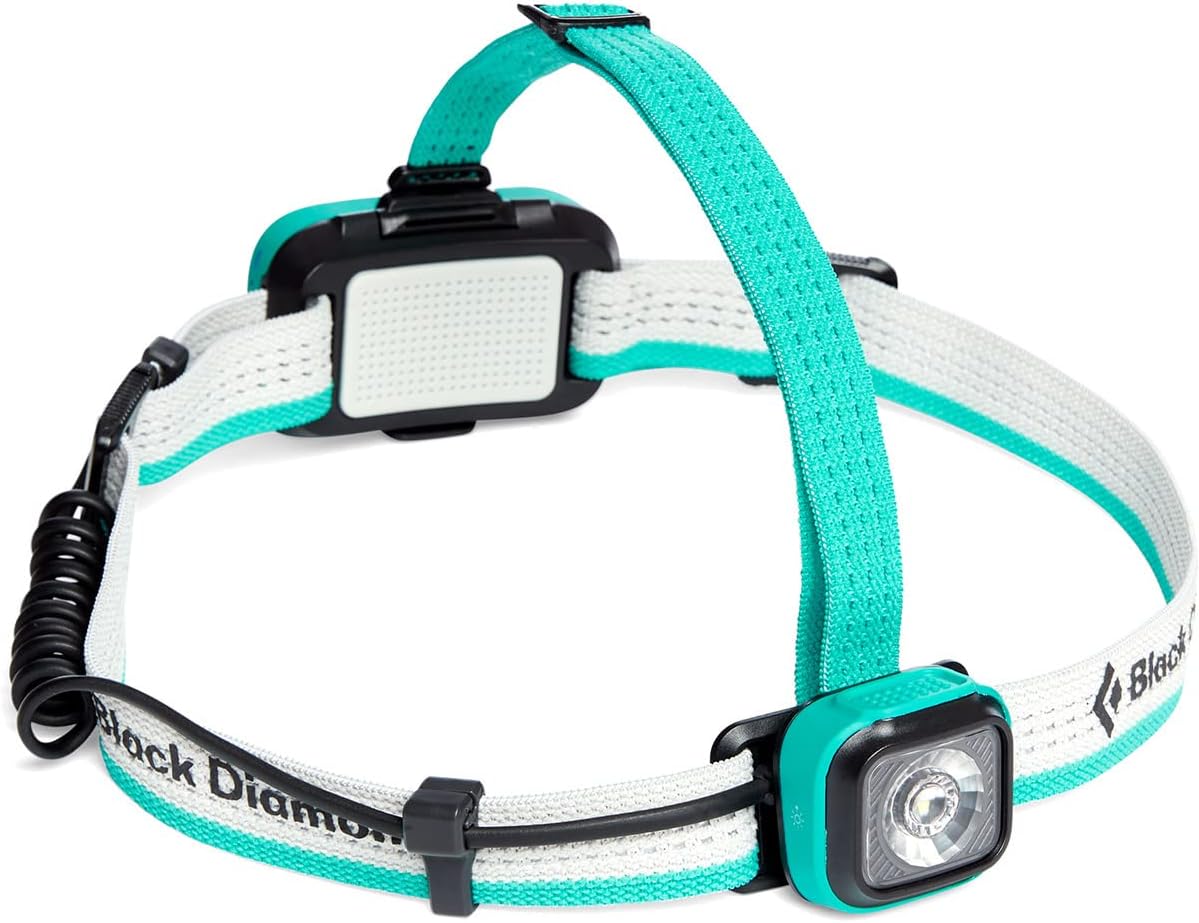
1. Black Diamond Sprinter 500
Price: ~80 EUR · Weight: 105 g · Max lumens: 500 · Battery life: 5 h (high) / 200 h (low) · Beam distance: 90 m · Charge: USB-C · IPX: IPX5
The Black Diamond Sprinter 500 is, in our opinion, the best overall headlamp for runners in 2026. It does everything well and has a feature that no other headlamp in this ranking offers: an integrated rear red LED. This means you're visible from both front and back, which is a significant safety advantage for road runners.
The 500 lumens on high mode are more than enough for any running scenario, from urban parks to rural roads. The combined beam gives you a focused spot for distance plus a wide flood for peripheral vision. The over-the-head strap keeps it stable even at fast paces. The only downside is the 105-gram weight, which is noticeable compared to ultralight competitors.
- Pros: Integrated rear light, excellent beam quality, IPX5, USB-C charging, stable fit
- Cons: 105 g is heavier than ultralight options, higher price point

2. Petzl IKO Core
Price: ~90 EUR · Weight: 79 g · Max lumens: 500 · Battery life: 9 h (standard) / 100 h (low) · Beam distance: 100 m · Charge: USB-C · IPX: IPX4
The Petzl IKO Core is an engineering marvel. At just 79 grams it delivers 500 lumens with a unique flat headband design called AIRFIT that distributes weight so evenly you forget you're wearing it. The beam quality is outstanding, with a wide, uniform flood that lights up the trail beautifully.
Its long battery life (9 hours in standard mode) makes it a strong contender for ultra trail races. The CORE battery is removable, so you can carry a spare for truly long events. The only compromise is IPX4 rather than IPX5, though it has handled rain perfectly fine in our testing.
- Pros: Only 79 g, incredible comfort, excellent beam, long battery life, removable battery
- Cons: IPX4 only, premium price, flat band takes getting used to
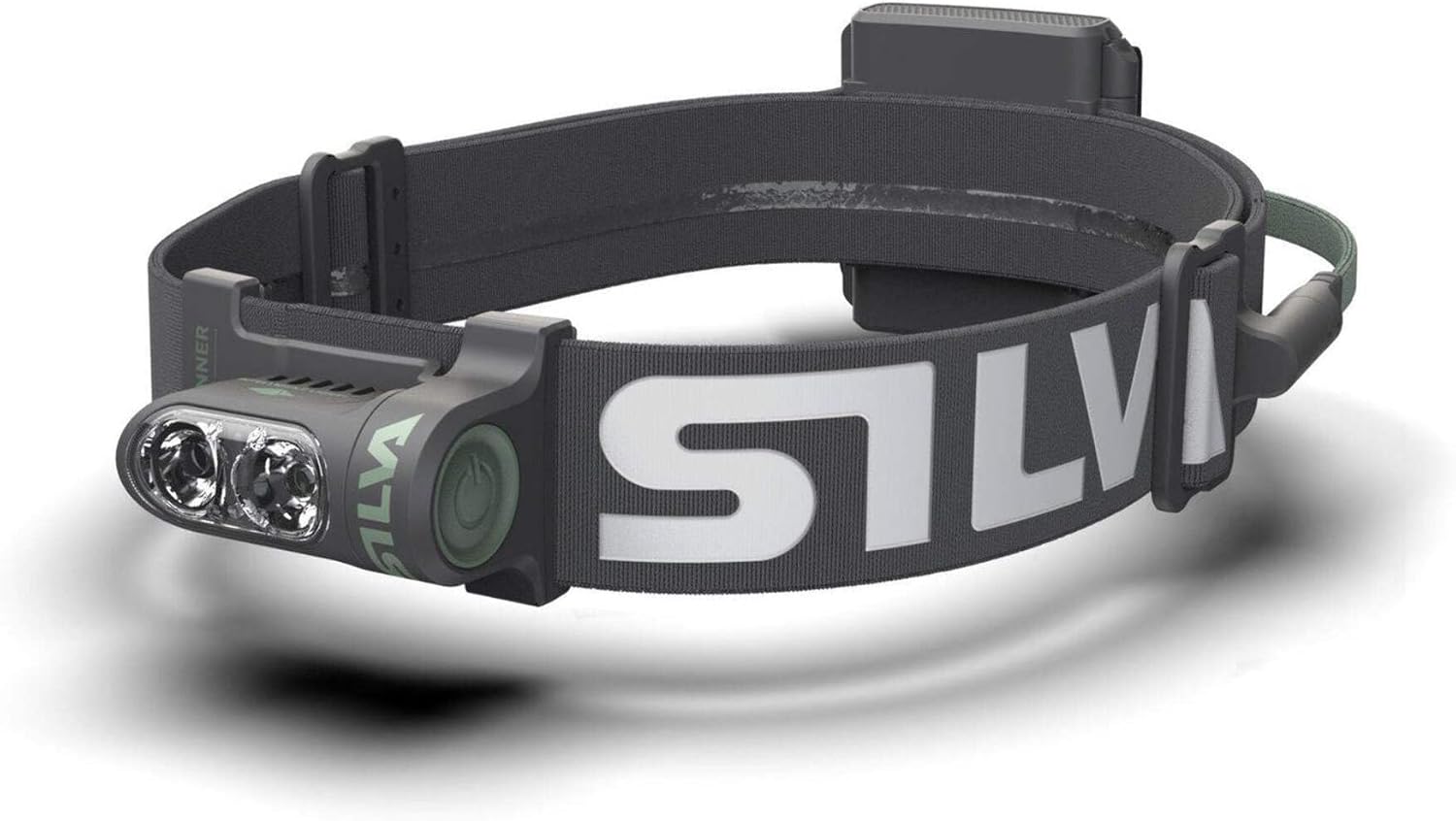
3. Silva Trail Runner Free 2
Price: ~130 EUR · Weight: 155 g (total system) · Max lumens: 700 · Battery life: 7.5 h (high) · Beam distance: 120 m · Charge: USB-C · IPX: IPX5
If money is no object and you want the very best headlamp for trail running, the Silva Trail Runner Free 2 is the reference. Its 700 lumens and 120-meter beam distance illuminate trail terrain like daylight. The battery sits on the back of the headband, perfectly balancing the front LED module and eliminating the front-heavy pendulum effect.
Silva's Intelligent Light technology automatically adjusts brightness based on your running pace and head movement, conserving battery when you need less light. The battery is removable and replaceable, a genuine advantage for ultra trail events. This is the headlamp you see on podiums at major mountain races.
- Pros: 700 lumens, 120 m range, balanced weight distribution, intelligent light, removable battery
- Cons: Expensive (130 EUR), 155 g total, overkill for urban running

4. Nitecore NU25 UL
Price: ~40 EUR · Weight: 28 g · Max lumens: 400 · Battery life: 15 h (low) / 3 h (high) · Beam distance: 64 m · Charge: USB-C · IPX: IPX6
At just 28 grams, the Nitecore NU25 UL is the lightest headlamp in our ranking by a huge margin. It's so light that you genuinely forget you're wearing it after the first minute. Despite its size, it pushes out an impressive 400 lumens and achieves IPX6 water resistance, the highest in our selection.
It includes white, red and auxiliary modes, and the beam quality is surprisingly good for something this small. The main trade-off is battery life at high power: 3 hours isn't enough for ultra events, but it's more than sufficient for daily training runs. Many ultra runners carry this as a backup headlamp alongside a more powerful primary (ACSM).
- Pros: Incredibly light (28 g), 400 lumens, IPX6, great price, multiple modes including red
- Cons: Limited battery at high power, headband feels basic, less comfortable than premium options

5. BioLite HeadLamp 330
Price: ~50 EUR · Weight: 69 g · Max lumens: 330 · Battery life: 4 h (high) / 40 h (low) · Beam distance: 75 m · Charge: USB-C · IPX: IPX4
The BioLite HeadLamp 330 is one of the most comfortable headlamps we've ever worn. The LED panel sits flat against your forehead (no protruding lamp housing) and the battery is integrated into the headband itself. The result is a headlamp that feels less like a headlamp and more like a headband that happens to produce light.
At 69 grams, it's excellent for urban running where you need good visibility without bulk. The 330 lumens are more than enough for parks and well-lit areas, though trail runners wanting maximum power will want to look elsewhere.
- Pros: Exceptionally comfortable, flat profile, 69 g, great for urban runners
- Cons: 330 lumens may be insufficient for technical trail, IPX4 only

6. Ledlenser NEO5R
Price: ~40 EUR · Weight: 73 g · Max lumens: 600 · Battery life: 6 h (medium) · Beam distance: 50 m · Charge: USB-C · IPX: IPX4
The Ledlenser NEO5R packs serious performance at a very accessible price. With 600 lumens maximum output and a magnetic rear charging system, it offers features that punch well above its 40 EUR price tag. The rear red light (similar to the Black Diamond Sprinter) adds safety for road runners.
The fit system is simple but effective, and the 73-gram weight keeps bounce minimal. Ledlenser's Advanced Focus System allows you to switch between a focused spot and a wide flood on the fly, which is a nice touch at this price.
- Pros: Excellent price-performance, 600 lumens, rear red light, adjustable focus, USB-C
- Cons: IPX4 only, beam quality not as refined as premium models, 50 m range
7. Decathlon Forclaz HL700
Price: ~25 EUR · Weight: 90 g · Max lumens: 250 · Battery life: 5 h · Beam distance: 55 m · Charge: USB-C · IPX: IPX4
At just 25 EUR, the Decathlon Forclaz HL700 is the budget entry into the world of running headlamps. Its 250 lumens are perfectly adequate for well-lit urban areas and park paths. USB-C charging, IPX4 protection and 5 hours of battery life at this price point is honestly impressive.
It's the ideal headlamp for beginners who want to try night running without a big investment. If you discover you love it, you can upgrade to a premium model later knowing exactly what features matter to you.
- Pros: Incredible price (25 EUR), USB-C, adequate for urban running, good beginner choice
- Cons: 250 lumens limits trail use, basic strap system, more bounce than premium options
Quick comparison table
| Headlamp | Lumens | Range | Battery | Weight | Charge | IPX | Price |
|---|---|---|---|---|---|---|---|
| Black Diamond Sprinter 500 | 500 lm | 90 m | 5 h | 105 g | USB-C | IPX5 | ~80 EUR |
| Petzl IKO Core | 500 lm | 100 m | 9 h | 79 g | USB-C | IPX4 | ~90 EUR |
| Silva Trail Runner Free 2 | 700 lm | 120 m | 7.5 h | 155 g | USB-C | IPX5 | ~130 EUR |
| Nitecore NU25 UL | 400 lm | 64 m | 15 h* | 28 g | USB-C | IPX6 | ~40 EUR |
| BioLite HeadLamp 330 | 330 lm | 75 m | 4 h | 69 g | USB-C | IPX4 | ~50 EUR |
| Ledlenser NEO5R | 600 lm | 50 m | 6 h | 73 g | USB-C | IPX4 | ~40 EUR |
| Forclaz HL700 | 250 lm | 55 m | 5 h | 90 g | USB-C | IPX4 | ~25 EUR |
*Nitecore NU25 UL battery life shown in low mode (25 lm). In high mode (200 lm) battery life is approx. 3 hours.
Mounting options: head, chest and vest
Most runners take for granted that a headlamp goes on the head. And they're right 90% of the time. But there's an alternative gaining more and more fans among trail runners: chest mounting.
Find your running with a group
1,100+ runners already train together. Free on iOS.
Head mount (the standard)
The classic forehead mount works well for most situations. The light follows where you look, which is intuitive: where you look, you illuminate. It's the most versatile option and works best on technical terrain where you need to look sideways, up or down frequently. Modern headlamps with quality straps like the Petzl IKO Core or the Silva Trail Runner Free 2 barely bounce, and the weight is so well distributed that after the first few minutes you don't notice it.
Chest mount (the trail alternative)
Mounting the headlamp on the chest, clipped to a hydration while running vest or with a specific harness, offers several advantages. The light projects from a low angle, which creates elongated shadows on the terrain that vastly improve relief perception: rocks, roots, elevation changes and potholes are much easier to see with grazing light than with overhead light. Plus, you completely eliminate head bounce and the neck fatigue some runners experience on long races. Many trail vests from Salomon or Compressport now include a specific front clip for this purpose.
The downside of chest mounting is that the light doesn't follow your gaze: if you turn your head to look sideways, the headlamp keeps pointing forward. This makes it less practical at trail junctions, aid stations or when you need to look around. The ideal solution for long trail races is to carry two headlamps: a powerful one on the chest for primary illumination and a lightweight one on the head as a directional complement.
Red light mode and night vision
Almost all quality running headlamps include a red light mode, and it's not a gimmick. It serves a very specific and useful purpose: preserving your adapted night vision.
When your eyes spend time in darkness, the pupils dilate and the retina adapts to capture the maximum available light. This process, called scotopic adaptation, takes between 20 and 30 minutes to complete. If you turn on a bright white light in the middle of that process, the pupils contract immediately and you lose all accumulated adaptation: you'll need another 20-30 minutes in darkness to recover it.
Red light doesn't cause that contraction because the retinal receptors sensitive to red (long-wavelength cones) are the least sensitive in dark conditions. You can use red light to check your watch, look at a map, inspect your gel or tie your shoelaces without losing night vision.
When to use red light in running
- At aid stations during night races: To see what you eat and drink without blinding yourself or other runners.
- During night-to-dawn transitions: When there's already some natural light but not enough, red light supplements without canceling your night vision.
- To check your watch or phone: A quick glance under red light and you keep running without needing minutes of readaptation.
- When running in a group: Red light doesn't blind the runners beside you or behind you.
Water resistance: understanding IPX ratings
If you run at night regularly, you're going to run in the rain sooner or later. The IPX rating tells you the protection level of your headlamp against water. Here's what the most common values mean for running headlamps:
- IPX4: Protection against splashes from any direction. Sufficient for light rain and heavy sweat. This is the minimum standard you should require from any running headlamp.
- IPX5: Protection against low-pressure water jets. Handles heavy rain and adverse conditions without issues. Models like the Black Diamond Sprinter 500 and the Silva Trail Runner Free 2 offer this level.
- IPX6: Protection against high-pressure water jets. Virtually weatherproof in any conditions. The Nitecore NU25 UL achieves this rating despite its tiny size.
- IPX7: Temporary immersion up to 1 meter for 30 minutes. For crossing rivers on trail or accidental falls into water.
An important note: IPX ratings are tested with the headlamp brand new, straight out of the box. With use, rubber gaskets and USB port seals can deteriorate. After every use in rain, dry the headlamp thoroughly and leave the charging port cover open to ventilate. Check the seals periodically, especially if you've been using it intensively for over a year.
Combining with reflective clothing and accessories
A headlamp is the centerpiece of your night running gear, but it shouldn't be the only piece. Combining a good headlamp with reflective elements and supplementary lights multiplies your safety exponentially. For a complete guide to all night safety gear, visit our running accessories section.
Essential reflective elements
- Reflective vest: The highest visual-impact accessory. A running reflective vest weighs under 100 grams and makes you visible from over 200 meters to drivers. If you can only add one thing besides the headlamp, make it this.
- Reflective ankle bands: The oscillating movement of the bands while running catches drivers' attention much more than a static reflector. It's a trick cyclists use that works just as well for runners.
- Rear LED clip light: If your headlamp doesn't have an integrated rear light (like the Black Diamond Sprinter and the Ledlenser NEO5R do), a small red LED clip on the back of your leggings or belt closes the visibility angle. They cost under 10 EUR and run on button batteries that last months.
- Clothing with reflective panels: Many running brands integrate reflective panels and logos into jackets, leggings and technical shirts. They don't replace a vest, but they add up.
Battery life: what they don't tell you
The battery life the manufacturer prints on the box is, at best, an indicative reference. In real life, battery life depends on many factors rarely mentioned in the specs.
Factors that reduce real battery life
- Ambient temperature: Lithium batteries lose capacity in the cold. At 0 degrees, a battery can deliver 20-30% less than at 20 degrees. On winter nights with sub-zero temperatures, real battery life can be significantly less than advertised.
- Number of charge cycles: After 300-500 full charge cycles, lithium batteries start losing capacity. A headlamp you use 3-4 times per week for two years will have noticeably less battery life than when new.
- Turbo mode usage: Maximum power modes consume battery at a disproportionate rate. A headlamp with 8 hours of battery life in medium mode may last only 1.5-2 hours on maximum.
- Thermal management: When the LED overheats, many headlamps automatically reduce power to prevent damage (thermal throttling). This means the advertised power only holds for the first few minutes before dropping to a sustainable level.
Tips to maximize battery life
Use the lowest power mode that's safe for each section. In areas with streetlights, drop to 50-100 lumens. Switch to maximum power only for technical descents or sections with no lighting at all. Fully charge the headlamp before every long run. In winter, keep the headlamp against your body (in an inside pocket) until the moment you use it to keep the battery warm. And if you're doing an ultra trail, always carry a backup battery or headlamp.
Bounce and fit: the detail that makes the difference
You can have the headlamp with the best optics and longest battery life on the market, but if it bounces on your forehead with every stride, you'll end up hating it and leaving it in a drawer. Bounce is the factor that most differentiates the experience of a running headlamp from a hiking or general-use headlamp. Running generates repetitive impact that no other outdoor activity produces, and the headlamp has to be designed to absorb it.
What to look for in a good fit system
- Overhead strap: Headlamps with only a circular strap around the head slide down with movement. Models with an additional strap over the crown (like the Black Diamond Sprinter) stabilize the headlamp vertically and eliminate slipping.
- Low weight: Less weight means less inertia and less bounce. Basic physics. Headlamps under 100 grams like the Petzl IKO Core or the BioLite HeadLamp 330 barely bounce at all.
- Weight distribution: Headlamps with the battery at the back of the strap (like the Silva Trail Runner Free 2) balance the weight and reduce the pendulum effect of the front block.
- Strap material: Straps with silicone grip on the inner face hold better against hair and skin without needing to over-tighten. Smooth straps require more tension to stay put, which can cause headaches.
Before buying, if possible, test the headlamp simulating running movement. Shake your head, jump a bit and check it stays stable. If you can't try it on, prioritize models with advanced fit systems and good reviews from actual runners, not hikers who use it for walking.
How to choose your headlamp by running type
To wrap up the technical recommendations, here's a quick summary of which headlamp to choose based on your runner profile. This section saves you reading everything above if you're in a hurry and want to go straight to buying.
Urban runner (roads, parks, bike paths)
Your priorities are: low weight, comfort and reasonable price. You don't need more than 200-300 lumens. The BioLite HeadLamp 330 is the ideal choice for comfort and lightness. If you want to spend less, the Decathlon Forclaz HL700 does the job perfectly for 25 EUR. And if you want an integrated rear light for extra safety on roads, the Black Diamond Sprinter 500 is unbeatable.
Trail runner (trails, mountains, night races)
You need power, beam distance and good battery life. Minimum 400-500 lumens for technical terrain. The Petzl IKO Core is the most balanced option, with 500 lumens, excellent combined beam and just 79 grams. If you run long trails or ultras and want the very best regardless of price, the Silva Trail Runner Free 2 is the market reference. For runners who prioritize weight above all else, the Nitecore NU25 UL at 28 grams is unbeatable as an ultralight primary or backup headlamp.
Beginner runner (first night workouts)
Don't overthink it. The Ledlenser NEO5R at 40 EUR or the Decathlon Forclaz HL700 at 25 EUR give you everything you need to discover if night running is for you. If after a few months you want more, invest in a superior model knowing exactly which features you value most. Also check our basic running pack for beginners to complete your essential gear.
Test your gear running in a group
Join a running meetup and try out your new gear with other runners. Free.
Join 1,100+ runners
Frequently Asked Questions
How many lumens do I need for running at night?
It depends on the environment. For city or partially lit paths, 100-200 lumens are enough. For rural roads without streetlights or dark parks, you need at least 250-400 lumens for clear visibility at 30-50 meters. For trail running at night on technical terrain (rocks, roots, elevation), 500+ lumens is recommended for good distance visibility and sufficient reaction time to obstacles. Most urban runners are comfortable with a 200-350 lumen headlamp.
Is a focused (spot) or wide (flood) beam better for running?
The ideal for running is a headlamp with a combined beam that mixes a central spot for distance vision with a peripheral flood for close and lateral vision. If you must choose one, the flood is more practical for running because it lets you see all the terrain around you, especially on trails with curves and uneven ground. A pure spot is useful for straight roads where you need to detect obstacles far away, but leaves the sides dark. Models like the Black Diamond Sprinter 500 and the Petzl IKO Core offer an excellent combined beam for all types of running.
How much should a running headlamp weigh?
For urban running and workouts up to 90 minutes, ideally under 100 grams so it causes no discomfort. Headlamps like the Nitecore NU25 UL (28 g), the BioLite HeadLamp 330 (69 g) and the Petzl IKO Core (79 g) fit this category. For trail running, where you need more power and battery life, headlamps between 100 and 200 grams are perfectly acceptable, especially with good weight distribution. Above 200 grams you'll start feeling neck fatigue and forehead discomfort on runs longer than 2-3 hours.
Is a USB rechargeable headlamp worth it over one with batteries?
For most runners, yes. USB-C rechargeable headlamps are more economical long-term because you eliminate recurring battery costs, more eco-friendly and more practical: you charge them with the same cable as your phone. All models in our selection are rechargeable. The downside is that on very long races (ultra trails over 10 hours) you can't simply swap batteries when they run out. For those cases, the solution is to carry a small power bank and charge during walking sections, or choose a model with a removable battery like the Silva Trail Runner Free 2 and carry a spare.
What is red light mode and what is it for in running?
Red light mode emits a dim red light that preserves your adapted night vision. When you've been in darkness, your pupils dilate to capture more light. If you turn on a bright white light, your pupils contract and you need 20-30 minutes to recover dark adaptation. Red light doesn't cause that contraction. It's very useful at aid stations during night races (to see what you eat without blinding yourself), for checking your watch or phone without losing night vision, and to avoid bothering other runners when running in a group.
Can I wear the headlamp on my chest instead of my head?
Yes, and it's an increasingly popular option among trail runners. Mounting the headlamp on the chest (clipped to a hydration vest or with a specific harness) has several advantages: it reduces bounce on the head, eliminates neck fatigue and projects light from a low angle that creates shadows improving terrain relief perception. Rocks, roots and elevation changes are much more visible with grazing light. The downside is the light doesn't follow your gaze, so it's less practical at trail junctions or when you need to look sideways. Many ultra runners combine a powerful chest light with a lightweight one on the head.
What IPX rating does a headlamp need for running in the rain?
For light to moderate rain, IPX4 (splash protection) is sufficient. All headlamps in our selection meet at least IPX4. If you regularly run in heavy rain or mountain conditions with adverse weather, look for IPX5 or higher (like the Black Diamond Sprinter 500 or the Silva Trail Runner Free 2). The Nitecore NU25 UL reaches IPX6, the highest in our selection, making it resistant even to high-pressure water jets. Remember that seals deteriorate with use: dry your headlamp well after every rainy run and periodically check the USB port cover.
Running Tips in Your Inbox
Gear guides, training plans and tips to run better. No spam.
We respect your privacy. Unsubscribe anytime.