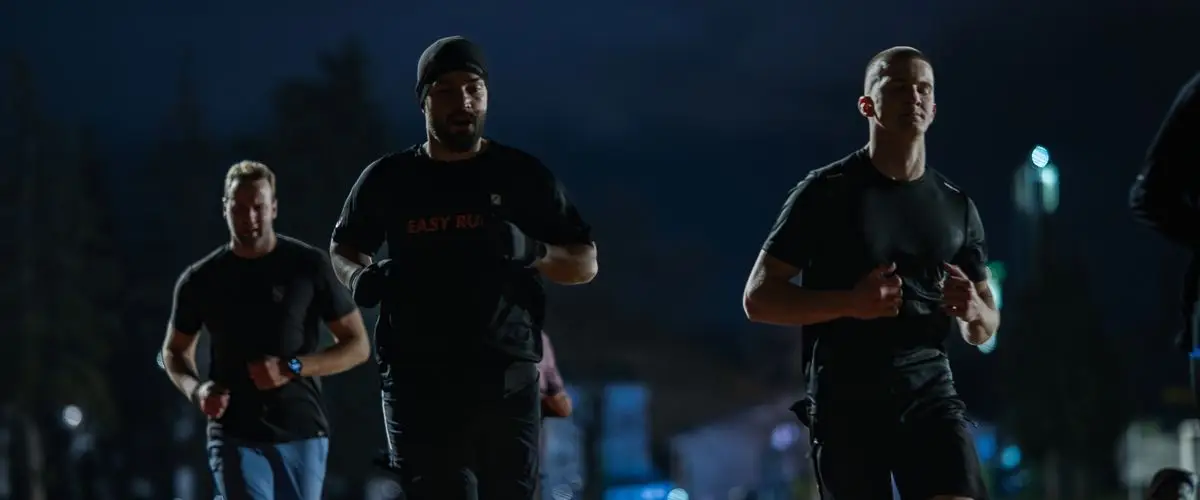
Spain hosts more than 50 night races every year, spread across the entire country. From the iconic San Silvestre races to trails under the stars, running at night has become one of the most sought-after experiences on the Spanish running calendar.
The advantages are clear: cooler temperatures (especially in summer), a unique festive atmosphere, and a completely different sensory experience compared to daytime races. That said, they require specific gear and adapted preparation.
In this guide, we present the complete 2026 calendar, the gear you need, safety tips, and everything you should know to make the most of night races in Spain.
Why run at night
Running at night is not simply running at a different hour. It is a completely different experience that transforms the runner's relationship with the environment, effort, and the race itself.
Cooler temperatures, better performance
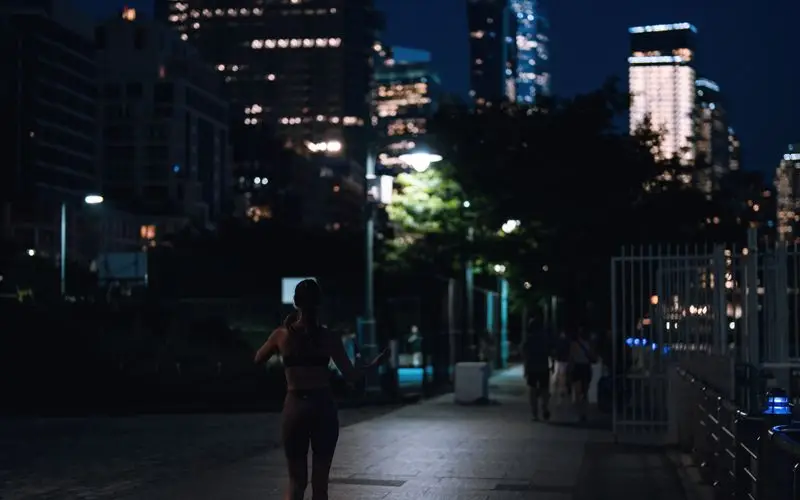
In Spain, where summers easily exceed 35°C, running at night allows you to train and compete at temperatures 10-15 degrees lower than midday. This translates directly into better performance: less dehydration, lower heart rate, and more sustainable paces. Proper hydration becomes easier to manage in cooler conditions.
Unique festive atmosphere
Night races typically have a festive component that daytime events cannot match. Special lighting, music along the course, visual displays, and crowd energy create a celebration atmosphere that motivates even through the toughest kilometres. It is a great setting for beginners to experience their first race.
A different sensory experience
At night, the perception of effort changes. Without clear visual distance references, many runners report that kilometres pass more quickly. Your senses sharpen: you hear your footsteps, your breathing, and the group's rhythm with greater intensity.
Night race calendar Spain 2026
These are the main night races held across Spain throughout 2026. Dates are estimated based on previous editions and will be confirmed by each organiser.
| Race | City | Month | Distance | Participants |
|---|---|---|---|---|
| Carrera Nocturna del Guadalquivir | Seville | June | 10 km | ~8,000 |
| Nit de l'Esport | Barcelona | June | 10 km | ~6,000 |
| Carrera Nocturna de Málaga | Málaga | June | 8 km | ~4,000 |
| Nocturna de San Fernando | San Fernando (Cádiz) | July | 10 km | ~3,000 |
| Night Trail Collserola | Barcelona | July | 15 km / 25 km | ~1,500 |
| Carrera Nocturna de Alicante | Alicante | August | 10 km | ~3,500 |
| Electric Night Run | Madrid | September | 5 km / 10 km | ~10,000 |
| Nocturna de Toledo | Toledo | September | 10 km | ~5,000 |
| Carrera Nocturna Valencia | Valencia | October | 10 km | ~7,000 |
| Night Trail Sierra de Guadarrama | Madrid (mountains) | October | 21 km | ~800 |
| Nocturna de Bilbao | Bilbao | October | 10 km | ~4,500 |
| Carrera Nocturna de Zaragoza | Zaragoza | November | 8 km | ~3,000 |
| San Silvestre Vallecana | Madrid | 31 December | 10 km | ~40,000 |
| San Silvestre de Barcelona | Barcelona | 31 December | 5 km | ~6,000 |
| San Silvestre de Valencia | Valencia | 31 December | 5 km | ~5,000 |
Essential gear for night races
Running at night requires specific equipment you do not need for daytime races. Here are the essentials. You will also want a reliable GPS watch to track your pace in low-visibility conditions.
Headlamp
Essential for night trails. In illuminated urban races it may not be mandatory, but it is always recommended. Look for a headlamp with at least 200 lumens and battery life for at least 4 hours. Reliable brands: Petzl, Black Diamond, Silva.
Reflective vest or elements
Even if the race has lighting, you need to be visible at all times. A lightweight reflective vest or reflective bands on arms and legs are mandatory in most night races. Many organisers provide them, but bring your own just in case.
Shoes with reflective elements
Many running shoes include reflective details on the heel and sides. For night trails, prioritise models with good traction and stability, as reduced visibility increases the risk of ankle rolls. For mountain events, check our guide to trail running footwear.
Visible technical clothing
Choose light colours or clothing with integrated reflective strips. Temperature drops significantly after sunset, so carry a thin extra layer even if it seems unnecessary at the start. A proper stretching routine before the race helps you warm up in the cooler air.
Rear light
A small red LED light clipped to your waistband or pack makes you visible from behind. Especially important on trails and courses shared with other runners.
Safety tips for running at night
Safety is the number one priority in any night race:
- Know the course: If possible, run the route during the day before the race. Identify areas with elevation changes, uneven surfaces, or sections without lighting.
- Never go alone on trails: Organised road races are fine, but solo night trails are dangerous. Always run in a group or ensure there are checkpoints. Use CorrerJuntos to find runners near you.
- Carry your phone at 100% charge: Besides being your emergency tool, it serves as a backup torch and GPS tracker.
- Tell someone: Share your real-time location with a trusted contact. Apps like CorrerJuntos let you share your activity live.
- Hydrate beforehand: Cold reduces the sensation of thirst, but dehydration still occurs. Drink enough fluids in the hours before the race. Good pre-race nutrition is equally important.
- Watch out for traffic: Even if the race has a closed course, start and finish areas often have nearby vehicle traffic. Stay alert.
Specific preparation for running at night
Running at night is not simply doing the same thing as during the day but with less light. Your body and mind work differently:
Adapt your training
Complete at least 2-3 weekly sessions during night-time hours for 4-6 weeks before the race. Your body needs to adapt to the different circadian rhythm, lower temperature, and altered perception of effort. Following structured training plans will keep your preparation on track.
Train your night vision
Go running with your headlamp on familiar routes and then on new ones. Practise light transitions (from lit zones to dark zones) and learn to read the terrain with peripheral vision. On trails, this is critical for avoiding falls. Consistent injury prevention work reduces the risk of ankle sprains on uneven terrain.
Calibrate your pace perception
At night we tend to run slower than we think (or faster, depending on the runner profile). Use a GPS watch and train with controlled paces until your body correctly calibrates speed without clear visual references. Complementing your running with strength training also improves stability and proprioception at night.
Nutrition and timing
If the race starts at 10 PM or 11 PM, you cannot have your usual dinner at 9 PM. Plan a light main meal at 6-7 PM and a small energy snack (banana, energy bar) 1-2 hours before the start. For longer events, carry energy gels and review our race day nutrition guide.
Night trail vs road night race
These are two radically different experiences. Choosing one depends on your runner profile:
| Aspect | Night trail | Night road race |
|---|---|---|
| Technical difficulty | High (uneven terrain, roots, rocks) | Low (uniform surface) |
| Gear | Powerful headlamp (300+ lm), pack, poles | Basic reflectives |
| Safety | Requires prior trail experience | Suitable for any level |
| Atmosphere | Intimate, silent, nature | Festive, urban, crowded |
| Participants | Hundreds (200-1,500) | Thousands (3,000-40,000) |
| Pace | Slower, conservative | Similar to daytime |
| Prior experience needed | Yes, daytime trail first | No, ideal for beginners |
Find your running group
1,100+ runners already train together. Free on iOS.
Frequently asked questions
Do I need special gear for an urban night race?
It depends on the race. In most organised urban races (Electric Night Run, San Silvestre) you do not need a headlamp because the course is illuminated. You do need reflective elements. Always check the regulations of each race.
Is running at night safe for beginners?
Organised road night races are completely safe for any level. They have traffic-closed courses, lighting, medical services and aid stations. It is an excellent way to debut as a runner.
What headlamp do I need for a night trail?
Minimum 200 lumens for easy trails and 300-500 lumens for technical trails. Recommended brands: Petzl Actik Core, Black Diamond Spot 400, Silva Trail Runner Free 2. Make sure the battery lasts longer than your estimated finish time.
What is the most popular night race in Spain?
The San Silvestre Vallecana in Madrid, with around 40,000 participants every 31 December. It is the most popular mass-participation race in Spain and a tradition for ending the year running.
How do I sign up for a San Silvestre?
Registration usually opens in September-October for December San Silvestre races. The Vallecana (Madrid) sells out within a few hours. Follow them on social media and turn on notifications so you do not miss it.
Does running at night improve performance?
Indirectly, yes. Cooler temperatures (especially in summer) reduce thermal stress, which allows you to maintain faster paces with lower cardiac cost. Many runners achieve better times in autumn night races.
Can I run a night race with my dog?
Most organised night races do not allow dogs for safety reasons. However, some specific night canicross events do exist. Always check the regulations of each race before registering.
What should I eat before a night race?
Have a main meal 4-5 hours before the start (pasta, rice, light protein). A small snack (banana, energy bar) 1-2 hours before. Avoid heavy, spicy or high-fibre meals. Hydrate well throughout the day.
Conclusion
Night races are one of the most special experiences on the Spanish running calendar. They combine ideal temperatures, a unique atmosphere, and the thrill of discovering a city or trail from a completely new perspective.
Spain offers a varied calendar throughout the year: from summer urban races in Seville and Barcelona to the iconic San Silvestre events to close out the year. Whether you are a beginner or an experienced runner, there is a night race for you. Explore local running groups to find training partners for your next event.
Get the right gear, train at night in the weeks before, and above all enjoy the experience. And if you are looking for company to train, at CorrerJuntos you will find night group runs and local groups in your city to prepare together for the next race.