Best Trekking Poles for Trail Running
How to choose the right poles for trail running: types, materials, weight and when they make a real difference.
How to choose the right poles for trail running: types, materials, weight and when they make a real difference.
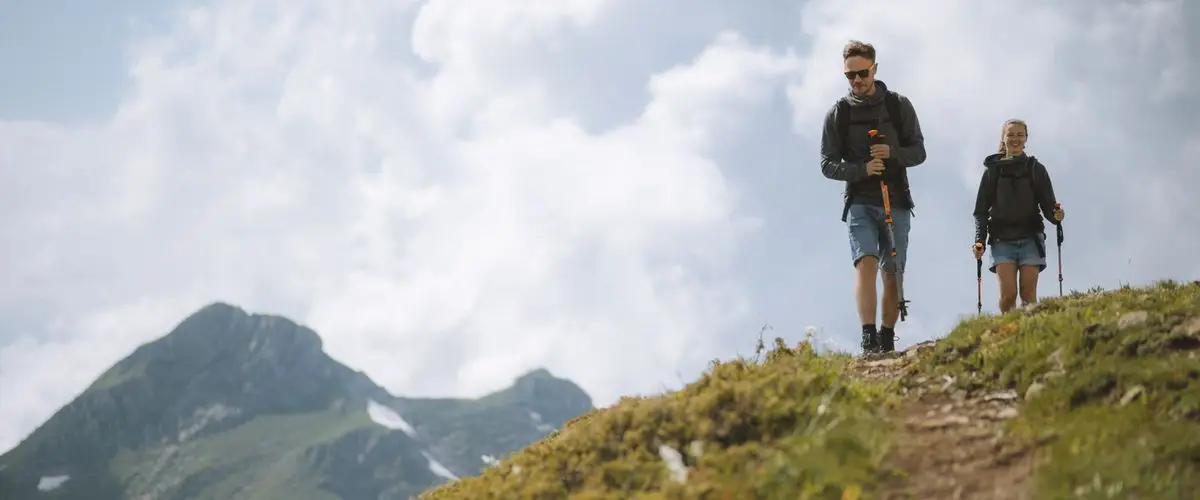
Trekking poles divide opinion among trail runners. Some consider them essential equipment for any mountain race. Others view them as unnecessary weight and hassle. The truth lies in between: poles are a specialized tool that provides genuine advantages in specific conditions, and understanding when they help and when they hinder is key to making the right choice.
The primary benefit of poles is reducing the load on your legs during long climbs. Research in exercise science suggests that poles can reduce the energy cost on your lower body by 10 to 15 percent on sustained ascents. Over the course of a mountain ultra with 3,000 meters or more of climbing, this saving is substantial. Your quads, calves, and hip flexors arrive at each summit fresher, with more capacity for the rest of the race.
Poles also provide stability on technical descents, river crossings, and exposed traverses. They give you two additional points of contact with the ground, which is particularly valuable when fatigue reduces your balance and coordination in the latter stages of a long race. For a broader view of trail gear and preparation, start with our guide to getting started with trail running.
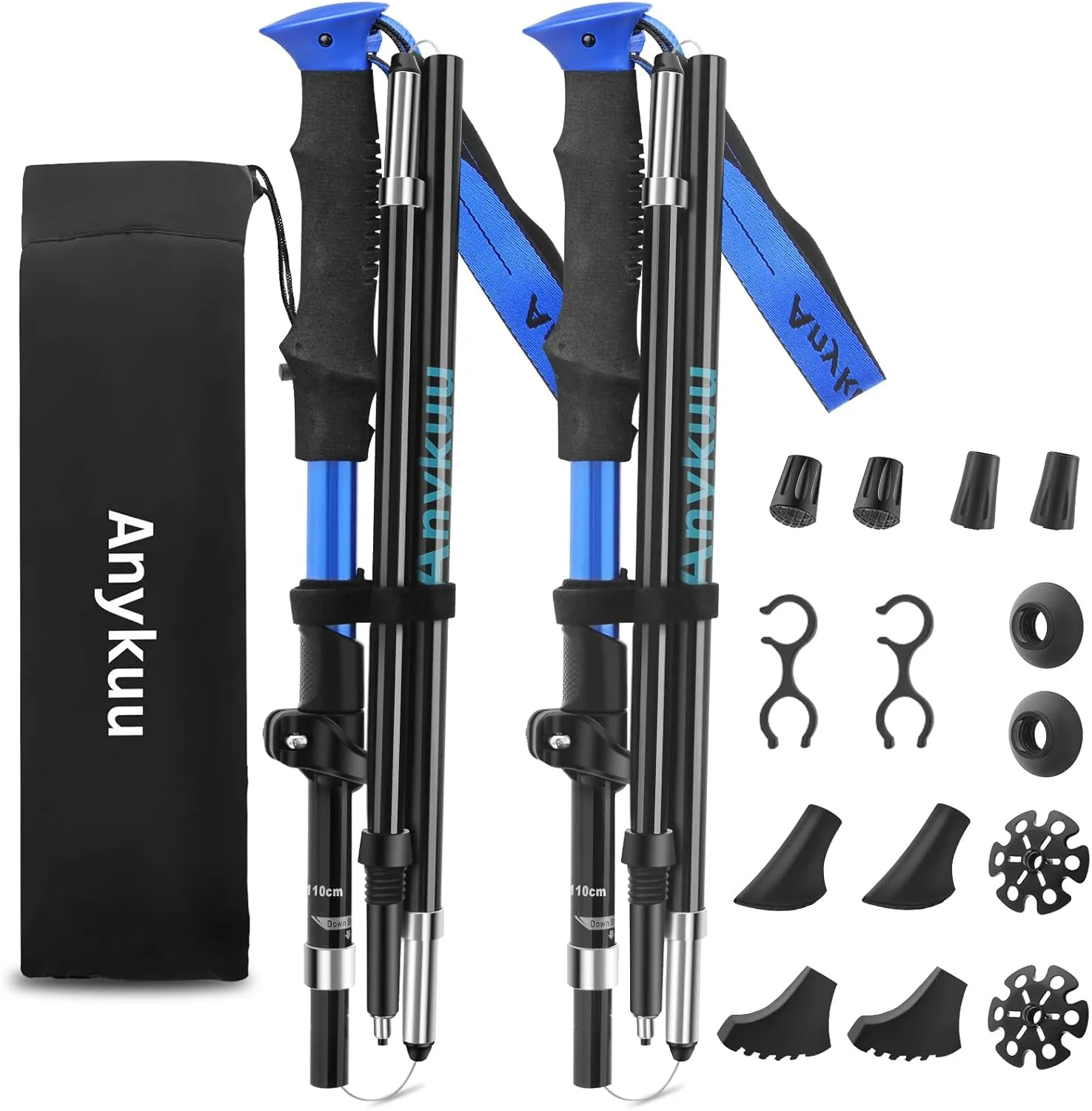
The best entry-level option for trail running with an unbeatable price-to-quality ratio. Built from 7075 aluminum alloy (the same used in mid-range poles), with EVA foam grips that offer solid grip even with sweaty hands. Foldable and adjustable between 110 and 130 cm, so they adapt to different heights and terrain. When folded they are very compact and fit in any trail backpack. For beginners, it's hard to ask for more at this price.
View price on Amazon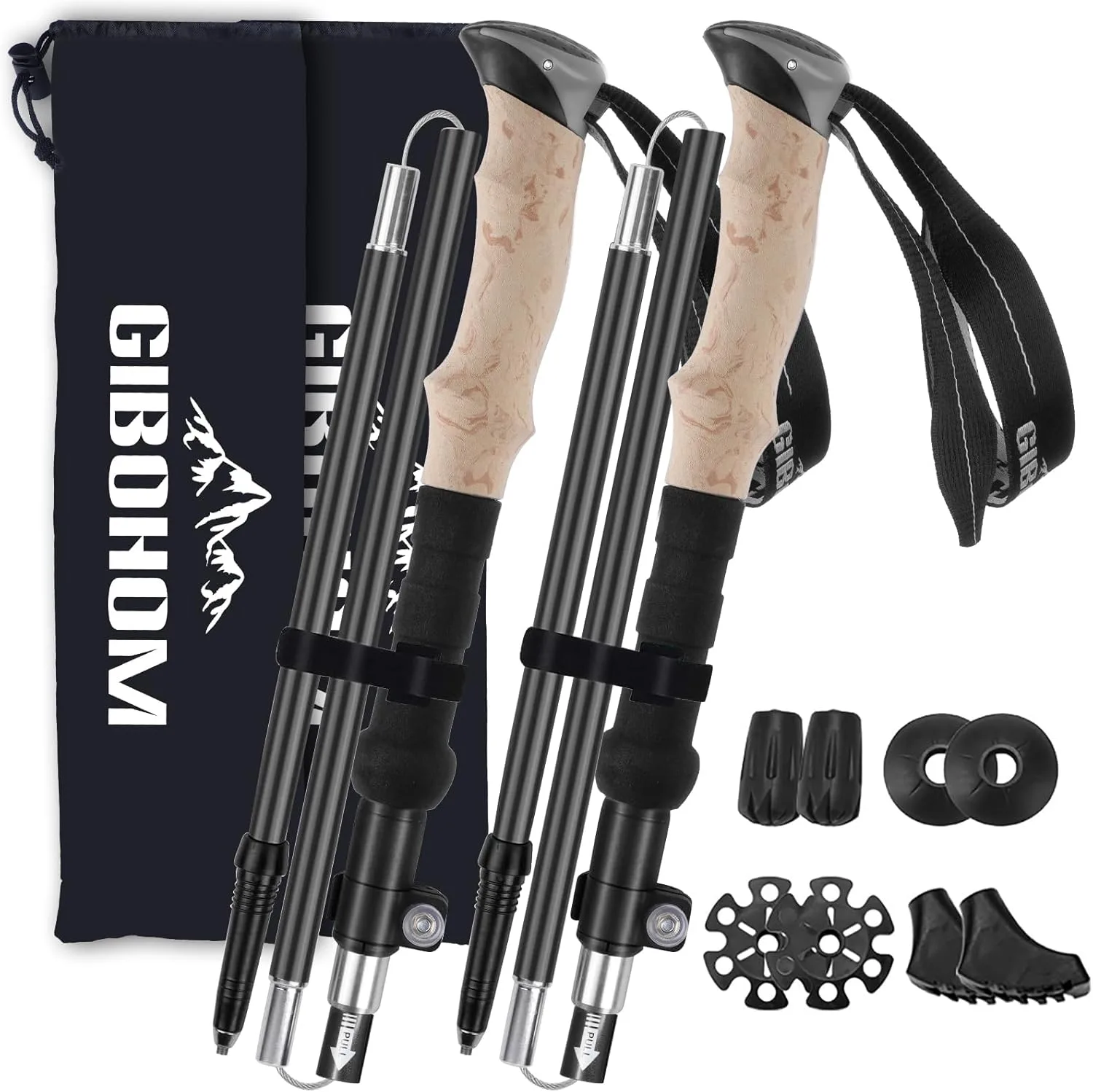
Versatile for both trail running and Nordic walking, these 7075 aluminum poles include an anti-shock system that reduces joint impact on technical descents. Adjustable between 105 and 125 cm, they include four pairs of rubber tips for different surfaces (asphalt, dirt, rock). A good choice if you want poles you can also use for hiking and easier trails, not just racing.
View price on Amazon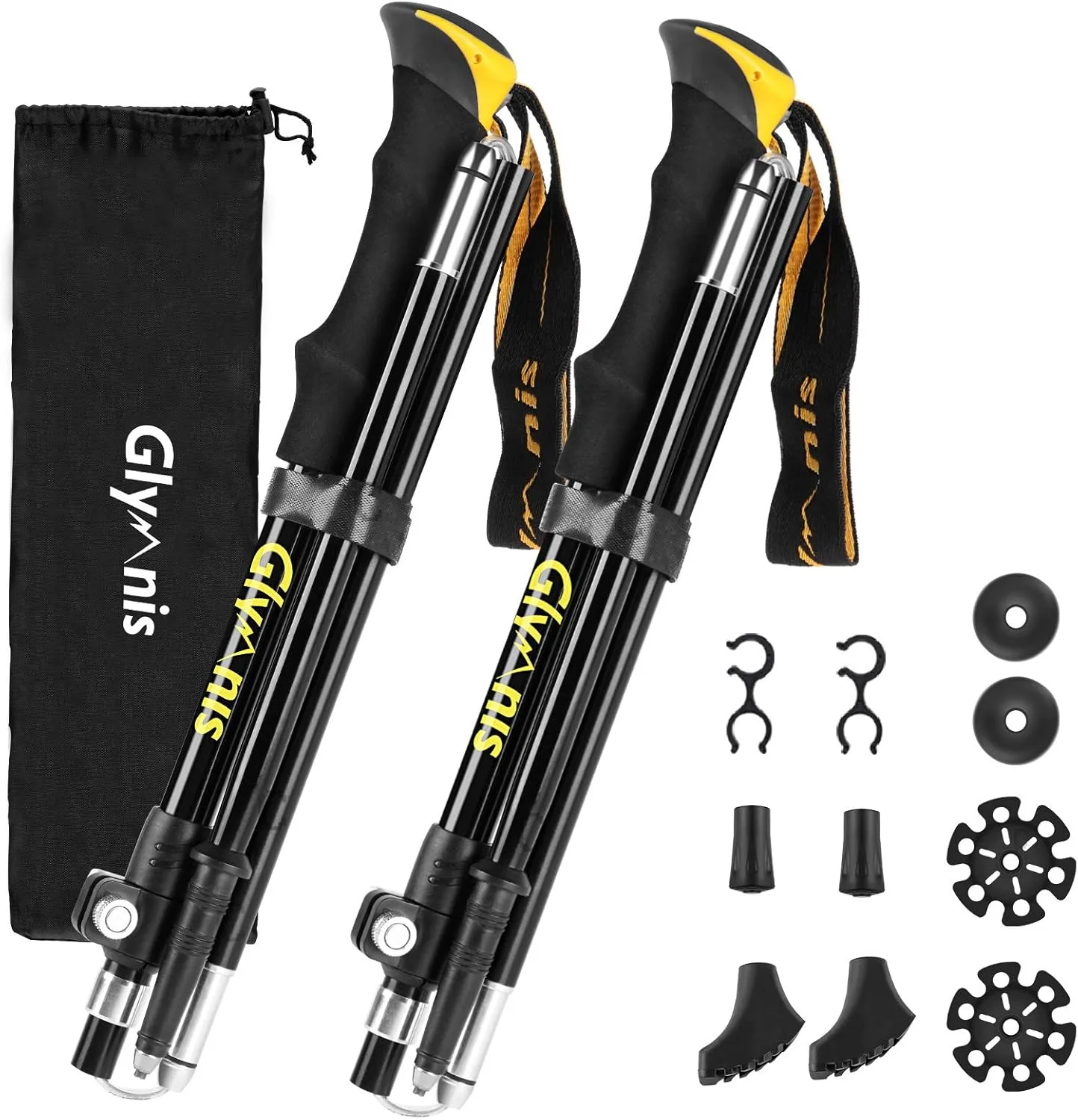
If you are looking for the most compact poles on the list, these are your pick. At just 36 cm folded, they are perfect for stashing on the side of a backpack or even in the pocket of a trail vest when you do not need them (on flat sections or easy forest terrain). Built from 7075 aluminum with EVA grips, adjustable up to 130 cm. One of the lightest models in the aluminum category, ideal for runners who want poles available without weighing down the pack.
View price on Amazon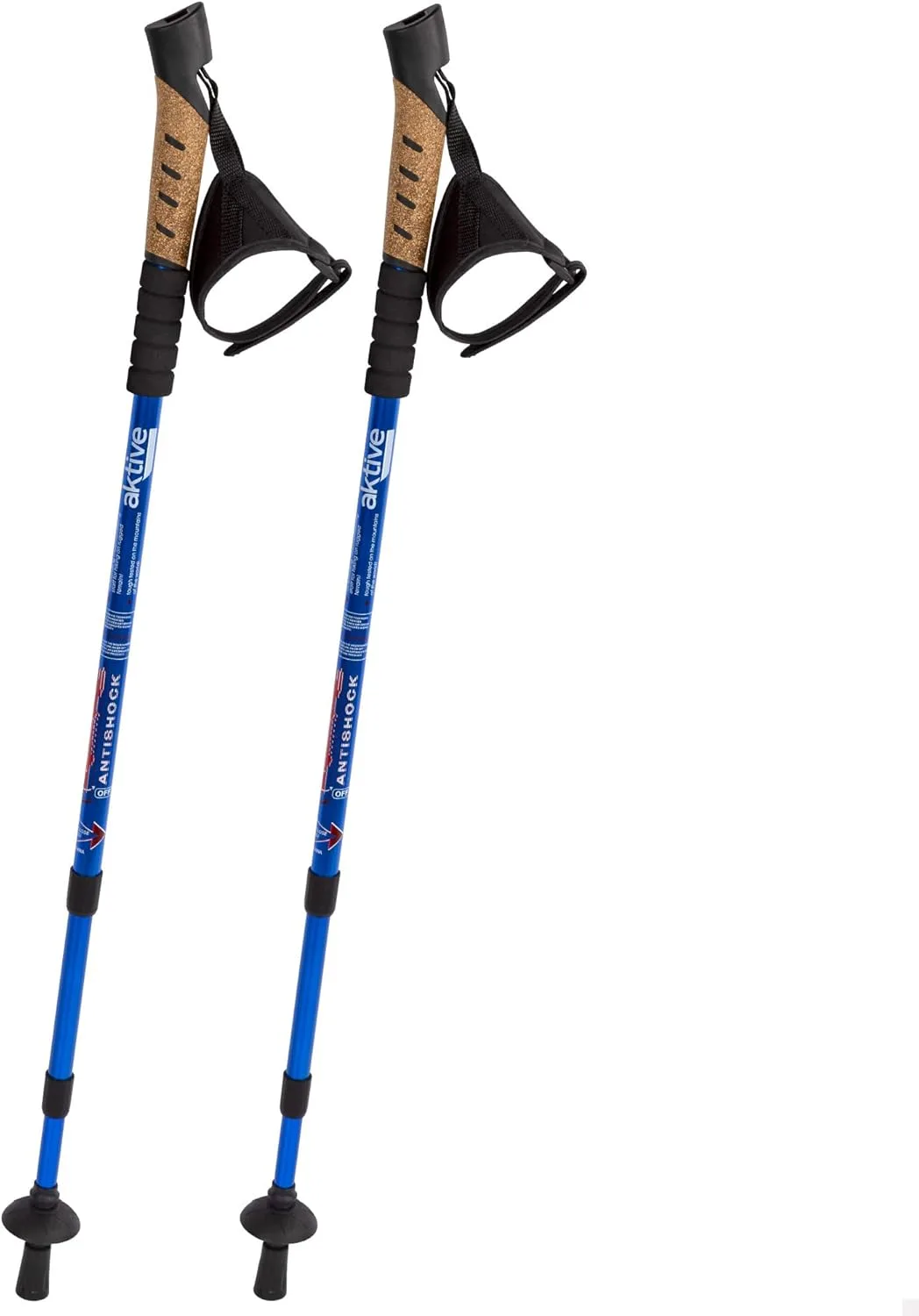
Budget-friendly and functional option for those looking for simple, reliable poles for less technical trails. Comfortable rubber grip, interchangeable metal or rubber tip depending on terrain, quick-lock system and adjustable strap. They are telescopic, allowing very precise length adjustment. Ideal for hiking and low-to-medium difficulty trails where you do not need the extreme lightness of race models.
View price on Amazon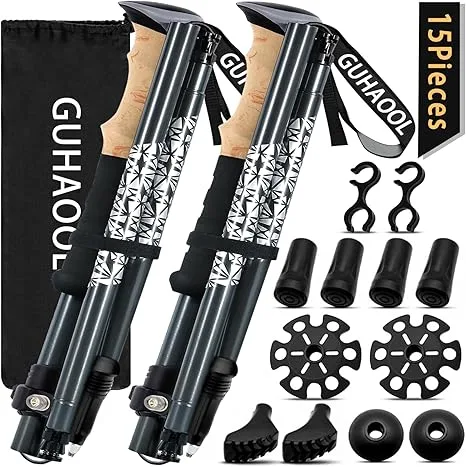
The absolute benchmark for trail running race poles. Ultra-light thanks to their full carbon construction, with the Z-pole quick-fold system that lets you stow or deploy them in seconds without releasing the strap. These are the poles used by elite runners at races like UTMB, Western States and Tor des Géants. Their weak points are price and that carbon, although light, can snap under a strong lateral impact against a rock. For racing on demanding trails, they are the number one choice.
View price on Amazon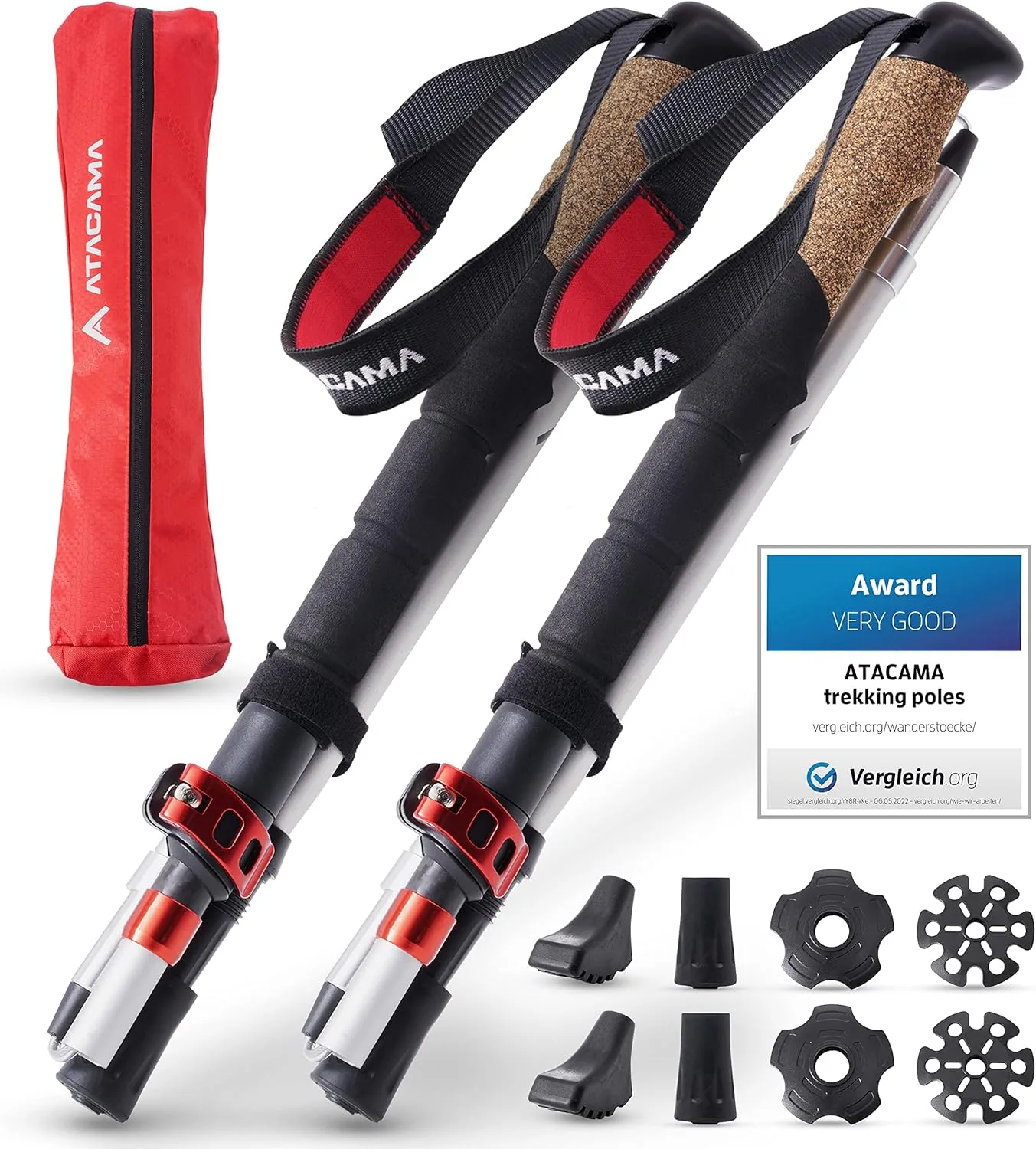
A premium balance between lightness and strength thanks to their combination of carbon 3K and 7075 aluminum. The natural cork handle is one of their strong points: it absorbs hand sweat better than EVA and prevents slipping in heat or rain, particularly valued on long-distance races. Extendable and adjustable, so they adapt to different terrain. Excellent option for the runner who wants to step up to premium materials without paying the price of pure carbon.
View price on Amazon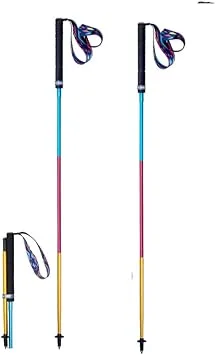
Leki is one of the most respected brands in mountain poles and the Micro Trail Vario is their flagship trail running model. The speed-lock system lets you adjust length one-handed in seconds, useful when you need to switch length between climbs and descents without stopping. Robust and lightweight construction, with an ergonomic strap system that reduces wrist fatigue during ultras. Ideal for long trails where you need maximum reliability over many hours.
View price on Amazon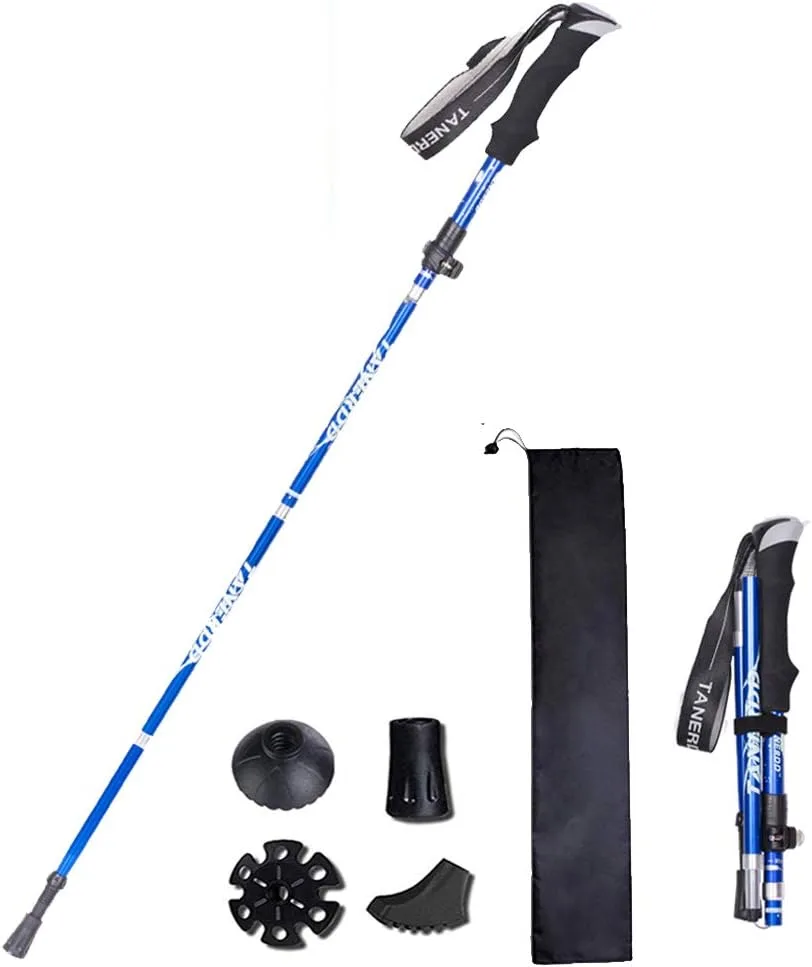
Cork is the most breathable material for pole grips: it absorbs sweat moisture and provides firm grip even when hands are wet from rain or effort. This foldable model with anti-shock system and non-slip tips is perfect for long-distance summer races, where heat makes hands sweat more. The anti-shock cushioning reduces wrist and elbow strain on rocky terrain.
View price on Amazon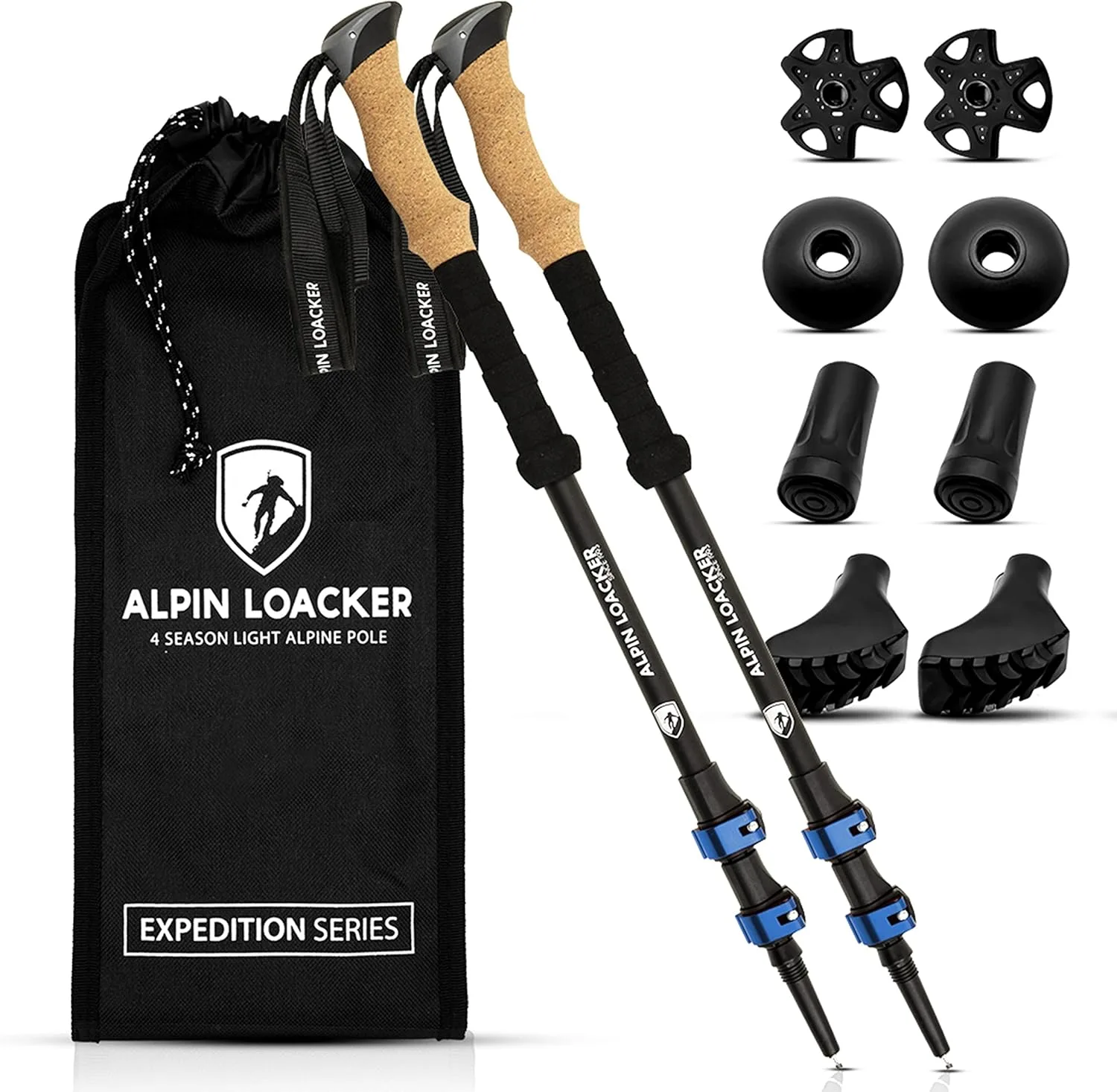
A complete, versatile kit that includes light aluminum poles, a carrying bag and multiple accessories (tips for different terrain). Compatible with trail running, Nordic walking and hiking, the height is adjustable to suit each user and terrain. If you want poles that work for weekend trails as well as a family hike or morning Nordic walk, the ALPIN LOACKER are a very reasonable purchase without sacrificing quality.
View price on Amazon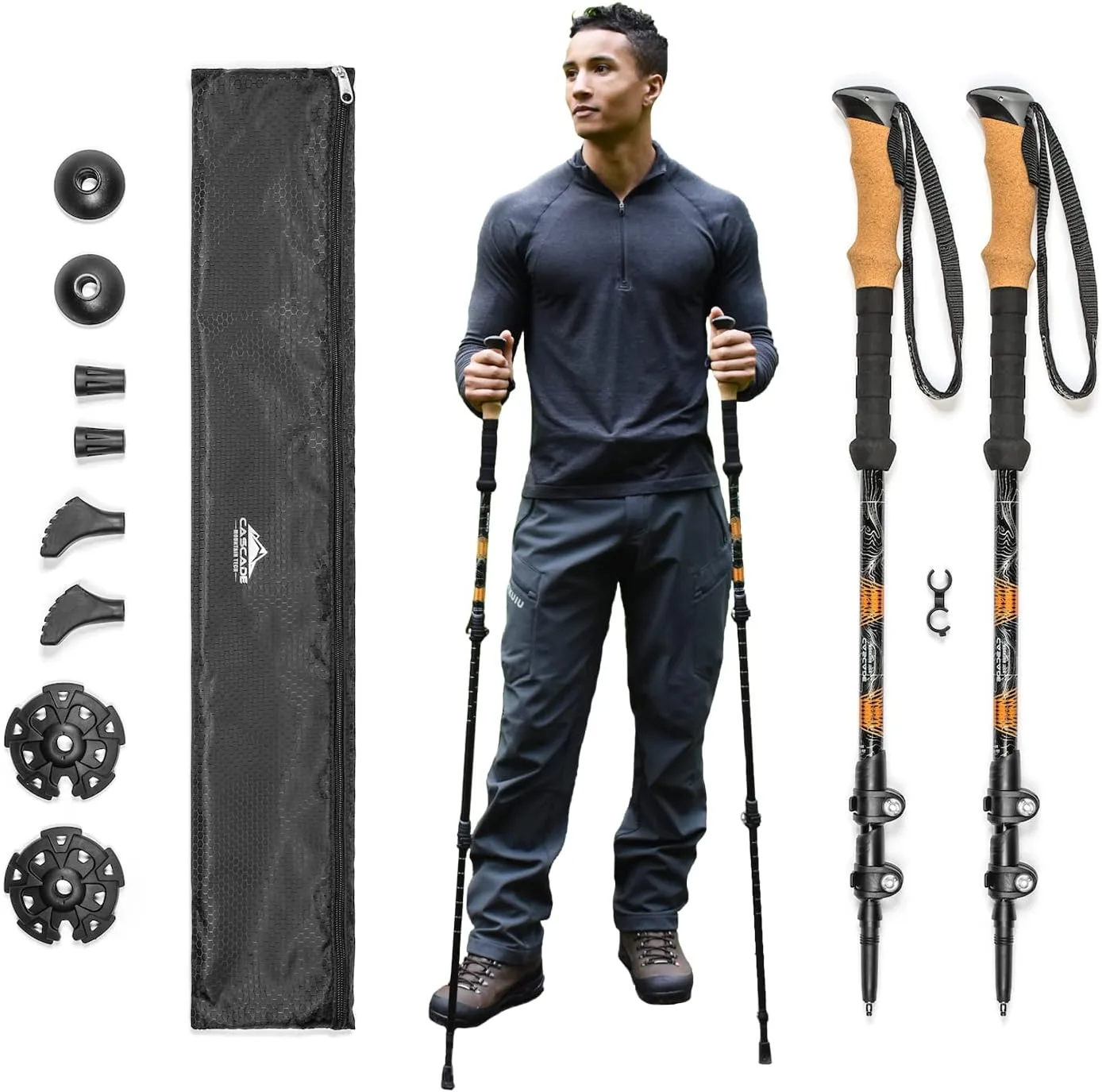
American brand with millions of units sold worldwide and a solid reputation in the hiking and trail market. The quick-lock system allows length adjustment in seconds, light aluminum keeps weight contained, and the 2-pole set includes everything needed to get started. Proven reliability at a very affordable price. Perfect for the runner looking for something functional and durable without complications or premium brand names. A popular choice among recreational trail runners.
View price on AmazonFolding poles collapse into three or four sections connected by an internal cord, similar to a tent pole. They pack down to 35 to 40 centimeters, making them easy to stow in or on a hydration while running vest. Their biggest advantage for trail running is speed of deployment. You can unfold and lock a Z-fold pole in 2 to 3 seconds, which is critical when you arrive at a climb mid-race and want to start using poles without losing momentum.
Telescopic poles slide into themselves like a telescope and lock at the desired length using twist-lock or lever-lock mechanisms. They are more adjustable than folding poles, which is useful if you want to shorten them for uphills and lengthen them for descents. However, they are bulkier when collapsed, slower to deploy, and harder to stow in a running vest. They remain popular for hiking but are increasingly less common in trail racing.
Carbon fiber is the material of choice for performance-focused trail runners. A pair of carbon poles typically weighs between 300 and 400 grams total, compared to 500 to 700 grams for aluminum. Carbon also absorbs vibration better, reducing fatigue in your hands and forearms during long sections of pole use. The downside is durability: carbon can snap under extreme lateral force, and it is more expensive.
Aluminum poles are heavier but virtually indestructible in normal use. They bend rather than snap under stress, which means a damaged aluminum pole is still usable. For training runs, casual trail running, and runners on a budget, aluminum poles offer excellent value. The weight penalty matters less in training where you are building strength, and the lower cost means replacing a lost or damaged pole is less painful.
Grip material matters more than many runners realize. Cork grips absorb sweat and provide excellent grip in wet conditions. Foam grips are lighter and comfortable but can become slippery when saturated. Rubber grips are the least desirable for running because they cause blisters and do not breathe. For the strap, look for an adjustable wrist loop that lets you maintain contact with the pole without gripping tightly. Your hand should rest in the strap, not clench the grip.
Find your running with a group
1,100+ runners already train together. Free on iOS.
Stand on flat ground with your arm at your side. Bend your elbow to 90 degrees. The distance from your hand to the ground is your ideal pole length. For most runners between 165 and 180 centimeters tall, this falls between 110 and 125 centimeters. If you use fixed-length folding poles, round down slightly. It is better to have poles that are marginally short than too long.
On climbs, plant the pole beside or slightly behind your opposite foot. Push down and back to propel yourself forward. The effort should come from your shoulders and triceps, transferring energy through the pole to the ground. Alternate arms with each step: left foot forward, right pole plants, and vice versa. On very steep terrain, you can use both poles together with a double-plant technique, pushing off both poles simultaneously with each step.
On descents, plant your poles ahead of you to absorb impact and provide balance. Place the tips slightly wider than your body to create a stable triangle with your feet. The poles should touch down before your feet land, creating a braking effect that takes pressure off your quads and knees. Keep your grip light. Holding the poles too tightly transmits every impact to your wrists and forearms. For more on descending form, read our uphill and downhill technique guide.
Not all hydration vests are designed to carry poles. Before buying poles, check that your vest has dedicated pole-carrying attachments. Most trail-specific vests from leading brands include bungee cord loops on the shoulder straps and a lower attachment point at the back or side. The poles should sit securely without bouncing or shifting during running. Test this with a short run before committing to the setup.
In a race, you need to switch between using and stowing poles quickly. Practice the sequence: fold the poles, slip them into the vest attachment, secure the bungee. Then reverse it: release the bungee, pull the poles out, unfold and lock. Time yourself. With practice, you should be able to deploy or stow poles in under 10 seconds without breaking stride. This efficiency comes from repetition during training.
Poles provide the greatest benefit in races with sustained climbs of 20 minutes or longer, total elevation gain over 1,500 meters, and distances over 50 kilometers. In ultra-distance events, poles can make the difference between finishing strong and shuffling the last 20 kilometers with destroyed legs. For your first long event, our first ultra trail guide covers complete preparation strategies.
For shorter trail races under 20 kilometers with moderate elevation, poles add weight and complexity without enough benefit. If the course is primarily technical with lots of scrambling over rocks, poles can get in the way and even become dangerous if they catch on something. Fast, undulating courses where you rarely walk are also better suited to poleless running. Consider the specific terrain and your goals before deciding.
Always check race regulations before planning to use poles. Some races prohibit them entirely. Others include them in the mandatory gear list, requiring all runners to carry and potentially use poles. Knowing the rules in advance lets you train appropriately and avoid disqualification on race day. When in doubt, contact the race organizer directly.
Find trail running groups in your city and learn from experienced runners.
Join 1,100+ runners
Routes, training plans and tips to run better. No spam.
We respect your privacy. Unsubscribe anytime.