CORRERJUNTOS
Matching Cities Blog
Log in Join
Home/Blog/Yoga for Runners
Woman practicing yoga outdoors for running recovery

Yoga for Runners: 10 Essential Poses + 20-Minute Routine

Improve flexibility, recover faster and prevent injuries with a yoga practice designed specifically for runners.

Training · March 15, 2026 · 9 min read
In this article
  • Why Yoga If You're a Runner?
  • The 10 Essential Poses
  • 20-Minute Routine
  • When and How to Practice
  • Recommended Gear
  • Common Mistakes

Why Yoga If You're a Runner?

Running is repetitive by nature. Your legs move in the same plane, your hips tighten, your hamstrings shorten, and your lower back absorbs thousands of impacts per session. Over time, this creates muscular imbalances that lead to stiffness, reduced range of motion and, eventually, injury.

Yoga directly addresses these issues. It lengthens the muscles that running shortens, strengthens the stabilizers that running neglects, and teaches you to breathe more efficiently under effort.

Here are the main benefits for runners:
  • Greater flexibility: Longer hamstrings, open hips and mobile ankles translate to a more fluid stride and fewer compensatory injuries.
  • Faster recovery: Gentle stretching after a run increases blood flow to tired muscles, reducing soreness and speeding up repair.
  • Injury prevention: Tight IT bands, plantar fasciitis and knee pain are often rooted in inflexibility. Yoga tackles the source, not just the symptom.
  • Better breathing: Yoga trains diaphragmatic breathing, which improves oxygen delivery during hard efforts.
  • Mental focus: Holding challenging poses builds the same mental resilience you need in the final kilometers of a race.
  • Core activation: Many yoga poses engage the deep core muscles that keep your pelvis stable and your running form efficient.
Runner stretching in downward dog pose on a yoga mat

The 10 Essential Poses for Runners

1. Downward Dog (Adho Mukha Svanasana)

The foundation of any runner's yoga practice. It stretches the calves, hamstrings and shoulders simultaneously while decompressing the spine. Press your heels toward the floor and keep your back flat. Hold for 30-60 seconds.

2. Pigeon Pose (Eka Pada Rajakapotasana)

The single best hip opener for runners. It targets the glutes, hip flexors and piriformis — three areas that become chronically tight from running. Keep your hips square and walk your hands forward to deepen the stretch. Hold 60 seconds per side.

3. Warrior I (Virabhadrasana I)

Strengthens the quads and glutes while stretching the hip flexors of the back leg. It also opens the chest and improves balance. Bend your front knee to 90 degrees and keep your back heel grounded. Hold 30 seconds per side.

4. Warrior II (Virabhadrasana II)

Opens the inner thighs and strengthens the legs in a wider stance than running demands. This lateral work builds stability that prevents knee collapse during longer runs. Gaze over your front hand. Hold 30 seconds per side.

5. Triangle Pose (Trikonasana)

Stretches the IT band, hamstrings and side body. Runners with tight IT bands should prioritize this pose. Keep both legs straight, hinge at the hip, and reach your bottom hand toward your shin or a block. Hold 30 seconds per side.

6. Butterfly Pose (Baddha Konasana)

A seated hip opener that targets the inner thighs and groin. Bring the soles of your feet together and let your knees fall open. Gently press your elbows on your inner thighs and fold forward for a deeper stretch. Hold 60 seconds.

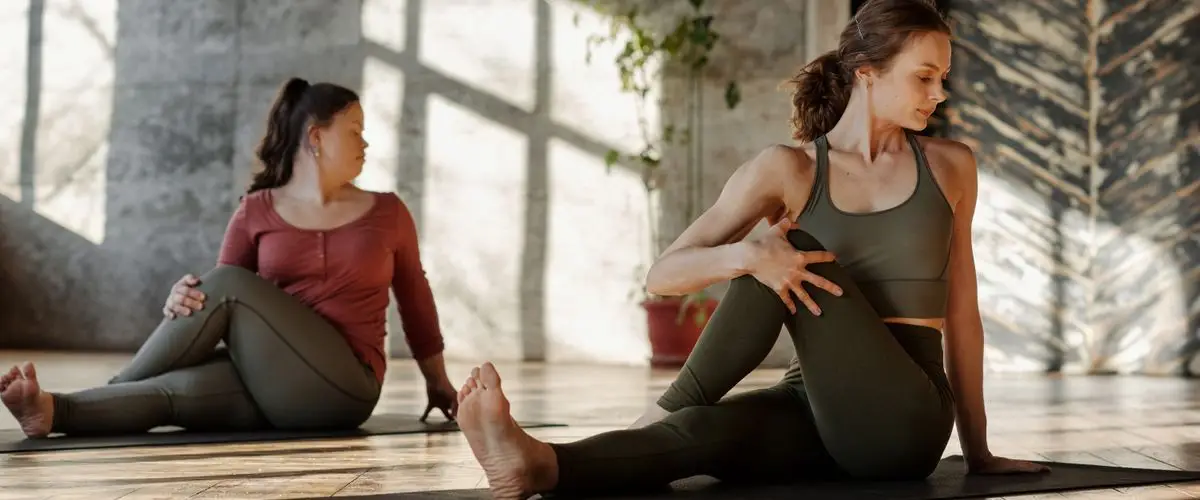
7. Spinal Twist (Supta Matsyendrasana)

Lying on your back, cross one knee over your body and look the opposite way. This releases tension in the lower back, glutes and IT band. Running compresses the spine; twists create space between the vertebrae. Hold 45 seconds per side.

8. Bridge Pose (Setu Bandhasana)

Strengthens the glutes and hamstrings while opening the hip flexors and chest. Lie on your back, feet flat on the floor, and lift your hips toward the ceiling. Squeeze your glutes at the top. Hold 30 seconds or do 10 slow repetitions.

9. Legs Up the Wall (Viparita Karani)

The ultimate recovery pose. Lie with your legs straight up against a wall. Gravity helps drain accumulated fluid from your legs and reduces post-run swelling. Stay here for 3-5 minutes after long runs.

10. Savasana (Corpse Pose)

Lie flat on your back, arms by your sides, palms facing up. Close your eyes and breathe naturally. This final relaxation pose activates the parasympathetic nervous system, shifting your body into recovery mode. Stay for 2-3 minutes.
Pro tip: You do not need to be flexible to start yoga. Use blocks under your hands in forward folds and a strap around your feet in seated stretches. Meeting your body where it is today is far more valuable than forcing a deeper pose.
Person practicing bridge pose on a yoga mat at home

20-Minute Post-Run Yoga Routine

Follow this sequence after any run. All you need is a mat and a wall. Hold each pose for the indicated time and breathe deeply through your nose.

  1. Downward Dog — 60 seconds. Pedal your heels alternately for the first 20 seconds to loosen the calves.
  2. Warrior I (right leg) — 30 seconds. Step your right foot forward from Downward Dog.
  3. Warrior II (right leg) — 30 seconds. Open your hips and arms to the side.
  4. Triangle (right side) — 30 seconds. Straighten your front leg and reach down.
  5. Warrior I (left leg) — 30 seconds. Repeat the flow on the left side.
  6. Warrior II (left leg) — 30 seconds.
  7. Triangle (left side) — 30 seconds.
  8. Pigeon Pose (right side) — 90 seconds. From Downward Dog, bring your right knee forward.
  9. Pigeon Pose (left side) — 90 seconds.
  10. Butterfly — 60 seconds. Sit up, soles together, fold forward gently.
  11. Spinal Twist (both sides) — 45 seconds each side. Lie on your back.
  12. Bridge — 30 seconds hold, or 10 slow lifts.
  13. Legs Up the Wall — 3 minutes. Let gravity do the recovery work.
  14. Savasana — 2 minutes. Close your eyes and breathe.
Total time: approximately 20 minutes. If you are short on time, prioritize poses 1, 8, 9, 13 and 14 for a 10-minute express version that covers the most critical areas.

When and How to Practice

Before a run (5-10 minutes)

Keep it dynamic and short. Downward Dog, Warrior I and gentle lunges warm up the hips without reducing muscle power. Avoid deep static holds before running — save those for after.

After a run (15-20 minutes)

This is the ideal time for the full routine above. Your muscles are warm and receptive to stretching. Focus on the areas that feel tightest: hips, hamstrings, calves and lower back.

On rest days (20-30 minutes)

Rest days are perfect for a longer, deeper session. Add extra time in Pigeon, Butterfly and Legs Up the Wall. You can also include poses like Reclined Hand-to-Big-Toe and Half Splits for a more thorough stretch.

After a race or long run

Wait at least 2-3 hours before doing any deep stretching. Your muscles are inflamed and need initial recovery first. Start with Legs Up the Wall, then gentle twists and easy forward folds.

Recommended Gear

Yoga mat: Liforme Yoga Mat — Extra grip, alignment markers and 4.2mm cushioning. Ideal for post-run sessions on hard floors.

Yoga blocks (pair): Manduka Cork Yoga Block — Essential for runners with tight hamstrings. Bring the floor closer to you in forward folds and Triangle.

Resistance band: Gritin Resistance Bands Set — Add light resistance to hip openers and glute activation exercises before your yoga flow.

Common Mistakes

  • Forcing flexibility: Stretching should feel like a strong pull, never sharp pain. Forcing a pose past your current range risks muscle tears, especially in cold muscles.
  • Holding your breath: Breathing is half the benefit. Exhale to deepen a stretch, inhale to create space. If you are holding your breath, you are pushing too hard.
  • Skipping it after easy runs: Many runners only stretch after hard workouts. But easy-run days are when tightness accumulates silently. A quick 10-minute flow after every run prevents problems.
  • Bouncing in stretches: Ballistic stretching triggers the stretch reflex and tightens the muscle further. Hold each pose still and let gravity and time do the work.
  • Doing deep stretches before running: Static holds longer than 30 seconds before a run can temporarily reduce power and increase injury risk. Stick to dynamic movement pre-run.
  • Neglecting the upper body: Runners often focus only on legs. But tight shoulders and a stiff thoracic spine reduce arm swing efficiency. Include Downward Dog and gentle twists to address the whole body.
Consistency over intensity: Fifteen minutes of yoga three times a week is far more effective than one long session on the weekend. Build a simple habit: mat out, shoes off, breathe.

More strength & flexibility guides

Training · Strength

Leg Strength Exercises for Runners

Read guide →
Training · Core

Core Exercises for Runners

Read guide →
Training · Cross-training

Cross-Training for Runners

Read guide →
Training · Recovery

Stretching After Running

Read guide →
José Márquez
José Márquez Founder of CorrerJuntos · Sub-3:30 Marathoner

Runner since 2012 and sub-3:30 marathoner. Founded CorrerJuntos with a simple idea: no runner should have to train alone.

Share: WhatsApp X 📋 Copy link

Train together, progress faster

Find runners at your level and train as a group. The motivation you need, for free.

Join 5,000+ runners

App Store Google Play
📬 Running Tips in Your Inbox

Training plans, nutrition and tips to run better. No spam.

🔒 We respect your privacy. Unsubscribe anytime.

🎉 Subscribed! We'll send you the best running tips.

Error subscribing. Please try again.

Related articles
Leg Strength for Runners Core Exercises Cross-Training Post-Run Stretching
CorrerJuntos

The most active running community in Spain. Run together, improve together.

Explore
Cities Places Events Blog App
Company
About Us Investors Contact Sponsors Media Kit
Legal
Privacy Policy Terms of Use Cookie Policy

© 2026 CorrerJuntos. All rights reserved. Made with ❤️ for runners.