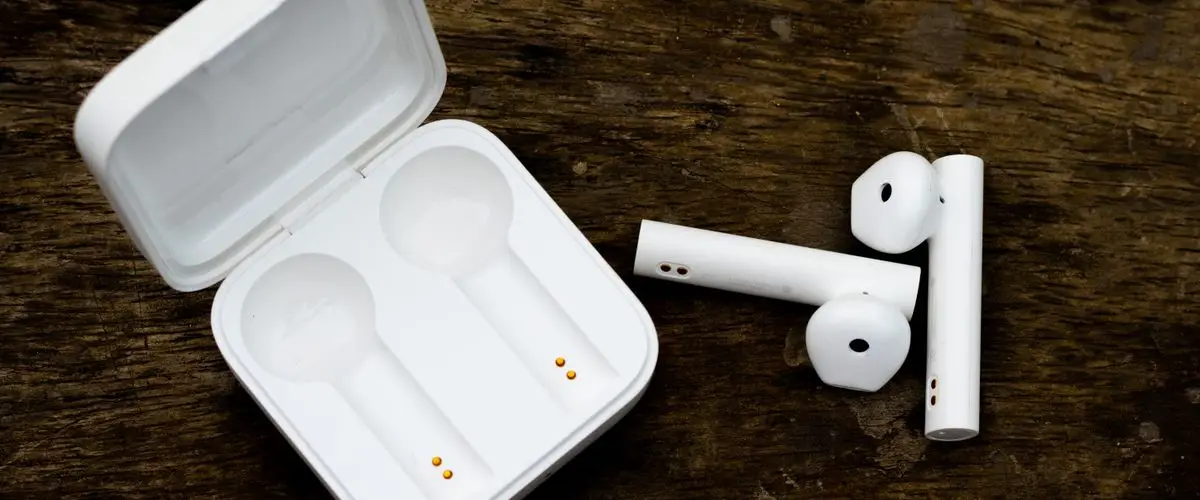
Why you need headphones that work on land and in water
If you run and swim, you know how frustrating it is to have separate headphones for each activity. One pair for running that can't survive the pool, another for swimming that's uncomfortable out of the water, and you end up with a drawer full of half-used devices. The problem multiplies if you're a triathlete: you need something that accompanies you from the water to the finish line without stopping to change gear in transition (World Athletics).
Headphones for running and swimming have evolved enormously in recent years. They are no longer clunky devices with laughable storage and tinny sound. Current models combine IP68 certification, up to 32 GB of storage, high-fidelity bone conduction and Bluetooth 5.3 connectivity for when you're on dry land. They are genuinely amphibious devices that perform well in both environments.
In this guide we'll cover everything you need to know before buying: how IP ratings work and why they matter, the real limitations of Bluetooth underwater, why bone conduction is the preferred technology for swimming, and a detailed analysis of the 6 best models you can buy right now. If you're only interested in dry-land running, we recommend our best running headphones guide where we cover models that don't need extreme water resistance.
IP ratings guide: IPX7, IP68 and what they really mean
IP (Ingress Protection) ratings are the international standard that defines how much protection an electronic device has against dust and water. It's a two-digit system: the first digit indicates protection against solids (dust, sand) and the second against liquids (water, sweat). Understanding these ratings is essential before buying swimming headphones, because the difference between an IPX4 and an IP68 is the difference between surviving a few drops of sweat and functioning at two meters depth.
First digit: protection against solids
The first digit ranges from 0 (no protection) to 6 (total dust protection). When you see an X instead of a number (as in IPX7), it means the manufacturer hasn't certified the solid protection, not that it doesn't have any. For sports headphones, the second digit is what matters, although a 6 in the first position guarantees that neither beach sand nor trail dust will cause any problems.
Second digit: water protection
This is the critical number for swimming headphones. Let's break down each level so you understand exactly what you can and cannot do with each rating:
| Rating | Protection | Suitable for swimming | Recommended use |
|---|---|---|---|
| IPX4 | Splashes from any direction | No | Light sweat, light drizzle |
| IPX5 | Low-pressure water jets | No | Heavy sweat, moderate rain, shower |
| IPX6 | High-pressure water jets | No | Heavy rain, rinsing under the tap |
| IPX7 | Immersion up to 1 m for 30 min | Limited | Accidental drops in water, extreme rain |
| IP68 | Continuous immersion at more than 1 m | Yes | Pool and open water swimming |
| IPX8 | Continuous immersion, depth per manufacturer | Yes | Extended swimming, shallow diving |
Waterproof vs water-resistant: the difference that matters
These two terms are often used interchangeably in marketing, but they mean very different things. Water-resistant indicates that the device can handle superficial water contact: sweat, rain, splashes. That's what headphones with IPX4 or IPX5 offer. Waterproof means you can submerge the device and it will keep working. That requires at least IPX7, and for real swimming you need IP68 or IPX8.
The usual marketing trap is labeling headphones with IPX5 or IPX6 as "waterproof." Technically it's not wrong because they resist water, but they won't survive a pool. If your goal is to swim with them, always look for IP68 or an explicit manufacturer statement that they are suitable for swimming with specified depth and duration.
How bone conduction works underwater
Bone conduction is probably the best technology for swimming headphones, and the reason is purely physical. In air, bone conduction headphones transmit vibrations through the skull bones to the cochlea of the inner ear. On land, this technology has a known limitation: bass is less deep than with in-ears because air is a poor conductor of low-frequency vibrations.
Find your running with a group
1,100+ runners already train together. Free on iOS.
Underwater, everything changes. Water is a much more efficient sound transmission medium than air. Sound waves travel at approximately 1,500 meters per second in water, compared to 343 meters per second in air. This greater speed and density of the medium means that the vibrations from bone conduction transducers are transmitted with greater force and clarity through the bone when the skull is surrounded by water. The practical result is that many users report that bone conduction headphones sound better underwater than above it.
Specific advantages underwater
- No ear canal seal needed: In-ear swimming headphones need to create a watertight seal in the wet ear canal, which is difficult and gets lost with swimming movements. Bone conduction doesn't have this problem because nothing goes into the ear.
- Compatible with goggles and swim cap: The transducers rest on the cheekbones, so they don't interfere with swim goggles or the swim cap. You can even put the cap over the headphones for extra hold.
- Enhanced bass: Water improves low-frequency transmission through bone, compensating for one of bone conduction's main weaknesses on dry land. Bass sounds fuller and more defined underwater.
- Less sound leakage: On land, bone conduction leaks some sound to the outside, especially at high volumes. Underwater, this leakage is drastically reduced.
If you want to dive deeper into how bone conduction works and compare it with other types of running headphones, we recommend our dedicated article on bone conduction vs in-ear for running.
Bluetooth limitations underwater: what nobody tells you
This is probably the most misunderstood aspect of waterproof headphones, and the reason why many buyers end up disappointed. Bluetooth does not work underwater. It's not that it works poorly or has reduced range: it simply doesn't work. And understanding why is fundamental to choosing the right model.
Why Bluetooth fails in water
Bluetooth operates in the 2.4 GHz frequency band, within the microwave spectrum. Water absorbs microwave energy very efficiently (it's the same principle that makes a microwave oven heat food). When you submerge a Bluetooth transmitter in water, the signal attenuates so rapidly that it can't reliably travel even a few centimeters. Your phone at the pool edge simply cannot communicate with the submerged headphones.
Operating modes: Bluetooth vs MP3
For this reason, all headphones designed for swimming offer two operating modes:
- Bluetooth mode: For use on land (running, cycling, gym). They connect to your phone like any wireless headphones. You can listen to Spotify music, podcasts, take calls and use any audio app. This is the mode you'll use while running or cycling.
- MP3/internal player mode: For underwater use. Audio plays directly from the headphone's internal memory, with no need for a wireless connection. You need to load your music onto the device beforehand by connecting it to your computer via USB. It's less convenient than streaming, but it's the only reliable way to listen to music while swimming.
Some models, like the Sony NW-WS623, let you switch between modes with a button. Others, like the Shokz OpenSwim Pro, automatically detect the environment and switch modes. In any case, for swimming you'll always depend on internally stored music.
The 6 best headphones for running and swimming in 2026
We've selected 6 models that genuinely work well for both running and swimming. These aren't running headphones with some water resistance, or swimming headphones you can reluctantly use outside the pool. They are devices designed from the ground up to be amphibious, with solid performance in both environments. They are ranked by overall score considering sound quality, versatility, comfort and value for money. To see our full running-only headphone selection, visit the running headphones section.
1. Shokz OpenSwim Pro - The best amphibious headphone of 2026

The Shokz OpenSwim Pro is the model we recommend by default to anyone looking for headphones for running and swimming. It's the natural evolution of the original OpenSwim, with substantial improvements in every aspect. The main new feature is the addition of Bluetooth 5.4, which allows you to use them as conventional wireless headphones when you're out of the water, something the previous model didn't offer.
Sound quality has taken a significant leap compared to the previous generation. Shokz's new transducer technology delivers more defined bass both dry and underwater, where bone conduction truly shines. The 32 GB internal storage lets you load thousands of songs without worrying about space, and compatibility with MP3, WMA, FLAC and AAC gives you flexibility with audio formats.
For running, they work exactly like Shokz OpenRun Pros: quality bone conduction with open ears, lightweight and stable titanium band, and intuitive touch controls. The transition from one use to the other is instant: you get out of the pool, activate Bluetooth and connect to your phone in seconds. For triathletes, this means a single pair of headphones for all three disciplines with no real compromise in any of them.
- Dual Bluetooth + MP3 mode
- 32 GB storage
- Premium bone conduction
- 9 hours battery life
- Fresh and salt water
- High price
- Limited bass on dry land vs in-ear
- Proprietary charger, not USB-C
2. FINIS Duo - The swimming specialist with bone conduction

FINIS is a brand any serious swimmer knows. They've been making professional swimming accessories for decades, and the FINIS Duo is their take on waterproof headphones. Unlike the Shokz, the FINIS Duo is designed from a swimmer's perspective, not a runner's. And it shows in details that matter in the pool.
The transducer placement is optimized for contact with swim goggles. They clip directly onto the goggle strap, providing firm and stable contact with the cheekbones without needing a rear band. This makes them extremely comfortable and secure during flip turns and push-offs. The underwater sound is excellent, with powerful bass thanks to the design optimized for bone transmission in an aquatic medium.
The main limitation is that they don't have Bluetooth: they are exclusively a waterproof MP3 player with bone conduction. For swimming they are fantastic, but for running you depend on the music stored in the 4 GB internal memory, with no option to connect to your phone for streaming or podcasts. If swimming is your primary activity and running is secondary, the FINIS Duo is an excellent choice. If you need Bluetooth for running, the Shokz is the better pick.
- Designed by swimmers for swimmers
- Clips to swim goggles
- Excellent underwater sound
- Very light and compact
- Trusted swimming brand
- No Bluetooth (MP3 only)
- Only 4 GB storage
- Less versatile out of the water
- Limited music transfer options
3. Sony NW-WS623 - The reference waterproof MP3 player

The Sony NW-WS623 has been a reference in the waterproof MP3 player segment for years, and the reason is simple: it works extraordinarily well for a reasonable price. It's not bone conduction but in-ear, which means the sound quality out of the water is notably superior to bone conduction models. The bass is deep, the treble crisp and the stereo separation is the best on this list.
The all-in-one design integrates the player, battery and earphones in a single piece that rests behind the neck. It includes multiple ear tip sizes, including swimming-specific ones that create a waterproof seal in the ear canal. The 12-hour battery is the most generous in this selection, and the quick charge delivers 60 minutes of playback from just 3 minutes of charging.
For running, the NW-WS623 works well but with an important caveat: being in-ear, they block the ear canal and reduce environmental awareness. They include an ambient mode that lets some outside sound through, but it's not comparable to the situational awareness of bone conduction. If you run in the city, this is something to consider. For swimming, you need to ensure a good seal with the aquatic ear tips; if you get it right, the underwater sound is very good.
- Best sound quality on the list
- 12 hours battery life
- Bluetooth + NFC + MP3
- Quick charge (3 min = 60 min)
- Excellent value for money
- In-ear: reduces environmental awareness
- Underwater seal can fail
- Only 4 GB storage
- Slightly bulky design
4. Naenka Runner Diver - Affordable waterproof bone conduction
Naenka has positioned itself as a serious alternative to Shokz in the waterproof bone conduction segment, and the Runner Diver is their flagship model. It offers the same combination of bone conduction, IP68, Bluetooth and MP3 player as the Shokz OpenSwim Pro, but at a significantly lower price. The question is whether the $60 savings justify the trade-offs.
Build quality is good, though a step below Shokz. The flexible silicone band adapts well to the head and is comfortable during long sessions of both running and swimming. The 8 GB of internal storage is double that of most competitors in this price range, giving you plenty of room for long podcasts and extensive playlists.
Sound is decent both dry and underwater, though it lacks some detail in the midrange compared to the Shokz. Underwater, the difference narrows, and the swimming experience is very satisfying. Bluetooth 5.3 works well for running with a stable connection and a range of about 10 meters. If your budget doesn't stretch to the Shokz OpenSwim Pro but you want dual-mode bone conduction, the Naenka Runner Diver is the best alternative we've tested.
- Best price for waterproof bone conduction
- 8 GB storage
- Bluetooth 5.3 + MP3
- IP68 certified
- Comfortable for long sessions
- Sound quality below Shokz
- Build quality a step below
- Less well-known brand
- Limited after-sales support in Europe
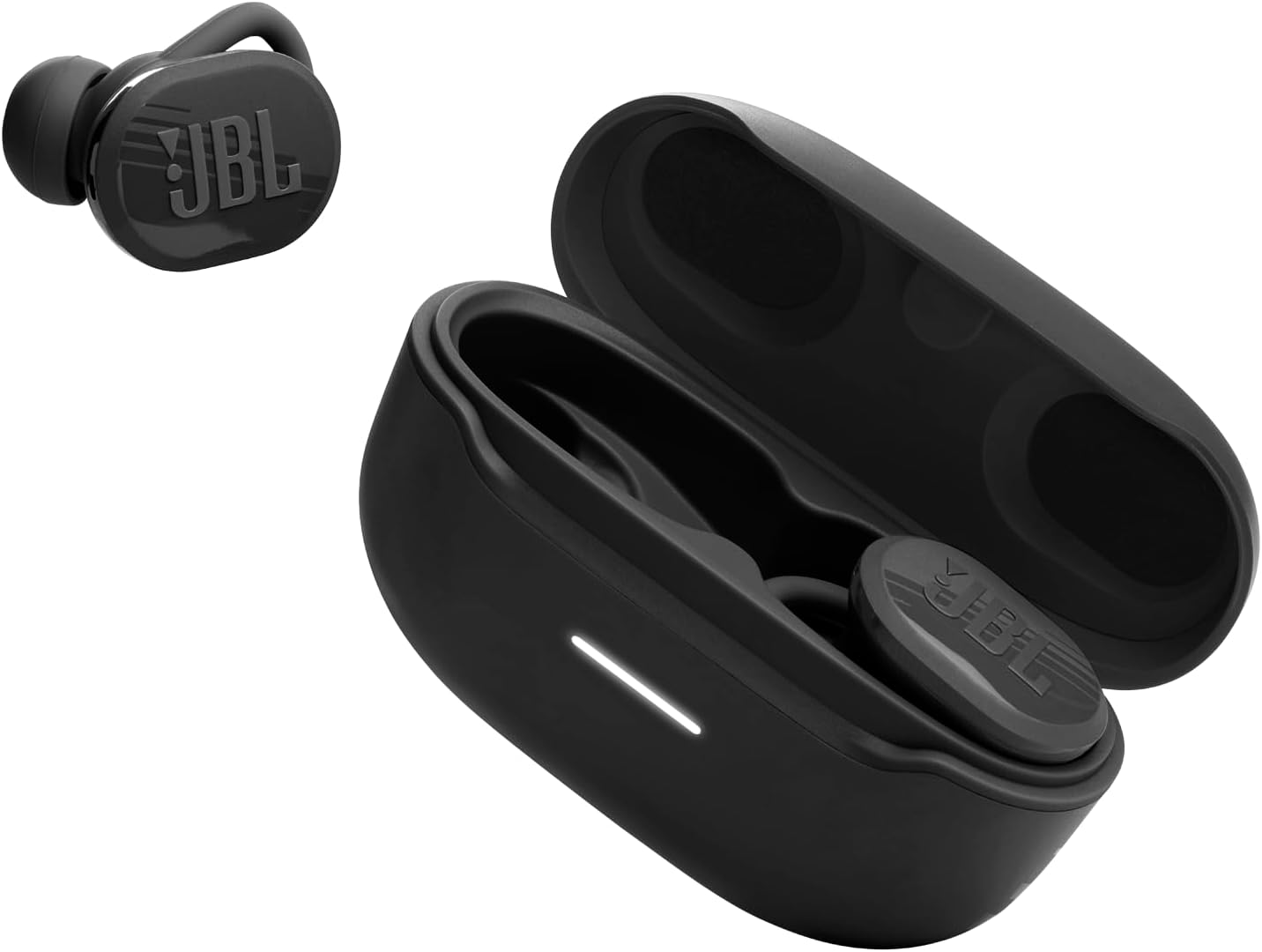
5. JBL Endurance Dive 2 - TWS with swimming mode

The JBL Endurance Dive 2 is the most affordable option in this selection and the only one with a true wireless (TWS) format with a charging case. JBL designed these in-ears specifically for water sports, with stabilizing fins that hook behind the ear and Twistlock tips that maintain the seal even during aggressive flip turns in the pool.
Dry sound quality is what you'd expect from JBL: powerful, with good bass and an energetic sound profile that works great for workouts. The JBL Sound Bass has presence and punch. In Bluetooth mode they are very capable sports earbuds for running, with the usual in-ear caveat: they block your ears and reduce environmental awareness.
For swimming, they have an MP3 mode with 1 GB of internal storage. That's significantly less than competitors (about 250 songs), but enough for 45-60 minute pool sessions if you rotate your playlist. The underwater seal is critical and depends heavily on finding the right ear tip. If you get a good fit, they work well; if not, water gets in and the sound deteriorates. They include three sizes of regular tips and two aquatic ones to maximize fitting options.
- Most affordable price
- TWS format with charging case
- Good JBL sound on dry land
- 10 hours battery life
- Well-known brand with easy support
- Only 1 GB storage
- Inconsistent aquatic seal
- In-ear: low environmental awareness
- Risk of losing an earbud in the pool
6. Aftershokz Xtrainerz - Compact waterproof bone conduction
The Aftershokz Xtrainerz are the spiritual predecessor to the Shokz OpenSwim and deserve a place on this list for their proven reliability over the years. Shokz (formerly Aftershokz) has been the pioneer brand in bone conduction for athletes, and the Xtrainerz were their first genuinely waterproof model. Although the brand has evolved with the OpenSwim Pro, the Xtrainerz are still available and offer a solid experience (ACSM).
The design is the classic bone conduction style with a titanium band that wraps around the nape, transducers over the cheekbones and a total weight of just 30 grams. They are extremely comfortable for both running and swimming, and the hold is impeccable. The 4 GB of internal storage holds about 1,000 MP3 songs, and the file management interface is as simple as drag and drop from your computer.
The main limitation is the absence of Bluetooth. Like the FINIS Duo, the Xtrainerz are exclusively an MP3 player with bone conduction. For swimming, this isn't a problem because Bluetooth doesn't work underwater anyway. For running, it means you're limited to the music you've loaded, with no streaming or live podcasts. If you can live with that limitation and value the proven reliability of the Shokz brand, the Xtrainerz are a safe choice.
- Proven reliability over years
- Quality Shokz bone conduction
- Only 30 grams
- Genuine IP68
- Easy music management
- No Bluetooth
- Only 4 GB storage
- 6-hour battery (shortest)
- Somewhat dated model
Full comparison table
All the key specs of the 6 models in one table so you can compare at a glance. Prices are approximate and may vary depending on the store and time of purchase.
| Model | Type | IP | Storage | Bluetooth | Battery | Weight | Price |
|---|---|---|---|---|---|---|---|
| Shokz OpenSwim Pro | Bone conduction | IP68 | 32 GB | 5.4 | 9 h | 35 g | ~$159 |
| FINIS Duo | Bone conduction | IPX8 | 4 GB | No | 7 h | 27 g | ~$120 |
| Sony NW-WS623 | In-ear | IP65/IP68 | 4 GB | 4.0 + NFC | 12 h | 32 g | ~$89 |
| Naenka Runner Diver | Bone conduction | IP68 | 8 GB | 5.3 | 8 h | 33 g | ~$99 |
| JBL Endurance Dive 2 | In-ear TWS | IP68 | 1 GB | 5.2 | 10 h | 24 g | ~$79 |
| Aftershokz Xtrainerz | Bone conduction | IP68 | 4 GB | No | 6 h | 30 g | ~$139 |
Buying guide for triathletes
If you train triathlon, your headphone needs are unique. You need a device that works across three very different disciplines without having to change it during transitions. Here are the specific criteria you should prioritize as a triathlete.
Priority 1: Dual Bluetooth + MP3 mode
This is the most important feature for a triathlete. You need MP3 for swimming (Bluetooth doesn't work underwater) and Bluetooth for running and cycling (to connect to your phone and receive pace data, distance or listen to podcasts). Models that only offer MP3 without Bluetooth, like the FINIS Duo or Aftershokz Xtrainerz, force you to rely on internally stored music throughout the entire event. For training it may be acceptable, but for races where you want real-time pace information, Bluetooth is necessary.
Priority 2: Bone conduction for safety on the bike and run
In cycling, having your ears blocked is dangerous and in many countries illegal during competitions. Bone conduction lets you listen to music or pace instructions while maintaining full awareness of traffic, other cyclists and race officials. For the run segment, environmental awareness is equally important. Bone conduction is the only technology that lets you listen to audio without compromising your safety in these two disciplines.
Priority 3: Quick transition and compatible design
In triathlon, every second counts in transitions. Bone conduction headphones with a rear band are the fastest to put on and take off: one motion, no need to find the right tip position or adjust the seal. They are also compatible with the cycling helmet (the band goes underneath) and with swim goggles (the transducers don't interfere with the strap).
Our recommendation for triathletes
The Shokz OpenSwim Pro is, by a considerable margin, the best headphone for triathletes. It has everything you need: bone conduction for safety, Bluetooth for connectivity, MP3 for swimming, IP68 for water resistance, and a design that works with swim goggles, cycling helmet and running cap. The $159 price is justified if you practice triathlon regularly. For more information on bone conduction in a sports context, read our comparison of bone conduction vs in-ear for running.
If your budget is tighter, the Naenka Runner Diver at $99 offers the same combination of features with minor concessions in sound quality and build. It's a solid alternative that meets all three triathlete priorities.
Care and maintenance to maximize lifespan
Waterproof headphones are designed to resist water, but proper maintenance can double their lifespan. These are the basic care steps you should follow after every use.
After pool swimming
- Rinse with fresh water: Pool chlorine is corrosive. After every session, rinse the headphones under the tap with fresh water for 15-20 seconds. Pay special attention to charging contacts and speaker openings.
- Air dry: Don't use a hair dryer or place them under direct sunlight. Gently shake them to remove excess water and let them air dry at room temperature. Most models have drainage holes that help water escape.
- Don't charge while wet: Make sure the charging contacts are completely dry before connecting the charging cable. Electrolytic corrosion can damage the charging pins if there's moisture during charging.
After ocean swimming
- Rinse immediately: Salt water is much more corrosive than chlorinated water. Rinse the headphones with fresh water as soon as possible, ideally before they dry. Salt crystallization can clog openings and damage transducer membranes.
- Fresh water bath: If you've swum in the ocean, submerge the headphones in a glass of fresh water for 5 minutes to dissolve any salt residue that may have penetrated into the crevices.
- Check the contacts: Salt accelerates oxidation of metal contacts. Visually inspect the charging pins after every ocean use and clean with a dry cotton swab if you see white residue.
For running in rain or heavy sweat
Sweat contains salts and acids that, over time, can deteriorate seals and headphone materials. After intense workouts or running in the rain, wipe the headphones with a damp cloth and dry the charging contacts well. This applies to any sports headphone, not just waterproof ones. For more running headphone options in different weather conditions, visit our running headphones guide.
Audio formats and music management for MP3 mode
MP3 mode is essential for swimming, and music management requires a bit of planning. It's not as convenient as opening Spotify, but with a few minutes of preparation you'll have music for weeks of workouts.
Compatible audio formats
Most waterproof headphones support the most common formats:
- MP3: Compatible with all models. It's the most universal format and the one we recommend for its balance between quality and size. An MP3 file at 192 kbps takes about 5-6 MB per 4-minute song.
- WMA: Compatible with most models. Similar to MP3 in size and quality. Useful if you already have your library in this format.
- AAC/M4A: Compatible with newer models (Shokz OpenSwim Pro, Naenka Runner Diver). It's the native format for iTunes and Apple Music. Offers better quality than MP3 at the same bitrate.
- FLAC: Compatible with some premium models (Shokz OpenSwim Pro). Lossless format with maximum quality but much larger files. Consumes storage quickly: a single FLAC song can take up 30-50 MB.
How to transfer music to the device
The process is generally straightforward: you connect the headphones to your computer via the USB charging cable, the device shows up as an external storage drive, and you drag your music files to the appropriate folder. You don't need any special software for most models. Some manufacturers offer desktop apps that make playlist organization and syncing easier, but they're not essential.
Usage differences: running vs swimming
Although these headphones work in both environments, the usage experience is different in each. Understanding these differences will help you get the most out of your device.
While running
- Connection mode: Bluetooth connected to your phone. Full access to Spotify, Apple Music, podcasts, audiobooks, training apps with voice instructions. It's the standard wireless sports headphone experience.
- Fit: The bone conduction headphone band is very stable during running. In-ears with sport fins also stay put. In general, fit is not a problem for running with any of these models.
- Sound quality: This is where you notice the biggest differences between models. On dry land, in-ears sound better than bone conduction, but bone conduction offers better environmental awareness. The choice depends on your priorities.
- Controls: All models offer physical or touch controls for volume, pause, track skip and call answering. The control experience is similar to any sports headphone.
While swimming
- Connection mode: Internal MP3 player. No access to streaming or phone apps. You need to have loaded music beforehand.
- Fit: More critical than during running. The abrupt movements of swimming, flip turns and push-offs test stability. Bone conduction wins here because it rests on the cheekbones, while in-ears depend on a seal in a wet ear canal.
- Sound quality: Bone conduction improves underwater (better bass transmission), while in-ears can deteriorate if the seal is lost. If the seal is perfect, in-ears sound better, but it's harder to maintain throughout the session.
- Controls: Underwater, touch controls don't work well because water generates phantom touches. Physical buttons are preferable. Some models automatically disable touch controls in aquatic mode to avoid this problem.
Our final verdict: which headphones to buy based on your profile
After analyzing all 6 models in detail, here are our recommendations based on your specific situation:
- Triathlete or multi-sport athlete: Shokz OpenSwim Pro ($159). Bone conduction + Bluetooth + MP3 + 32 GB. It's the most complete and versatile headphone. Works perfectly for swimming, running and cycling. The investment is justified if you train two or more disciplines.
- Swimmer who also runs: FINIS Duo ($120) if you prioritize swimming, or Sony NW-WS623 ($89) if you want better sound outside the water.
- Tight budget but want Bluetooth: Naenka Runner Diver ($99). Best feature-to-price ratio with dual-mode bone conduction.
- Minimum budget: JBL Endurance Dive 2 ($79). Good option if you adapt to the TWS in-ear format and don't mind limited storage.
- Reliability above all: Aftershokz Xtrainerz ($139). A model proven over years with the Shokz quality guarantee. No Bluetooth, but works like clockwork.
If your priority is bone conduction but only for dry running without the need for swimming, we recommend reading our Shokz OpenRun Pro 2 review, which is Shokz's premium model for runners who don't need extreme water resistance.
See the best waterproof headphones on Amazon
Compare prices, read user reviews and take advantage of current deals.
See headphones on Amazon →Frequently asked questions
Can I use regular Bluetooth headphones for swimming?
No. The Bluetooth signal operates at 2.4 GHz, a frequency that water absorbs very efficiently. The connection drops out within a few centimeters of depth, making it impossible to maintain stable playback. For swimming, you need headphones with a built-in MP3 player that store music directly on the device. Bluetooth only works reliably out of the water, for running, cycling or the gym.
What is the difference between IPX7 and IP68 in headphones?
IPX7 guarantees resistance to temporary immersion in fresh water up to 1 meter depth for a maximum of 30 minutes. The X indicates that dust protection hasn't been certified. IP68 offers superior protection on both fronts: the 6 indicates total protection against dust and fine particles, and the 8 indicates resistance to continuous immersion at more than 1 meter depth, according to the manufacturer's specific specifications. For regular pool swimming, IP68 is the certification you should look for. IPX7 is sufficient to protect against heavy sweat and rain, but not for extended underwater sessions.
Do bone conduction headphones work underwater?
Yes, and the underwater experience is actually surprisingly good. Bone conduction transmits vibrations through the skull bones, and water is a much more efficient sound conductor than air. Vibrations are transmitted with greater force and clarity, resulting in fuller bass and a generally more powerful sound than on dry land. Models like the Shokz OpenSwim Pro or FINIS Duo are specifically designed to take advantage of this aquatic physics, offering a very satisfying audio experience during swimming.
How many GB of storage do I need for swimming with music?
With 4 GB you can store approximately 1,000 songs in MP3 format at 128 kbps, or about 700 songs at higher quality (192 kbps). For most swimmers, this equals several weeks of workouts without repeating a single song. If you prefer podcasts or audiobooks, 4 GB gives you more than 60 hours of spoken audio. Models with 8 GB double this capacity, and the Shokz OpenSwim Pro with 32 GB offers virtually unlimited storage for sports use. For typical swim sessions of 45 to 90 minutes, even 1 GB is enough if you rotate playlists periodically.
Can I use these headphones in salt water or the ocean?
It depends on the specific model. IP certifications are generally tested with fresh water, and salt water presents additional challenges due to its corrosive nature. Some models like the Shokz OpenSwim Pro and Sony NW-WS623 specify salt water compatibility in their technical documentation. Others don't make this distinction. In any case, if you use your headphones in the ocean, it's essential to rinse them with fresh water immediately after each use to remove salt residue that can damage charging contacts and transducer membranes over time.
Which headphones are best for triathlon?
For triathlon, the ideal combination is bone conduction with dual Bluetooth and MP3 mode. The Shokz OpenSwim Pro is our top recommendation because it covers all three disciplines without compromise: MP3 for swimming, Bluetooth for cycling and running, bone conduction for road safety while biking and running. The mode transition is instant: you get out of the water, the device detects the environment change, and you can connect to your phone in seconds. The band design is compatible with cycling helmet, swim goggles and swim cap, making it the perfect companion for triathlon training and racing.
Do swimming headphones also work for running in heavy rain?
Absolutely. If a headphone is certified to function submerged in a pool for hours, a storm poses no challenge whatsoever. All models in this guide with IP68 or IPX8 certification are over-protected for rain conditions, no matter how intense. In fact, for runners who live in rainy climates, swimming headphones are a smart investment because they completely eliminate any worry about water. You can run through a downpour, splash through puddles and train in extreme conditions with the peace of mind that your headphones are designed to withstand far more than that.