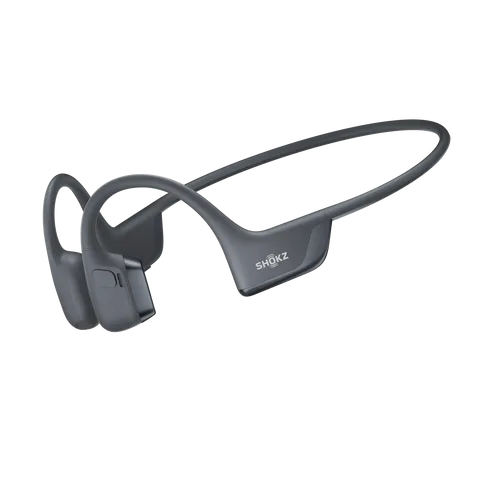

Introduction: why the OpenRun Pro 2 matter
Shokz has dominated the bone conduction headphone market for years, and the OpenRun Pro became the absolute benchmark for runners who want to listen to music without losing awareness of their surroundings. With the OpenRun Pro 2, Shokz promises to improve everything that already worked well and correct the few weaknesses of the first generation (World Athletics). The question we ask ourselves as runners is straightforward: is the upgrade worth it, or is this a minor refresh disguised as a new generation?
To answer that question, we used the OpenRun Pro 2 for six weeks of real training. Over 200 kilometers of running through city streets, parks, tracks and dirt paths. Interval sessions, 25 km long runs, rainy workouts, extreme heat with heavy sweating and phone calls in the middle of easy runs. We compared them directly with the original OpenRun Pro and the OpenRun Mini to have a clear reference point (ACSM).
If you are deciding between these headphones and other options, we recommend reading our bone conduction vs in-ear comparison for running first, where we explain the advantages and drawbacks of each technology. In this review we focus exclusively on the OpenRun Pro 2 and whether they deliver on their promises for the demanding runner.
What is bone conduction and how it works
Before diving into the technical details of the product, it is worth understanding the technology that makes it possible. Bone conduction is a method of sound transmission that does not use the ear canal. Instead of placing a speaker inside the ear or resting it over the ear, bone conduction headphones use transducers that vibrate against the bones of the skull, specifically the cheekbones, to transmit sound waves directly to the inner ear (the cochlea) without passing through the eardrum.
Find your running with a group
1,100+ runners already train together. Free on iOS.
The physical principle behind the technology
Sound, at its core, is vibration. When you listen to music conventionally, sound waves travel through the air, enter the ear canal, make the eardrum vibrate, and that vibration is transmitted through the tiny bones of the middle ear to the cochlea, where it is converted into electrical signals that the brain interprets. Bone conduction simply shortcuts this path: the vibrations from the transducer travel through the skull bones directly to the cochlea, bypassing the eardrum entirely.
This has a fundamental practical consequence for runners: your ears remain completely open. Nothing is inside the ear canal, nothing covers or blocks the ear. You hear your music and, at the same time, hear the world around you with complete naturalness. Cars, bicycles, other runners, loose dogs, traffic light signals. Everything. It is the reason bone conduction has become the preferred technology for runners who train outdoors.
The limitations of bone conduction
Being honest means also explaining what bone conduction cannot do as well as conventional headphones. Since sound is transmitted through bone vibration, deep bass is harder to reproduce with fidelity. Low frequencies require more energy and vibration amplitude, and small transducers have physical limitations in this regard. Additionally, in very noisy environments, music can be partially masked because there is no isolation from external noise. And the maximum perceived volume is lower than that of an in-ear that seals the ear canal.
The OpenRun Pro 2 tackle these limitations with their proprietary second-generation TurboPitch technology, which promises deeper bass and improved dynamic range. We will see in the following sections whether these improvements are real or just marketing.
Design, materials and comfort
Build quality and materials
The OpenRun Pro 2 maintain the classic Shokz format: a titanium band wrapped in soft silicone that goes around the back of the head, with two transducers that rest on the cheekbones just in front of the ears. The total weight is just 29 grams, practically imperceptible once in place. The titanium band provides just the right flexibility to adapt to different head sizes without applying excessive pressure, and the silicone has a soft feel that does not irritate the skin even with sweat.
Compared to the first generation, Shokz has refined several details. The transducers are slightly thinner with a larger contact surface, which distributes the vibration better and reduces the tickling sensation that some users noticed at high volumes with the previous model. The cheekbone contact area now has an improved angle of tilt that promotes more stable and uniform contact.
Ergonomics for running
The definitive test for any running headphone is whether it moves when you run. The OpenRun Pro 2 pass this test with flying colors. The combination of the rear band, which anchors the headphone around the head, and the transducers resting on the cheekbones creates a retention system that does not depend on the ear canal or the shape of the ear. The result is exceptional stability even at aggressive paces, doing 400-meter intervals on the track or running on uneven terrain.
We analyzed the OpenRun Pro 2 with sports sunglasses from various brands and with regular prescription glasses. In all cases compatibility was good: the glasses temples pass over the headphone band without creating uncomfortable pressure points. Only with one pair of very thick-templed glasses did we notice slight additional pressure behind the ear, but nothing that prevented comfortable use during an hour of training.
Sizing and fit
Shokz offers two sizes: standard and Mini. The standard size fits head circumferences of approximately 54 to 62 cm, while the Mini covers the 48 to 54 cm range. This is an important detail because a bone conduction headphone that does not press firmly against the cheekbones loses sound quality: the transducer needs good contact with the bone to transmit vibrations efficiently. If you are unsure between both sizes, our recommendation is to measure your head circumference with a tape measure and choose accordingly. At the boundary between both sizes, around 54 cm, the Mini usually offers a tighter fit and better sound.
Sound quality and bass improvements
Second-generation TurboPitch technology
The original OpenRun Pro already featured TurboPitch technology, which adds internal resonant cavities to amplify bass. The OpenRun Pro 2 take this technology to its second generation with redesigned transducers that vibrate with greater amplitude at low frequencies and optimized resonance chambers. The practical result is a tangible improvement in bass depth, especially in the 50 to 150 Hz range, where you perceive the punch of the kick drum, bass lines and low vocal tones.
Real-world sound performance while running
This is where theory meets the reality of running. When you run, ambient noise (traffic, wind, your own footsteps) masks some of the audio nuances. This applies to any headphone that does not seal the ear canal. That said, the OpenRun Pro 2 deliver sound that we have rated as surprisingly good for bone conduction. Voices sound clear and well-defined, making them excellent for podcasts and audiobooks. Music has more body and presence than any previous generation of Shokz.
The improved bass is especially noticeable with electronic music, hip hop and modern pop. It is not the deep, enveloping bass of a pair of Sony WF-1000XM5 with active noise cancellation, but for bone conduction it is the best sound we have heard. The midrange is well balanced and the treble is clean without becoming harsh, a problem that affected earlier Shokz models at high volumes.
Vibration at high volume
A side effect of bone conduction is that at high volumes the transducers can generate a noticeable tickling or vibration sensation on the cheekbone skin. The OpenRun Pro 2 handle this better than their predecessors thanks to the larger transducer contact surface, but the effect is still present if you push the volume above roughly 80 percent. For running this is usually not an issue: you rarely need maximum volume because the environment does not generate the noise level you would find on a subway or airplane. Our recommendation is to use the OpenRun Pro 2 between 50 and 75 percent volume for the best balance between sound quality and comfort.
If you want a deeper understanding of the differences between bone conduction and in-ear headphones and when each option makes sense, we have a dedicated article on bone conduction vs in-ear headphones for running that will help you decide.
Battery, Bluetooth 5.3 and connectivity
10 hours of real battery life
Shokz advertises 10 hours of battery life for the OpenRun Pro 2, and in our tests we have confirmed that this figure is realistic. At 65 percent volume, which is our usual level for running in urban environments, we consistently got between 9.5 and 10.25 hours of continuous playback before the headphones shut off. This is a significant improvement over the theoretical 8 hours of the original OpenRun Pro.
In practical terms, 10 hours of battery means you can cover an entire week of one-hour training sessions without charging the headphones. Or you can run a 100 km ultramarathon with music without worrying about battery, as long as your pace allows you to finish in under 10 hours. For marathons, half marathons and daily workouts, the battery is more than sufficient and leaves a very comfortable margin.
Quick charge and magnetic charger
The OpenRun Pro 2 charge with a proprietary magnetic charger that attaches to the back of the band. A full charge takes approximately one hour. The quick charge feature is especially useful: just 5 minutes of charging gives you approximately 1.5 hours of playback. If you forgot to charge the headphones before heading out for a run, a few minutes plugged in while you change clothes will give you more than enough battery for your workout.
The downside of the magnetic charger is that it is proprietary: you cannot use a standard USB-C cable. This means if you lose the charger or leave it at home when traveling, you cannot charge the headphones with any cable you find. Shokz sells replacement chargers, but a transition to USB-C, as many competitors have done, would have been preferable.
Bluetooth 5.3 and multipoint
The upgrade to Bluetooth 5.3 brings several practical improvements. The connection is more stable and faster: the headphones connect to the phone in 2-3 seconds when turned on, and we did not experience a single connection drop during our weeks of testing, even running through areas with heavy electromagnetic interference such as dense urban centers.
The multipoint feature allows connecting the OpenRun Pro 2 to two devices simultaneously. You can have them paired with your phone and sports watch, or with your personal and work phones, and switch between audio sources without needing to unpair and re-pair. In practice this is very convenient: if you are listening to music from your phone and receive a call on another device, the headphones switch automatically.
Supported codecs include SBC and AAC. There is no support for aptX or LDAC, which limits audio quality in terms of bitrate compared to some competitors. However, for the resolution that bone conduction can actually reproduce, AAC is more than sufficient and maintains low latency, which is important for video content and calls.
Water and sweat resistance: IP55
What IP55 certification means
The IP55 certification of the OpenRun Pro 2 indicates two levels of protection. The first 5 refers to dust protection: the device is protected against dust entry in quantities sufficient to interfere with operation, although it is not completely sealed. The second 5 refers to water protection: it withstands low-pressure water jets from any direction, which in practical terms includes rain, splashes and heavy sweat.
Performance in rain and heavy sweat
We ran with the OpenRun Pro 2 in moderate rain on two occasions and in light rain during four workouts. In all cases the headphones functioned normally, with no audio cuts, distortion or connectivity issues. After drying them with a cloth, we observed no anomalies.
As for sweat, we used them in interval sessions at 35 degrees Celsius where the amount of sweat was considerable. The silicone covering the transducers and the band does not retain sweat and is easy to clean. Unlike in-ear headphones, there is no risk of sweat accumulating inside the ear canal, which is an important advantage both for hygiene and long-term durability.
It is important to clarify that IP55 is not the same as IP67 or IP68. The OpenRun Pro 2 are not submersible. You should not swim with them, run them under the tap to clean them, or expose them to pressurized water jets. For cleaning, a damp cloth is sufficient. If you need bone conduction headphones for swimming, Shokz has specific models like the OpenSwim with IP68 certification.
Running performance: road and trail test
City and road training
The most common environment for most runners. We used the OpenRun Pro 2 on easy runs of 10 to 25 km through urban areas with medium to heavy traffic. The awareness of your surroundings is exactly what you would expect from quality bone conduction headphones: music plays in the background while you hear with full clarity the car engines, horns, passing bicycles and conversations of people around you. There is no sense of isolation whatsoever, which provides enormous peace of mind when running through streets with intersections and roundabouts.
Stability during running is flawless. In track interval sessions with aggressive pace changes (from 3:30 min/km in the fast reps to 5:30 in the recoveries), the headphones did not move a single millimeter. The rear band keeps everything in place without applying excessive pressure. We did not need to adjust or touch the headphones at any point during speed sessions.
Trail and dirt paths
On trails and rural paths the OpenRun Pro 2 also perform well. Uneven terrain generates more head movement than smooth pavement, but the titanium band retention absorbs the vibrations without the transducers losing contact with the cheekbone. On technical descents with lots of bouncing we did notice minimal sound variation when the head moves abruptly, but nothing that affects the experience significantly.
The advantage of hearing your surroundings is even more relevant on trails: loose rocks, branches, other hikers, local wildlife. Running on trails with headphones that block your ears is a practice we strongly advise against for safety reasons, and bone conduction solves this problem at its root.
Wind and ambient noise
Wind is the biggest enemy of bone conduction headphones. With moderate crosswind (20-30 km/h), the sound of the OpenRun Pro 2 is partially masked and you need to turn up the volume to hear music clearly. With strong wind (gusts of 40 km/h or more), music becomes difficult to enjoy at any volume. This is not a flaw specific to the OpenRun Pro 2, but an inherent limitation of any headphone that leaves the ears open.
In very noisy environments (main avenues with heavy traffic, construction zones), something similar happens: music competes with ambient noise and can fall into the background. Shokz's solution for these scenarios is to include foam earplugs in the box that you can use to partially block the ear canal. They work, but they negate the main advantage of bone conduction. Our recommendation is to accept this limitation as part of the trade-off: safety and environmental awareness in exchange for less sound immersion in challenging conditions.
Microphone and call quality
Dual microphone system with AI
The OpenRun Pro 2 feature a dual microphone system with AI-based noise cancellation. One microphone captures your voice while the second records ambient noise, and a signal processing algorithm separates both sources to transmit your voice more cleanly during calls.
Call quality in different environments
In quiet environments (home, office, park without wind), call quality is very good. The person on the other end hears you clearly and naturally, without the metallic artifacts or tunnel effect that some Bluetooth headphones produce. Latency is low, allowing fluid conversations without the discomfort of delays.
Running through the city, quality remains acceptable. The noise cancellation algorithm filters out much of the traffic noise and wind, although at high paces your labored breathing may bleed into the microphone. If you need to take an important call during a workout, our recommendation is to slow down to an easy jog or walk during the call so your breathing does not interfere.
With strong wind, call quality degrades noticeably. Wind noise against the microphones is hard to filter completely, and the person on the other end may hear an annoying background sound. For calls in windy conditions, no bone conduction headphone works really well, and the OpenRun Pro 2 are no exception.
Comparison: OpenRun Pro 2 vs Pro 1 vs Mini
If you already own the original OpenRun Pro or are considering the Mini as a more affordable alternative, this comparison will help you decide. You can also check out our full guide to the best running headphones in 2026 and our running headphones section to explore all available options.
| Feature | OpenRun Pro 2 | OpenRun Pro 1 | OpenRun Mini |
|---|---|---|---|
| Price | ~$159 | ~$129 | ~$99 |
| Battery | 10 hours | 10 hours | 8 hours |
| Bluetooth | 5.3 | 5.1 | 5.1 |
| Multipoint | Yes | No | No |
| Protection | IP55 | IP55 | IP67 |
| Weight | 29 g | 29 g | 26 g |
| Quick charge | 5 min = 1.5 h | 5 min = 1.5 h | 10 min = 1.5 h |
| TurboPitch | Gen 2 | Gen 1 | No |
| Mic noise cancellation | Dual mic + AI | Dual mic | Single mic |
| Charger | Magnetic | Magnetic | Magnetic |
Is it worth upgrading from the OpenRun Pro 1?
If your original OpenRun Pro are in good condition, the upgrade is not essential. The main improvements are Bluetooth 5.3 with multipoint, slightly improved bass with TurboPitch Gen 2, and AI-enhanced microphone noise cancellation. These are real improvements, but incremental. If your OpenRun Pro 1 work well, you can wait until they wear out to make the switch. If you need multipoint or make many calls while running, the upgrade makes more sense.
OpenRun Pro 2 vs OpenRun Mini
The OpenRun Mini are an excellent option for those seeking bone conduction at a more contained price point. They are lighter (26 g vs 29 g), have better water protection (IP67 vs IP55) and are ideal for smaller heads. However, the sound is noticeably inferior: without TurboPitch, the bass is flatter and the dynamic range is smaller. If audio quality matters to you and your budget allows it, the OpenRun Pro 2 justify the price difference. If you prioritize lightness, IP67 protection or have a tight budget, the Mini remain a solid purchase.
Pros and cons
What we like
- Total safety: you hear your surroundings 100%
- Flawless stability while running at any pace
- Improved bass with TurboPitch Gen 2
- 10 hours of real battery, enough for a full week
- Bluetooth 5.3 with 2-device multipoint
- Just 29 grams, practically imperceptible
- Quick charge: 5 min for 1.5 h of use
- Compatible with sunglasses and prescription glasses
- Very decent call quality with dual mic
- No sweat accumulation in the ear
Room for improvement
- Bass inferior to in-ear with ANC (physical limitation)
- IP55 and not IP67 like the basic OpenRun
- Proprietary magnetic charger, not USB-C
- $159 price tag may feel steep
- No aptX or LDAC codec support
- Music gets masked in strong wind
- Noticeable vibration above 80% volume
Testing methodology
How we conducted this review
This review is based on real, continuous use of the Shokz OpenRun Pro 2 over six weeks. This is not a lab analysis or a first-impression piece after one hour of use. We detail our methodology so you can assess the reliability of our conclusions:
- Kilometers run: Over 200 km across 32 training sessions of different types: easy runs, intervals, fartleks, long runs and active recovery.
- Test environments: City with medium and heavy traffic, urban parks, athletics tracks, dirt paths and rural trails.
- Weather conditions: Sun, light rain, moderate rain, crosswind of 15 to 35 km/h, temperatures between 5 and 18 degrees Celsius.
- Audio content: Varied music (electronic, rock, pop, hip hop, classical), voice podcasts, audiobooks and phone calls.
- Paired devices: iPhone 15 Pro, Samsung Galaxy S24, Garmin Forerunner 265 (multipoint test).
- Direct comparison: Sessions alternating with OpenRun Pro 1 and OpenRun Mini to evaluate differences simultaneously.
- Battery test: Three complete charge and discharge cycles with total playback time recorded for each cycle.
- Call test: 15 calls of 5 to 20 minutes in different conditions (indoor, quiet outdoor, outdoor with traffic, windy).
Final verdict and rating
The Shokz OpenRun Pro 2 are, in our opinion, the best bone conduction headphones for running you can buy in 2026. They do not revolutionize the category, but they perfect a formula that was already excellent. The improved bass with TurboPitch Gen 2 closes the sonic gap with conventional headphones, Bluetooth 5.3 with multipoint adds very practical day-to-day flexibility, and the 10-hour real battery life eliminates any battery anxiety for 99 percent of runners.
The fundamental question you should ask yourself is not whether the OpenRun Pro 2 are good headphones (they are), but whether bone conduction is the right technology for your type of training. If you regularly run outdoors (streets, parks, roads, trails), the answer is a resounding yes. The safety of hearing your surroundings naturally is priceless, and the OpenRun Pro 2 deliver the best possible audio experience within that safety priority.
If you run exclusively on a treadmill or in a gym, quality in-ear headphones will give you better sound for the same money or less. And if you alternate between outdoor and indoor running, bone conduction remains the most versatile option because it works well in both contexts, it simply will not be the best-sounding option at the gym.
At $159, the OpenRun Pro 2 are not cheap, but they are an investment that lasts. The build is robust, quality holds up with use, and the IP55 protection ensures resistance to sweat and rain. For runners who train 3 to 6 times a week outdoors, dividing the price by the hundreds of hours of use you will get makes the investment very reasonable.
Affiliate link. If you purchase through this link, we receive a commission at no extra cost to you.
Frequently asked questions
The OpenRun Pro 2 have IP55 certification, which means they resist water splashes, heavy sweat and light rain without any problem. You can train in the rain or on extremely hot days with complete peace of mind. However, they are not submersible: do not swim with them or submerge them in water directly. For running and outdoor workouts, the IP55 protection is more than enough for any typical weather condition. If you need headphones for swimming, Shokz has the OpenSwim with IP68 certification.
Yes, and this is the main reason bone conduction is the preferred technology for runners who train outdoors. The OpenRun Pro 2 never block or cover the ear canal at any point. Music is transmitted through vibrations in the cheekbones directly to the inner ear, leaving your ears completely free to hear cars, bicycles, other runners, dogs and any ambient sound naturally. It is exactly like having background radio playing at home: you hear the music and you hear everything else at the same time.
The OpenRun Pro 2 feature second-generation TurboPitch technology, which noticeably improves bass compared to previous Shokz generations. The lows have more depth and presence, especially in the 50 to 150 Hz range. That said, bone conduction has physical limitations for reproducing very low frequencies, so quality in-ear headphones with good noise cancellation will still deliver deeper and more enveloping bass. For running, where ambient noise and footstrike mask some of the audio, the difference narrows considerably and the OpenRun Pro 2 deliver more than satisfying sound.
Yes, the OpenRun Pro 2 are compatible with the vast majority of glasses. The neckband and transducers that rest on the cheekbones are designed to coexist with glasses temples without creating uncomfortable pressure points. Shokz has refined the design in this generation with thinner transducers and a more flexible band. In our tests they worked perfectly with sports sunglasses, casual sunglasses and prescription glasses. Only with very thick-templed frames might you notice some additional pressure, but nothing that prevents use during workouts of an hour or more.
The standard size fits head circumferences of approximately 54 to 62 cm, which covers most adults. The Mini version is designed for smaller heads (below 54 cm), including many women, teenagers and people with slimmer builds. To choose correctly, measure your head circumference with a tape measure around the forehead and back of the head. If you are in the 52 to 55 cm range, the Mini usually offers a tighter fit and better sound transmission. Above 55 cm, the standard size is the safe choice. A good fit matters because the transducer needs firm contact with the cheekbone to transmit vibrations correctly.
Call quality has improved considerably thanks to the dual microphone system with AI noise cancellation. In quiet environments, your voice sounds clear and natural. Running through the city, the algorithm filters traffic noise quite well, although your breathing may come through if you are running at high intensity. With strong wind, quality drops as it does with any headphone of this type. The OpenRun Pro 2 are perfectly suitable for taking calls during workouts, especially if you slow down to an easy jog during the conversation.
It depends fundamentally on where you run. For outdoors (streets, parks, roads, trails), the OpenRun Pro 2 are the superior choice for safety: you hear your surroundings naturally, without relying on an artificial transparency mode that always has latency and processing. They also do not fall out with sweat, do not create moisture in the ear, and the battery lasts twice as long as the AirPods Pro. For treadmill running, AirPods offer better sound and noise cancellation. Since most runners train outdoors most of the time, the OpenRun Pro 2 tend to be the smarter choice for runners.
Run with music and great company
Find running groups in your city and enjoy your headphones while running together.
Join 1,100+ runners
Running Tips in Your Inbox
Routes, training plans and tips to run better. No spam.
We respect your privacy. Unsubscribe anytime.