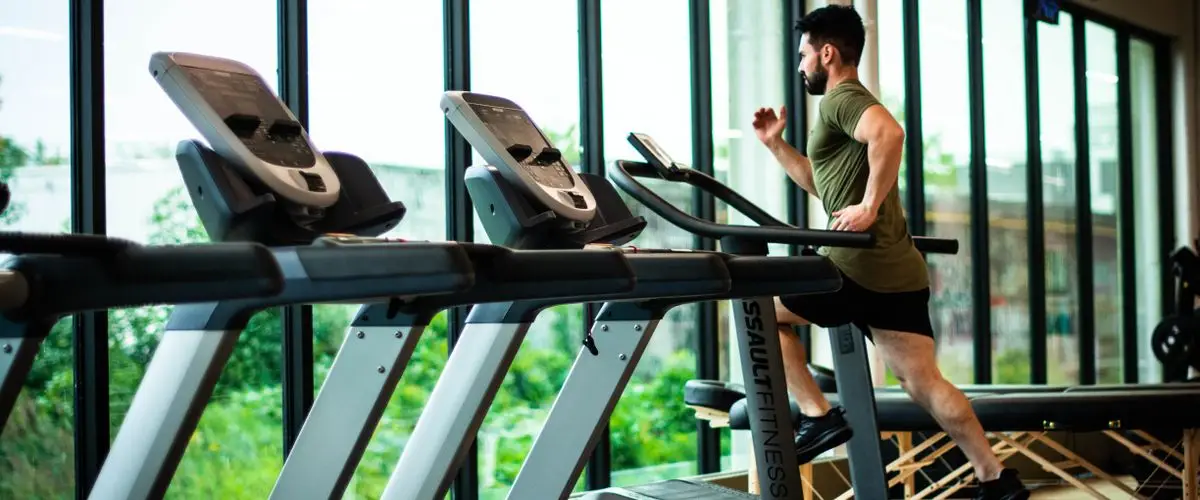
The treadmill vs outdoor running debate is one of the oldest in the running world. There are passionate advocates on each side, but the reality is that both options have their place in a smart training plan. The key is not choosing one over the other, but knowing when and why to use each one.
In this guide we break down the real differences —with data, not opinions— so you can decide what fits best with your goals, your situation and your lifestyle.
The real differences between treadmill and outdoor running
The fundamental difference is biomechanical. Outside, you propel your body forward against wind resistance and gravity. On a treadmill, the belt moves beneath your feet and you simply keep up with the movement. This creates several measurable differences:
- Wind resistance: Outdoors you spend between 2% and 10% more energy (depending on speed) due to aerodynamic drag. On a treadmill it is virtually zero.
- Surface: The treadmill offers a cushioned, uniform belt. The road has asphalt, cobblestones, slopes and irregularities that engage more stabilizer muscles.
- Stride: On a treadmill your stride tends to be slightly shorter and cadence slightly higher. Outdoors there is more natural variability.
- Temperature: Indoors there is no wind, which reduces sweat evaporation. You may sweat more on a treadmill at equivalent paces (ACSM).
Treadmill benefits
- Total pace control: You program the exact speed and the treadmill holds it. Ideal for intervals and speed workouts where you need precision.
- Lower joint impact: The cushioned belt reduces the impact force on every stride. Perfect for coming back from an injury or if you have knee or ankle discomfort.
- Weather independence: Rain, extreme cold, scorching heat or darkness are no longer excuses. Train whenever you want, regardless of the weather.
- Safety: No cars, no crossings, no slippery terrain. Especially relevant for running at night or in areas with little pedestrian traffic.
- Controlled hill training: You can simulate climbs from 1% to 15% without needing to live near mountains.
- Multitasking: You can watch shows, listen to podcasts or even work while running at an easy pace.
Free Plan: couch to 5K plan in 8 Weeks
Works on the treadmill or outside. Week by week, with nutrition and gear tips. Just need your email.
Download free plan →Benefits of running outside
- Direct transfer to races: If you race 5K, 10K or marathon, you need to train on real terrain. The treadmill does not replicate race conditions.
- Greater muscle activation: Uneven terrain, turns, natural uphills and downhills work more stabilizer muscles than a flat, uniform surface.
- Psychological benefits: Fresh air, natural light and changing scenery improve mood and reduce perceived effort. Running outside generates more endorphins according to studies from the University of Exeter.
- Vitamin D exposure: Running in sunlight contributes to vitamin D synthesis, essential for bone health and the immune system.
- Social component: You can meet up with friends, join a running group or simply enjoy the urban or natural environment.
- No extra cost: No gym or machine needed. Just shoes and your front door.
Impact on performance
The key question: does running on a treadmill make you slower? The short answer is no, as long as you combine it correctly. Several studies have shown that oxygen consumption (VO2) and heart rate at equivalent paces are virtually identical on a treadmill (at 1% incline) and outdoors.
However, there are important nuances for performance:
- Proprioception: The treadmill does not train your ability to adapt to changing terrain, curves or natural slopes. If you only run on a treadmill, your ankles and knees will be less prepared for real racing.
- Pace management: Outside you learn to self-regulate, to feel your pace without checking data. On the treadmill, the machine carries you. This can be a problem on race day if you are not used to setting your own pace.
- Mental toughness: Racing involves wind, heat, unexpected hills and cumulative fatigue. The treadmill does not prepare you for that. A GPS watch will help you measure your progress in both environments.
Find your running with a group
1,100+ runners already train together. Free on iOS.
When to use each option
Use the treadmill when...
- There is extreme heat or dangerous cold and it is not safe to go outside
- You need to do intervals with exact pace control
- You are recovering from an injury and need a softer surface
- It is dark and you do not have a safe, well-lit route
- You want to train hills and you live in a completely flat area
- Your schedule only allows training at the gym that day
Run outside when...
- You are training for a race (5K, 10K, half, marathon)
- You want to improve proprioception and joint stability
- You need to practice pacing without machine assistance
- You are looking for the psychological benefits of fresh air
- You are going to run with your group or friends
- The weather is perfect for enjoying your favorite route
How to combine both: sample weekly plan
The best strategy is not to choose one or the other, but to combine both according to your needs. Here is a sample week for an intermediate runner (4 sessions per week) who uses running apps to track progress:
- Tuesday (treadmill): Intervals 6x800m at 5K pace with 90 seconds recovery. The treadmill gives you exact speed control.
- Thursday (outdoor): Easy run of 45-50 minutes in zone 2. Work on proprioception and enjoy the fresh air.
- Saturday (outdoor): Long run of 12-15 km at a comfortable pace. Simulate race conditions.
- Sunday (treadmill): Active recovery of 30 minutes at a very easy pace. Take advantage of the soft surface to go easy on your joints.
Frequently asked questions
Do you burn the same calories on a treadmill as running outside?
At the same pace and duration, calorie burn is very similar. The difference is small (about 3-5% more outdoors due to wind resistance and terrain irregularities). If you set the treadmill to a 1% incline, that difference practically disappears.
Is treadmill running bad for your knees?
No. In fact, a treadmill is usually gentler on your joints than pavement because the belt absorbs some of the impact. It is a good option if you are coming back from an injury or have joint discomfort. The key is maintaining good form and not ramping up speed too quickly.
What incline should I set the treadmill to simulate outdoor running?
The classic recommendation is to set the treadmill between 1% and 2% incline to compensate for the lack of air resistance and belt assistance. This better simulates the real effort of running outdoors on flat terrain.