📋 Transparency: This article contains affiliate links to Amazon. If you purchase through them, we receive a small commission at no extra cost to you. This helps us keep CorrerJuntos free. We only recommend products we have tested or thoroughly analyzed.
Any runner who has done a long run in summer or tackled a trail race over 20 kilometers knows this: hydration is not optional. Losing just 2% of your body weight in sweat significantly reduces performance, and greater dehydration can become a serious health issue. A hydration vest is the tool that solves this problem: it lets you carry water, gels, your phone, and mandatory gear without having to depend on public fountains or aid stations (World Athletics) (WHO).
But choosing the right vest is not trivial. There are dozens of models on the market with very different capacities, hydration systems, and fits. A vest that is too large will bounce with every stride and wreck your back. One that is too small will not fit everything you need. And one with poor ventilation will turn into an oven as soon as temperatures rise. In this guide we have tested and analyzed 8 hydration vests covering every runner profile, from beginners doing their first road races to ultramarathoners who need gear for 8 hours on the mountain. For more essential running accessories, visit our running accessories section.
Why you need a hydration vest for running
There are three fundamental reasons why a hydration vest has become an essential accessory for many runners. The first is obvious: being able to drink whenever you want. On a long training run of 20 or 30 kilometers there are not always fountains available, and planning your route based on where there is water severely limits your options. With a vest, you choose whatever route you want and drink when your body needs it, not when the city allows it (ACSM).
The second reason is gear transport. Modern vests are not just for water: they have pockets for your phone, compartments for energy gels, room for a windbreaker, emergency blanket, and whistle. In trail races, where mandatory gear is extensive, a good vest is the only practical way to carry everything without it bothering you. And in road marathon training, being able to carry 6 or 8 gels without depending on aid stations gives you enormous freedom to simulate race conditions.
The third reason is safety. Heading out to run with water, a phone, some food, and a waterproof layer means you are prepared for the unexpected: a sudden weather change, an injury that forces you to stop in the middle of nowhere, or simply a run that goes longer than planned. Quality vests also include reflective elements for nighttime visibility and an emergency whistle.
When a vest is essential
- Trail running: Any distance over 15 km in the mountains where there are no reliable water sources.
- Ultras and long races: Virtually all ultra trail races require a vest with mandatory gear.
- Long marathon training runs: Runs over 25 km where you need gels and water.
- Summer and heat: When the temperature exceeds 25 degrees and fluid loss spikes.
- Routes without fountains: Rural areas, mountains, trails far from urban centers.
If you are just getting started and still unsure what gear you need, check out our beginner's running starter pack where we explain what to buy first and what can wait.
The 7 best running hydration vests in 2026
We have selected 7 models that cover the full spectrum: from budget-friendly Decathlon options ideal for beginners to premium Salomon and CamelBak vests for demanding ultramarathoners. We evaluated them on five criteria: fit and comfort, load capacity, hydration system, ventilation, and value for money. They are ranked by overall score, not by price.
1. Salomon ADV Skin 12 - Best overall hydration vest
Best for: medium-long trail, ultras up to 80 km, demanding runners
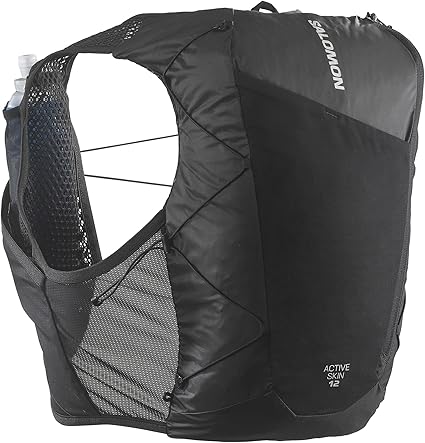
If you could only choose one vest for everything, this would be it. The Salomon ADV Skin 12 has been the market benchmark for years, and the 2026 version holds that position on merit. What makes this vest special is its SensiFit adjustment system: the vest conforms to the body like a second skin, without needing elastic straps that squeeze. The outer mesh is lightweight and breathable, perfect for summer races without feeling like you are carrying an oven on your back.
With 12 liters of capacity you have plenty of room for races up to 80 kilometers. The 11 pockets are intelligently distributed: two front pockets for the included 500 ml soft flasks, elastic mesh side pockets for quick-access gels, a main rear compartment with a zipper for a windbreaker or emergency blanket, and a security pocket in the back for documents or cash. The rear panel features air ventilation to minimize sweat buildup.
The included soft flasks are the Salomon Speed 500 ml, which compress as you drink and virtually eliminate sloshing. The nozzle is comfortable and does not leak. Additionally, the rear compartment is compatible with 1.5-liter hydration bladders if you need more water for ultras. The construction is robust yet lightweight: 255 grams empty, which is impressive for a 12-liter vest.
The only drawback is the price. At 140 euros it is not cheap, but if you regularly do trail running and participate in mountain races, it is an investment you will recoup quickly. The durability of Salomon materials is excellent: we have seen ADV Skin vests with over 3 years of heavy use that still function perfectly.
View Salomon ADV Skin 12 on Amazon — Purchase link temporarily removed. Destination pending verification.
2. CamelBak Ultra Pro - Best ventilation on the market

Best for: hot-weather racing, trail 20-50 km, heavy sweaters
CamelBak has been manufacturing hydration systems for decades and their expertise shows in the Ultra Pro. This vest's greatest virtue is its Crux ventilation system: the rear panel has a three-dimensional structure that separates the vest from your back, creating an air channel that dramatically reduces heat and sweat buildup. If you run in warm climates or sweat a lot, this is probably the coolest vest you will find.
The included Quick Stow 500 ml soft flasks are excellent: they feature an ergonomic design that conforms to the shape of the chest, a self-sealing nozzle that does not drip, and a quick-open system for fast refills at aid stations. The rear compartment has 7 liters of capacity and is compatible with Crux hydration bladders up to 1.5 liters, giving you a total of 2.5 liters of water if needed.
The fit uses two adjustable chest straps with a magnetic buckle system: they open and close with one hand, even with gloves on. The 9 pockets are well sized: two front for flasks, four small for gels or bars with on-the-run access, a mesh side pocket for your phone, and two rear compartments with zippers.
It is somewhat heavier than the Salomon (340 g versus 255 g), but the ventilation difference makes up for it if staying cool is your priority. Includes an emergency whistle and reflective elements. To learn about other hydration options while running, check our running hydration drinks guide.
3. Nathan VaporAir 2.0 - Most comfortable for ultras

Best for: ultras, 50+ km races, runners who prefer a hose
Nathan is an American brand with decades of experience in running hydration, and the VaporAir 2.0 is their flagship model for long distance. What sets this vest apart is that it comes with a 2-liter hydration bladder instead of front soft flasks. This means you can drink hands-free thanks to the bite-valve hose, something many ultramarathoners prefer because it lets them maintain their rhythm without interruptions.
The fit is among the best on the market. Nathan uses an elastic harness system that adapts to body movement without restricting breathing. The seams are flat and the edges are finished with soft binding to prevent chafing over long distances. We have seen runners complete 100 km races with this vest without a single mark on their skin, something not all models can claim.
Total capacity is 7 liters not counting the hydration bladder, enough for ultras up to 80 km with regular aid stations. The 10 pockets include two large front ones with zippers (fits an iPhone 15 Pro Max without issue), mesh side pockets for gels, and a spacious rear compartment for waterproof clothing. It also includes an insulated pocket to keep the hose protected from the sun.
The weak point is that the hydration bladder is harder to refill than soft flasks at fast aid stations. If you race with frequent water points, this can be an inconvenience. But if you prefer heading out with plenty of water and not stopping as much, Nathan's bladder system is hard to beat.
4. Decathlon Evadict 5L - Best value for money
Best for: beginners, short-medium trail, tight budget
If you are getting into trail running and do not want to spend 130 euros on your first vest, the Evadict 5L from Decathlon is the answer. At 40 euros it offers a fully functional vest with 5 liters of capacity, 8 pockets, and two 250 ml soft flasks included. It will not have the same finishing quality as a Salomon, but it does its job perfectly for races up to 30-35 kilometers.
The construction is surprisingly good for the price. The mesh is breathable, the seams are well finished, and the fit using two elastic chest straps is stable and comfortable. It weighs just 195 grams empty, making it the lightest in our selection. The front pockets accept standard soft flasks up to 500 ml (you can buy Salomon Speed or Decathlon 500 ml flasks separately), and the rear compartment fits a compact windbreaker.
The limitations are what you would expect at this price: the included flasks are small (250 ml), the fabric is not as abrasion-resistant as premium models, and the adjustment system is more basic. But for a runner who does trail once or twice a month and races up to a mountain half marathon, this vest delivers more than you ask for at that price. Invest the 100 euros you save in a good pair of 500 ml soft flasks and you will have a very competitive setup.
For a complete list of all the gear you need when starting out, don't miss our beginner's running starter pack.
5. Compressport UltRun S Pack - Most technical and compressive
Best for: fast runners, trail races 20-42 km, minimalists
Compressport has applied its expertise in technical compression clothing to the world of hydration vests, and the result is the UltRun S Pack: an ultra-minimal vest weighing just 145 grams that feels more like a shirt than a backpack. The fabric is the same used in their compression garments, which means it hugs the body like a glove and virtually eliminates any bouncing.
The included 350 ml ErgoFlasks have a curved shape that follows the contour of the chest, creating a much more aerodynamic profile than straight soft flasks. For competitive runners who care about aerodynamics, this is a real plus. The 7 pockets are compact but sufficient for a race up to marathon distance with gels, phone, and keys.
The 5-liter capacity limits its use for long ultras with extensive mandatory gear, but for trail races up to 42 km and mountain half marathons it is perfect. Ventilation is excellent thanks to the microperforated mesh fabric on the rear panel. On-the-run stability is the best in our selection: being compressive, it does not move a millimeter.
The main drawback is water capacity: with two 350 ml flasks you have just 700 ml, which is tight for long races in the heat. You can add larger 500 ml flasks in the front pockets, but the design is optimized for the original ErgoFlasks. This is a specialist vest: perfect if you know you don't need much load, but limited if your races require more than 5 liters of space.
6. Ultimate Direction Race Vest 6.0 - Most versatile for road and trail
Best for: versatile runners, road marathons, short-medium trail
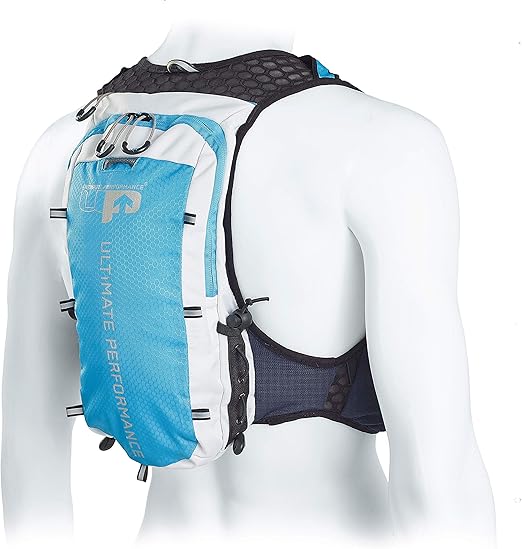
Ultimate Direction was the pioneer brand in running hydration vests (its founder, Scott Jurek, is an ultrarunning legend) and the Race Vest 6.0 is their most versatile offering. It is a vest that works equally well in a road marathon as on a 30 km trail, and that versatility makes it an excellent choice if you can only own one vest.
The included 500 ml Body Bottles are among the best soft flasks on the market: they feature an ergonomic body that conforms to the curvature of the chest, a bite-valve nozzle, and a spill-proof closure system. Total water capacity is 1 liter without a rear bladder, expandable to 2.5 liters with a compatible bladder.
The fit combines elastic chest straps with a lower elastic band that wraps around the torso, creating a very stable fit with minimal bounce. The 8 pockets include four small quick-access chest pockets for gels, two mesh side pockets, and a rear compartment with a waterproof zipper. It weighs 198 grams empty, an excellent weight for the capacity it offers.
At 90 euros it hits the sweet spot: not as cheap as the Evadict from Decathlon but with clearly superior materials and fit. If you want a vest that serves you for long marathon training runs as well as your first trail races, this is probably the best option on the market in terms of quality-performance-price ratio. To round out your gear, check out our essential running accessories.
7. Kalenji 15L Trail - Cheapest option for ultras

Best for: ultras on a budget, races with extensive mandatory gear
If you need a large-capacity vest for ultras and do not want to spend more than 60 euros, the Kalenji 15L Trail from Decathlon is the only serious option at this price. With 15 liters of capacity you can fit absolutely all the mandatory gear for any ultra trail: windbreaker, emergency blanket, headlamp, power bank, whistle, cup, food for 8 hours, warm clothing, and still have room to spare.
The construction is sturdy with abrasion-resistant nylon fabric, reinforced seams, and quality zippers. The 10 pockets are reasonably distributed: two front mesh ones compatible with 500 ml soft flasks (not included), a large main rear compartment, side pockets accessible on the run, and a small security pocket with a zipper. The fit uses chest straps and a waist buckle that stabilizes the load on the hips.
It is compatible with hydration bladders up to 2 liters (sold separately), and the rear compartment has an internal hook for hanging the bladder. The rear ventilation system is basic but functional, with a mesh layer separated from the main panel.
The limitations are the weight (380 g is quite heavy for a vest, though normal for 15 liters) and that it does not include any flask or hydration bladder: you have to buy those separately. But even adding Decathlon soft flasks for 10 euros, the total cost is still under 70 euros for a fully equipped ultra trail vest. For ultra trail beginners, there is no rival at this price.
Comparison table of the 7 best hydration vests
Here is a quick summary of the key specs for each vest so you can compare at a glance. If you want to dive deeper into any of them, click on the name to jump back to the full review.
Find your running with a group
1,100+ runners already train together. Free on iOS.
| Vest | Capacity | Weight | Hydration | Pockets | Price | Best for |
|---|---|---|---|---|---|---|
| Salomon ADV Skin 12 | 12 L | 255 g | 2x 500ml Flask | 11 | ~140€ | Trail / Ultra |
| CamelBak Ultra Pro | 7 L | 340 g | 2x 500ml Flask | 9 | ~130€ | Hot weather / Ventilation |
| Nathan VaporAir 2.0 | 7 L | 310 g | Bladder 2L | 10 | ~120€ | Ultra / Hose |
| Evadict 5L (Decathlon) | 5 L | 195 g | 2x 250ml Flask | 8 | ~40€ | Beginners |
| Compressport UltRun S | 5 L | 145 g | 2x 350ml ErgoFlask | 7 | ~110€ | Fast runners |
| UD Race Vest 6.0 | 5.4 L | 198 g | 2x 500ml Body Bottle | 8 | ~90€ | Versatile |
| Kalenji 15L Trail | 15 L | 380 g | Comp. bladder 2L | 10 | ~55€ | Budget ultra |
Buying guide: how to choose the perfect hydration vest
With so many options on the market, choosing the right vest can feel overwhelming. These are the key factors to consider, ranked by importance. Having the right gear makes a difference: check all the running accessories we recommend to complement your vest.
1. Capacity: how many liters do you actually need
Capacity is the first thing you need to decide because it determines everything else. The basic rule is to choose the minimum capacity that covers your longest regular distance. A large vest for short races is uncomfortable and heavy; a small vest for ultras means not carrying everything you need.
- 1-3 liters: Road races up to 21 km, half marathon training, 10K in summer. You only need water, phone, and a few gels.
- 5-7 liters: Trail up to 42 km, long marathon training, mountain half marathons. Fits a windbreaker, gels, phone, food, and 1L of water.
- 10-15 liters: Ultras over 42 km, races with extensive mandatory gear, full-day routes. Fits everything: warm clothing, headlamp, emergency blanket, food for 8+ hours.
2. Hydration system: soft flask vs. bladder
There are two main systems and each has clear advantages:
Soft flasks (front soft bottles): The favorite of most trail runners. They sit in the front vest pockets, compress as you drink (eliminating sloshing), and refill in seconds at aid stations. Typical capacities: 250 to 500 ml per flask. Usual total: 500 ml to 1 liter.
Hydration bladder with hose: Sits in the rear compartment and you drink through a hose with a bite valve. Typical capacities: 1.5 to 2 liters. Advantage: you can drink without letting go of trekking poles and without slowing down. Disadvantage: refilling is slower and you need to clean the hose regularly.
For trail races with frequent aid stations, soft flasks are more practical. For long ultras with few water points, a hydration bladder gives you more autonomy. Many vests allow both systems, giving you flexibility to adapt to each race.
3. Fit and sizing: the key to preventing chafing and bouncing
A poorly fitted vest is an instrument of torture. If it bounces, it will wreck your shoulders and back. If it squeezes too tight, it will restrict your breathing. The correct fit is firm but comfortable: the vest should sit close to the body without pressing.
- Measure your chest circumference: Use a tape measure under the armpits, at the widest part of your torso. Check the manufacturer's sizing guide.
- Test with load: An empty vest always fits well. Test it with full flasks, gels in the pockets, and some weight on the back. If it bounces when loaded, it is not your size.
- Chest straps: They should cross the chest below the collarbone, without rising toward the neck. If they rub your nipples, adjust the strap position.
- Arm mobility: Check that you can move your arms completely without the vest shifting. Simulate the running motion.
4. Bounce and stability
Bouncing is the number one reason runners abandon a vest. A good vest does not move when you run, regardless of speed or terrain. The factors that affect bounce are: fit (the most important), weight distribution (balance between front and back), and load height (the closer to your center of gravity, the less bounce).
Vests with a compressive fit (like the Compressport UltRun) virtually eliminate bounce. Models with adjustable chest straps allow fine-tuning the fit, but depend on you taking the time to dial it in properly. The ultimate test is running downhill at a fast pace with the vest loaded: if it does not move in that situation, it will never move.
5. Reflective elements and visibility
If you train at night or at dawn (common in winter or summer to avoid the heat), reflective elements on the vest are essential for your safety. The best vests include reflective strips on the chest, back, and shoulder straps. Some premium models like the Salomon ADV Skin have 360-degree reflective inserts that make you visible from any angle.
6. Distance type and terrain
Your choice also depends on where and how far you run:
- Road / half marathon: Minimal vest (1-3L), prioritize lightness and comfort. Compressport UltRun.
- Short-medium trail (up to 42 km): Medium vest (5-7L), look for a balance between load and weight. UD Race Vest, Evadict 5L, or CamelBak Ultra Pro.
- Ultra trail (50+ km): Large vest (10-15L), prioritize capacity and long-term comfort. Salomon ADV Skin 12, Nathan VaporAir, or Kalenji 15L.
Common mistakes when using a hydration vest
Even with the best vest on the market, there are mistakes that can ruin your experience. These are the most frequent and how to avoid them.
Wearing a new vest on race day
Never, ever, debut a vest in competition. Use at least 3-4 long training runs with your new vest to check the fit, detect potential chafing zones, and get used to drinking on the run. What feels comfortable in the store can become a nightmare after 30 km.
Overloading the vest
More weight means more bounce, more fatigue, and more energy expenditure. Carry only what you truly need. If the race has aid stations every 10 km, you do not need to carry 2 liters of water: 500 ml between points is enough. Make a list of essentials before each race and resist the temptation to add things just in case.
Poor weight distribution
All the weight in the back pulls the vest backward and generates bounce. Distribute the load between front pockets (flasks, gels) and the rear compartment (clothing, gear). Water in front and clothing in back is the most stable distribution for most runners.
Not cleaning soft flasks
Soft bottles accumulate bacteria and mold if not washed after every use, especially if you have carried isotonic drinks or sugar-based mixes. Always rinse after running with hot water and soap. Once a month, use baking soda or bottle-cleaning tablets. And let them dry open to prevent odors.
Choosing size by capacity
Vest size is chosen by your chest circumference, not by the load capacity you need. First choose the correct size for your body, then find a model with the right capacity within that size. A large vest to carry more stuff that fits loosely is worse than one in your correct size with less space.
How to care for and maintain your hydration vest
A well-cared-for vest can last 3-5 years of regular use. These are the basic maintenance tips that will extend the life of your vest and soft flasks.
Washing the vest
After every heavy-use session, rinse the vest with cold water to remove sweat and salts. If you need a deeper wash, you can use the washing machine on a delicate cycle at 30 degrees with mild detergent, without fabric softener. Put the vest inside a mesh bag to protect the zippers and elastic bands. Never use a dryer: let it air dry in a well-ventilated spot in the shade.
Caring for soft flasks
Soft bottles are the part that needs the most care. After every use, rinse with hot water and a few drops of soap, shake well, and rinse several times. For a deep clean, fill with warm water and a teaspoon of baking soda, let it sit for 30 minutes, and rinse. If the flask has a valve nozzle, disassemble it and clean it separately. Always let them dry open and upside down.
Storage
Store the vest in a dry, ventilated place, never inside a sealed bag where moisture can accumulate. Loosen all straps and zippers to prevent deformation. Soft flasks should be stored open and dry. If you are storing the vest for months (winter, for example), wash it thoroughly beforehand and store the flasks separately.
Hydration strategy during the race
Having a good vest is only half the equation. The other half is knowing when and how much to drink. Dehydration and overhydration (hyponatremia) are two dangerous extremes, and the goal is to stay in the middle. For more information on what to drink during your races, visit our running hydration drinks guide.
How much to drink by distance
- 10K (35-60 min): 200-400 ml. A few sips every 15-20 minutes is enough. In mild weather you may not need water at all.
- Half marathon (1:30-2:30): 400-800 ml. Drink 150-200 ml every 20-30 minutes. Start drinking from km 5.
- Marathon (3:00-5:00): 1-2 liters. Plan a regular intake system: 150-200 ml every 20 minutes, alternating water and electrolyte drink.
- Ultra trail (5+ hours): 500 ml - 1 liter per hour depending on heat. Take small frequent sips rather than large spaced-out gulps.
Signs of dehydration
Learn to recognize the early signs of dehydration to act before it is too late: dry mouth, intense thirst, decreased performance, dark urine, headache, dizziness, or muscle cramps. If you notice any of these symptoms, slow down and drink immediately. Do not wait for the next aid station.
Our quick recommendations
If after reading the entire guide you are still not sure what to choose, here are our direct recommendations by runner profile:
- Best vest overall: Salomon ADV Skin 12. The most complete, versatile, and durable. If you can only have one premium vest, this is it.
- Best value for money: Decathlon Evadict 5L. At 40 euros it is unbeatable for getting started. Buy it and once you know what you need, invest more.
- Best for hot weather: CamelBak Ultra Pro. Its ventilation is the best on the market. If you run in Mediterranean summers, there is no rival.
- Best budget ultra: Kalenji 15L Trail. 15 liters for 55 euros. If you are starting in ultras, it is the smart choice.
- Best for racing: Compressport UltRun S Pack. 145 grams. If your priority is going fast with the essentials, this is yours.
- Best all-rounder: UD Race Vest 6.0. Works on road and trail. Good price, good materials, good fit. The do-it-all.
- Best for ultras with hose: Nathan VaporAir 2.0. 2L bladder included and the most comfortable fit for extreme distances.
Frequently asked questions about hydration vests
Do I need a hydration vest for running?
It depends on the distance and conditions. For road races under 10 km with fountains available, it is not essential. But if you run more than 15 km, train on trails, it is hot, or you have no access to water points, a hydration vest is practically mandatory. It is also essential for mountain races where organizers require mandatory gear. For long marathon training runs (over 25 km) it is very useful so you don't depend on public fountains.
What vest capacity do I need based on distance?
For 10-21 km road races, 1-2 liters of capacity with basic pockets is enough. For trail half marathons and training runs up to 30 km you need 5-8 liters to carry a windbreaker, gels, and 1 liter of water. For ultras and races over 42 km you need 10-15 liters with room for an emergency blanket, headlamp, warm clothing, and 1.5-2 liters of water. Always choose based on your longest regular distance, not your shortest.
Soft flask or hydration bladder?
Soft flasks are better for most runners: they weigh less, compress as you drink (preventing sloshing), allow drinking without a hose, and refill easily at aid stations. Hydration bladders with a hose are better for ultras and long races where you need more than 1.5 liters of water because you can drink hands-free and the capacity is greater. Most modern vests use front soft flasks, and many allow adding an optional rear bladder.
How do I prevent the vest from bouncing while running?
Bouncing is the biggest problem with a poorly fitted vest. To prevent it: first, choose the correct size by measuring your chest circumference and checking the manufacturer's sizing guide. Second, adjust the chest straps so the vest sits snug without being too tight. Third, distribute weight evenly between front and rear pockets. Fourth, place heavy items close to your center of gravity. And fifth, do a test run with the vest loaded before race day to make the necessary adjustments.
Can I use a trail vest for road running?
Yes, absolutely. A trail vest works just as well on the road. In fact, many marathon runners use lightweight vest-style packs to carry gels, water, and a phone without depending on aid stations. The difference is that for road running you probably don't need as much capacity: a 2-5 liter model will be enough. Race vests are ideal for road running because they are very lightweight and minimalist.
How often should I wash my hydration vest?
Wash the vest after every heavy-sweat use or after every race. For frequent washes, use cold water by hand with a mild neutral soap. You can machine wash on a delicate cycle at 30 degrees, without fabric softener and inside a mesh bag. Never put it in the dryer: air dry it. Soft flasks should be rinsed after every use with hot water and soap, especially if you used isotonic drinks.
How much should I spend on a hydration vest?
It depends on your level and goals. For casual runners or beginners doing races up to half marathon distance, a vest in the 40-60 euro range from Decathlon works perfectly. For intermediate runners who regularly do trail and half marathons, investing 80-110 euros in a Nathan, Osprey, or Ultimate Direction is worth it for the extra comfort and durability. For ultramarathoners, premium vests in the 120-150 euro range from Salomon or CamelBak justify their price through materials, fit, and load capacity.