Core Workout for Runners: 10 Essential Exercises + Routine
Build the stable foundation every runner needs. A strong core means better posture, fewer injuries and faster times.
Build the stable foundation every runner needs. A strong core means better posture, fewer injuries and faster times.
Your core is not just your abs. It is the entire cylinder of muscles that wraps around your midsection: the rectus abdominis in front, the obliques on the sides, the erector spinae and multifidus in the back, and the deep transverse abdominis that acts like a natural weight belt underneath everything.
During running, your core has one primary job: keep your pelvis and spine stable while your arms and legs move dynamically around them. Every time your foot strikes the ground, your core must resist the rotational forces that would otherwise waste energy and create compensations throughout your kinetic chain.
When your core fatigues, your form breaks down. Your hips start to drop, your trunk begins to rotate excessively, and your lower back absorbs forces that should be distributed across your entire trunk. This is why many running injuries — IT band syndrome, lower back pain, hip flexor strains — are actually core stability problems in disguise.
The exercises below train your core the way running demands: resisting movement, maintaining stiffness under load, and stabilizing your pelvis during single-leg stance. For a broader approach to building running-specific strength, see our complete strength training guide for runners.
These exercises train your core to resist your lower back from arching excessively. During running, anti-extension strength keeps your pelvis in a neutral position, which is critical for efficient hip extension and knee drive.
The dead bug is the single best core exercise for runners. It trains contralateral limb movement (opposite arm and leg moving simultaneously) while maintaining a stable, flat lower back — exactly what happens during every running stride.
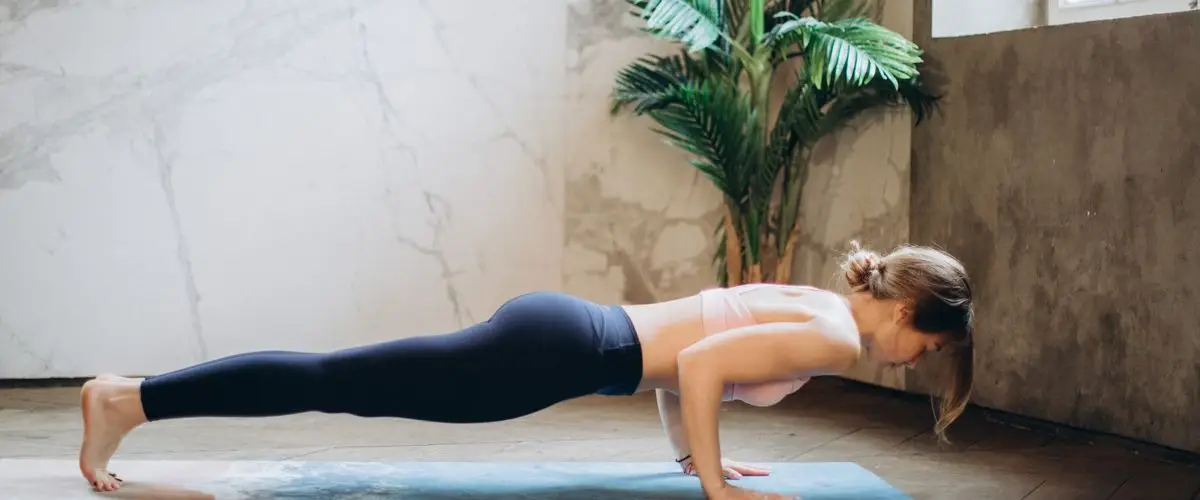
The plank builds baseline core endurance. While it is not the most dynamic exercise, it teaches you to create full-body tension and maintain a rigid trunk position — a skill that directly transfers to maintaining running posture during long efforts.
An advanced anti-extension exercise that challenges your core through a longer lever arm. Rollouts build the deep core strength needed to maintain posture during the final kilometers of a long run when everything wants to collapse.
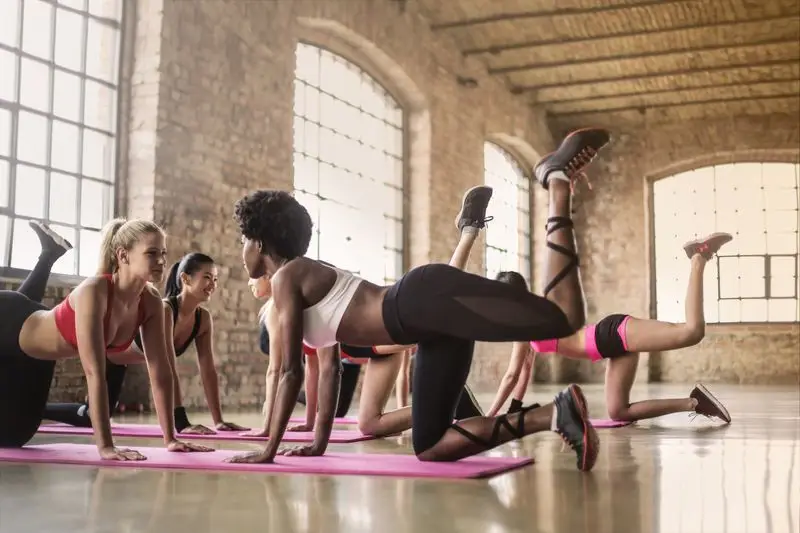
Running generates significant rotational forces with every stride. Your core must resist this rotation to keep your energy moving forward rather than being wasted on lateral sway. Anti-rotation exercises are the most running-specific core work you can do.
The Pallof press uses a cable or resistance band to create a rotational pull that your core must resist. It trains the obliques and deep stabilizers in a way that directly mimics the anti-rotation demands of running.
A dynamic plank variation that forces your core to stabilize against rotation each time you lift a hand. This simulates the alternating single-arm swing pattern of running while demanding trunk stability.
A deceptively challenging exercise that combines anti-extension with anti-rotation while training the contralateral movement pattern central to running. The bird dog builds the coordination between your core, glutes and shoulders that keeps you stable during each stride.
Your hips are the bridge between your core and your legs. Hip stability exercises prevent the pelvic drop that causes knee pain, IT band issues and wasted energy during running.
The side plank targets the gluteus medius and obliques — the muscles responsible for preventing your hip from dropping when you land on one foot during running. Weak hip stabilizers are one of the top predictors of running injury.
An advanced progression that adds a hip abduction component to the side plank. Lifting the top leg while maintaining the side plank position creates enormous demand on the gluteus medius and entire lateral chain.
These exercises add movement to core training, bridging the gap between static stability work and the dynamic demands of running.
Forget the fast, sloppy version you see in HIIT classes. Slow, controlled mountain climbers train your core to stay stable while your legs drive forward — the exact movement pattern of running.
This exercise ties together glute strength, core stability and single-leg control. Holding the bridge on one leg demands that your core and glutes work together to prevent pelvic rotation — exactly what happens with every running stride.
Do this routine 3-4 times per week, ideally after your runs. No equipment needed — just a mat or soft surface.
As you get stronger, progress by adding the Pallof press, ab wheel rollout and side plank leg lifts. Swap out the basic exercises for their advanced versions rather than simply adding more volume.
For activities beyond traditional training, explore cross-training alternatives like yoga and Pilates that build core strength while improving flexibility.
Join CorrerJuntos — find training partners near you who share your goals and pace.
Join 1,100+ runners
Routes, training plans and tips to run better. No spam.
We respect your privacy. Unsubscribe anytime.