📋 Transparency: This article contains affiliate links to Amazon. If you purchase through them, we receive a small commission at no extra cost to you. We only recommend products we have thoroughly analysed.
Running at home is no longer an inferior alternative to outdoor training. With the right treadmill, you can maintain your weekly mileage regardless of weather, time of day or safety concerns in your area. The 2026 market offers home treadmills with features that were only found in commercial gym equipment five years ago.
We have analysed the most popular options in the $300 to $700 range and selected the 10 best home treadmills for running in 2026. From compact walking pads at $250 to the premium NordicTrack T Series for runners who want the most complete home running experience.
Why a home treadmill for running
A home treadmill solves the four main obstacles that prevent runners from maintaining consistency: bad weather, lack of time, safety concerns and irregular terrain. According to Strava data, runners who combine outdoor running with treadmill sessions are 42% more consistent in their weekly volume than those who rely exclusively on outdoor running.
Here are the specific benefits of having a treadmill at home:
- Weather independence: rain, extreme cold, heatwaves or air pollution are no longer excuses. You can run at 6 AM or 11 PM regardless of conditions outside. In many regions, summer heatwaves (35+ degrees Celsius) make a treadmill almost essential from June to September.
- Time savings: no commute to the gym, no preparation time. Put on your running shoes and you are running within 30 seconds. For parents with young children or professionals with demanding schedules, saving 30-45 minutes per session is often the deciding factor.
- Total training control: exact pace, programmed incline, precise intervals. On a treadmill you can execute interval and speed sessions with a precision that is impossible outdoors, especially if you do not have access to a running track.
- Safety: no traffic, no loose dogs, no uneven surfaces. For people who run alone, especially at dawn or dusk, the treadmill eliminates real risks. It is also ideal for injury recovery, as the cushioned surface reduces joint impact by 15-40% compared to tarmac.
- Data tracking: modern treadmills display speed, distance, calories, heart rate and time on screen. Some models connect via Bluetooth to apps like Strava, Garmin Connect or the manufacturer's own app to sync your workouts.
That said, a treadmill does not completely replace outdoor running. Running mechanics differ slightly (the belt pulls your feet backward), and you miss the adaptation to terrain, natural hills, curves and spatial awareness. The ideal approach is to combine both: treadmill for sessions when outdoor conditions are unsuitable, and outdoor running whenever possible.
What to look for when buying a treadmill
Buying a treadmill without understanding the key specifications is a common mistake. These are the features that determine whether a treadmill is suitable for running (not just walking):
- Motor (continuous HP): the most important specification. Look for at least 2.0 continuous HP (CHP) for running. Many brands advertise peak HP, which is an inflated value of little practical use. Continuous HP measures the sustained power the motor can deliver throughout your entire session. For high-speed intervals (9+ mph), look for 2.5-3.0 CHP.
- Belt size (inches/cm): the length and width of the running belt determine your comfort and safety. Minimum recommended for running: 48 x 16 inches (120 x 40 cm). For people over 6 feet tall, look for 51+ x 18+ inches (130+ x 45+ cm). Never buy a treadmill with a belt shorter than 43 inches if you plan to run.
- Maximum speed (mph/km/h): for runners doing speed work or interval training, look for treadmills that reach at least 10 mph (16 km/h). If you only plan to jog at easy pace (8-9 min/mile), 7.5-8.5 mph is sufficient.
- Incline: adjustable incline lets you simulate hills, increase intensity without raising speed and engage different muscle groups. Look for at least 10% incline. Some premium models offer up to 15% or even decline (negative incline) to simulate downhill.
- Folding system: if you live in a small space, a folding treadmill is almost mandatory. Check that the mechanism is hydraulic (smooth and safe) and that it includes transport wheels. A folded treadmill takes up roughly half the vertical footprint.
- Maximum weight capacity (lb/kg): budget treadmills typically support 220-240 lb (100-110 kg). Mid-range to premium models reach 265-300 lb (120-136 kg). If your weight is close to the limit, the treadmill will suffer more wear and the motor will strain. Always look for a margin of at least 45 lb (20 kg) above your weight.
- Noise level (dB): a critical factor if you live in a flat with neighbours below. Treadmills with DC motors are generally quieter than AC motor models. Look for models with integrated impact cushioning, which reduces both noise and vibration transmitted to the floor.
- Connectivity: Bluetooth for headphones, external heart rate monitors or syncing data with training apps. Treadmills with WiFi and touchscreens offer access to training platforms like iFit (NordicTrack/ProForm), Kinomap or Zwift.
The 10 best home treadmills for running 2026
We have selected ten treadmills covering all budgets and runner profiles: from compact walking pads to 7 HP powerhouses. Each model has been evaluated on motor, belt size, build quality, features and value for money. At the end you will find a comparison table and our recommendation by runner profile.
1. Cecotec DrumFit — Best budget option at ~$300
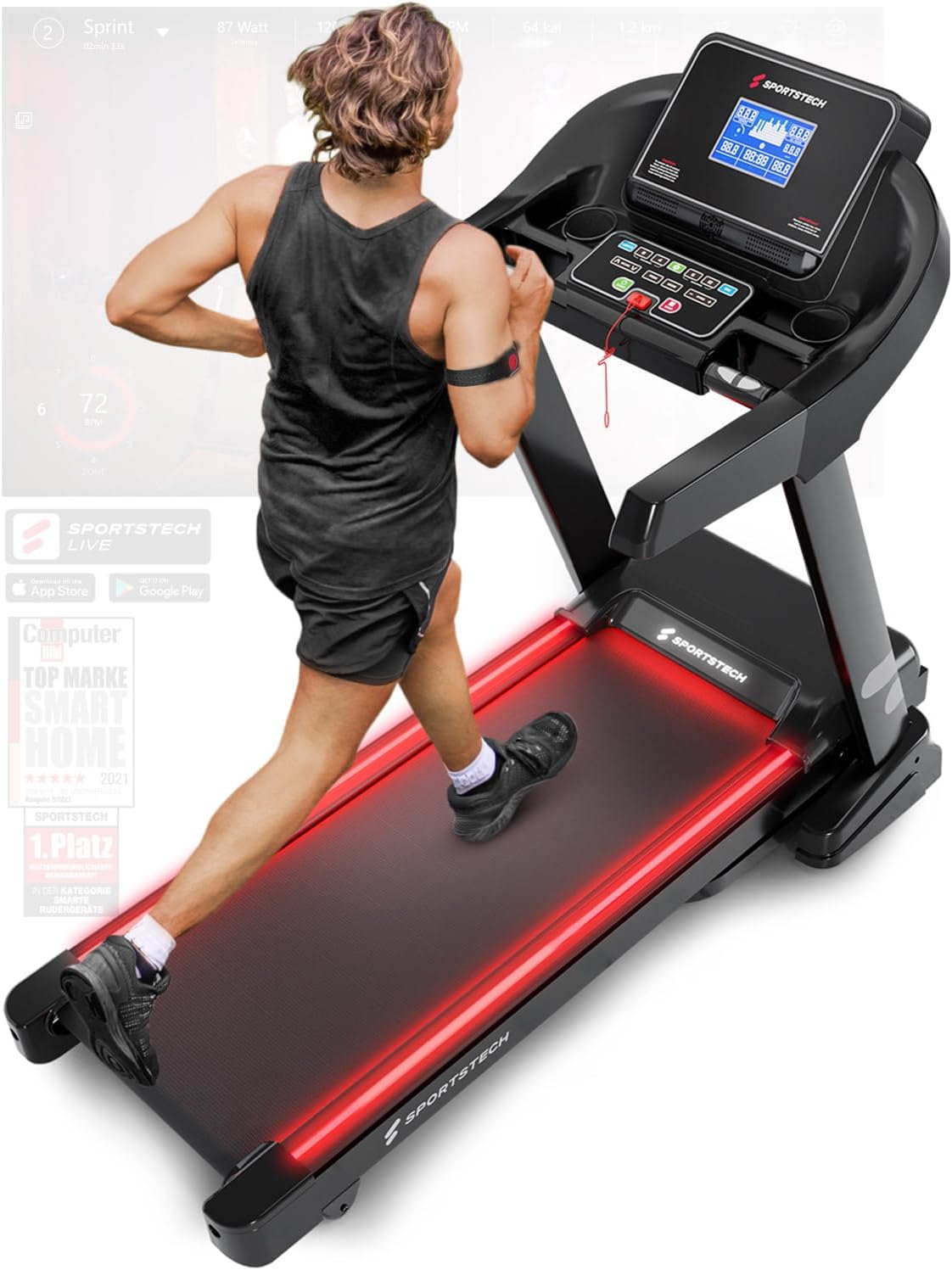
The Cecotec DrumFit is the gateway to home running for those who do not want to spend more than $300. The Spanish brand has significantly improved its treadmills over the past two years, and this model offers features that previously cost $400-500.
The DC motor delivers enough power to run at moderate paces of up to 8.7 mph (6:54 min/mile pace), which covers the needs of 80% of recreational runners. The running belt of 47 x 16.5 inches is tight but functional for people up to about 5'11" tall. It includes adjustable incline, an LED display with basic data (speed, distance, time, calories) and a folding system with transport wheels.
The cushioning is acceptable but basic: you will feel more impact than on $500+ treadmills, especially at higher speeds. Noise levels are moderate, similar to most treadmills in this price range. There is no Bluetooth connectivity or access to training apps, which limits data tracking to what the display shows.
For beginner runners who want to complement their outdoor training with home sessions, or for people just starting to run who prefer the safety of a treadmill, the Cecotec DrumFit is a solid purchase. If you are already an intermediate or advanced runner planning to use the treadmill as your primary training tool, it is worth investing a bit more.
Pros
- Very competitive price (~$300)
- Spanish brand with good after-sales service
- Foldable with transport wheels
- Adequate belt size for running
- Adjustable incline
Cons
- No Bluetooth connectivity
- Basic cushioning
- Simple LED display
- Motor may overheat during long sessions at high speed
2. NordicTrack T Series — Premium quality at ~$700
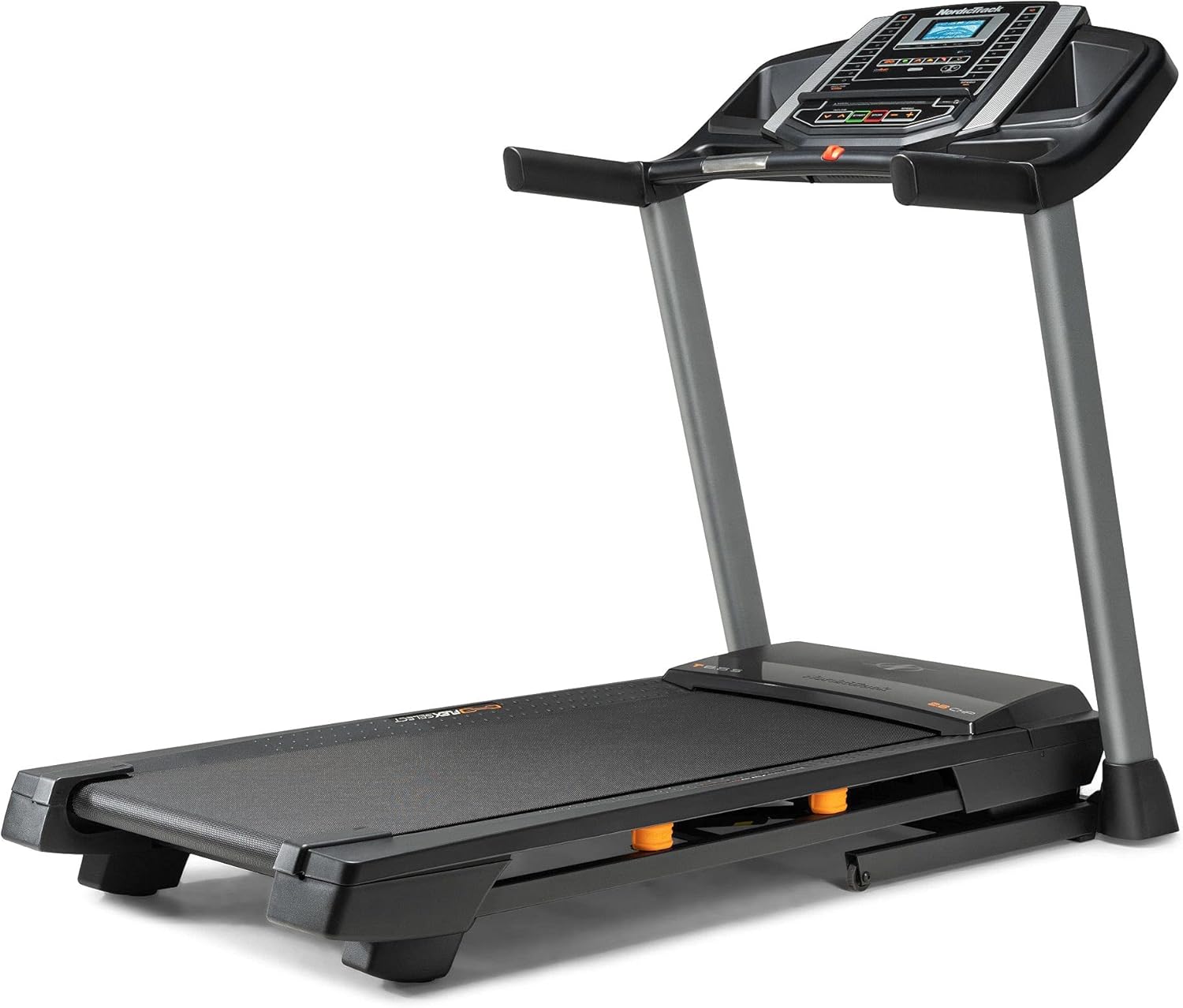
The NordicTrack T Series is the treadmill we recommend to runners who want a complete home training experience without paying the $1,000+ of high-end models. NordicTrack is one of the world's reference brands in fitness equipment, and the build quality is apparent from first use.
The 2.6 CHP motor is powerful and quiet, capable of maintaining speeds up to 10 mph (6:00 min/mile) without straining. This covers the needs of the vast majority of runners, including interval and speed work sessions. The running belt of 53 x 18 inches is generous: even tall runners (6'3"+) will run comfortably and safely.
The adjustable incline from 0 to 10% allows you to simulate hills and vary training intensity. The FlexSelect cushioning system is one of the best in this price range: you can choose between a cushioned surface (less joint impact) or a firm surface (feeling more similar to road running). This versatility is a key differentiator from cheaper treadmills.
Bluetooth connectivity allows you to pair wireless headphones and chest-strap heart rate monitors for more accurate heart rate readings. The treadmill is compatible with the iFit app (separate subscription required), which offers guided workouts, virtual routes around the world and automatic progress tracking. The EasyLift hydraulic folding system makes storing the treadmill simple with a single motion.
The maximum capacity of 300 lb is the highest in this comparison, speaking to the robustness of the frame. The only significant downside is the price: at $700 it is the most expensive in our selection. But if the treadmill will be a central part of your training routine for years, the investment is well worth it.
Pros
- 2.6 CHP motor, quiet and powerful
- Generous belt size (53 x 18")
- FlexSelect adjustable cushioning
- Bluetooth + iFit compatible
- 300 lb capacity, robust build
- EasyLift hydraulic folding
Cons
- High price (~$700)
- iFit requires separate subscription
- Heavy (179 lb), difficult to move
- Maximum incline 10% (some competitors offer 12-15%)
3. ProForm Carbon Pro 2000 — Mid-range with high-end features at ~$600
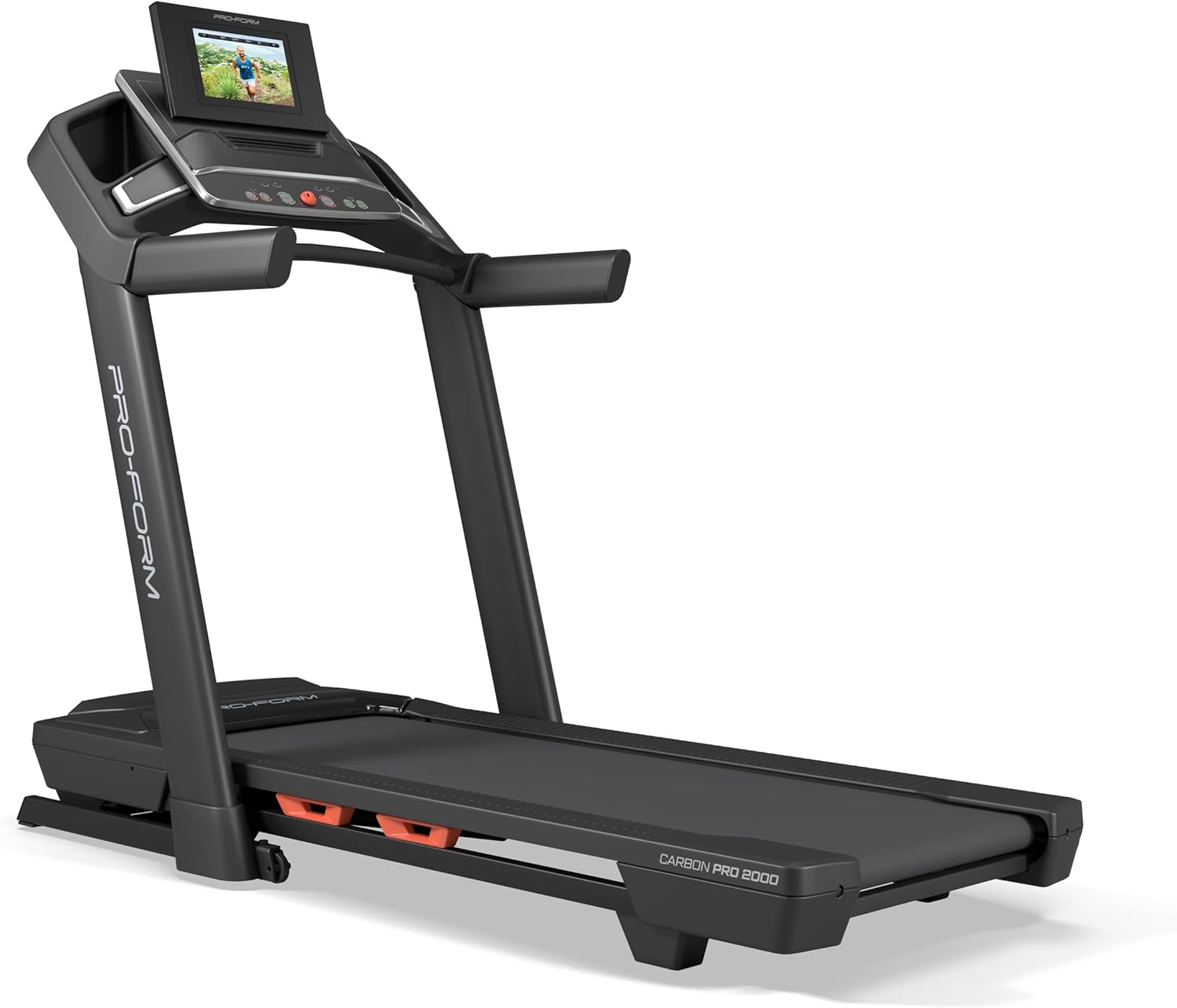
The ProForm Carbon Pro 2000 is the best option for runners seeking a balance between price and performance. ProForm belongs to the same parent company as NordicTrack (ICON Fitness), which translates to the same engineering quality at a slightly lower price point.
The 2.4 CHP motor delivers sufficient power for demanding workouts, and the maximum speed of 11.2 mph (5:21 min/mile) makes it the fastest treadmill in this comparison. If you do speed intervals or want to simulate 5K/10K race pace, this maximum speed is an important differentiator.
The 51 x 18 inch belt is spacious and comfortable for most runners. The adjustable incline from 0 to 12% exceeds the NordicTrack in this regard, allowing you to simulate steeper hills for specific strength training. The ProShox cushioning system effectively reduces joint impact, although it does not offer the adjustability of the NordicTrack.
Like the NordicTrack, the ProForm Carbon Pro 2000 is compatible with the iFit platform. It includes an HD display where you can view your data in real time, follow guided workouts or run virtual routes anywhere in the world. The difference from the NordicTrack is that the ProForm's display is somewhat smaller.
The SpaceSaver folding system is efficient and the treadmill includes transport wheels. At around 165 lb, it is somewhat more manageable than the NordicTrack. The maximum capacity of 275 lb is adequate for most users, though lower than the NordicTrack's 300 lb.
Pros
- 11.2 mph max speed (the fastest)
- Incline up to 12%
- 2.4 CHP quiet motor
- HD display + iFit compatible
- Strong price-to-performance ratio
Cons
- iFit requires separate subscription
- 275 lb capacity (lower than NordicTrack)
- Non-adjustable cushioning
- Smaller display than NordicTrack
4. FITFIU Fitness — The complete foldable at ~$350
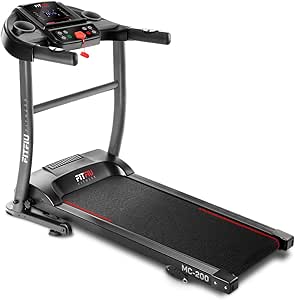
The FITFIU Fitness is the best option if space is your top priority. Its folding system is the most compact in this comparison, and the integrated transport wheels make it easy to move. When folded, it takes up less than one square metre, making it viable even in small flats where space is at a premium.
The 1500W motor provides acceptable power for running at speeds up to 8.7 mph. It includes 12 pre-configured training programmes that automatically vary speed to simulate intervals, hills and endurance sessions. For beginner and intermediate runners who want variety without manually programming each session, these programmes are a useful addition.
The LCD display shows essential data: speed, distance, time, calories and heart rate (measured through the hand grip sensors). Hand sensors are less accurate than an optical wrist-based heart rate monitor or a chest strap, but they provide an approximate reference for monitoring effort intensity.
The FITFIU Fitness sits just above the Cecotec DrumFit in price and features. The 12 programmes and integrated heart rate measurement justify the extra $50. However, it shares similar limitations: no Bluetooth connectivity, basic cushioning and a motor that can overheat during prolonged sessions at maximum speed.
It is the ideal treadmill for people who live in small spaces, want to start running at home and value portability. If space is not a concern and you can stretch your budget, the ProForm or NordicTrack offer a significantly better running experience.
Pros
- Compact folding + transport wheels
- 12 training programmes
- Integrated heart rate monitoring
- Competitive price (~$350)
- Easy assembly
Cons
- No Bluetooth
- Hand grip HR sensors (less accurate)
- Compact running belt
- Basic cushioning
- Motor may overheat during long sessions
5. MERACH Foldable Treadmill — Auto incline at ~$400
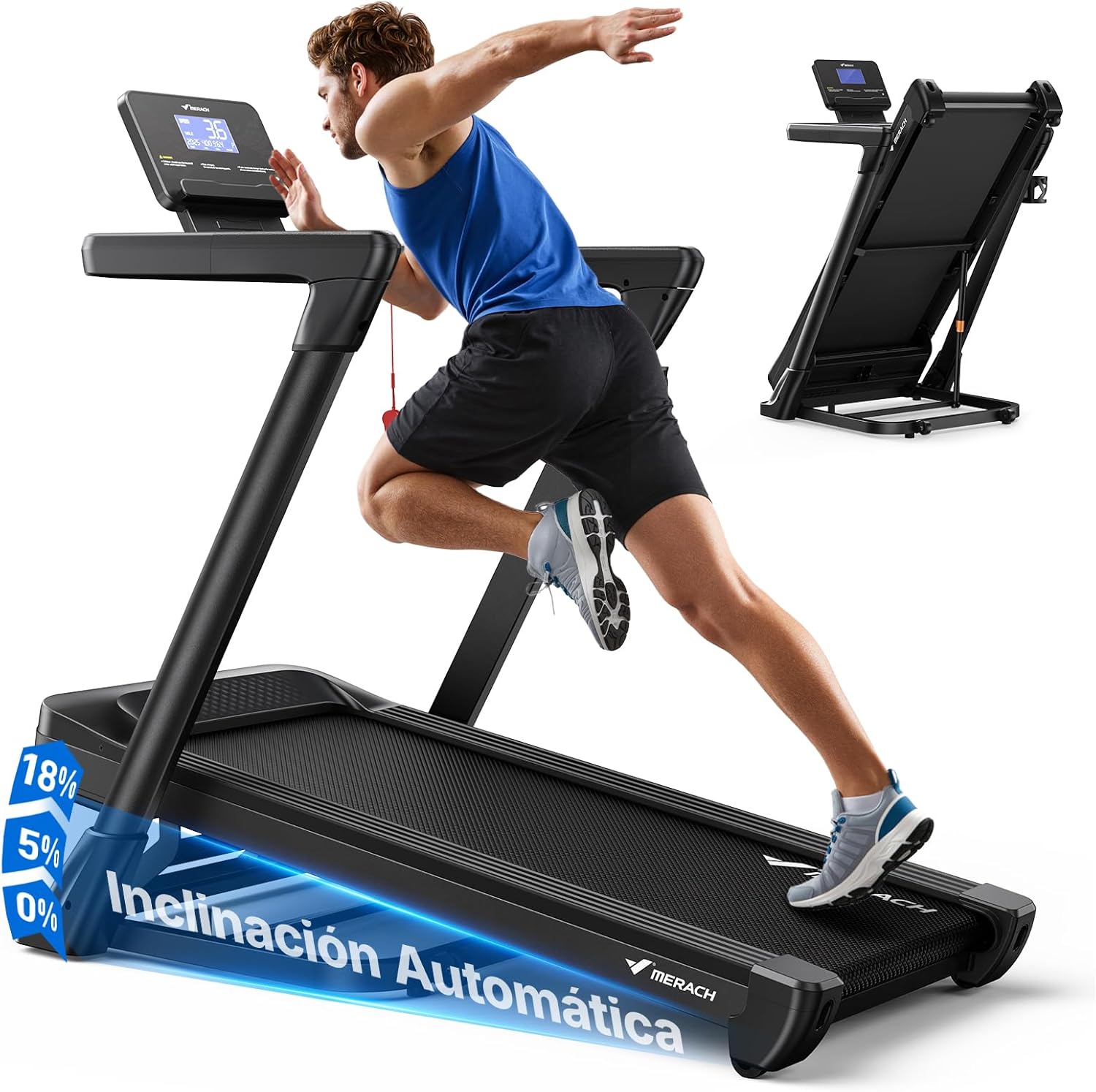
The MERACH Foldable Treadmill stands out with its automatic incline of up to 18%, the highest in this entire comparison. This capability allows you to simulate steep hills for specific strength training and burn more calories without increasing speed, which is particularly useful for runners preparing for hilly races or trail events.
The 3.5 HP motor is powerful and capable of maintaining speeds up to 8.7 mph in a stable manner. The 18 x 47 inch belt is adequate for most runners, and the maximum capacity of 350 lb is the second highest in the comparison, reflecting robust build quality. The folding system is practical and the treadmill includes an LCD display with essential data and mobile app connectivity.
At $400, the MERACH offers a combination of automatic incline and powerful motor that is hard to find at this price point. It is the ideal choice for runners who want to train seriously on hills at home without spending more than $500.
Pros
- Automatic incline up to 18% (the highest)
- 3.5 HP powerful motor
- 350 lb capacity, very robust
- Foldable with App compatible
- Competitive price for its features
Cons
- Max speed 8.7 mph (limited for fast intervals)
- Basic LCD display
- Less well-known brand
- Belt width on the narrower side
6. 7HP Treadmill with App — Maximum power at ~$500
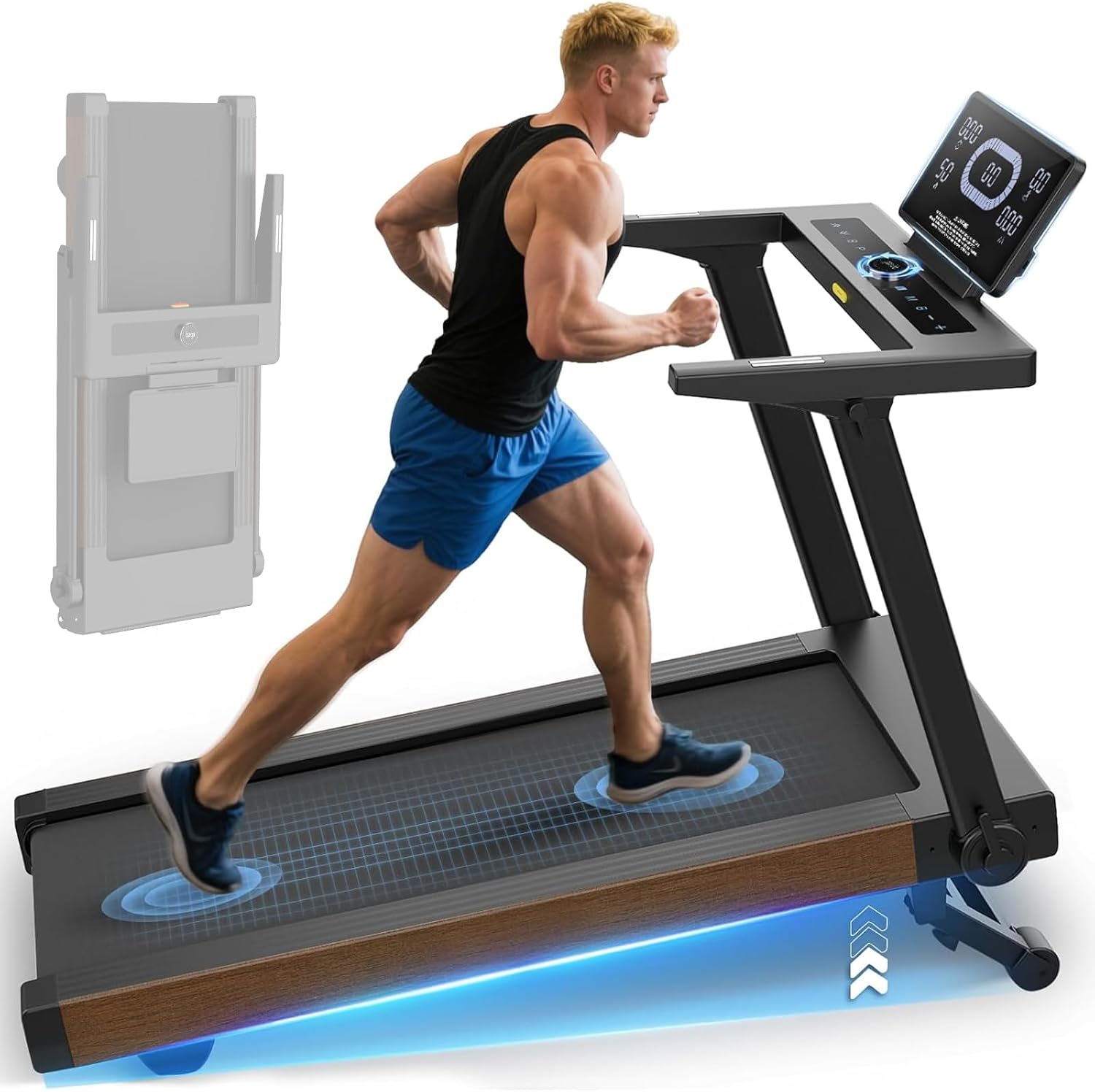
This 7HP treadmill is the most powerful in the entire comparison and the only one reaching 12.4 mph (4:50 min/mile). If you need a treadmill capable of handling high-intensity workouts, race-pace intervals and explosive speed sessions, this is the motor you need. The 15% incline allows you to simulate demanding hills without compromising stability.
The maximum capacity of 397 lb is the highest in the selection, indicating semi-professional build quality. The rotating LED screen is an innovative detail that lets you adjust the viewing angle to suit your position. It includes an integrated pulse sensor and mobile app connectivity for workout tracking.
At $500, it sits in the upper mid-range price bracket, but the performance it delivers competes with treadmills costing $800-1,000 from better-known brands. It is the best option for advanced runners who want power without reaching NordicTrack or Sole premium price territory.
Pros
- 7HP motor, the most powerful in the comparison
- Max speed 12.4 mph
- 397 lb capacity, semi-professional
- 15% incline
- Innovative rotating LED screen
Cons
- Higher price (~$500)
- Heavier and more bulky
- Generic brand, uncertain after-sales
- No native Bluetooth
7. FITFIU MC-160 4 in 1 — Maximum versatility at ~$300
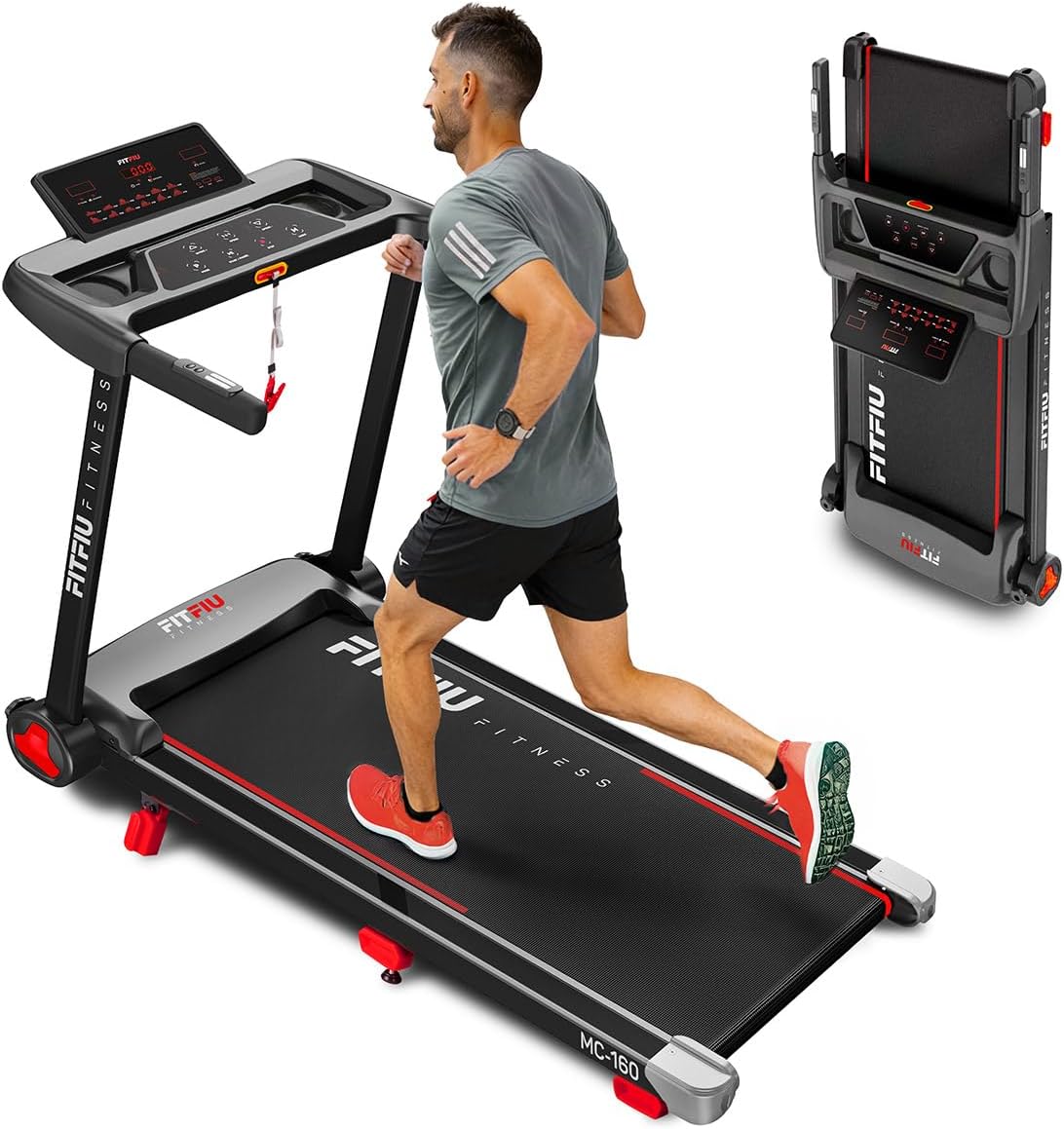
The FITFIU MC-160 is the most versatile treadmill in this comparison thanks to its 4-in-1 design. You can use it as a conventional running treadmill, as an under-desk walking pad, as a walking treadmill with handrails, or in compact mode for tight spaces. This flexibility makes it an ideal choice for anyone who wants a single piece of equipment for multiple uses.
The 9% incline is sufficient to vary training intensity and simulate moderate hills. The maximum speed of 8.7 mph covers the needs of beginner and intermediate runners. It includes a heart rate sensor, tablet holder and mobile app connectivity for session tracking.
At $300, the MC-160 competes directly with the Cecotec DrumFit on price but offers greater functional versatility. If you work from home and want to walk whilst working as well as run, this model is hard to beat for value.
Pros
- Highly versatile 4-in-1 design
- Under-desk walking pad mode
- Competitive price (~$300)
- Integrated HR + tablet holder
- Compact and foldable
Cons
- Basic motor for intense running
- Maximum incline 9%
- Compact running surface
- Not ideal for advanced runners
8. Mobvoi Home Treadmill SE — AI-powered at ~$350
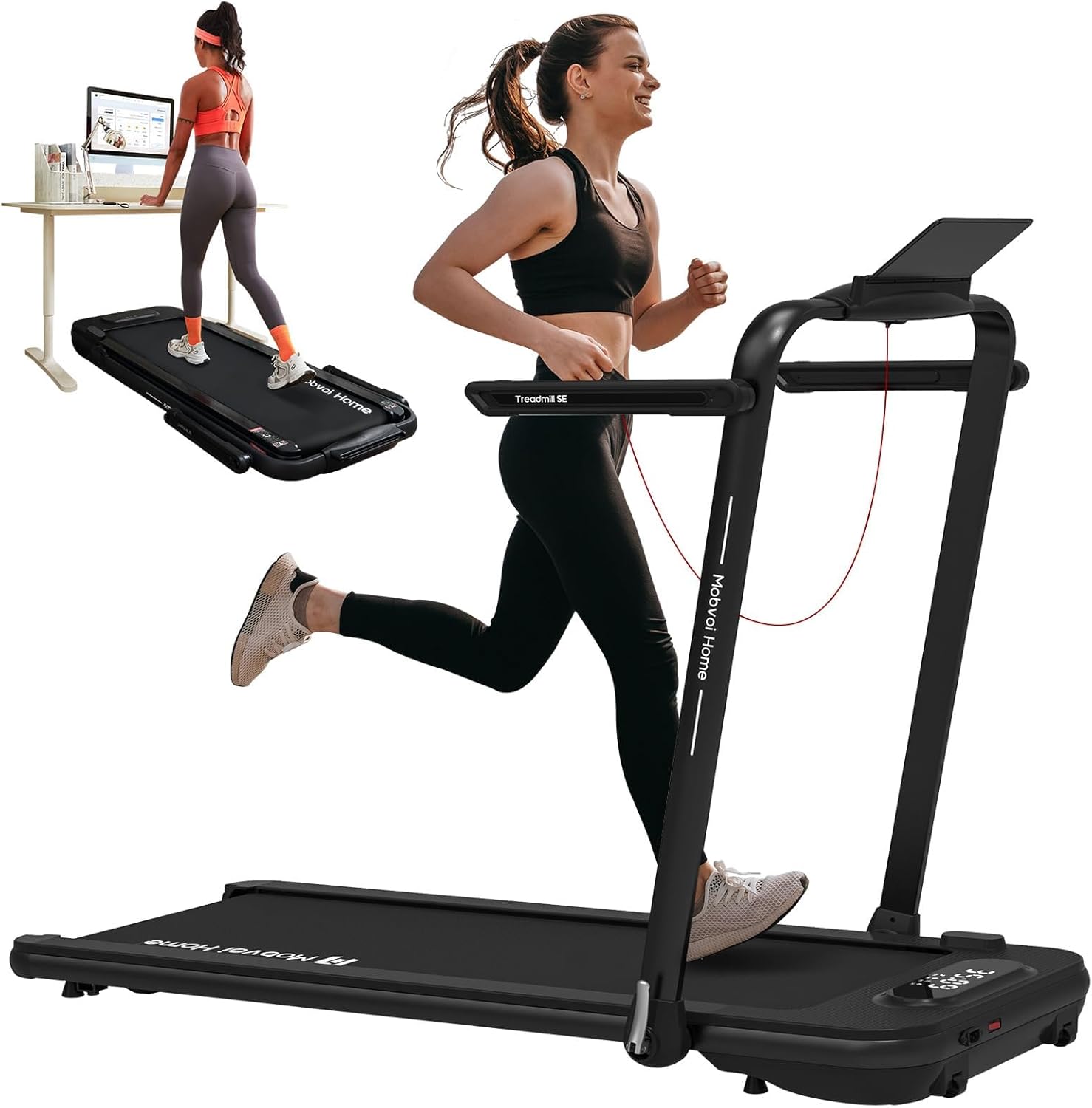
The Mobvoi Home Treadmill SE differentiates itself from the competition with its integrated artificial intelligence through the TicSports app. The AI adjusts speed and training intensity in real time based on your performance data, offering a personalised training experience typically found only on treadmills costing $1,000 or more.
The 3-in-1 design allows use as a conventional treadmill, as an under-desk walking pad, or in compact mode. The 2.5 HP motor is quiet and suitable for jogging and moderate running up to 7.5 mph. It includes a remote control, LED display and a very compact folding system that makes it one of the easiest treadmills to store.
With a 265 lb capacity and a sleek low-profile design, the Mobvoi is ideal for those who want a discreet treadmill that combines advanced technology with a minimalist form factor. The $350 price is competitive considering the AI integration and app quality.
Pros
- Integrated AI with TicSports App
- Very compact 3-in-1 design
- Quiet 2.5 HP motor
- Remote control included
- Minimalist and modern aesthetic
Cons
- Max speed 7.5 mph (limited)
- 265 lb capacity (tight for larger users)
- No adjustable incline
- Not suitable for intense running
9. CHAOKE Walking Pad — Best budget at ~$250
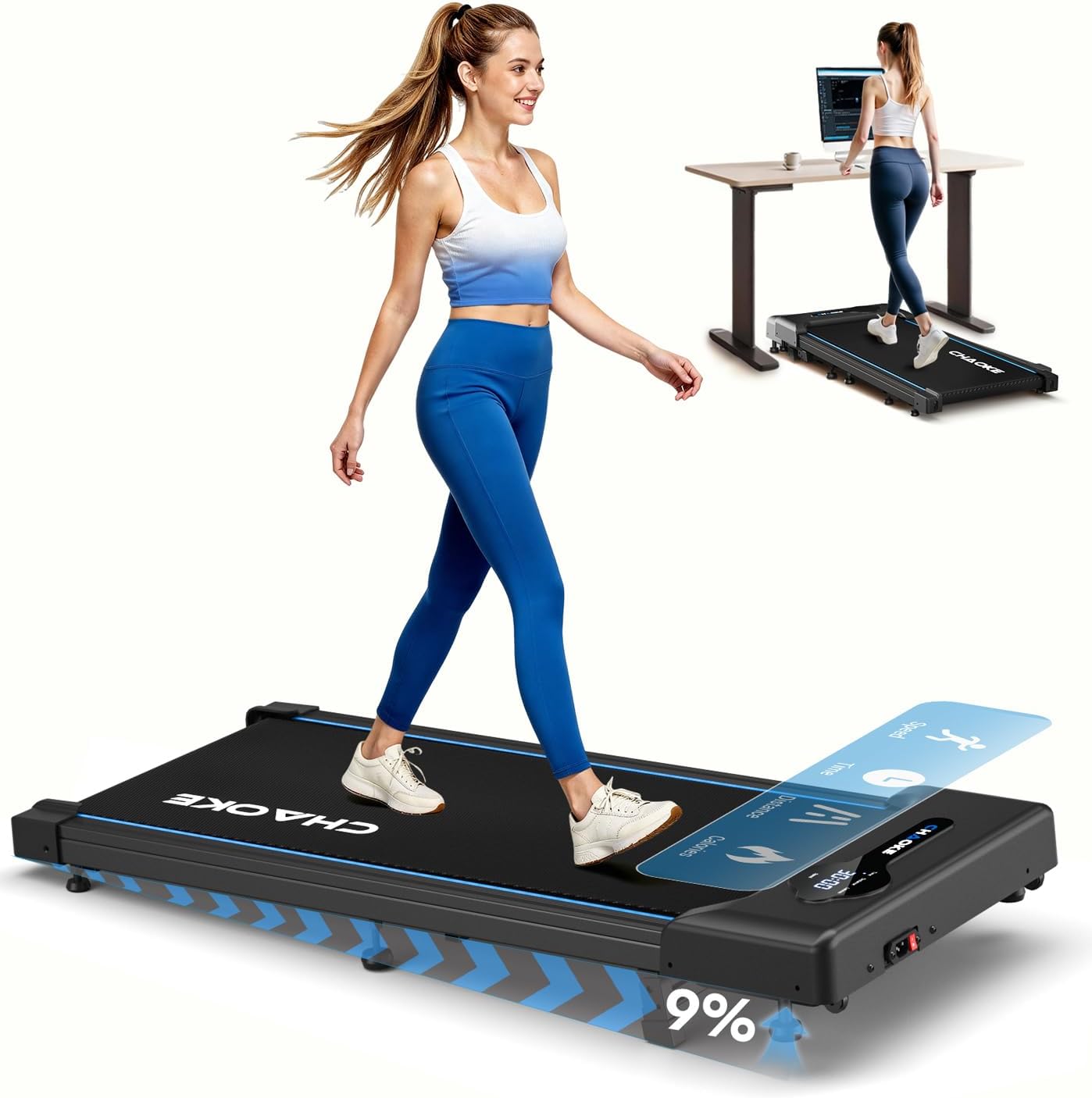
The CHAOKE Walking Pad is the most affordable option in this comparison and one of the best walking pads on the market in 2026. Its silent 2.75 HP motor makes it ideal for under-desk use whilst working, without disturbing colleagues or neighbours. The 9% incline adds a training dimension that many budget walking pads lack.
The 12 pre-configured HIIT programs are a notable addition at this price point: they allow automated interval sessions combining brisk walking with light jogging. The maximum speed of 6.2 mph (9:40 min/mile) is sufficient for easy jogging but falls short for running at competitive paces. The 330 lb capacity is impressive for its size and price.
At $250, the CHAOKE is perfect for anyone looking to supplement their outdoor training with active walking at home or in the office. It is not a treadmill for running at fast paces, but as a walking pad with incline and HIIT programs, it offers the best value for money in the comparison.
Pros
- Unbeatable price (~$250)
- Silent 2.75 HP motor
- 12 HIIT programs included
- 9% incline
- Impressive 330 lb capacity
- Ideal for under-desk use
Cons
- Max speed 6.2 mph (jogging only)
- Not suitable for fast running
- Compact running surface
- No large display
10. TOPUTURE 6 in 1 — All-in-one at ~$350
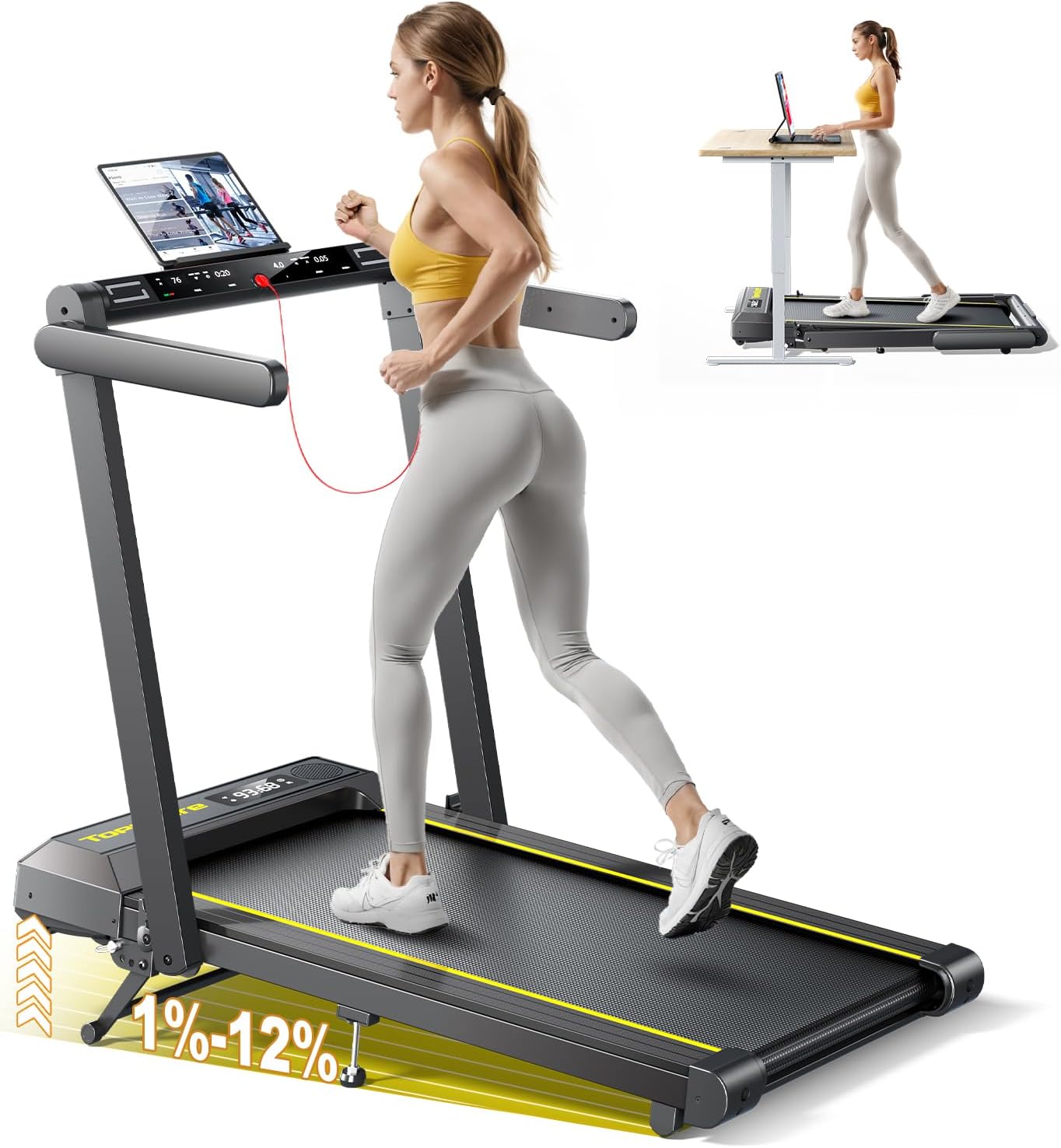
The TOPUTURE 6 in 1 is the most versatile treadmill in this comparison with six different modes of use including conventional running treadmill, walking pad, under-desk mode and various training configurations. The dual-screen design allows you to view data both standing and in desk position, a well-thought-out detail.
The 12% incline and maximum speed of 10 mph place it a step above most treadmills in this price range. The integrated heart rate sensor and Bluetooth speaker enhance the training experience. Mobile app connectivity enables session tracking and workout programming.
At $350, the TOPUTURE combines versatility, competitive speed and generous incline. It is the best option for anyone who wants a treadmill that works equally well for training and walking whilst working, with features that exceed many similarly priced treadmills.
Pros
- 6 different modes of use
- 12% incline + 10 mph
- Practical dual screen
- Integrated Bluetooth speaker
- HR + App compatible
Cons
- Less well-known brand
- Basic motor for very long sessions
- Weight capacity not specified
- Compact surface in walking pad mode
Quick comparison
This table summarises the key specifications of all ten treadmills so you can compare them at a glance:
| Model | Price | Motor | Max speed | Belt size | Incline | Max weight | Foldable | Bluetooth | Score |
|---|---|---|---|---|---|---|---|---|---|
| Cecotec DrumFit | ~$300 | DC | 8.7 mph | 47x16.5" | Adjustable | 265 lb | Yes | No | 6.7 |
| NordicTrack T Series | ~$700 | 2.6 CHP | 10 mph | 53x18" | 0-10% | 300 lb | Yes | Yes | 8.4 |
| ProForm Carbon Pro 2000 | ~$600 | 2.4 CHP | 11.2 mph | 51x18" | 0-12% | 275 lb | Yes | Yes | 8.1 |
| FITFIU Fitness | ~$350 | 1500W DC | 8.7 mph | Compact | Manual | 240 lb | Yes | No | 6.7 |
| MERACH Foldable | ~$400 | 3.5 HP | 8.7 mph | 18x47" | 0-18% | 350 lb | Yes | App | 7.4 |
| 7HP Treadmill | ~$500 | 7 HP | 12.4 mph | Wide | 0-15% | 397 lb | Yes | App | 7.8 |
| FITFIU MC-160 | ~$300 | DC | 8.7 mph | Compact | 0-9% | N/A | Yes | App | 6.9 |
| Mobvoi SE | ~$350 | 2.5 HP | 7.5 mph | Compact | No | 265 lb | Yes | AI App | 7.0 |
| CHAOKE Walking Pad | ~$250 | 2.75 HP | 6.2 mph | Compact | 0-9% | 330 lb | Yes | No | 6.9 |
| TOPUTURE 6 in 1 | ~$350 | DC | 10 mph | Compact | 0-12% | N/A | Yes | BT | 7.2 |
Which to choose based on your level
Not all treadmills suit all runners. Here is our recommendation by profile:
Beginner (0-12 miles/week)
If you are just starting to run or mixing walking with jogging, the Cecotec DrumFit, FITFIU Fitness or CHAOKE Walking Pad cover your needs. The maximum speed of 6-8.7 mph is more than sufficient for your current level, and saving $250-400 compared to premium options lets you invest in good running shoes or a GPS running watch.
Intermediate (12-30 miles/week)
If you already have a solid training base and do interval and speed sessions, the ProForm Carbon Pro 2000 or the TOPUTURE 6 in 1 are the right choices. ProForm offers 11.2 mph and iFit; TOPUTURE combines 10 mph, 12% incline and 6-in-1 versatility at a lower price. For hill training, the MERACH with its 18% auto incline is unmatched.
Advanced (30+ miles/week)
For advanced runners who will use the treadmill as their primary training tool (especially during winter or extreme summer months), the NordicTrack T Series or the 7HP Treadmill are the serious options. NordicTrack offers the premium brand, FlexSelect cushioning and iFit; the 7HP Treadmill has the most powerful motor (7HP) reaching 12.4 mph with a 397 lb capacity, ideal for race-pace intervals.
Common treadmill buying mistakes
After analysing hundreds of buyer reviews, these are the most frequent mistakes you should avoid:
- Buying the cheapest option on impulse: treadmills under $200 are for walking, not running. Saving $100 today means buying another treadmill in 6 months because the first one cannot handle the use. Invest a minimum of $300 if you genuinely want to run on a treadmill.
- Ignoring continuous HP: many brands advertise peak HP (a laboratory value the motor only reaches for fractions of a second). The figure that matters is continuous HP (CHP). A treadmill with 3.0 peak HP may have only 1.0 CHP, which is insufficient for running.
- Not measuring available space: a treadmill needs at least 78 x 31 inches (200 x 80 cm) of floor space when unfolded, plus 3 feet of clearance behind for safety. Measure before buying. If space is tight, choose a folding model.
- Forgetting maintenance: a treadmill needs regular lubrication (every 3-6 months), motor cleaning and belt tension adjustment. Ignoring maintenance drastically shortens the lifespan and can cause noise and motor overheating issues.
- Not considering noise: if you live in a flat with neighbours below, every footstrike transmits vibration through the floor. Invest in an anti-vibration mat ($20-40) and choose treadmills with good cushioning. Running at 6 AM without a mat can create problems with neighbours.
- Focusing only on maximum speed: maximum speed matters if you do speed intervals, but for most training sessions you will use the 5-7.5 mph range. Prioritise motor, belt size and cushioning over a top speed you will rarely use.
Our final recommendation
After analysing all 10 treadmills, if we had to choose just one it would be the ProForm Carbon Pro 2000. At $600 it offers the best balance of powerful motor (2.4 CHP), high maximum speed (11.2 mph), spacious belt (51 x 18 inches), generous incline (12%) and modern connectivity (Bluetooth + iFit). It serves beginners, intermediates and most advanced runners.
If budget is the priority, the CHAOKE Walking Pad at $250 is the most affordable option with a silent motor and HIIT programs, ideal for active walking and light jogging. The Cecotec DrumFit at $300 steps up with genuine running speeds. And if you want no compromises in quality, the NordicTrack T Series at $700 or the 7HP Treadmill at $500 deliver semi-professional power.
Frequently asked questions
What is the best home treadmill for running in 2026?
The NordicTrack T Series (~$700) is the best home treadmill for running if you want premium quality with a 2.6 CHP motor, 53 x 18 inch belt, Bluetooth and hydraulic folding. For tighter budgets, the Cecotec DrumFit (~$300) offers the best value for money with solid running features.
How much does a good running treadmill cost?
A basic but functional running treadmill costs between $300 and $400 (Cecotec DrumFit or FITFIU Fitness). For mid-range features with better motor and cushioning, expect $500 to $700 (ProForm Carbon Pro 2000 or NordicTrack T Series). Below $250 it is difficult to find reliable treadmills for regular running.
What motor power does a running treadmill need?
For walking, 1.0-1.5 continuous HP is sufficient. For running at moderate pace (5-7.5 mph), you need at least 2.0 continuous HP (CHP). For interval training above 8.5 mph, look for 2.5-3.0 CHP. Be aware that many brands advertise peak HP, not continuous. Continuous HP is the figure that matters.
What is the minimum belt size for running?
The minimum recommended belt size for running (not walking) is 48 x 16 inches (120 x 40 cm). For runners over 6 feet tall or with a long stride, look for at least 51 x 18 inches (130 x 45 cm). Budget treadmills with 39-43 inch belts are suitable for walking or very gentle jogging, not for running.
Is a folding treadmill worth it?
Yes, especially in flats or apartments with limited space. Modern folding treadmills include hydraulic systems and transport wheels for easy folding. The key is ensuring the mechanism is robust and does not compromise stability during use. All four treadmills in this comparison are foldable.
Are home treadmills very noisy?
It depends on the model and speed. Treadmills with DC motors typically generate 60-75 dB when running at 6 mph. To reduce noise: place an anti-vibration mat underneath (~$20-40), lubricate the belt regularly and choose models with integrated cushioning. The NordicTrack and ProForm models are among the quietest in their range.
Can I connect my treadmill to a GPS watch or Strava?
Treadmills with Bluetooth (NordicTrack T Series, ProForm Carbon Pro 2000) connect to the iFit app, which syncs with Strava. Treadmills without Bluetooth (Cecotec, FITFIU) have no direct connection, but you can use your GPS watch in indoor mode (accelerometer) to record the activity and sync it afterwards.
How often should I maintain my treadmill?
Basic maintenance includes: lubricating the belt every 3-6 months or every 100-120 miles, adjusting belt tension if it drifts, cleaning the motor area every 2-3 months and checking all bolts are tight. A well-maintained treadmill lasts 8-12 years. Use only silicone lubricant designed for treadmills, never cooking oils or WD-40.
Track your workouts with CorrerJuntos
Whether you run on a treadmill or outdoors, track your activities, follow training plans and connect with other runners. The social running app to improve together.
Editorial lead at CorrerJuntos. Popular runner and founder of the app, writing about training, gear and the running community from Huelva, Spain.