📋 Transparency: This article contains affiliate links to Amazon. If you purchase through them, we receive a small commission at no extra cost to you. We only recommend products we have analysed in depth.
Hydration can make the difference between crossing the finish line strong or dragging yourself through the final ten kilometres. During a marathon, your body loses between 1 and 2.5 litres of sweat per hour depending on heat and intensity, and with that sweat go essential electrolytes like sodium, potassium and magnesium. Replacing water alone is not enough: you need a sports drink that provides carbohydrates for energy, electrolytes for muscular function and an osmolality your stomach can tolerate at race pace.
We have analysed the most popular and effective options on the market and selected the 8 best sports drinks for marathon running in 2026. From Maurten's hydrogel technology to Gatorade's accessibility, through European brands like 226ERS, SIS and Precision Fuel that dominate the professional peloton.
Why hydration is key in marathon running
A marathon demands between 2,500 and 3,500 kcal depending on body weight and pace. Muscle and liver glycogen stores hold roughly 2,000 kcal at most, which means that without external energy intake, a runner depletes their reserves around the 30 km mark: the infamous wall. A sports drink is one of the primary tools for delaying or preventing that energy collapse.
But hydration is not just about energy. Sweat contains significant concentrations of sodium (between 500 and 1,500 mg per litre of sweat depending on the individual), and sodium loss causes cramps, premature muscle fatigue and, in extreme cases, hyponatraemia (dangerously low blood sodium levels). A good sports drink replenishes both energy and the minerals lost through sweating.
These are the measurable effects of dehydration on running performance:
- 1% body weight loss: performance starts to decline detectably. Heart rate increases by 3 to 5 beats per minute compared to a hydrated state.
- 2% loss: performance drops by 5 to 10%. Perceived effort increases significantly. In a marathon at 4:30 min/km, that can mean 10-15 extra minutes at the finish.
- 3-4% loss: performance drops by over 20%. Real risk of heat stroke in hot conditions. Mental concentration deteriorates, affecting technique and decision-making.
- 5%+ loss: serious health danger. Risk of cardiovascular collapse. The runner must stop and seek medical attention.
The science of race hydration has evolved enormously in recent years. A decade ago, the advice was simple: drink as much as possible. Today we know that over-hydration (drinking more than you lose) is equally dangerous as dehydration, as it can cause hyponatraemia. The modern strategy is to drink to thirst, guided by your pre-established nutrition plan rather than fixed volumes.
What to look for in a sports drink
Not all sports drinks are created equal. These are the six variables that determine whether a drink is suitable for a marathon:
- Carbohydrates (g per serving): the primary fuel during racing. Current marathon recommendations are 60-90 g of carbohydrates per hour. Look for drinks providing at least 30-40 g per 500 ml serving to avoid overloading the stomach with excessive liquid volume. The ideal sources are maltodextrin, fructose and dextrose in a 2:1 ratio (glucose:fructose) to maximise intestinal absorption through independent transporters.
- Electrolytes (sodium, potassium, magnesium): sodium is the most important electrolyte for runners, as it is lost in the greatest quantity through sweat. Look for a minimum of 500 mg of sodium per litre. Potassium and magnesium support muscular function and cramp prevention. Drinks with less than 300 mg/L of sodium are insufficient for marathons in hot conditions.
- Osmolality: determines the speed of gastric absorption. Isotonic drinks (280-320 mOsm/kg) have the same concentration as blood and are absorbed in a balanced way. Hypotonic drinks (below 280 mOsm/kg) are absorbed faster but provide less energy. Hypertonic drinks (above 320 mOsm/kg) provide more energy but can cause gastrointestinal distress. For marathon running, isotonic drinks are the safest option.
- Flavour and palatability: an underrated but critical factor. During a marathon, the tolerance threshold for sweet flavours changes. Many runners experience rejection of very sweet tastes beyond the 25 km mark. Look for options with mild or neutral flavour, or carry two different flavours to alternate.
- Gut tolerance: the digestive system receives less blood flow during running (blood is diverted to muscles), which reduces absorption capacity. Drinks with hydrogel technology (like Maurten) or moderate carbohydrate concentrations (6-8%) are more tolerable. Highly concentrated drinks (above 10%) frequently cause digestive issues.
- Format (powder vs liquid): powder is more practical for marathon because you can adjust concentration, it weighs less and is more economical. Ready-to-drink bottles are useful for short training but impractical to carry in quantity during a race. All products in this comparison are available in powder format.
The 8 best sports drinks for marathon 2026
We have selected eight sports drinks covering all runner profiles and budgets: from Maurten's hydrogel technology used by world record holders to accessible options like Gatorade and 226ERS. Each product has been evaluated on carbohydrate content, electrolytes, gut tolerance, flavour and value for money.
1. Maurten Drink Mix 320 CAF 100 — The choice of world record holders

Maurten has revolutionised sports nutrition with its patented hydrogel technology. The principle is simple but brilliant: the drink encapsulates carbohydrates in a gel structure that forms on contact with stomach acid. This allows absorption of up to 80 g of carbohydrates per hour without the gastrointestinal distress typical of conventional drinks.
The CAF 100 version adds 100 mg of caffeine per sachet, roughly equivalent to an espresso. Caffeine improves endurance performance by 2 to 5% according to scientific evidence, and combined with the high carbohydrate load, makes this drink the most complete option for the second half of the marathon. It is the drink Eliud Kipchoge used in his sub-2 hour attempt and the one that dominates the world elite peloton.
Pros
- Unique hydrogel technology
- 80g carbs/h without GI distress
- 100mg caffeine for performance
- Used by world elite
- Neutral flavour, not cloying
Cons
- High price (~$2.85/sachet)
- Relatively low sodium content
- Only one flavour available
- Requires mixing with exactly 500ml
2. SIS GO Electrolyte — Best value for money

Science in Sport (SIS) is the official sports nutrition brand for several Tour de France teams and World Athletics. Their GO Electrolyte is the best-selling isotonic drink in Europe and one of the most reliable on the market. The formula combines maltodextrin and fructose with a complete electrolyte profile including sodium, potassium and magnesium.
What makes SIS GO Electrolyte special is its consistency: the 1.6 kg tub yields approximately 40 servings, making it the most economical option in this comparison per prepared litre. The lemon-lime flavour is pleasant even in the final hours of racing, and the vegan formulation makes it suitable for all runner profiles. It is a classic isotonic drink without radical innovations, but executed with pharmaceutical precision.
Pros
- Best value for money
- 40 servings per tub
- Trusted brand (World Athletics)
- Pleasant, non-cloying flavour
- Vegan and gluten-free
Cons
- 36g carbs: needs supplementing
- No caffeine
- Large tub, not portable
- Limited flavour range
3. Gatorade Endurance Formula — The reliable classic

Gatorade needs no introduction. The Endurance Formula is the version specifically designed for endurance sports, with twice the sodium and potassium of standard Gatorade. It is the official drink of the major US marathons, including the New York City Marathon and Chicago Marathon, which means that if you run a major, you will likely find it at the aid stations.
Its strength is accessibility and familiarity. Millions of runners have trained and raced with Gatorade for decades, which reduces the risk of surprises on race day. The carbohydrate concentration is moderate (6%), which promotes absorption and minimises gastric distress. It is not the most innovative or the most powerful, but it is the one least likely to cause problems.
Pros
- World's most recognised brand
- Available at major marathons
- High sodium and potassium
- Very accessible price
- Tolerance proven by millions
Cons
- 30g carbs: insufficient alone
- Too sweet for some runners
- Contains artificial colourants
- No advanced absorption technology
4. Isostar Hydrate & Perform — The European reference

Isostar is a Swiss brand with over 45 years of history in sports nutrition. Their Hydrate & Perform is the best-selling isotonic drink in continental Europe and is present at most marathons and half marathons across the continent. The formula combines sucrose and dextrose with a balanced electrolyte profile.
The 1.5 kg tub offers 37 servings, making it one of the most economical options per litre. Its main advantage is consistency: Isostar has been manufacturing exactly the same product for decades, which generates a trust that is hard to match. The lemon flavour is mild and refreshing, and gut tolerance is excellent thanks to the moderate 6.7% concentration. If you have run a European marathon, you have likely already encountered it at aid stations.
Pros
- 45 years of proven history
- 37 servings per tub
- Available at European marathons
- Excellent gut tolerance
- Mild, pleasant flavour
Cons
- 33g carbs: needs supplementing
- Sodium somewhat low for intense heat
- No recent formula innovations
- Contains refined sugar
5. 226ERS Isotonic Drink — Best Spanish brand
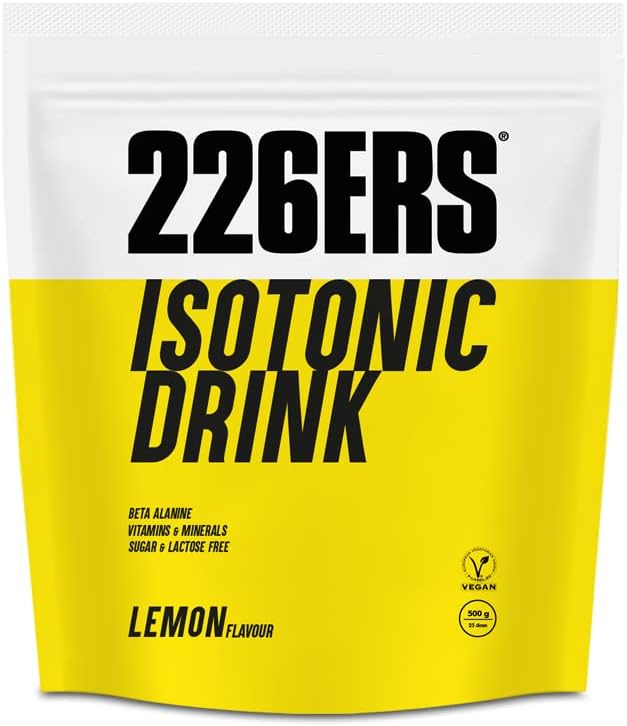
226ERS was born in Valencia, Spain, in 2012 with a clear mission: to create quality sports nutrition for runners with food intolerances. The name references the 226 km of an Ironman (3.8 km swim + 180 km bike + 42.2 km run), giving an idea of the target audience. Their Isotonic Drink is gluten-free, lactose-free and made with natural ingredients.
What sets 226ERS apart from the competition is the inclusion of beta-alanine, an amino acid that acts as a muscular buffer, delaying the onset of fatigue. Additionally, it uses mineral salts from natural sources rather than the usual synthetic forms. For runners with sensitive stomachs or dietary restrictions, 226ERS is arguably the best option on the market. Being a Spanish brand, availability at local shops and popular races in Spain and Latin America is excellent.
Pros
- Gluten-free, lactose-free
- Beta-alanine as muscular buffer
- Natural ingredients
- Very competitive price
- Good availability in Europe
Cons
- 30g carbs: the minimum
- Small tub (500g, ~13 servings)
- Sodium somewhat low
- Less known internationally
6. Naak Ultra Energy — The ultra-distance specialist
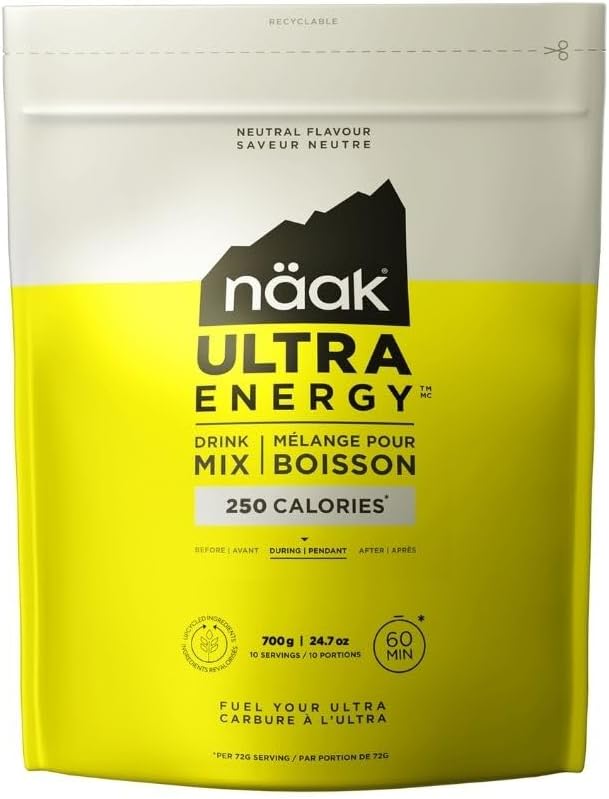
Naak is a Canadian brand that has carved out a niche in the ultra-distance segment with a focus on natural and sustainable ingredients. Their Ultra Energy is formulated for races exceeding 3 hours, with a combination of fast and slow-release carbohydrates that maintains stable energy levels during prolonged efforts.
The 700 g tub offers a good number of servings and the natural flavour avoids the palate fatigue many runners experience with artificial drinks. The brand has gained a following among trail runners and ultramarathoners, though it works equally well for road marathons. If you are looking for an option with clean ingredients and no unnecessary chemicals, Naak deserves serious consideration.
Pros
- Formulated for ultra-distance
- Natural, clean ingredients
- 40g carbs: solid delivery
- Natural flavour that does not tire
- Sustained energy release
Cons
- Less known brand
- Somewhat elevated price
- Less scientific evidence than Maurten/SIS
- Limited availability in shops
7. Precision Fuel & Hydration — Highest sodium content

Precision Fuel & Hydration is a British brand founded by Andy Blow, a former professional athlete who suffered severe cramps from sodium loss. The brand is built around a clear proposition: aggressive and personalised electrolyte replacement. Their drink combines 60 g of carbohydrates with 1000 mg of sodium per litre, by far the highest concentration in this comparison.
If you are a salty sweater (white marks on clothing, salty taste on skin during running) or will be competing in intense heat, Precision Fuel is the obvious choice. The brand also offers a personalised sweat test to determine your exact sweat sodium concentration. With 60 g of carbohydrates per litre, it also covers a significant portion of energy needs without requiring as much supplementation from gels.
Pros
- 1000mg sodium/L: the highest
- 60g carbs: solid dual delivery
- Personalised sweat test
- Ideal for heat and salty sweaters
- Backed by precision science
Cons
- Elevated price
- Salty taste for some
- Limited availability outside UK
- Can be excessive in cool weather
8. HIGH5 Energy Drink — The accessible British option
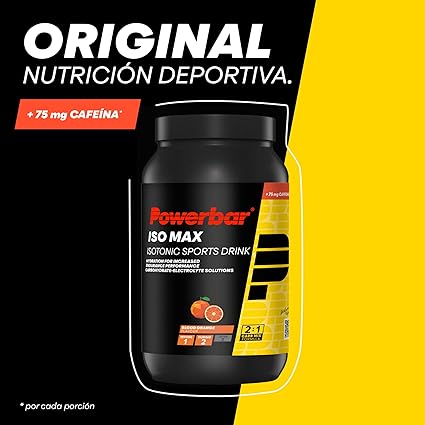
HIGH5 is a British brand with over 25 years of experience in sports nutrition. Their Energy Drink is an isotonic energy drink designed to deliver sustained energy during long efforts. The formula combines maltodextrin and fructose in the optimal 2:1 ratio with a balanced electrolyte profile.
What stands out about HIGH5 is its focus on real ingredients and simple but effective formulations. The brand sponsors numerous half and full distance races in the United Kingdom, making it a race-proven option. The price is competitive and gut tolerance is good thanks to a moderate carbohydrate concentration. A solid option for runners seeking reliability without paying the Maurten premium.
Pros
- 2:1 maltodextrin:fructose ratio
- Good gut tolerance
- Competitive price
- 25 years of experience
- Race-proven in the UK
Cons
- Less innovative than Maurten
- Less known outside UK
- Moderate sodium
- Limited flavour variety
Quick comparison
This table summarises the key specs of all 8 drinks so you can compare at a glance:
| Drink | Price | Carbs/500ml | Sodium/L | Type | Score |
|---|---|---|---|---|---|
| Maurten 320 CAF 100 | ~$40 | 79g | ~290mg | Hydrogel | 9.0 |
| SIS GO Electrolyte | ~$20 | 36g | ~500mg | Isotonic | 8.5 |
| Gatorade Endurance | ~$15 | 30g | ~620mg | Isotonic | 8.0 |
| Isostar H&P | ~$25 | 33g | ~460mg | Isotonic | 7.8 |
| 226ERS Isotonic | ~$15 | 30g | ~450mg | Isotonic | 7.8 |
| Naak Ultra Energy | ~$35 | 40g | ~480mg | Isotonic | 7.5 |
| Precision F&H | ~$30 | 30g | 1000mg | Isotonic | 7.5 |
| HIGH5 Energy | ~$20 | 38g | ~450mg | Isotonic | 7.3 |
Which to choose by distance
5K and 10K (under 60 minutes)
For races under an hour, pre-race hydration matters more than what you drink during the event. Water and a good meal 2-3 hours before is sufficient. If you prefer to carry a sports drink, lighter options like 226ERS Isotonic Drink or SIS GO Electrolyte work well without risk of gastric distress. You do not need high-carbohydrate formulas for these distances.
Half marathon (60-120 minutes)
In a half marathon, carbohydrate intake during the race starts to matter. Target: 30-60 g of carbohydrates per hour. Isostar Hydrate & Perform or Gatorade Endurance cover these needs. In hot weather, prioritise options with more sodium. A small 250 ml bottle with concentrated drink at the start and water at aid stations is an effective strategy.
Marathon (3-5 hours)
Here, in-race nutrition is critical. Target: 60-90 g of carbohydrates per hour. Maurten Drink Mix 320 CAF 100 is the premium option par excellence. For tighter budgets, SIS GO Electrolyte combined with energy gels covers the requirements. If you sweat heavily or race in heat, Precision Fuel & Hydration with its 1000 mg of sodium is the safest choice for avoiding cramps in the final kilometres.
Ultra marathon and trail (5+ hours)
In ultra-distance, gut tolerance is the number one factor. The digestive system experiences cumulative stress that worsens with the hours. Naak Ultra Energy is formulated specifically for these efforts, with sustained-release carbohydrates and a mild flavour. Alternate between sports drink, solid food (bars, fruit, boiled potato) and plain water to avoid palate fatigue and sugar saturation.
Common hydration mistakes during racing
These are the hydration mistakes we see most frequently among marathon runners, even experienced ones:
- Trying the drink for the first time on race day: the most dangerous and most easily avoided mistake. Every stomach reacts differently to every formulation. What works for your training partner can cause diarrhoea at race pace. Always test in long training runs.
- Drinking only water throughout the marathon: water does not replenish the carbohydrates burned or the electrolytes lost through sweat. Worse still: drinking lots of water without sodium dilutes blood sodium concentration, potentially causing hyponatraemia, a life-threatening condition. Always combine water with sports drink or salt tablets.
- Waiting until thirsty to start drinking: by the time you feel thirst, your body has already lost 1 to 2% of body weight. At marathon pace, that loss translates to a measurable performance drop. Start drinking from the first aid station (5 km) and maintain regular sips every 15-20 minutes.
- Mixing the drink more concentrated than recommended: if the manufacturer says 40 g in 500 ml, putting 60 g does not give you more energy: it gives you a hypertonic drink that your stomach cannot absorb properly. The result is nausea, abdominal cramps and diarrhoea. Follow the recommended ratios.
- Ignoring weather conditions: your hydration strategy must adapt to the heat. A marathon at 10 degrees requires less fluid and less sodium than one at 30 degrees. If the temperature exceeds 25 degrees, increase fluid volume by 20-30% and consider higher-sodium options like Precision Fuel & Hydration.
- Not practising aid station logistics: grabbing a cup at 4:30 min/km, drinking without choking and continuing to run is a skill that requires practice. Train it during your long runs. Some runners pinch the cup at the top to create an opening for sipping without spilling.
Our final recommendation
After analysing all 8 drinks, if we had to choose just one for a marathon it would be SIS GO Electrolyte. At around $20 it offers the best value for money on the market, with a proven isotonic formulation backed by decades of use, good electrolyte concentration, excellent gut tolerance and a flavour that does not tire during long races. Combined with energy gels to cover the necessary carbohydrates, it is a solid and economical strategy.
If budget is not the priority and you want maximum performance, Maurten Drink Mix 320 CAF 100 is unbeatable. Its hydrogel technology allows absorption of more carbohydrates with less gastric distress than any other drink on the market, and the 100 mg of caffeine provides an extra performance boost for the second half. For hot conditions or salty sweaters, Precision Fuel & Hydration with its 1000 mg sodium per litre is the safest choice. And for runners who prefer clean, natural formulations, 226ERS Isotonic Drink is excellent.
Frequently asked questions
What is the best sports drink for marathon running in 2026?
Maurten Drink Mix 320 CAF 100 (~$40) is the best sports drink for marathon if you want maximum performance. Its hydrogel technology allows absorption of 80 g of carbohydrates per hour without gastric distress, and the 100 mg of caffeine boost performance in the second half. For tighter budgets, SIS GO Electrolyte (~$20) offers excellent value for money.
How many grams of carbohydrates per hour do I need during a marathon?
Current recommendations for marathon are 60 to 90 grams of carbohydrates per hour. For races under 90 minutes (5K-10K), 30-40 g/h is sufficient. For half marathons, 40-60 g/h. For marathons and ultras, 60-90 g/h. The key is training your gut during long runs to tolerate higher amounts without digestive issues.
How much sodium do I need during a marathon?
Most runners need between 500 and 1000 mg of sodium per litre of drink. Salty sweaters (white marks on clothing after running) may need up to 1500 mg/L. Precision Fuel & Hydration offers 1000 mg/L, the highest concentration in this comparison, ideal for hot conditions or runners with high salty sweat rates.
Can I mix sports drink with energy gels?
Yes, and it is actually a very common strategy among experienced runners. The key is calculating total carbohydrate intake to stay under 90 g/h. If you take a 25 g carb gel, reduce your drink concentration proportionally. Many runners use a low-carb isotonic drink (SIS or 226ERS) combined with concentrated gels for better dosage control.
When should I start drinking during a marathon?
Start drinking from the first aid station, usually at the 5 km mark. Do not wait until you feel thirsty: by then you have already lost 1-2% of body weight in sweat. Take small sips (150-200 ml) every 15-20 minutes. In total, aim to consume between 400 and 800 ml per hour depending on heat, your sweat rate and body weight.
What is the difference between isotonic, hypotonic and hypertonic drinks?
The difference lies in osmolality (particle concentration). Isotonic (280-320 mOsm/kg): same concentration as blood, balanced absorption. Hypotonic (below 280): faster water absorption but less energy. Hypertonic (above 320): more energy but slower absorption and greater risk of stomach issues. For marathon running, isotonic drinks are the most versatile and safest choice.
Should I test the sports drink before race day?
Yes, absolutely. Never try anything new on race day. Use at least 3-4 long training runs to test the drink you plan to use in competition, with the same concentration, temperature and frequency. What feels fine at easy pace can cause stomach problems at race pace due to reduced blood flow to the digestive system.
Powder or ready-to-drink: which is better for marathon?
Powder is better for marathon for three reasons: you can adjust concentration to your preference, it is more economical (up to 70% cheaper per litre), and it weighs less to carry. Ready-to-drink bottles are more convenient for short training sessions. For racing, carry individual sachets and mix at aid stations with available water.
Train your nutrition with CorrerJuntos
Plan your long runs, test your hydration strategy and log what works. The social running app for training better and sharing with other runners.
Editorial lead at CorrerJuntos. Popular runner and founder of the app, writing about training, gear and the running community from Huelva, Spain.