Transparency: This article contains affiliate links to Amazon. If you buy through them, we receive a small commission at no extra cost to you. This does not change the price or our editorial selection.
Compression socks are one of the best-selling running accessories and, at the same time, one of the most misunderstood. Most runners buy them for one of two reasons: they saw them at a marathon, or their calves hurt. Both are fair. But the science behind what they actually do is more nuanced than the marketing suggests.
I went through the products available on Amazon ES in June 2026: from the €9.92 CEP Ultralight to the €32.95 DANISH ENDURANCE. This guide tells you how many mmHg you need, what changes between wearing compression during the run or after it, and which pair to buy for your real use case. Nothing invented.
What a compression sock really does
A compression sock applies graduated pressure along the leg: firmer at the ankle, easing off as it climbs towards the knee. That graduated pressure has two documented effects:
- Venous circulation: it helps venous blood return from the limb towards the heart. Useful during long periods of immobility (flights, standing all day at work) or when the venous system struggles (varicose veins).
- Muscle support: it reduces muscle vibration on each footstrike. Part of the post-run recovery effect comes from here.
What a compression sock does not do: it does not fix biomechanical problems, it does not replace your warm-up, it does not prevent muscle injuries caused by overtraining and it does not guarantee a single extra watt of performance. Evidence for performance gains during the run is inconsistent across studies. The evidence is more solid for post-effort recovery.
How many mmHg you need for each use
The mmHg (millimetres of mercury) measures the pressure the sock applies. This is the practical scale for runners:
- 8-15 mmHg (very light): the entry level. You barely feel the pressure. Useful for tired legs after long days on your feet. No measurable athletic impact.
- 15-20 mmHg (light to moderate): the range of technical running socks such as Compressport Pro Racing. Noticeable pressure, calf support while you run. Suitable for sport and for travel.
- 20-30 mmHg (moderate to firm): the lowest clinical range. More effective for recovery after a long race, for long flights and for legs that tend to swell. CAMBIVO works in this range.
- 30-40 mmHg and above: medical prescription for venous insufficiency. It makes no sense for recreational running and can be counterproductive without medical supervision.
During the run vs after it: the difference matters
Socks worn during the run
Running compression socks (Compressport Pro Racing, CEP, HANKER) are designed to be worn during the effort. They are thin, breathable and work in the 15-20 mmHg range. The main benefit runners report is less muscle vibration, which can translate into less perceived fatigue in the final kilometres. They also help avoid chafing and blisters on the calf over long distances.
Socks for post-race recovery
The 20-30 mmHg socks such as CAMBIVO or DANISH ENDURANCE Compression are mostly used in the 24-48 hours after a long race or a hard session. Worn at rest, they support venous return and can reduce delayed onset muscle soreness (DOMS). They are also useful for flights or long journeys after a race.
The 9 best compression socks for running 2026
Compressport Pro Racing Socks V3 Run High — ~€13
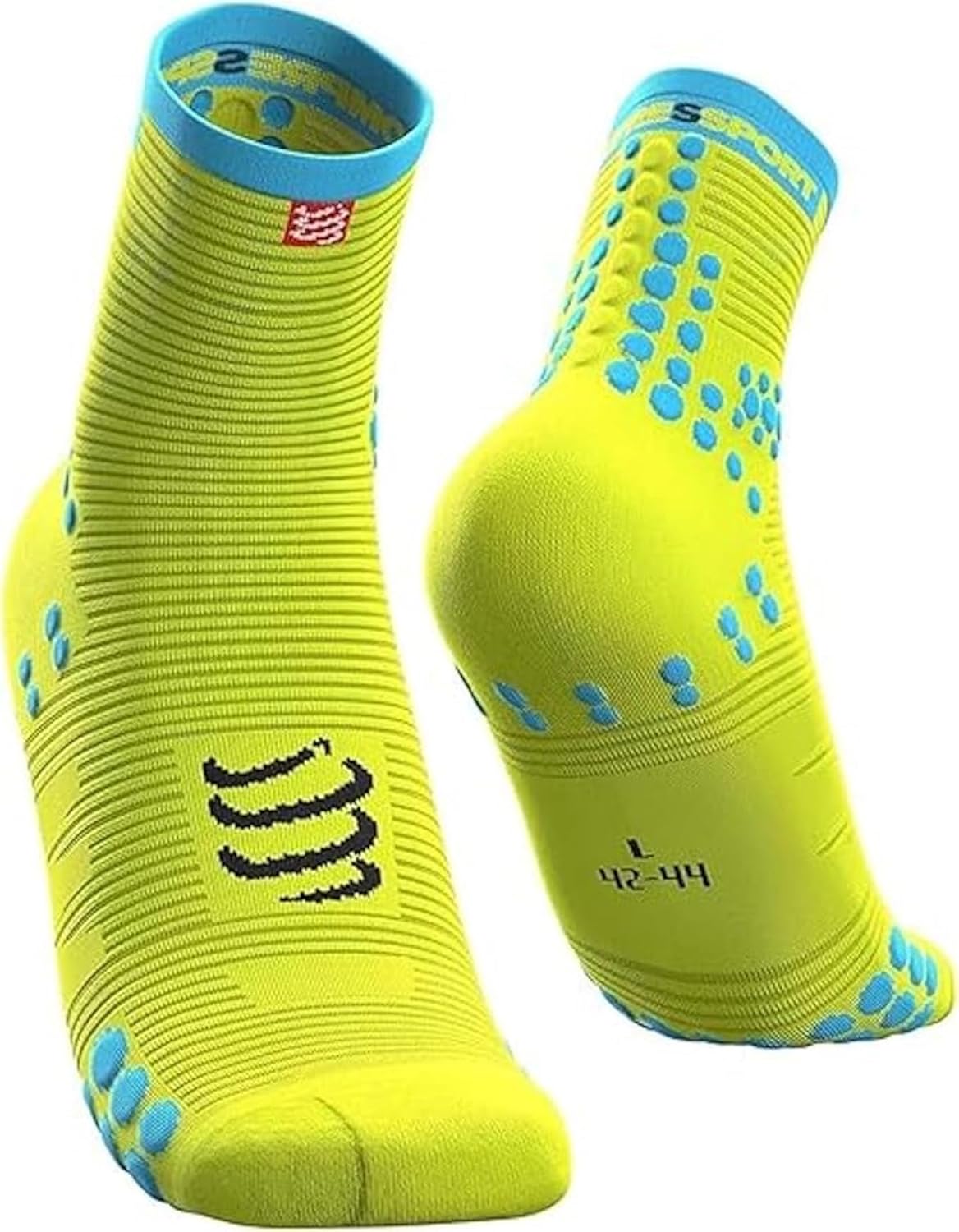
The market reference for race-day running socks. Compressport is one of the few brands working with verified mmHg and a genuine graduated compression structure, rather than an elastic sock labelled "compression". The Run High version reaches the knee and covers the whole calf with the brand's signature fabric: dense, with a vertical channel that spreads the pressure evenly. The cushioning under the forefoot is subtle but effective over the first kilometres.
They have spent years on the feet of marathon and triathlon runners worldwide, not because the marketing is good, but because they work in practice. The price per pair (~€13) is higher than generic options, but with proper care their useful life goes beyond 100 washes. On Amazon ES they come in several colours at the same price.
Pros
- Genuine verified graduated compression
- Purpose-built for running and triathlon
- Full calf coverage
- Excellent durability with good care
- The reference in the racing segment
Cons
- Pricier than generic options
- Very tight to pull on (normal with real compression)
- Delicate washing is mandatory
Who it is for: the runner doing marathons or triathlons, racing 10K and beyond regularly, or looking for the benchmark compression sock on the market.
View on AmazonDANISH ENDURANCE Compression Socks — ~€26
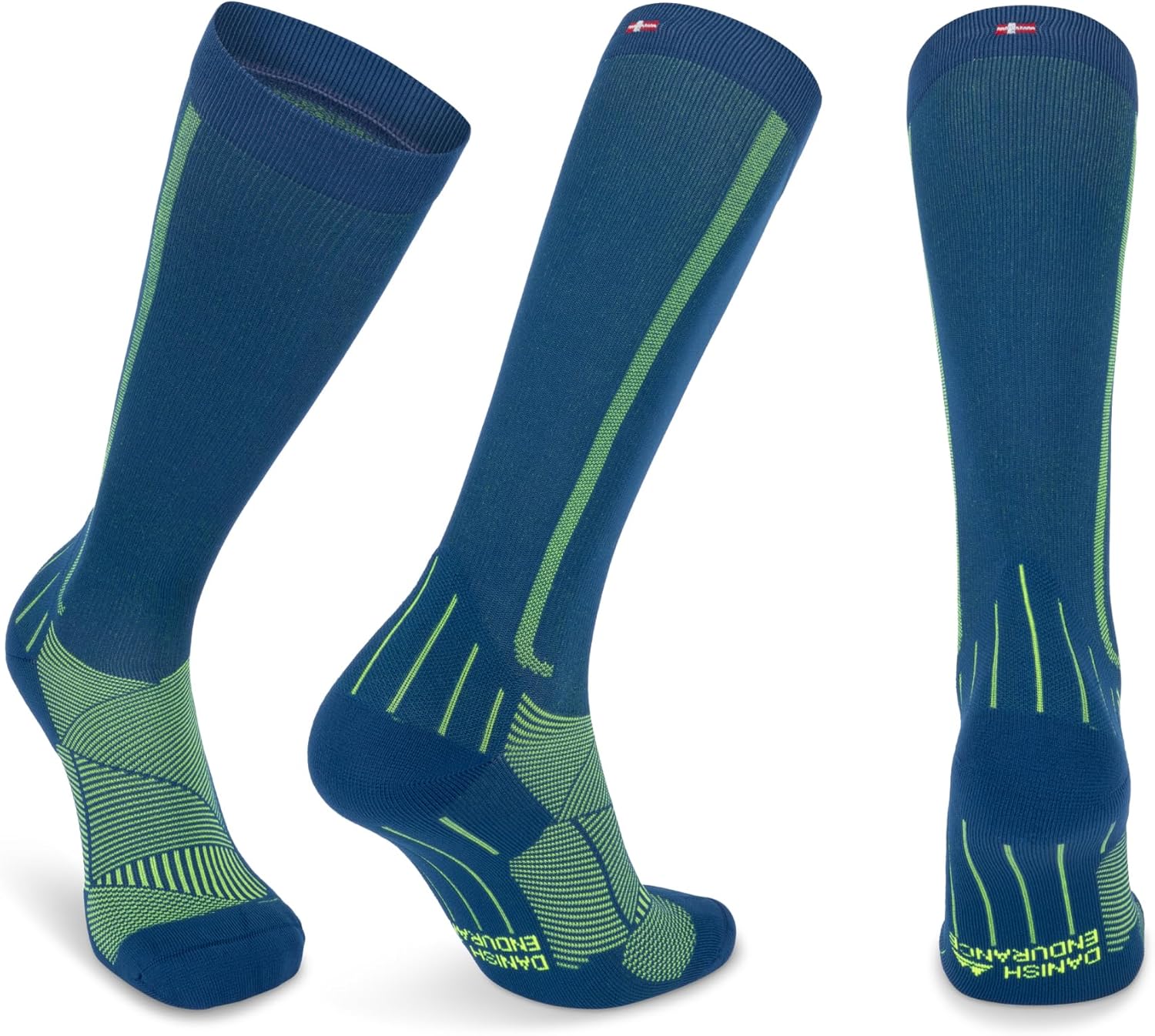
DANISH ENDURANCE is a Danish brand with a strong presence on Amazon ES and solid genuine ratings. Its compression socks are versatile: they work for running, for recovery and for travel. The knee-high cut covers the whole calf, and the two-tone design (blue with green details in the hero photo) is easy to spot on any run.
The compression sits in the right range for sport. The material blends polyamide and elastane in a technical knit that breathes better than traditional medical socks in the same mmHg range. They are sold in packs of 1 or 2 pairs. Build quality is consistent from pair to pair, which is not always the case with cheaper brands.
Pros
- Brand with a proven track record on Amazon ES
- Versatile: running, recovery and travel
- Consistent quality between pairs
- Good breathability for a knee-high sock
- Available as 1 or 2 pairs
Cons
- Higher price per pair than Compressport in the 2-pack
- No short version in this compression line
Who it is for: the runner who wants one compression sock for combined use: running, recovering and travelling in the same garment.
View on AmazonCompressport Pro Racing Socks V3 Trail — ~€10
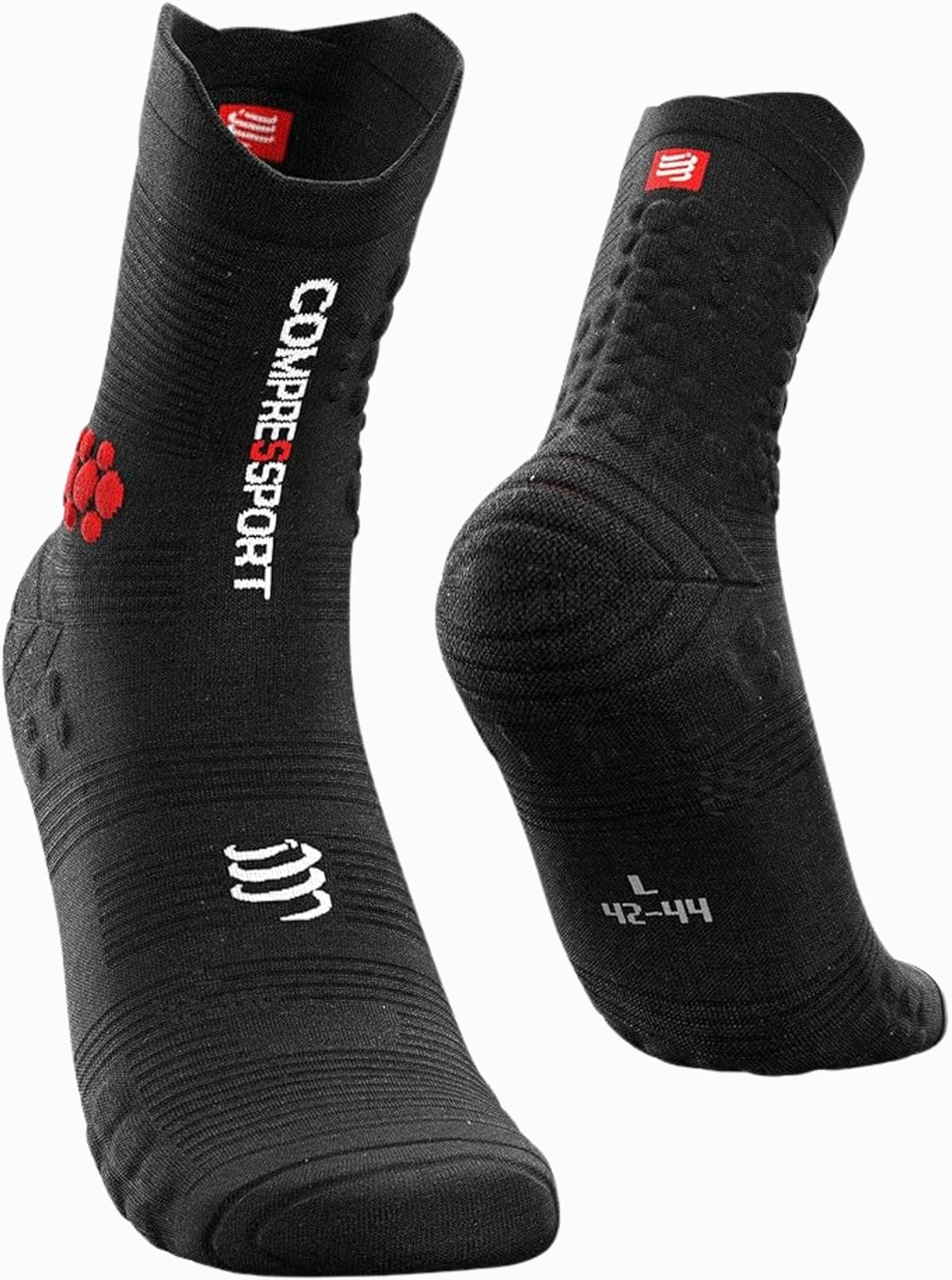
The trail version of the Compressport Pro Racing flips the priorities of the Run High: less emphasis on calf compression, more on protecting the foot and ankle from rough ground. Cushioning is significantly thicker under the foot and around the ankle, which makes it bulkier than the road version. The black fabric with red details (the usual trail-line colourway) uses fibres that resist abrasion from rock and gravel better.
In trail running, uneven ground creates lateral impacts on the ankle that the Run High is not built for. The V3 Trail is designed for rocky ground, stony paths and long descents. At ~€10 it sits at the accessible end of the Compressport range and is still a genuinely technical product, not marketing.
Pros
- Trail-specific design: ankle protection
- Reinforced cushioning for rough ground
- Superior abrasion resistance
- Most accessible Compressport price
- Brand with real technical credibility
Cons
- Less calf compression than the Run High
- Thicker: warmer in summer
- No intermediate size (only T1/T2/T3/T4)
Who it is for: the trail or mountain runner who needs real foot and ankle protection on technical descents and stony terrain.
View on AmazonCEP Ultralight Short Socks — ~€9
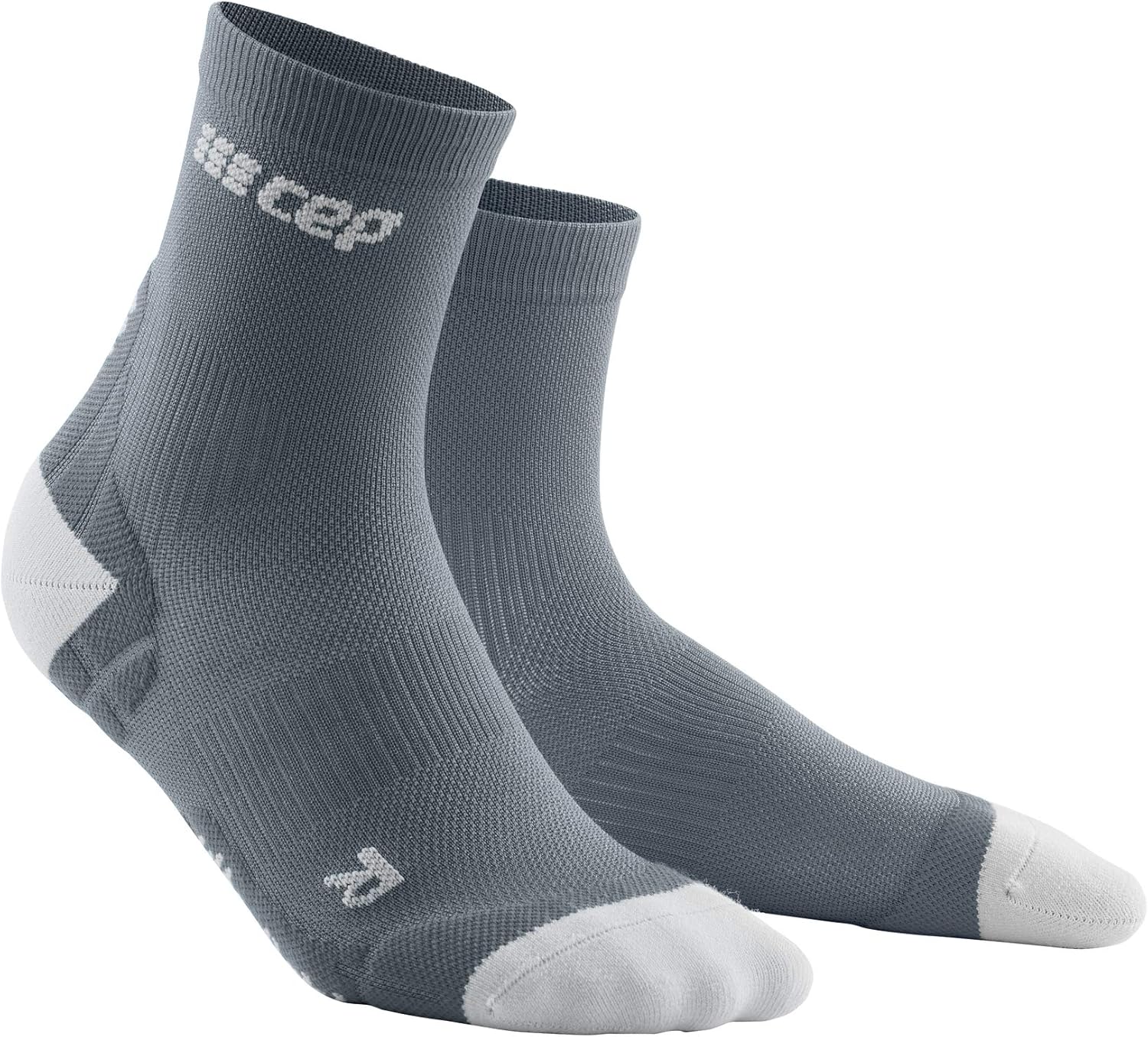
CEP is the German compression brand from the medi Group, a reference in the medical and sports world since the 1990s. The Ultralight line is the thinnest and most breathable they make: a short sock (ankle height) that applies compression across the arch and ankle without the heat of a knee-high.
For summer running in cities like Seville, Huelva or Almería, where heat is a real factor, a knee-high compression sock is unbearable. The CEP Ultralight Short give you foot support without adding heat around the calf. The grey colourway with white details is discreet and disappears inside any shoe. At ~€9 they are the most accessible pick in this selection that is not a generic brand.
Pros
- German brand with real medical credibility
- Ultra light: ideal for heat
- Arch and ankle support without heating the calf
- Lowest price among the premium brands
- Discreet design
Cons
- No calf compression (it is a sock, not a sleeve)
- Not suitable for whole-leg recovery
- Tight sizing: check the chart before ordering
Who it is for: the runner who trains in summer or in hot climates and wants foot support without the extra heat of a knee-high compression sock.
View on AmazonCAMBIVO Compression Socks 20-30 mmHg — ~€14
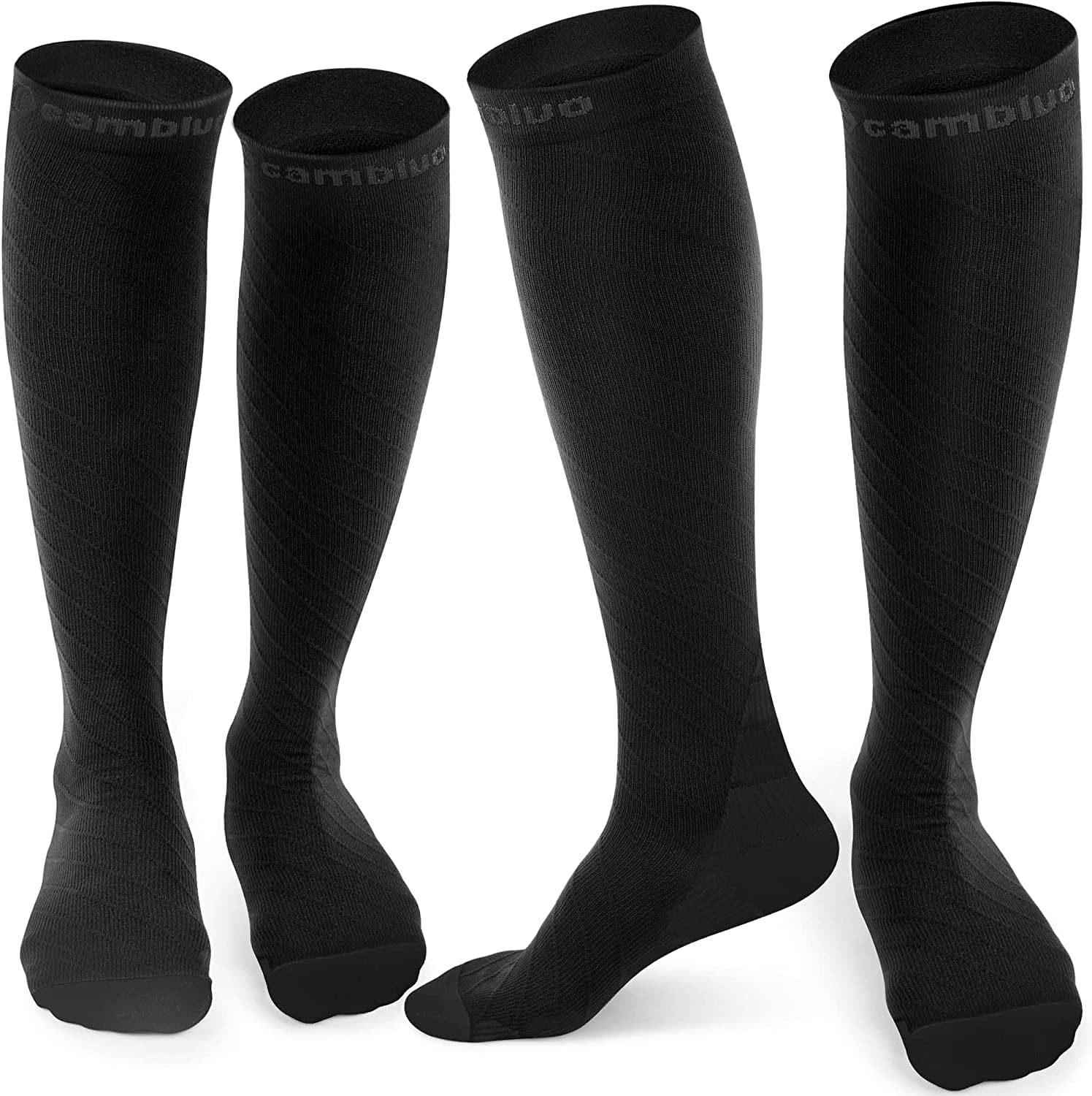
CAMBIVO is a brand with a strong Amazon ES presence that works in the 20-30 mmHg range: the moderate-to-firm level clinically recommended for post-effort recovery and long flights. Two pairs for ~€14 makes the maths more attractive than premium options if your main use is recovery at home or travel.
They are not designed for running: the fabric is thicker and the compression stronger than is advisable for high-intensity activity. Their strength is wearing them in the hours after a long run or a marathon, lying down or sitting, to speed up muscle recovery and reduce swelling. They also work well for flights after a race.
Pros
- 20-30 mmHg: the sweet spot for recovery
- 2 pairs included: one in the wash
- Very accessible price for this range
- Effective for air travel
- Full coverage: ankle to knee
Cons
- Not recommended for running: too much compression
- Thicker fabric: less breathable
- No left/right differentiation in the design
Who it is for: the runner looking for recovery socks after a long run or a marathon, or for flights after a race. Not for running in.
View on AmazonCompressport Pro Racing V3 Run Low — ~€15
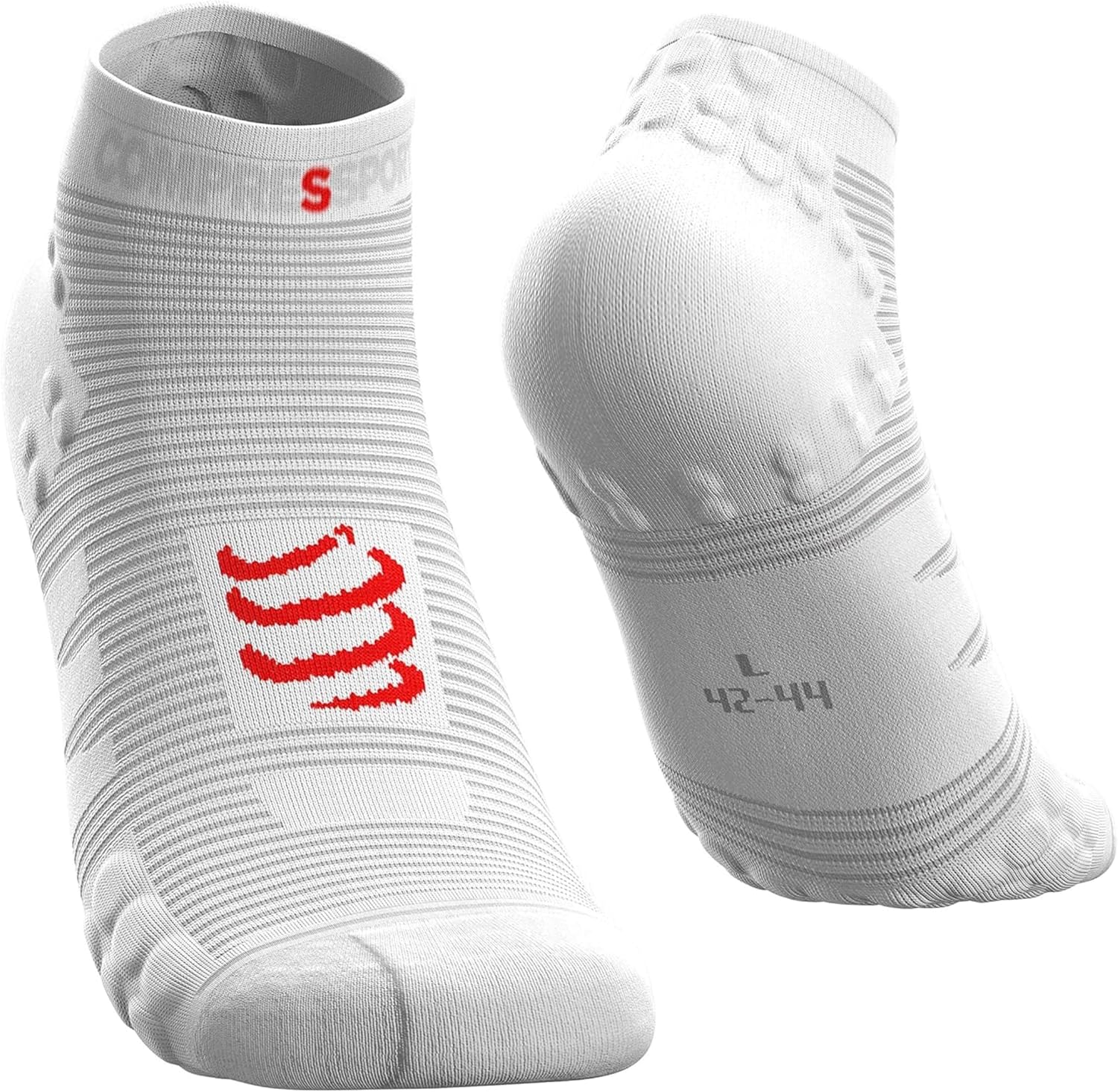
The Run Low is the Compressport for runners who do not want (or do not need) a knee-high sock in summer. Instead of covering the calf, it applies compression across the arch and ankle, cutting vibration in the structures of the foot on impact without adding heat to the leg.
On top of the foot compression, the Run Low has improved arch support compared with a standard sock. It is genuinely useful for runners with mild plantar fasciitis or a high arch who would rather not go to insoles. Cushioning at the heel and toe is well judged for road running.
Pros
- Compressport technical compression without a knee-high
- Built-in arch support
- Very breathable: great in the heat
- Compressport build quality
- Good for mild plantar fasciitis
Cons
- No calf compression
- Less visible aesthetically (low-cut sock)
- Generous sizing: can feel loose on narrow feet
Who it is for: the runner training in summer, or anyone after arch support without the heat of a knee-high compression sock. Also for runners with foot discomfort.
View on AmazonDANISH ENDURANCE Running Quarter 3 Pack — ~€27
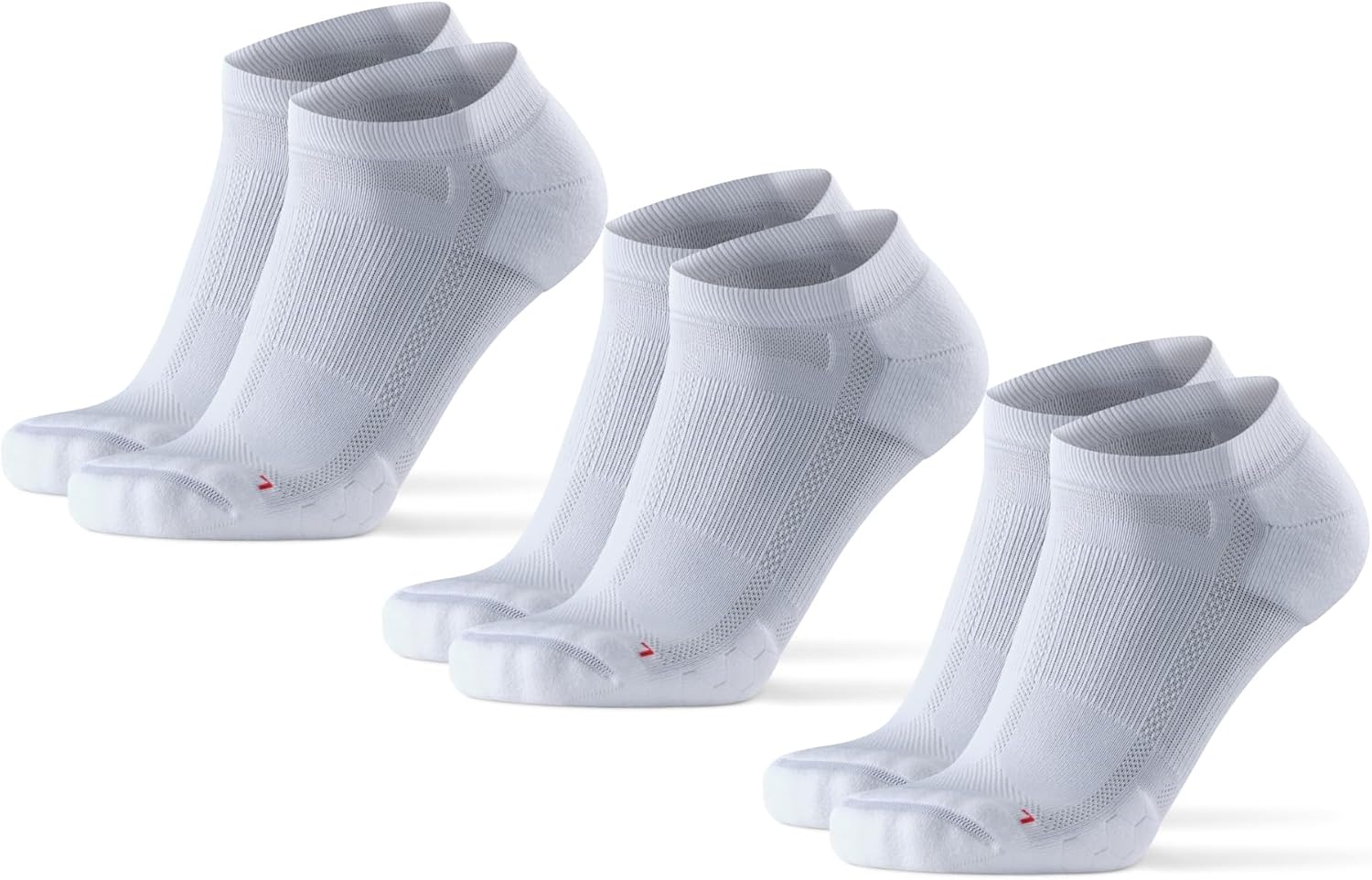
This DANISH ENDURANCE 3-pack is not a classic compression sock but a technical running sock with moderate compression at the arch and anti-blister protection. The double-layer construction in friction zones (heel and toes) noticeably cuts down blisters on long runs.
Three pairs for ~€27 is the usual DANISH ENDURANCE equation: Danish quality at pack pricing. The white design is discreet, with a barely visible red DANISH logo. The non-slip elements on the sole stop the sock from shifting inside the shoe. They work equally well for daily road miles and for race day.
Pros
- 3-pack: very competitive price per pair
- Real anti-blister protection: double layer at friction points
- Non-slip inside: it stays put
- Consistent DANISH quality between pairs
- Discreet, neutral design
Cons
- Moderate compression, not medical grade
- No calf coverage
- Only white in this reference
Who it is for: the runner with blister problems, or anyone who simply wants a good technical running sock at a fair price in a 3-pack.
View on AmazonDANISH ENDURANCE High Performance — ~€22
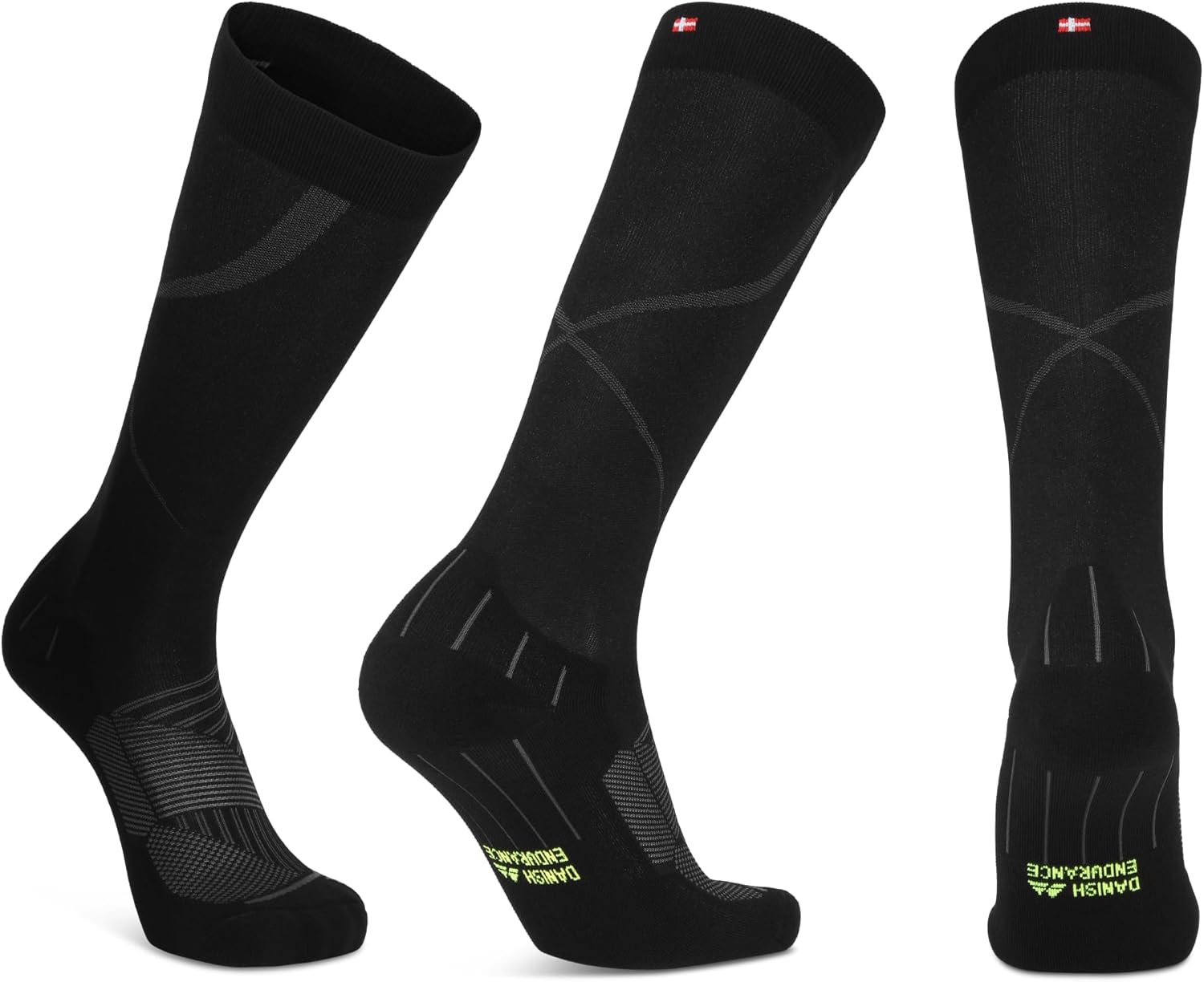
The DANISH ENDURANCE High Performance line targets endurance training: long-distance running, cycling, triathlon and marathons. Construction is more technical than their standard running socks, with support zones mapped to the muscle groups of the calf and a firmer graduated compression.
The black colourway with grey details is a classic that goes with most running kit. For marathons and ultras, where accumulated muscle fatigue is a real factor, a sock with firm compression and zoned support is more functional than a generic one.
Pros
- Built for long distance: marathons and ultras
- Firm, differentiated graduated compression
- Support mapped by muscle zone
- Neutral black colourway
- Mid-range price
Cons
- Higher price per pair than the 3-pack
- Can be overkill for regular 10K runs
Who it is for: the runner preparing a first marathon or ultra who wants a long-distance compression sock with real technical support, without paying Compressport prices.
View on AmazonHANKER Trail Running Seamless — ~€9
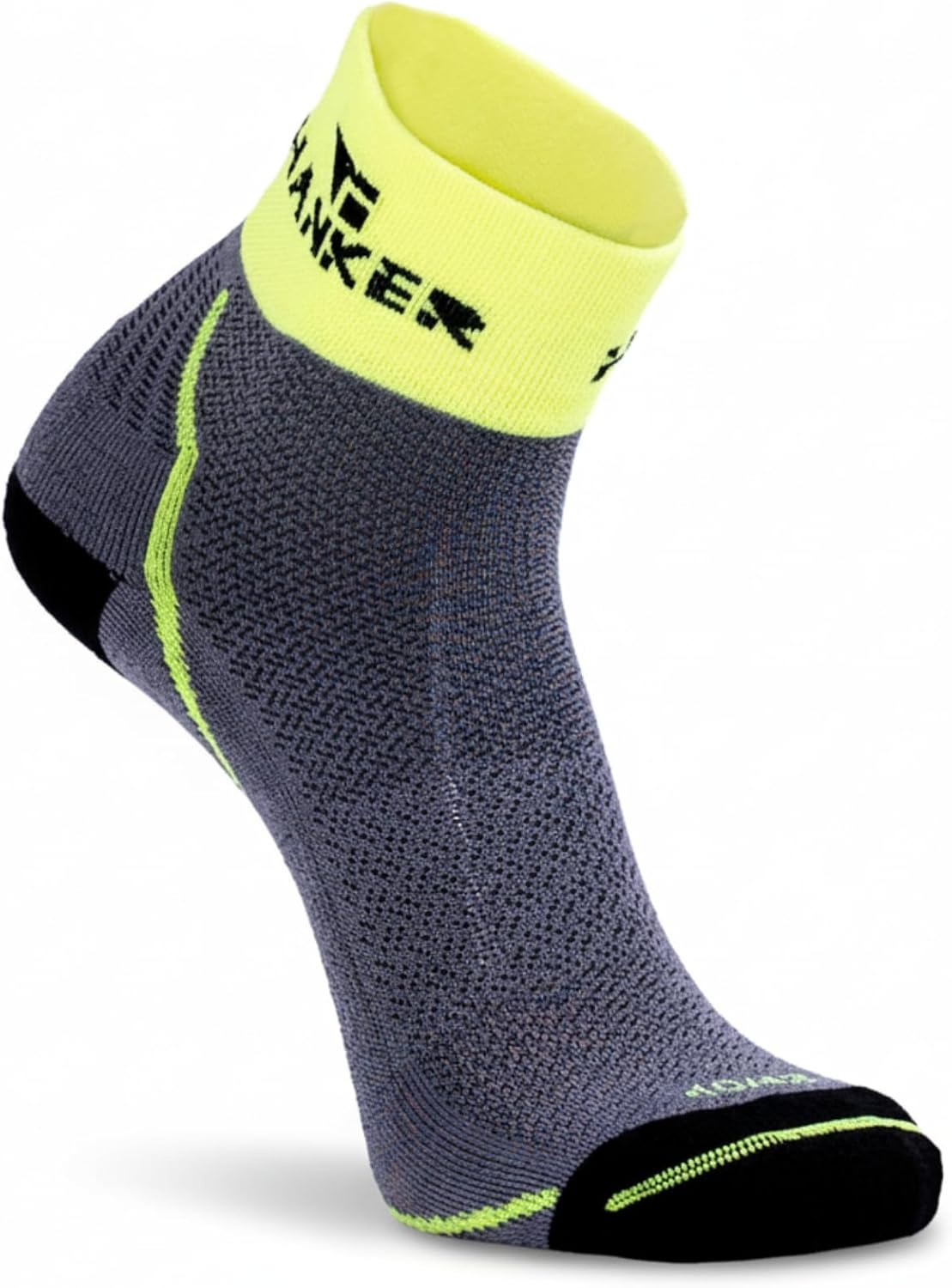
The HANKER are technically a trail compression sock rather than a classic compression sleeve. Their differentiator is the seamless construction: there is no join anywhere that could chafe on long days on the trail. On trails, where damp and mud make rubbing worse on the foot and toes, seams are public enemy number one.
The compression sits at the ankle and the arch. The moisture-wicking fabric keeps the foot drier than a standard cotton sock when hiking. At ~€9 it is the most affordable trail entry point in this selection.
Pros
- Seamless: zero chafing on the foot
- Very affordable price (~€9)
- Moisture wicking: drier feet
- Compression at the arch and ankle
- Also valid for long hikes
Cons
- New brand without a long verified track record
- No calf compression
- Not for recovery use
Who it is for: the trail runner or hiker with chafing and blister problems looking for an affordable seamless option.
View on AmazonQuick comparison table
| Product | Price | mmHg | Height | Main use | Material |
|---|---|---|---|---|---|
| Compressport Run High V3 | ~€13 | 15-20 | Knee | Racing / training | Nylon + Spandex |
| DANISH ENDURANCE Compression | ~€26 | Graduated | Knee | Running + recovery + travel | Polyamide + Elastane |
| Compressport Trail V3 | ~€10 | 15-20 | Knee | Trail / mountain | Abrasion-resistant nylon |
| CEP Ultralight Short | ~€9 | Light, foot | Ankle | Summer running / heat | Ultra thin |
| CAMBIVO 20-30 mmHg | ~€14 (2 pairs) | 20-30 | Knee | Post-race recovery | Nylon + Elastane |
| Compressport Run Low V3 | ~€15 | 15-20 foot | Low | Hot-weather running / arch | Nylon + Spandex |
| DANISH ENDURANCE 3 Pack | ~€27 | Moderate, arch | Ankle | Anti-blister / daily use | Technical nylon |
| DANISH ENDURANCE High Perf. | ~€22 | Firm graduated | Knee | Long distance / marathon | Nylon + Elastane |
| HANKER Trail Seamless | ~€9 | Light, arch | Ankle | Trail / anti-chafing | Technical microfibre |
Which one to pick for your profile
You race marathons and half marathons on the road → Compressport Pro Racing V3 High (~€13). The benchmark of the segment, no hype. Genuine certified graduated compression.
You want one sock for running, recovering and flying → DANISH ENDURANCE Compression (~€26). The most versatile pick here.
You run trails and need ankle and foot protection → Compressport Trail V3 (~€10). Built for rough ground, not for tarmac.
You run in summer and the heat of a knee-high is a problem → CEP Ultralight Short (~€9) or Compressport Run Low (~€15).
You want recovery socks after a marathon or for long flights → CAMBIVO 20-30 mmHg (~€14 for 2). The 20-30 mmHg range is the one recommended for active recovery. Do not run in them.
You get blisters and want a pack of technical socks → DANISH ENDURANCE 3 Pack (~€27). Double layer at friction points, non-slip inside.
You are preparing your first marathon and want firm compression for long distance → DANISH ENDURANCE High Performance (~€22).
You run trails or hike and chafing is your worst enemy → HANKER Trail Seamless (~€9). The cheapest option in the selection.
Compression socks are one more piece of technical running kit. To round out your recovery toolkit, read our guide to the best recovery drinks for running, where we cover full post-race recovery strategies. If your calves hurt regularly, take a look at the comparison between a foam roller and a massage gun for recovery as well.
For technical running socks without a medical compression component, we also have the guide to the best running socks, where we look at the best anti-blister options on the market. And if you have not found your shoes yet, the article on the best running shoes 2026 starts from the same honesty-first criteria.
Find runners to break in your new socks with
Buying the right sock is the easy part. Finding people at your pace for the long runs where you actually need it is what CorrerJuntos does. Running groups in Huelva, Seville, Málaga and across Spain.
Download freeiOS App Store · Google Play · Free
Frequently asked questions about compression socks for running
How many mmHg do you need in a compression sock for running?
For running during the activity itself, 15-20 mmHg (light to moderate compression) is the usual recommendation. For post-race recovery or air travel, 20-30 mmHg (moderate to firm compression). Above 30 mmHg you are into medical prescription territory, which makes no sense for recreational running. Compressport Pro Racing works in the 15-20 mmHg range; CAMBIVO offers 20-30 mmHg, which suits recovery better than running.
Do compression socks actually improve performance?
The scientific evidence on performance during the run is mixed: some studies show small improvements in running economy and delayed muscle fatigue, others find no significant difference. The evidence is more solid for post-effort recovery: less DOMS and faster recovery over the following 24-48 hours. If you wear them only during the race hoping to beat your personal best, the science is not strongly on your side. If you also use them to recover, the benefit-to-cost ratio makes more sense.
Knee-high sleeve or short compression sock: which is better for running?
It depends on the goal. Knee-high socks apply pressure along the whole calf and are more effective for recovery and long trips. Short compression socks are lighter, cooler and better suited to summer running or to runners who only want support in the foot and ankle. For a marathon or a long trail race in cold weather: knee-high. For 10K sessions in summer: a short or quarter sock.
How long do compression socks last?
Compression degrades with washing and use. Premium brands such as Compressport and CEP tend to keep their properties for 100-150 washes if you wash them at 30°C on a gentle cycle and let them air dry. Cheaper options can lose noticeable compression before 50 washes. The practical rule: if the sock no longer squeezes your calf slightly when you put it on, it has lost its effect.
Can I wear running compression socks on a plane?
Yes, and it is one of their best uses. Prolonged immobility in flight increases the risk of deep vein thrombosis and causes swelling. Socks in the 20-30 mmHg range such as CAMBIVO or DANISH ENDURANCE are ideal for flights longer than 4 hours. For short flights or people with no risk factors, the 15-20 mmHg of Compressport Pro Racing also works. Trail socks such as HANKER are not designed for graduated compression while travelling.
What temperature should you wash compression socks at?
Always 30°C maximum, delicate cycle or by hand. Heat and spinning damage the elastic fibres responsible for the compression. Do not tumble dry. Always air dry, never in direct sun for hours. If you routinely wash at 40°C, you are halving the useful life of the sock.
Do compression socks help with plantar fasciitis?
Compression socks with arch support (such as the DANISH ENDURANCE Running Quarter or the Compressport Run Low) can help reduce tension on the plantar fascia while you run. However, for established plantar fasciitis the first line of treatment is stretching exercises, orthotic insoles if there is pronation, and relative rest. Socks are a complement, not a treatment. If you have had heel pain for more than 3 weeks, see a podiatrist.