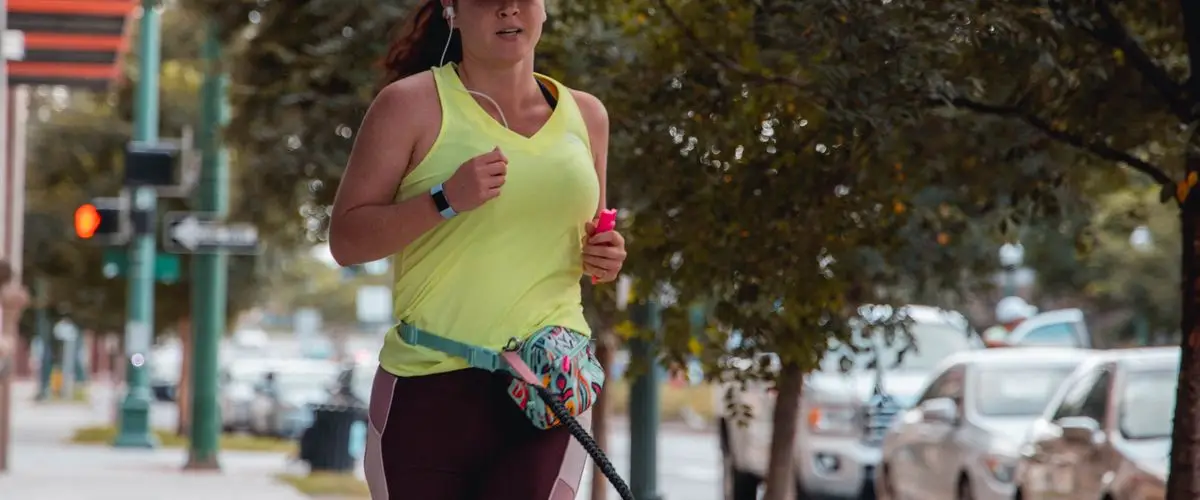
If you own a dog and enjoy running, chances are you have already tried heading out together. Maybe with a regular leash in hand, your dog pulling sideways, you struggling to hold pace and both of you ending up frustrated. Canicross solves exactly that problem: it is a sport specifically designed so that a person and a dog run together in a coordinated, comfortable and safe way.
Canicross is not simply jogging with your dog on a lead. It is a discipline with purpose-built equipment, its own technique and a rapidly growing community across the United States, the United Kingdom and Europe. The best part is that you do not need to be an experienced runner or own a purebred dog to get started. All you need is enthusiasm, the right kit and a bit of patience while you and your dog learn the ropes together.
In this guide we walk you through everything you need to take your first steps in canicross: from choosing a suitable breed to building a progressive training plan. If you are just getting into running yourself, our guide on how to build running endurance will give you a solid foundation before adding the dog factor into the mix.
1. What is canicross and why is it booming?
Canicross is a sport in which a runner and a dog are connected by an elastic bungee line that links a waist belt worn around the runner's hips to a pulling harness on the dog. The dog runs out front, providing a gentle forward pull, while the runner guides them using voice commands. It originated in Scandinavia as a summer training method for mushers (sled dog drivers), but has since evolved into a standalone sport with its own competitions, governing bodies and a global community that continues to grow year after year.
The rise of canicross worldwide
Over the past five years, canicross has experienced remarkable growth across the English-speaking world and beyond. In the United Kingdom alone, CaniSports UK now sanctions over 60 official races per season, and participation has roughly doubled since 2021. The United States has seen similar momentum through organisations like the American Excelsior Canicross Association, with events popping up in virtually every state. Canada, Australia and New Zealand have all developed thriving scenes as well, with clubs offering group training sessions, guided trail runs and mentorship for newcomers. The sport even has a European and World Championship circuit that attracts hundreds of elite teams each year.
Several factors explain this surge. The dramatic increase in dog adoption during and after the pandemic created a massive pool of owners looking for active things to do with their pets. Running was already experiencing a boom, and combining the two passions felt like a natural fit. Social media amplified the trend further: videos of dogs running joyfully through forests with their owners regularly go viral, introducing canicross to audiences that had never heard of it before. The accessibility of the sport also helps. Unlike cycling with a dog or skijoring, canicross requires minimal equipment and no special terrain. If you can run and you have a dog, you can do canicross.
Benefits for your dog and for you
Canicross is about far more than physical exercise. For your dog, running satisfies their natural drive for movement, reduces destructive behaviours linked to boredom and provides mental stimulation through new scents, varied terrain and the cognitive challenge of following voice commands. A dog that runs regularly with their owner tends to be calmer at home, more balanced and better socialised. The structured nature of canicross also channels energy productively, which is particularly valuable for high-energy breeds that can become restless without an adequate outlet.
For the runner, having a furry training partner who is always desperate to get out the door is the ultimate motivator. There are no excuses when your dog is staring at you hopefully next to the front door with their tail wagging. Beyond motivation, the forward pull from your dog helps on uphills, forces you to maintain a steady rhythm and strengthens the emotional bond between you in a way that few other activities can match. Many runners also report that canicross makes them feel safer on early morning or late evening runs, particularly on remote trails. The shared experience of moving through nature together creates a connection that goes deeper than any walk around the block.
2. Best dog breeds for running (and which to avoid)
While any healthy dog in good physical condition can join you for short runs, not every breed is genetically suited to regular canicross. Body structure, respiratory capacity, thermoregulation and skeletal framework all determine how far and how fast a dog can safely run. Here is a practical guide organised by distance type so you can assess whether your dog is a good fit or whether you need to start with shorter distances and build gradually.
Best breeds for short distances (up to 5 km)
For short, intense runs, athletic medium-sized breeds with good top-end speed shine: the German Shorthaired Pointer, the Dalmatian, the Border Collie and the Australian Shepherd. These dogs offer an excellent combination of speed, agility and short-term stamina. The Whippet and the Greyhound can also be solid companions at shorter distances, though their sprinter nature means they prefer explosive bursts followed by rest rather than sustained effort. If your dog falls into one of these categories, keep initial runs under 3 km and work up gradually, paying close attention to how quickly they recover between sessions.
Best breeds for medium distances (5 to 15 km)
This is the range with the most options. The Siberian Husky is the quintessential canicross breed: it was literally bred to pull and run for hours on end. The Alaskan Malamute, the Samoyed, the Eurasier and Nordic-type crosses also excel at medium distances. Outside the Nordic group, the Weimaraner, the English Setter, the Hungarian Vizsla and the Labrador Retriever (when in good physical shape) are all excellent choices. Mixed-breed dogs of medium to large size, particularly those with working breed heritage, often perform extremely well in canicross thanks to their robustness and genetic versatility. Do not underestimate a rescue mutt with long legs and a willing attitude.
Best breeds for long distances (over 15 km)
For long distances, Nordic breeds are unbeatable. The Eurohound (a cross between a German Pointer and a Husky), the Greyster (a cross between an English Pointer and a Nordic dog) and the Alaskan Husky are the preferred choices among elite competitors. These breeds combine the endurance of a Nordic dog with the speed of a Pointer, creating an exceptional canine athlete capable of covering 30 km or more at a respectable pace. Outside the competitive circuit, breeds like the Belgian Malinois and the Rhodesian Ridgeback can also handle long distances with the right progressive training programme.
Breeds to avoid
Brachycephalic breeds (flat-faced dogs) are not suited for canicross. English Bulldogs, French Bulldogs, Pugs, Pekingese, Boston Terriers and Shih Tzus have a limited respiratory capacity that prevents them from regulating their body temperature efficiently during intense exercise. Running with these breeds can trigger dangerous heatstroke even at moderate temperatures. Toy and miniature breeds (Chihuahua, Yorkshire Terrier, Pomeranian) are also unsuitable due to their fragile bone structure and their inability to generate the forward pull that canicross requires. Giant breeds (Great Dane, Saint Bernard, Mastiff types) can manage short distances but suffer excessive joint wear from regular running, making consistent canicross training inadvisable for them.
Age matters more than breed
Regardless of breed, never how to start running with a puppy. A young dog's bones and joints are not fully developed until they are 12 to 18 months old (up to 24 months for giant breeds). Running on hard surfaces before the growth plates have closed can cause irreversible damage, including hip and elbow dysplasia. Stick to long walks and free play on soft surfaces until your vet confirms that the growth plates have sealed. Swimming is also an excellent low-impact exercise for young dogs that builds muscle and cardiovascular fitness without stressing the joints.
3. Essential canicross gear
Canicross equipment is not optional or decorative: it is what separates a comfortable, safe experience from a frustrating and potentially dangerous one. Using a regular lead or a collar to run with your dog is a mistake that can cause neck injuries to the animal and shoulder or wrist injuries to you. Every piece of specialised canicross gear exists for a specific biomechanical reason, and understanding those reasons will help you make better purchasing decisions. If you are interested in the broader question of appropriate footwear, have a look at our comparison of running shoes versus regular shoes.
Pulling harness for the dog
The pulling harness is the single most important piece of equipment. Unlike a standard walking harness, a canicross harness is engineered to distribute pulling force across the dog's chest and back without compressing the trachea or restricting breathing capacity. There are two main designs:
- X-back harness: The classic mushing design. It forms an X shape across the dog's back and distributes pulling force from the chest all the way to the base of the tail. It is the most efficient option for dogs that pull strongly and for longer distances. It requires precise sizing to prevent chafing.
- H-back harness: Features an H shape on the back. It is easier to adjust, more tolerant of size variations and more comfortable for dogs that are still learning. It is the recommended option for beginners because it is more forgiving of sizing errors and adapts better to dogs that are still developing their pulling technique.
Never use a collar for canicross. Concentrated pulling force on the neck can cause cervical injuries, tracheal compression and thyroid problems. Also avoid walking-style harnesses like the Julius K9 or similar brands that clip at the front: they are designed to discourage pulling, not to facilitate it, and they restrict the natural movement of your dog's shoulders during a running stride.
Waist belt for the runner
The waist belt is your anchor point to the dog. It sits at hip level (not at your natural waist) and distributes the pulling force across your pelvic area, which is far more stable than the upper lumbar spine. A good canicross belt should have firm padding at least 7 to 8 cm wide, a quick-release buckle for safety (so you can disconnect instantly if needed) and a central or lateral attachment point for the bungee line. Some premium belts also feature leg straps that prevent the belt from riding up during steep descents. Expect to spend between 30 and 60 dollars on a quality belt that will last for years.
Elastic bungee line
The elastic bungee line connects your belt to the dog's harness. Its key function is to absorb sudden jerks: when your dog accelerates abruptly or you brake, the bungee cushions the impact and protects both your lower back and the dog's spine. The recommended length is 1.5 to 2 metres when stretched, with an extension capacity of 30 to 50 percent. Lines that are too short do not absorb jerks effectively; lines that are too long cause tangles and loss of control on narrow trails. Look for a line with a panic snap at each end for quick attachment and removal.
Appropriate footwear
Your regular road running shoes can work for getting started on paved paths, but if you plan to do canicross on trails, forest paths or dirt tracks, you will need trail running shoes with aggressive grip. Your dog pulls you forward, which shifts your centre of gravity and increases the risk of slipping, especially on wet or loose surfaces. Shoes with Vibram or Continental outsoles and lugs of at least 4 mm provide the traction you need. On downhill sections where your dog accelerates, solid grip is not a luxury but a safety essential.
Hydration for both of you
Your dog needs water during longer runs just as much as you do. Carry a hydration while running vest or a bottle belt with an extra bottle for the dog and a collapsible bowl. On warm days, offer water every 15 to 20 minutes. Dogs do not sweat like humans: they regulate temperature through panting, which means they dehydrate faster than you might expect. A reliable rule of thumb is that if you are thirsty, your dog has been needing water for a while already. For runs over 45 minutes, consider adding electrolytes to your own water and bringing a second collapsible bowl to prevent cross-contamination.
Free Plan: couch to 5K plan in 8 Weeks
Week by week, rest days included. No experience needed.
Download free plan4. Technique and progressive training
Running with your dog attached to your waist is a skill that has to be learned. It is not enough to put on the gear and head out the door: you need to teach your dog the basic voice commands, adapt your running form to account for the forward pull and build distance gradually to protect both your joints and your dog's. If you want to dive deeper into building your own aerobic base, our guide on how to build running endurance offers a solid framework that applies just as well when you add a four-legged partner.
Essential voice commands
Your dog needs to understand at least four basic commands before you start running seriously. Always use the same words and a clear, consistent tone of voice. Inconsistency confuses the dog and slows down the learning process.
- "Hike" or "Let's go": The start command. It tells the dog to begin running and pulling forward. This is the signal that kicks off every session and should be delivered with energy and enthusiasm.
- "Gee" (right) / "Haw" (left): Directional commands inherited from mushing tradition. These terms prevent you from having to physically guide the dog at forks and trail junctions. Some runners prefer plain English ("right" and "left"), but the mushing terms are shorter and less likely to be confused with conversational speech.
- "On by" or "Leave it": The command to ignore distractions such as other dogs, people, squirrels or interesting smells. This is arguably the hardest command to teach but the most important one for safety, especially on shared trails.
- "Easy" or "Steady": Tells the dog to slow down. It is essential for downhill sections, technical terrain and any moment when you need to decelerate without stopping abruptly.
Train these commands on walks first, then at a trot and finally at a running pace. Do not attempt to teach them all simultaneously. Start with "Hike" and "On by", which are the most urgent for basic safety and control, and add the directional commands once the first two are firmly established. Most dogs pick up the start command within a few sessions, while "On by" typically requires several weeks of consistent reinforcement.
Adapting your running form
When a dog pulls you, your centre of gravity shifts forward. This changes your running biomechanics in ways you need to anticipate rather than react to. Lean your torso slightly backward to counterbalance the pull, keep your knees flexed and shorten your stride slightly, particularly on downhill sections. Downhills are the most dangerous moment in canicross: the dog naturally accelerates going downhill while you need to brake. If you do not control the speed, the risk of falling increases dramatically. Use the "Easy" command and brake with short, rapid steps rather than long strides. Keep your arms slightly wider than usual for balance, and avoid looking down at the bungee line. Your eyes should be on the trail ahead, reading the terrain 5 to 10 metres in front of you.
A progressive training plan
Progression in canicross should be more conservative than in conventional running because you need to respect your dog's limits. Your dog cannot tell you verbally that they are tired or in pain, so you must err on the side of caution. A sensible plan for beginners would look like this:
- Weeks 1 to 2: Brisk walks of 20 to 30 minutes with the full gear on. The goal is for both of you to get accustomed to the harness, belt and bungee line. Practise the basic voice commands during these sessions so the dog associates the equipment with structured activity.
- Weeks 3 to 4: Intervals of easy trotting and walking. Run 2 minutes, walk 2 minutes, for 25 to 30 minutes total. The dog will start learning to distinguish running pace from walking pace. Keep the intensity low and praise them frequently.
- Weeks 5 to 6: Increase the trot intervals to 4 to 5 minutes with 1 to 2 minutes of walking recovery. Total duration: 30 to 35 minutes. Begin incorporating direction changes and the "Gee" and "Haw" commands.
- Weeks 7 to 8: Continuous running of 15 to 20 minutes at an easy pace. Add 2 to 3 minutes per week until you reach 30 continuous minutes. At this point both of you should be comfortable with the rhythm and the equipment.
Temperature limits
This is a critical point that many beginners overlook. Dogs do not regulate temperature the way humans do: they cannot sweat through their skin, only through their paw pads and via panting. When the ambient temperature exceeds 20 degrees Celsius (roughly 68 degrees Fahrenheit), the risk of heatstroke increases significantly, especially in Nordic breeds with a double coat. The general rule among competitive canicross runners is clear: above 20 degrees Celsius, you do not run. Between 15 and 20 degrees, reduce intensity and distance. Below 15 degrees is the optimal zone. If you often run in the evening to avoid heat, our guide on running at night safely will give you additional safety advice for low-light conditions.
Looking for canicross partners?
Find runners and canicross groups near you with CorrerJuntos. Free.
Download app5. Common mistakes and how to avoid them
Canicross looks straightforward from the outside, but there are frequent mistakes that can compromise your dog's health, your safety or simply ruin the experience for both of you. After speaking with canicross coaches and veterinary sports specialists, these are the most common errors among people who are just starting out. Being aware of them from the beginning will save you time, money and potentially a trip to the vet.
Running with a dog that is too young
This is the most serious and most common mistake. The excitement of unboxing new gear leads many owners to head out running with puppies as young as 6, 8 or 10 months old. At that age, the growth plates in the bones are still open and the repetitive impact of running can cause permanent joint malformations, including hip and elbow dysplasia. It does not matter how athletic your puppy looks or how eagerly they pull on the lead: until your vet confirms that the growth plates have closed (generally between 12 and 18 months depending on breed), limit activity to walks, free play on soft surfaces and swimming. The few months of patience will pay dividends across the entire lifespan of your dog.
Running in excessive heat
Dogs are far more sensitive to heat than humans. Their baseline body temperature is already higher (between 38 and 39 degrees Celsius) and their cooling mechanism depends almost entirely on panting, which is less efficient than human perspiration. Heatstroke in a dog can be fatal within minutes. Symptoms include excessive panting, thick drool, disorientation, dark red gums and vomiting. If you observe any of these signs, stop immediately, cool the dog with fresh water (not ice-cold water, which can cause shock) and get to a veterinary emergency clinic without delay. Prevention is simple: respect the 20-degree Celsius limit and do not run during the hottest part of the day in warmer months. Early mornings and late evenings are your safest windows.
Using the wrong harness
A walking harness is not a canicross harness. Walking harnesses are designed to limit pulling (which is why many have a front clip that redirects the dog sideways); canicross harnesses are designed to facilitate pulling and distribute the force evenly. Running with an inappropriate harness can cause painful chafing under the dog's armpits, restriction of shoulder movement, tracheal compression (if using a collar) and an overall negative experience that makes your dog associate the gear with discomfort. Investing in a proper X-back or H-back harness from a reputable canicross brand is not extravagant. It is the minimum requirement for doing the sport responsibly.
Not reading your dog's body language
Your dog cannot tell you they are tired, that a paw hurts or that they are thirsty. You have to learn to read their signals. A dog that spontaneously begins slowing down, that pants excessively, that stops to sniff at unusual frequency or that falls behind instead of pulling forward is communicating that they need to stop. Ignoring these signals can lead to muscle injuries, exhaustion or heatstroke. The rule is simple: if your dog wants to stop, you stop. You can always go out again tomorrow. It is also worth learning to distinguish between a dog that is genuinely fatigued and one that is simply distracted by an interesting smell. Over time you will develop an intuitive sense of your dog's effort level and mood, but in the early stages always err on the side of rest.
Skipping veterinary check-ups
Canicross is a demanding sport for your dog's joints, spine and cardiovascular system. An annual vet visit is not enough if you practise canicross regularly. Schedule check-ups every six months that include joint palpation, a physical condition assessment and, ideally, periodic X-rays of the hips and elbows, especially if you have a large breed predisposed to dysplasia. Also inspect your dog's paw pads after every session: cracks, redness or excessive wear indicate that you need to reduce frequency or switch to softer surfaces. Keeping a simple training log that notes distance, temperature, terrain and how the dog looked afterward will help both you and your vet spot trends before they become problems.
Frequently asked questions
At what age can my dog start canicross?
Most veterinarians recommend waiting until the dog is between 12 and 18 months old, depending on the breed. Puppies have open bone growth plates and running on hard surfaces can cause permanent joint damage. Large and giant breeds (German Shepherd, Golden Retriever, Husky) should wait closer to 18 months, while medium breeds may start at around 12 months. Before you begin, get a full veterinary check-up that includes hip and elbow X-rays to rule out dysplasia. Starting too early is the single biggest mistake in canicross and the one with the most serious long-term consequences.
Can I do canicross in the city?
Yes, but with precautions. Pavement is harsher on your dog's paw pads than dirt trails, especially in summer when the ground surface temperature can exceed 60 degrees Celsius even when the air feels only moderately warm. Choose large parks, separated bike lanes or wide pedestrian areas away from heavy traffic. Avoid peak heat hours and always check the ground temperature with the back of your hand: if you cannot hold it there for 5 seconds, it is too hot for your dog. Many urban canicross runners opt for early mornings or late evenings to avoid heat and traffic, and they stick to shaded paths whenever possible.
Do I need a licence to do canicross?
For recreational canicross you generally do not need a specific licence, but you must comply with local dog ownership regulations: microchip identification, up-to-date vaccinations, liability insurance and any breed-specific legislation that may apply in your area. In the UK, dogs must be under control in public spaces. In the US, leash laws vary by state and municipality, but canicross gear typically satisfies the leash requirement since the dog is physically attached to you. If you want to compete in official canicross races, you will usually need to register with a national mushing or canicross federation. An up-to-date veterinary health record is mandatory at all sanctioned competitions.
Run with your dog. Run with company.
Find runners and canicross groups near you. Organise meetups and head out together. Free.
Join 1,100+ runners
Training tips in your inbox
Plans, running technique, canicross advice and gear reviews. No spam.